

The debate surrounding the death of Zacharias Abendong remains unresolved and continues to generate differing interpretations. What is undeniable, however, is that the event occupies an important place in the collective memory of many Southern Cameroonians. It serves as a reminder of the complex and often contested history that continues to shape political attitudes in the region today.
By Lester Maddox. Guest Contributor, Independentist News, Oakland County, California
The political history of the relationship between Southern Cameroons and La République du Cameroun is marked by deep mistrust, competing narratives, and enduring allegations of political manipulation. For many Ambazonian historians and independence advocates, understanding the present requires revisiting key events from the past that they believe shaped the trajectory of the conflict and contributed to the erosion of trust between Southern Cameroonians and the authorities in Yaoundé.
Among the most frequently cited examples is the death of Zacharias Abendong, an event that remains the subject of controversy and political interpretation decades after it occurred. According to accounts widely circulated within Ambazonian political circles, the circumstances surrounding Abendong’s death reveal what they view as an early example of a divide-and-rule strategy designed to weaken Southern Cameroonian unity and strengthen the authority of the post-independence regime.
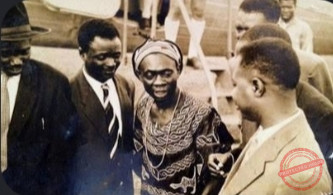
The story centers on a period of growing political tension during the early years of reunification. At the time, West Cameroon Prime Minister John Ngu Foncha was reportedly invited to participate in discussions aimed at easing regional tensions and improving relations between the two entities that had come together under the federal arrangement. The meeting was presented as an opportunity for dialogue and reconciliation. Accompanying Foncha was Zacharias Abendong, a trusted associate and respected political figure.
According to the interpretation advanced by many Ambazonian commentators, the mission was never intended to produce a genuine political settlement. They argue that forces within the political establishment sought instead to undermine Southern Cameroonian leadership by creating distrust among its most influential figures. Abendong’s death during the visit became the catalyst for a narrative that allegedly sought to portray Foncha as responsible for the tragedy.
Supporters of this interpretation point to what they consider a fundamental contradiction in the official narrative. They argue that if Foncha had genuinely intended harm against a close political ally, it would have made little strategic sense to carry out such an act in territory beyond his direct control and under circumstances that would inevitably expose him to suspicion and political risk. To them, the more plausible explanation is that the event was orchestrated by actors seeking both to eliminate a respected Southern Cameroonian figure and to discredit the leadership of West Cameroon at the same time.
Whether one accepts this interpretation or not, the significance of the episode lies in its lasting political impact. The controversy contributed to suspicion, weakened confidence in political institutions, and reinforced a perception among many Southern Cameroonians that their leaders were vulnerable to manipulation by more powerful actors operating within the central state apparatus.
For contemporary Ambazonian activists, the lessons drawn from the Abendong affair extend far beyond the historical details of a single event. They see it as part of a broader pattern in which political divisions are cultivated, rivalries are encouraged, and public narratives are shaped in ways that prevent collective action. In this view, the most effective means of maintaining control over a dissatisfied population is not necessarily through direct force alone but through the creation of mistrust among those who might otherwise unite around common objectives.
This perspective continues to influence political discourse within the Ambazonian movement today. Many advocates argue that modern information campaigns, competing political factions, and recurring accusations among activists reflect challenges that are not entirely new but rather extensions of tactics that have existed for decades. As a result, they emphasize the importance of historical awareness, critical thinking, and unity in the face of efforts that could deepen internal divisions.
The debate surrounding the death of Zacharias Abendong remains unresolved and continues to generate differing interpretations. What is undeniable, however, is that the event occupies an important place in the collective memory of many Southern Cameroonians. It serves as a reminder of the complex and often contested history that continues to shape political attitudes in the region today.
For those who advocate the Ambazonian cause, the enduring lesson is that political movements are strongest when they understand their history, learn from past divisions, and remain vigilant against efforts to turn allies against one another. In their view, unity remains the greatest challenge to systems that depend on fragmentation and distrust to survive.
Lester Maddox. Guest Contributor, Independentist News, Oakland County, California