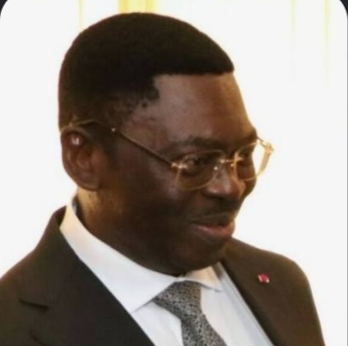


Calling Ferdinand Ngoh Ngoh the “de facto President of Cameroon” remains a political interpretation, not an established constitutional fact. The deeper scandal may lie elsewhere. A country should not have to guess who is exercising its highest executive authority.
By The Independentist News editorial desk
For 62 days, President Paul Biya has remained outside Cameroon. That extraordinary absence has understandably triggered questions about who is actually running the country, who is making decisions, and how presidential authority is being exercised. But amid those legitimate questions, a dangerous analytical shortcut is beginning to emerge: that Ferdinand Ngoh Ngoh has somehow become the “de facto President of Cameroon.” No.
That conclusion is politically dramatic, but legally and constitutionally it has not been established by the evidence presently available. Ngoh Ngoh may be one of the most powerful men operating around the Presidency. He may exercise considerable influence. He may possess delegated authority to sign certain documents on behalf of the President. But delegated authority is not constitutional succession, and proximity to power is not the same thing as possession of the presidency.
The distinction is not technical trivia. It goes to the heart of how a state should function when the head of state is absent for an extended period. If constitutional offices, delegated powers, and practical influence are blurred together, then the public loses the ability to distinguish lawful authority from political improvisation.
A Delegation of Signature Is Not a Coronation
This should be stated plainly. Presidential Decree No. 2019/043 of February 5, 2019, reportedly grants Ferdinand Ngoh Ngoh a permanent delegation of signature. That does not make him President. It does not make him Vice-President. It does not make him the constitutional successor to the head of state. It does not transfer the Presidency to the Secretary-General of the Presidency. A delegation of signature is an administrative device. It allows an official to sign specified acts within the scope of authority granted. It does not magically transform the holder into the constitutional source of that authority.
That is the point too many political commentaries are beginning to blur. The question should therefore be simple: if Ngoh Ngoh is President, where is the constitutional act that made him President? Where is the declaration of vacancy? Where is the determination of permanent incapacity? Where is the constitutional provision placing the Secretary-General of the Presidency in the line of interim succession?
Without such an instrument, calling him “President” is not a statement of constitutional fact. It is an interpretation of practical influence. Those are not the same thing. But This Is Not a Defense of the Status Quo Rejecting the claim that Ngoh Ngoh has automatically become President does not mean defending the way the Biya system is handling the situation. Far from it.
Sixty-two days is an extraordinary period for a president to remain outside his country while uncertainty grows over the exercise of executive power. Cameroonians are entitled to ask who is making major decisions, who is giving instructions, who is authorizing state actions, what Ngoh Ngoh is signing, under what precise authority he is signing it, and whether those powers remain strictly within the limits of the 2019 delegation. Those questions are serious because constitutional legitimacy depends not only on who holds an office in theory but on whether the exercise of authority can be traced, explained, and held accountable.
If President Biya continues to exercise his constitutional functions from abroad, the government should be able to explain how. If Ngoh Ngoh is exercising delegated authority, the government should be able to explain the scope of that authority. If decisions are being made beyond what the delegation permits, that should be exposed clearly. The public should not have to reverse-engineer the state from signatures, rumors, photographs, decrees, and social-media speculation.
The Real Scandal Is Opacity
The most troubling issue may therefore not be Ngoh Ngoh himself. It is the opacity surrounding the exercise of power. A modern state should not function in a way that forces citizens to guess who is actually exercising the highest executive authority. If one official is constitutionally President, another is signing documents, others are coordinating state functions, and no one is explaining the lines of authority clearly, then the system has an accountability problem. This is where the debate must move beyond personalities.
Cameroon has concentrated enormous political authority around the Presidency. Major appointments, security decisions, public administration, foreign relations, financial control, and the machinery of the state have long been associated with the presidency and the central executive structure. Such concentration may appear strong when the center is functioning normally. But once the President is absent for a prolonged period, the underlying vulnerability becomes obvious. Who commands? Who authorizes? Who can be held responsible? If the answers are unclear, the problem is not merely one official’s influence. The problem lies in the design of the system itself. A Single Point of Failure. An engineer would recognize the danger immediately. A complex system that depends too heavily on one component develops a single point of failure. In electrical systems, transport networks, communications systems, and critical infrastructure, serious designers create redundancy because they know that no component should be assumed to function forever.
A resilient system survives disruption because authority, capacity, backup, and continuity are designed into the structure. Cameroon’s political order has moved in the opposite direction. Power has been concentrated so heavily around one presidency that the prolonged absence of one individual creates national uncertainty about who is actually running the state.
That is not resilience. That is institutional brittleness. The constitutional question should therefore go beyond asking whether Ferdinand Ngoh Ngoh is behaving like a president. It should ask why the Republic has become so centralized that an extended presidential absence produces this level of confusion in the first place. A functioning republic should not depend on rumors to explain continuity of government.
Do Not Confuse Proximity to Power with Possession of Power
Ngoh Ngoh’s position gives him extraordinary proximity to the center of government. That does not automatically make him the center of constitutional power. A Secretary-General of the Presidency can be influential without being President. He can coordinate presidential affairs without inheriting presidential authority. He can sign delegated instruments without becoming head of state. He can be politically powerful without holding the constitutional mandate of the President. This distinction matters precisely because Cameroon has spent decades operating under an exceptionally centralized political system.
When institutions are already weak and public information is limited, language becomes dangerous. Calling a senior official “de facto president” can create the impression that a constitutional transfer has occurred when no such transfer has been demonstrated. That may be politically convenient for some. It is not constitutional clarity. So Who Really Runs Cameroon? That remains the legitimate question.
And it is more uncomfortable than simply declaring Ngoh Ngoh President. If Biya is still governing, show how. If Ngoh Ngoh is exercising delegated powers, show the limits. If ministers or military officials are making major decisions independently, explain the constitutional basis. If the Presidency is operating through a collective internal arrangement, tell the public.If the constitutional order has changed, produce the legal instrument. Cameroonians deserve more than speculation. They deserve transparency.
The Broader Lesson: Centralization Creates Vulnerability
The Ngoh Ngoh controversy also exposes a deeper lesson for the entire region. A political system that concentrates too much authority in one office creates its own vulnerability. When the center weakens, the whole structure becomes uncertain. That is one reason federal and polycentric systems often possess greater resilience. Authority is not necessarily trapped in one building, one presidency, or one city. Different institutions retain defined responsibilities. Local and regional authorities continue functioning. Courts, legislatures, governments, and administrative systems operate through clearer divisions of power.
Cameroon has moved in the opposite direction for decades. The result is now visible. A president can be absent for weeks, and the entire country begins debating not simply whether he is away, but who possesses real power in his absence. That is not a healthy sign. Ambazonia Should Study This Carefully
For Southern Cameroons, the lesson is especially important.Any future Ambazonian republic would make a grave mistake if it simply removed Yaoundé’s centralism and rebuilt it in Buea. The objective should not be to change the location of concentrated power. It should be to change the architecture of power itself.
A resilient republic must distribute authority, create institutional redundancy, protect local government, preserve judicial independence, and ensure that the absence or failure of one leader cannot paralyze the entire state. That is the difference between a personality-driven system and an institution-driven republic.The current uncertainty in Cameroon should therefore be studied as a warning.
The Bottom Line
After 62 days of presidential absence, Cameroon unquestionably faces serious questions about the practical exercise of executive authority. But Ferdinand Ngoh Ngoh does not become President merely because he possesses a permanent delegation of signature. A delegated signature is not a presidential mandate. Administrative authority is not constitutional succession.
Political influence is not the Presidency.
And until there is concrete constitutional and legal evidence establishing otherwise, calling Ferdinand Ngoh Ngoh the “de facto President of Cameroon” remains a political interpretation, not an established constitutional fact. The deeper scandal may lie elsewhere. A country should not have to guess who is exercising its highest executive authority.
The Independentist News editorial desk