

As the conflict enters another year, one reality appears increasingly evident: the struggle is not simply about battlefield outcomes but about competing visions of legitimacy and political authority. Whether one supports the government, the Ambazonian cause, or a negotiated political settlement, the events in Fako underscore the continuing complexity of a conflict that has proven resistant to simple solutions.
By Lester Maddox. Guest Contributor, Independentist News, Oakland County, California
BUEA – 20 June 2026 – One of the defining features of long-running conflicts is the struggle over narrative. Governments seek to project stability, control, and normalcy, while opposition movements attempt to demonstrate continued resistance and the persistence of unresolved grievances. In the ongoing conflict affecting the Northwest and Southwest regions, this battle over perception remains as important as events on the ground themselves.
Nowhere is this contest more visible than in Fako County, a strategically important region that serves as both an economic hub and a key administrative center. Over the years, government officials have repeatedly pointed to areas of Fako as evidence that security operations have restored order and that state institutions continue to function effectively. Yet supporters of the Ambazonian cause argue that events on the ground tell a different story.
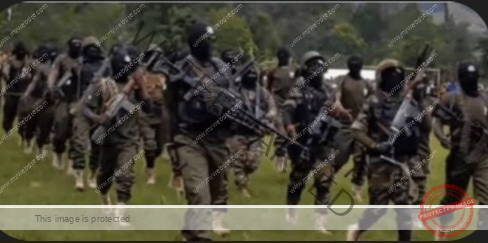
According to reports circulated within Ambazonian political and military circles, armed groups operating under the banner of the Ambazonia State Army (ASA) have continued to conduct operations throughout parts of Fako despite repeated claims that the area has been pacified. These reports describe attacks on military positions, disruptions to security patrols, and actions intended to demonstrate that resistance remains active in areas considered strategically important by the state.
Supporters of the resistance view these developments as evidence of organizational resilience. They argue that after years of conflict, the movement has adapted to changing conditions by relying on decentralized structures, local intelligence networks, and flexible operational methods. In their view, this evolution has enabled armed groups to remain active despite sustained military pressure.
Government officials, on the other hand, have consistently maintained that armed separatist factions have been significantly weakened and that remaining incidents are carried out by isolated groups lacking broad support. This sharp disagreement over the state of the conflict highlights the wider information struggle that has characterized the crisis from its earliest stages.
What is clear is that the conflict has endured far longer than many observers initially anticipated. The persistence of violence, periodic military operations, and continuing insecurity suggest that neither side has achieved a decisive resolution. As a result, competing narratives regarding control, legitimacy, and public support continue to dominate political discourse.
Military analysts often note that modern insurgencies cannot be understood solely through conventional measures such as territorial control. Armed movements frequently survive by embedding themselves within local social networks, drawing support from grievances that remain unresolved, and adapting their tactics in response to changing circumstances. Whether one agrees with the goals of such movements or not, history demonstrates that prolonged conflicts are rarely resolved through military force alone.
For many Ambazonians, the continued presence of armed resistance is interpreted as evidence that the underlying political issues driving the conflict remain unresolved. They argue that military operations may suppress symptoms temporarily but cannot eliminate demands rooted in questions of governance, representation, identity, and self-determination.
At the same time, the human cost of the conflict continues to weigh heavily on affected communities. Years of instability have disrupted economic activity, displaced families, damaged infrastructure, and deepened social divisions. Many civilians find themselves caught between competing political visions while bearing the consequences of a conflict they did not choose.
The debate surrounding Fako therefore extends beyond military operations. It raises broader questions about the meaning of normalcy in a conflict zone. Can a region be considered fully stable when armed resistance persists? Can security alone produce lasting peace without addressing underlying political grievances? These are questions that remain at the center of discussions about the future of the region.
As the conflict enters another year, one reality appears increasingly evident: the struggle is not simply about battlefield outcomes but about competing visions of legitimacy and political authority. Whether one supports the government, the Ambazonian cause, or a negotiated political settlement, the events in Fako underscore the continuing complexity of a conflict that has proven resistant to simple solutions.
The lesson for observers is that declarations of victory, stability, or normalcy should always be evaluated against realities on the ground. In prolonged conflicts, perception and reality often diverge, and understanding the true state of affairs requires looking beyond official statements from all sides. The future of the region will ultimately depend not only on military developments but also on whether a sustainable political solution can address the grievances that continue to fuel the conflict.
Adapted from commentary concerning security developments, competing narratives, and the continuing conflict in Fako County.
Lester Maddox. Guest Contributor, Independentist News, Oakland County, California