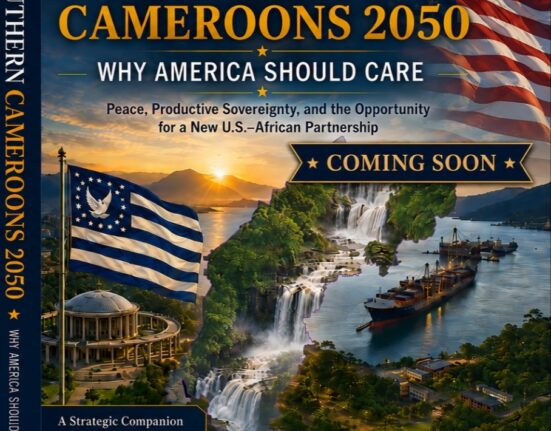


China will pursue China. America will pursue America. Europe will pursue Europe. No serious Ambazonian should be offended by that. The responsibility of an Ambazonian government would be to pursue Ambazonia. Trade widely. Welcome investment. Purchase useful technology. Build relationships with competing powers. Take advantage of Chinese market access. Seek access to American markets. Participate in African continental trade.
By Timothy Enongene, Associate Editor-in-chief The Independentist News
A new economic shock is moving through Africa, and Southern Cameroonians should pay attention before political independence and economic sovereignty are mistakenly treated as the same thing.
For decades, Americans have debated what became known as the “China shock.” China’s entry into the World Trade Organization in 2001 accelerated its integration into the global trading system. American consumers gained access to enormous quantities of inexpensive manufactured goods. American companies gained supply chains and lower production costs. China accumulated manufacturing capacity on a scale few countries had seen before. But there was another side.
Many American manufacturing communities discovered that cheap imports could carry a price that did not appear on the supermarket shelf. Factories closed. Supply chains migrated. Industrial skills disappeared. Communities that had depended on manufacturing employment struggled to replace the wages, tax base, technical knowledge, and economic circulation that factories had generated.
America eventually responded with tariffs, industrial policy, strategic subsidies, restrictions on particular technologies, and efforts to rebuild domestic manufacturing. Now a version of that problem is arriving in Africa.
Bloomberg reported in 2025 that Chinese exports were moving into African markets faster than into any other major region as trade tensions redirected some of China’s enormous manufacturing output away from the United States. China subsequently ended 2025 with a record trade surplus of about $1.2 trillion, demonstrating the extraordinary scale of its export machine.
For Africa, this presents an opportunity and a warning.
For Southern Cameroons, it should be treated as a national-development lesson before there is ever a sovereign customs service, trade ministry, industrial bank, investment authority, or national tariff schedule to administer. The question is simple: Will Ambazonia eventually become a country that produces, or merely another market in which other nations sell what they produce?
Cheap Is Not the Same as Economically Free
The attraction of inexpensive imports is obvious. A family that can purchase a refrigerator for $300 instead of $600 benefits. A contractor who can purchase affordable machinery may build faster. A farmer who gains access to low-cost pumps, solar equipment, motorcycles, telecommunications equipment, or agricultural tools may become more productive.
Economic policy should never pretend that consumers do not matter. China has brought enormous manufacturing efficiencies to global markets, and African consumers and businesses have benefited from many of them. But the national calculation cannot stop at the cash register.
Suppose an imported shirt costs $8 while the same shirt produced locally costs $12. The consumer sees four dollars of savings. The national economy must ask additional questions. Who employed the textile worker? Who purchased the local cotton? Who operated the warehouse? Who repaired the machinery? Who developed the logistics system? Who paid payroll taxes? Who acquired manufacturing skills? Who financed the company? Where were profits reinvested? And when the shirt was purchased, where did most of the money ultimately go?
These are not arguments for inefficient factories or permanent protection from competition. They are questions about the difference between consumption and production. A country can consume itself into dependency while believing it is becoming prosperous because its stores are full.
Africa’s Manufacturing Deficit Is Already Visible The broader continental numbers should concern anyone thinking seriously about an Ambazonian economy. UN Trade and Development reported that in 2025 Africa imported nearly four times as much manufactured goods as it exported. At the same time, the continent continued to record strong export growth in ores, metals, precious stones, and other primary commodities. That is not merely a trade statistic.
It describes the architecture of dependency. Africa digs. Africa cuts. Africa harvests. Africa ships. Somebody else processes. Somebody else manufactures. Somebody else brands. Somebody else finances distribution. Somebody else owns the intellectual property. Somebody else captures much of the value added. Then Africa imports the finished product. This is one of the oldest economic structures on the continent. The flags changed. The extraction pattern often did not.
The twenty-first-century danger is that African countries may repeat that structure under new partners while calling it development. A Tree Should Not Leave as a Tree. Take timber. If a country exports raw timber and another economy converts it into engineered wood, furniture, cabinetry, doors, flooring, prefabricated housing components, paper products, packaging, and architectural systems, the country exporting the tree has surrendered most of the productive chain. It has exported not only wood. It has exported jobs. It has exported skills. It has exported industrial learning. It has exported factory investment. It has exported product design. It has exported financing opportunities. It has exported recurring tax revenue. It has exported the possibility of creating domestic companies capable of becoming regional exporters.
The same logic applies to cocoa. Why should a cocoa-producing country remain proud merely because its beans are internationally valuable while chocolate, cosmetics, food ingredients, branded consumer goods, logistics, financing, and retail margins are captured somewhere else? The same question applies to palm products, coffee, fish, agricultural crops, minerals, construction materials, energy, digital services, and eventually advanced manufacturing. Raw resources do not automatically make a country rich. The ability to transform resources into recurring productive value does.
That distinction should sit at the center of any serious Ambazonian economic doctrine. Independence Could Actually Make the Danger Worse There is an uncomfortable possibility that independence advocates should confront now rather than later. A newly independent country usually wants rapid improvements. Citizens expect roads, electricity, housing, transportation, hospitals, telecommunications, schools, consumer goods, construction materials, vehicles, industrial equipment, and employment.
Government wants visible progress. Foreign suppliers arrive with financing. Contractors arrive with turnkey projects. Importers see opportunity. Political leaders want quick results. In that environment, it is extremely easy to build an economy around imports. The port becomes busy. Customs revenues increase. Shops are full. Construction accelerates. Foreign companies advertise. Government points to cranes, containers, vehicles, and new buildings as proof of development.
But underneath the activity, a dangerous structure may be forming. The country imports the machinery. Imports the steel. Imports the cement products. Imports the furniture. Imports the processed food. Imports the vehicles. Imports the electronics. Imports the solar panels. Imports the pumps. Imports the telecommunications systems. Imports the industrial components. Imports the engineering expertise. Imports the financing. Eventually it may even import the people required to maintain what has been imported.
That country may possess a flag, anthem, parliament, and international recognition while remaining economically subordinate. Political sovereignty without productive capacity can become little more than local administration of foreign economic systems. China Is Not the Enemy This is where the discussion must remain intellectually disciplined.
China should not be turned into a villain simply because Chinese firms are extraordinarily effective at manufacturing and exporting. China is pursuing Chinese interests. That is what serious states do. China spent decades building ports, factories, technical universities, transport networks, supply chains, industrial clusters, financing institutions, manufacturing expertise, and export capacity. It developed the ability to manufacture products at scales that few economies can match.
Africa cannot condemn China for possessing capabilities that African governments neglected to develop themselves. Nor should every low-priced Chinese product automatically be described as “dumping.”
Dumping has a specific meaning in international trade law. It generally requires evidence concerning pricing and injury to the importing country’s domestic industry. Cheap goods are not automatically dumped goods. The real problem is not that China manufactures too much. The problem is that Africa manufactures too little of what it consumes and processes too little of what it owns. That is an African policy failure before it is a Chinese offense.
China Can Be Part of Ambazonia’s Industrial Strategy
A future Ambazonia would be foolish to reject China. China possesses precisely many of the capabilities that a developing economy would need: industrial machinery, solar technology, battery systems, electric transportation, construction capacity, port development, telecommunications equipment, manufacturing expertise, logistics, rail systems, engineering services, and large pools of investment capital.
The right relationship would therefore not be: China, stay away. It should be: China, come and build with us—but build productive capacity here. Sell machinery, but help create factories. Finance infrastructure, but train Ambazonian engineers and technicians. Construct industrial facilities, but develop local supplier networks. Buy resources, but process more of them within Ambazonia. Build power systems, but create domestic maintenance capability. Establish manufacturing plants, but train local management. Develop ports, but ensure the ports export increasing quantities of Ambazonian manufactured and processed goods rather than becoming gigantic receiving stations for foreign production. That is partnership. Import dependence is something else.
China Has Also Opened a Door Africa Should Use The relationship is not one-directional. Beginning May 1, 2026, China extended zero-tariff treatment to all 53 African countries with which it maintains diplomatic relations. Thirty-three least-developed African countries had already received broad zero-tariff treatment; the new arrangement extended preferential zero tariffs to another twenty African countries for two years. That is important.
African governments should not merely celebrate the ability to import Chinese goods. They should ask what they are capable of selling into China. The Chinese consumer market is enormous. If an African country receives preferential market access but lacks the factories, standards, logistics, financing, packaging, cold chains, agricultural productivity, industrial certification, and export institutions necessary to take advantage of it, then the tariff concession means less than politicians may suggest. Market access is valuable only when a country has something competitive to send through the door. That is another reason productive capacity must come before slogans.
America Is Not the Savior Either The same intellectual discipline must apply to the United States. Ambazonians should resist the temptation to view global economic competition as a choice between a benevolent America and a predatory China. Countries have interests. America has interests. China has interests. Britain has interests. France has interests. India has interests. The European Union has interests. The Gulf states have interests. A serious Ambazonian state must have interests of its own.
The United States reauthorized the African Growth and Opportunity Act in February 2026, extending the program through December 31, 2026. AGOA provides eligible sub-Saharan African countries duty-free access to the American market for more than 1,800 products in addition to thousands of products covered by other preference arrangements. But Washington is already discussing what comes next.
The U.S. Trade Representative has made clear that a modernized AGOA is expected not merely to give African countries access to America but to create greater reciprocal opportunities for American companies, farmers, workers, and exporters. Again, that is not immoral. It is national interest. America is asking: What does America receive from this relationship? China asks: What does China receive? Ambazonia must learn to ask exactly the same question.
Do Not Choose America or China. Choose Ambazonia.
One of the greatest strategic mistakes a future Southern Cameroons state could make would be to enter independence believing it must become a permanent client of one geopolitical bloc. That is old thinking. A small strategically located country should diversify its relationships. Work with America where American technology, universities, finance, energy systems, artificial intelligence, engineering, healthcare, capital markets, and advanced industries offer advantages. Work with China where Chinese manufacturing, infrastructure, solar technology, industrial machinery, construction capacity, batteries, transportation, and logistics offer advantages.
Work with Europe where European technical standards, research institutions, engineering companies, environmental technologies, and markets offer advantages. Work with India in pharmaceuticals, information technology, engineering, manufacturing, education, and business services. Work with Brazil in agriculture, tropical science, energy, education, and South–South trade.
Work with Japan and South Korea in manufacturing, electronics, transport, industrial quality systems, and technology. Work with Gulf countries in finance, logistics, ports, aviation, energy, and investment. The objective is not geopolitical romance. It is productive diversification. No foreign power should be allowed to become so dominant that disagreement with that power threatens the country’s economic survival. That is what sovereignty looks like in practice.
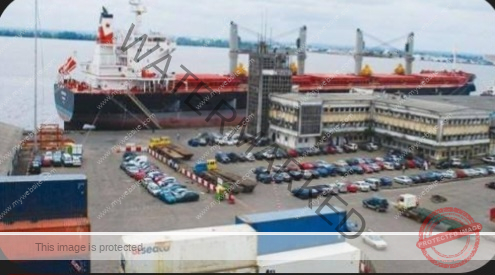
Victoria Must Not Become an Import Funnel This issue has particular significance for Victoria. A deep seaport can transform a small coastal economy. It can also destroy one. Everything depends on what flows through it. Consider the first model: A ship arrives. Containers are unloaded. Imported consumer products enter warehouses. Trucks distribute them throughout the country. Citizens purchase them. Importers collect margins. Government collects customs duties. Foreign exchange leaves the economy.Another ship arrives. The cycle repeats. The port becomes very busy. GDP may increase. Retail activity may increase. Yet the port has become an extremely efficient machine for transferring domestic purchasing power toward foreign productive systems.
Now consider another model. Agricultural products arrive from the interior. Timber enters engineered-processing facilities. Cocoa enters food-processing plants. Fish enters cold-storage and processing systems. Palm products enter refining and manufacturing facilities. Locally fabricated products arrive from industrial parks. Ambazonian companies package, certify, brand, finance, and export those goods. Ships leave Victoria carrying products whose value was substantially created inside the country. Foreign exchange enters. Workers are paid. Domestic suppliers grow. Banks finance expansion. Engineering firms maintain equipment. Government collects taxes from productive activity. Companies reinvest. The port remains busy.
But now it is performing an entirely different economic function. One port imports dependency. The other exports productivity. Victoria must become the second. Tiko Must Be Connected to the Same Productive System Tiko should not be treated simply as another airport. Its strategic role should be connected to an integrated Victoria–Tiko industrial and logistics corridor. Air cargo should support high-value agricultural exports, pharmaceuticals, technology products, specialized manufacturing components, flowers, fresh foods, medical logistics, time-sensitive goods, and regional business movement.
The airport, agro-industrial zone, transport corridors, digital infrastructure, energy systems, and Victoria seaport should operate as components of one productive system. A port without industry is incomplete. An airport without production is incomplete. A highway without productive destinations may simply accelerate imports. Infrastructure has no independent economic morality. Its value depends upon what the system is designed to carry. Bamenda Must Not Become Merely a Consumer Market The same principle applies inland. Bamenda should not simply become a large commercial market into which imported goods flow from the coast.
Its highland agricultural economy, universities, professional population, entrepreneurship, geographic position, and connections toward Nigeria create opportunities for agro-processing, food manufacturing, knowledge industries, logistics, construction materials, education, professional services, technology, and regional trade.
Mamfe can serve as a major inland and cross-border connector. Other counties and LGAs should develop around comparative productive advantages rather than becoming identical collections of imported retail goods. The national economy should therefore be conceived as a network of productive regions linked to domestic and international markets. That is very different from designing a capital city and expecting development to radiate outward automatically. Protect Industry, but Do Not Protect Failure
There is another danger. Once governments discover industrial policy, they often move from one extreme to another. Unrestricted imports can destroy emerging domestic industries. But permanent protection can create inefficient monopolies that survive only because consumers are forced to purchase expensive, inferior products.
Ambazonia should avoid both mistakes. Strategic industries may deserve temporary protection. But protection must have conditions. A company receiving tariff protection should demonstrate rising productivity. It should train workers. It should reinvest. It should improve quality. It should meet measurable domestic-content targets where practical. It should move toward export competitiveness. It should not be protected forever merely because it employs politically connected owners. Industrial policy should have performance tests and sunset provisions. Government should protect learning, not incompetence.
Government Procurement Can Build Industry One of the most powerful industrial tools would not necessarily be tariffs. It would be government purchasing. Every new state will need enormous quantities of goods: school furniture, uniforms, hospital supplies, construction materials, electrical equipment, office furniture, road materials, vehicles, food, information systems, water infrastructure, telecommunications equipment, and public housing components.
If government imports everything, public expenditure becomes a mechanism for developing foreign factories. If carefully designed procurement rules encourage competitive domestic production, the same expenditure can create local industries. The question should therefore become: Whenever the state spends one dollar, how much productive capacity remains behind after that dollar is gone? That is a much more sophisticated measure of public investment than simply asking whether the project was completed.
Foreign Investment Must Pass a Productive Sovereignty Test
A future investment authority should examine major foreign investments against a simple national standard. Does the investment create productive employment? Does it create skills? Does it transfer technology? Does it establish domestic suppliers? Does it process local resources? Does it generate exports? Does it retain meaningful value inside the economy? Does it strengthen infrastructure that other domestic companies can use? Does it create environmental or fiscal liabilities that citizens will later inherit?
Who owns the productive asset? Who owns the land? Who owns the data? Who controls the intellectual property? Who receives recurring cash flow? Where do profits go? What happens when tax holidays expire? Who operates the facility twenty years later? And most importantly: Is Ambazonia more capable after the investor leaves than it was before the investor arrived? If the answer to that final question is no, the agreement deserves another look.
The Five Tests of Readiness Meet at the Factory Gate
This issue reaches beyond economics. Constitutional legitimacy matters because someone must possess lawful authority to negotiate trade agreements, natural-resource concessions, tariffs, and investment contracts. Administrative effectiveness matters because customs rules, product standards, procurement requirements, tax systems, competition laws, and rules of origin are useless if they cannot be enforced.
Civilian protection matters because economic destruction and unemployment can destabilize communities almost as surely as physical insecurity. Productive capacity is obviously central because sovereignty ultimately depends upon the ability of a people to produce, maintain, finance, repair, and improve the systems upon which their society depends.
External relations matter because trade agreements can either widen national options or quietly create new forms of dependence. The China shock therefore is not merely an economic story. It is a test of state readiness. Do Not Export the Goose and Import the Eggs There is a basic principle that every resource-rich African economy should understand. The productive source matters more than the first transaction.
A mine is not valuable merely because ore can be sold. A forest is not valuable merely because trees can be exported. A port is not valuable merely because containers move. A cocoa farm is not valuable merely because beans have a world price. A young population is not valuable merely because labor is inexpensive. A university is not valuable merely because it awards degrees. The national question is always: What recurring productive system can be built around the asset?
The country that owns the productive source but repeatedly allows somebody else to capture processing, finance, technology, branding, distribution, and intellectual property eventually discovers that formal ownership and economic power are not the same thing. Africa has lived this lesson for too long. Ambazonia should not volunteer to repeat it.
The China Shock Is Actually an Ambazonian Warning. What is happening across Africa should be treated as an early warning. Chinese manufacturers are not waiting for African states to develop industrial strategies. American policymakers are not waiting. European companies are not waiting. Global capital is not waiting. Markets move toward opportunity.
The question is whether Ambazonians will organize themselves before those forces determine the structure of the economy for them. A future country that begins without an industrial strategy may discover that its industrial strategy has already been written—in Beijing, Washington, London, Paris, Brussels, Dubai, or corporate boardrooms elsewhere. That is why economic planning cannot wait until independence.
The intellectual architecture must come first.
What should be produced domestically? What can be imported efficiently? Which industries deserve temporary protection? Which resources should not leave without minimum processing? Which strategic assets require domestic participation? What percentage of major infrastructure spending should develop local skills? How should foreign investors be evaluated? Which industries could realistically compete in West and Central African markets? How should Victoria, Tiko, Bamenda, Mamfe, and other productive centers be connected? What technical schools and universities must be built around those industrial objectives? Those are independence questions just as surely as constitutional design and diplomacy are independence questions.
A Flag Over the Marketplace Is Not Enough
The greatest economic mistake would be to assume that sovereignty arrives automatically with political recognition. It does not. A country can own its flag while foreigners own its mines. It can possess borders while outsiders control its banking. It can possess a port while importing almost everything that moves through it. It can educate engineers who spend their careers maintaining equipment designed, financed, owned, and replaced elsewhere. It can export resources while borrowing money to purchase the finished products manufactured from those resources. It can call itself independent while depending upon others for food, fuel, medicine, technology, transportation, finance, communications, and industrial equipment.
That is sovereignty on paper. Productive sovereignty is harder. It requires factories. It requires farms that feed industry. It requires reliable electricity. It requires technicians. It requires engineers. It requires financing. It requires standards.It requires ports designed around exports. It requires domestic entrepreneurs capable of becoming regional corporations. It requires universities connected to the productive economy. It requires disciplined government. And it requires leaders willing to ask foreign partners a question African governments too often fail to ask: What will our people know how to do after this agreement that they could not do before it?Choose Production
China will pursue China. America will pursue America. Europe will pursue Europe. No serious Ambazonian should be offended by that. The responsibility of an Ambazonian government would be to pursue Ambazonia. Trade widely. Welcome investment. Purchase useful technology. Build relationships with competing powers. Take advantage of Chinese market access. Seek access to American markets. Participate in African continental trade. Invite factories. Invite universities. Invite capital. Invite engineers. Invite ideas.
But never confuse the arrival of foreign goods with development. Never confuse a crowded port with industrialization. Never confuse consumption with prosperity. Never export a productive asset merely because somebody offers quick cash. And never allow a new republic to become a shopping center surrounded by resources it does not transform. The lesson of the China shock is therefore larger than China.
It is about what happens when one country develops productive capacity faster than another country develops the ability to defend and expand its own. Ambazonia should learn that lesson before it has to pay for it. Political independence may determine who raises the flag. Economic sovereignty will determine who owns the factory beneath it. And in the long run, that may be the harder independence to win.
Timothy Enongene, Associate Editor-in-chief The Independentist News