Commentary

Commentary

50 Days of Shadows: The Cost of the Invisible Presidency in Yaoundé

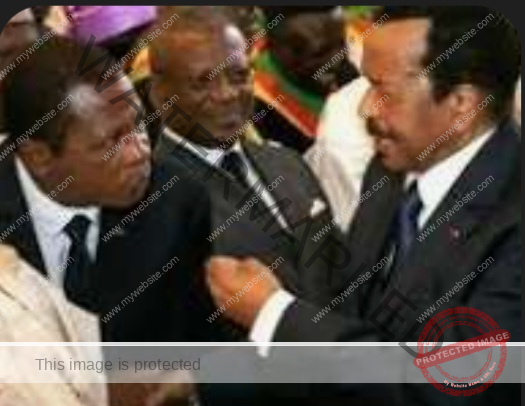
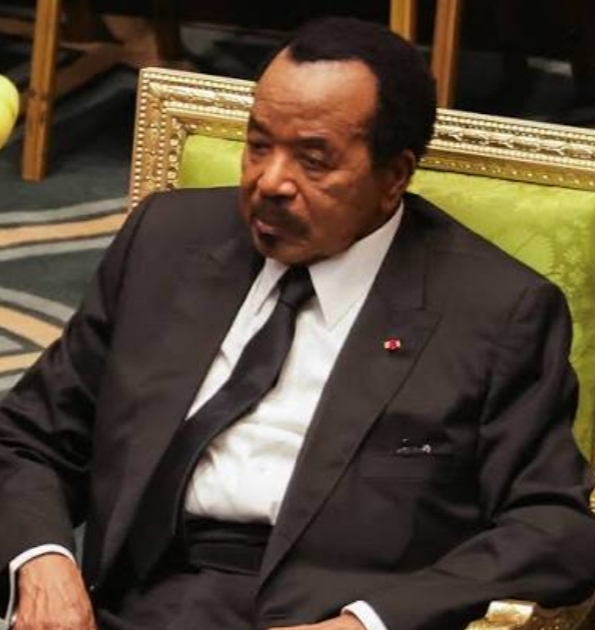
The cost of an invisible presidency extends beyond political embarrassment. It weakens public trust. It undermines constitutional legitimacy. It encourages factional competition. It raises doubts about military command. It damages investor confidence. It intensifies succession fears. It exposes the fragility of state institutions. By Carl SandersGuest Writer, Independentist NewsSoho, LondonFifty Days Without Public Proof LONDON

Read More
Commentary

THE GHOST SIGNATURES OF ETOUDI: Absentee Leadership, Questions Over Presidential Authority, and the Conflict in Ambazonia

Governments are strongest when authority is transparent, constitutional processes are respected, and citizens are not left to speculate about who is making decisions in their name. Until greater clarity emerges, questions surrounding executive authority are likely to persist, not only within Cameroon but also among regional observers and the international community. By Carl SandersGuest Writer,

Read More
Commentary

WHEN THE PEOPLE BECOME THE COUNTERINTELLIGENCE NETWORK Part IV: When the People Become the Intelligence Network From the Sahel and Senegal to the Takembeng Wall Around John Fru Ndi

The peoples of the Sahel understood part of it when they began questioning foreign arrangements that appeared incapable of delivering security or sovereignty. Their continuing responsibility is to scrutinize those who replaced the old order with equal determination. Ambazonia must gather these lessons into a disciplined system. The Home Front should observe without becoming a

Read More
Commentary

WHO IS “MONSIEUR AFRIQUE”? Arnaud Suquet and the Reinvention of French Power on a Changing Continent. A Portrait of France’s New Man for Africa

France now speaks of listening, humility, partnership and reciprocity. Its representatives engage youth groups, entrepreneurs, artists, academics and technology leaders. They increasingly operate beyond the traditional Francophone sphere. Some are learning African languages. These changes should not be dismissed. Diplomacy evolves, and meaningful cultural engagement can create genuine understanding. By Ali Dan Ismael, Editor-in-chief The

Read More
Commentary

THE PRODUCTIVE REPUBLIC SERIES Part III: Who Benefits from Bamenda’s Economy?The Main Market, Colonial Extraction, Public Assets, and the Struggle to Restore Economic Power to the People

Bamenda’s recovery cannot be measured only by reconstructed buildings, reopened roads, new power lines, rehabilitated markets, or recommissioned machinery. It must also recover public trust. It must recover local accountability. It must recover the principle that public borrowing creates public value. It must recover the dignity of work. It must recover confidence that rules will

Read More
Commentary

THE PRODUCTIVE REPUBLIC SERIES Part II: From Bamenda to National Productive Sovereignty, How the Sako Administration Could Reduce the Costs of Money, Energy, Labor, Transportation, and Institutional Uncertainty

The Sako administration should therefore evaluate and reduce the cost of money, the effective cost of reliable energy, the cost of transportation, and the unit cost of productive labor. It should reduce the fifth cost—uncertainty—through constitutional government, transparent institutions, enforceable contracts, civilian protection, and professional administration. By Ali Dan Ismael, Editor-in-chief The Independentist News This

Read More
Commentary

How the Sako Administration Can Restore Power, Protect Enterprise, Strengthen Healthcare, and Jump-Start the Highland Economy

Bamenda must no longer be viewed only as a conflict-affected city, a political stronghold, or a large marketplace. It must become a national center of production, healthcare innovation, knowledge, and enterprise. Its farmers must supply processing industries. Its markets must become enterprise platforms. Its universities must generate businesses and technology. Its financial institutions must mobilize

Read More
Commentary

WHEN THE PEOPLE BECOME THE COUNTERINTELLIGENCE NETWORK Part III: Ambazonia’s Costly Education in Infiltration, From Fragmented Movements and the Nera Ten to the Unanswered Questions of Political Money

Ambazonia has learned that a leader can be captured, a faction can be manipulated and money can become a weapon. It must now learn the other side of the lesson: When legitimate institutions remain rooted in an informed people, the population itself can become the strongest intelligence network. By Ali Dan Ismael, Editor-in-chief The Independentist

Read More
Commentary Condolence message

WHEN RELIGION BETRAYS ETHICS Part I: The Emptying Churches of the West, How Institutional Christianity Lost Moral Authority, Prosperity Preachers Commercialized God, and Spirituality Rose from the Ruins

The rise of spirituality, agnosticism, atheism, and religious non-affiliation should therefore be understood as a warning. Where religion refuses reform, people will seek meaning elsewhere. Where the church protects power, people will protect themselves from the church. Where religious leaders sell God, people will conclude that God has become another commercial product. By Judith ElondoAuthor

Read More
Commentary

WHEN THE PEOPLE BECOME THE COUNTERINTELLIGENCE NETWORK (Part II) The Hidden Architecture of Foreign Influence How Money, Education, Professional Networks and Cultural Diplomacy Shape Political Loyalty

The old empires no longer need to rule every territory directly. They can influence the people who regulate its resources, educate its elites, define its international legitimacy and negotiate its economic future. They can celebrate a people’s culture while ignoring its political voice. They can speak Pidgin in the marketplace, speak Lamnso at a cultural

Read More