










Commentary

We are home to news on Cameroon and the CEMAC region. We are dedicated to honest and reliable reporting. We are the voice of the Cameroonian people and their fight for freedom and democracy at a time when the Yaoundé government is silencing dissent and suppressing democratic voices.

A journalist may bring attention. A diaspora may provide resources. But ultimately, the people seeking sovereignty must construct the political, economic, institutional, and civic capacity capable of sustaining it. A declaration begins a national project. Perseverance sustains it. Solidarity strengthens it. Diplomacy opens space for it. Institutions give it substance. And a prepared people gives it a future.
By Timothy Enongene
Associate Editor-in-Chief, Independentist News
On Special Assignment in the Dominican Republic and Haiti
As Amazon associate this site earns from qualifying purchases
Get your back to school via Amazon
https://www.amazon.com/s?k=back+to+school&crid=3RPWOE458PDIV&sprefix=Back%2Caps%2C2724&linkCode=ll2&tag=njokings-20&linkId=0efb70ea4a06f05addf6e55ccf7f09bb&language=en_US&ref_=as_li_ss_tl
History occasionally presents lessons that travel far beyond the countries and generations in which they were first written. The relationship between Haiti and the Dominican Republic during the nineteenth-century Dominican Restoration offers one such lesson, particularly for peoples engaged in prolonged struggles for political self-determination.
The Dominican Republic declared independence from Haiti in 1844. Yet independence did not settle the country’s political future permanently. In 1861, under President Pedro Santana, the Dominican Republic was annexed to Spain. That decision produced a new struggle—not for independence from Haiti, but for the restoration of Dominican sovereignty from Spanish rule. Beginning in 1863, Dominican restorationists confronted a vastly superior imperial power while struggling with shortages of weapons, money, manpower, and institutional capacity. Spain nevertheless withdrew in 1865, and Dominican sovereignty was restored.
The lesson is not that history repeats itself mechanically. It does not. The Dominican experience belongs to its own time, geography, and political circumstances. What it provides are principles worth examining: perseverance, regional solidarity, political organization, diplomacy, historical consciousness, and preparation for self-government.
Haiti’s Role: Solidarity Without Substitution
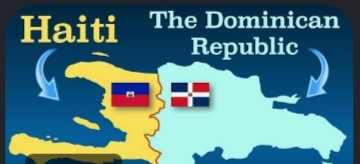
One of the most instructive aspects of the Dominican Restoration was Haiti’s role under President Fabre Geffrard. Haiti became an important source of refuge and assistance for Dominican restorationists. Fighters could cross the border, obtain supplies, reorganize, and survive periods when circumstances became exceptionally difficult.
Haiti did not fight the entire war for the Dominicans. Nor did Haitian assistance relieve Dominican restorationists of responsibility for their own political objective. Haiti instead provided strategic space and solidarity that helped the Dominican resistance survive. That distinction matters.
External support can strengthen a national movement, but it cannot substitute permanently for the organization, credibility, responsibility, and determination of the people seeking political change themselves. Haiti could have remained entirely neutral. Supporting Dominican restorationists carried risks, including the possibility of confrontation with Spain.
Yet Haitian leaders understood that the re-establishment of a European colonial power immediately across their border had implications for Haiti’s own security. Haiti had itself emerged from one of history’s most consequential anti-slavery revolutions. The consolidation of European colonial power on Hispaniola therefore represented more than a Dominican issue.
This does not require romanticizing Haiti or ignoring the profound challenges that Haiti itself faced. It simply demonstrates an enduring principle of international affairs: neighbouring peoples sometimes recognize that another people’s political fate may also affect their own long-term security and interests.
Historical Memory Is Complicated
The history of Haiti and the Dominican Republic also cautions against simplistic national narratives. The two countries have known conflict, occupation, migration, resentment, cooperation, shared ancestry, cultural exchange, and solidarity. These realities can exist simultaneously. A mature society does not need to erase uncomfortable history in order to preserve national identity.
Historical literacy requires distinguishing the Dominican declaration of independence from Haiti in 1844 from the later Dominican Restoration against Spain following the 1861 annexation. Conflating the two produces a distorted understanding of both Dominican and Haitian history.
The broader lesson for Ambazonians is equally important: political movements strengthen their credibility when they confront history accurately—including facts that may complicate preferred narratives. Historical truth ultimately provides a stronger foundation than political mythology.
A Declaration Is Not Yet a State
For Ambazonians, perhaps the most consequential lesson lies here. The 1 October 2017 declaration of restored independence represented an assertion of a political objective. It did not, by itself, complete the work of nation-building. No declaration alone creates a functioning sovereign state.
A durable national project eventually requires legitimate institutions, competent administration, diplomacy, economic capacity, constitutional arrangements, credible leadership, social cohesion, historical documentation, security, public finance, courts, infrastructure, and a clear understanding of what the proposed political order intends to build. The longer a political struggle continues, the more important these questions become.
A movement cannot define itself indefinitely only by what it opposes. At some point, it must demonstrate what it intends to construct. That is the transition from protest to statecraft.
Perseverance Without Romanticizing Conflict
The Dominican Restoration also teaches perseverance, but perseverance should not be confused with romanticizing war. The restorationists suffered serious setbacks. Those setbacks did not automatically become political surrender. They reorganized, preserved their objective, adapted to changing circumstances, and continued until Spain eventually withdrew. History repeatedly demonstrates that national political questions are rarely resolved by a single event, a single leader, or even a single generation.
This is precisely why institutions matter.
A national project that repeatedly collapses whenever its leadership changes has not yet developed the institutional durability required for sovereignty. The objective must therefore be larger than personalities. Institutions, rules, records, succession mechanisms, and administrative capacity must survive individual leaders. Build Relationships Before You Need Them
Perhaps the most practical diplomatic lesson from Haiti’s assistance to the Dominican Restoration is simple: Build relationships before the moment of crisis. International solidarity rarely appears spontaneously when it is suddenly required. It is cultivated over time through diplomacy, credibility, intellectual exchange, humanitarian engagement, respect for international norms, consistent communication, and relationships with governments, institutions, scholars, journalists, civil society, and foreign publics.
A people seeking international understanding must be capable of explaining its history coherently. It must preserve evidence. It must document constitutional and historical arguments. It must engage foreign publics in language those publics understand. And it must demonstrate that its political aspirations are accompanied by responsible thinking about governance and regional stability.
The Dominican restorationists benefited from a neighbouring country willing to provide support. Ambazonians should therefore understand the strategic importance of building legitimate relationships throughout Africa, the Caribbean, Europe, North America, and elsewhere.
Solidarity Must Never Become Dependency
The same history carries a warning. Ambazonia cannot construct its future around the expectation that somebody else will eventually arrive to rescue it. Haiti helped Dominican restorationists, but Dominicans still bore responsibility for the Dominican national project.
Likewise, friends, allies, diplomats, international organizations, humanitarian institutions, journalists, civil society, and diaspora communities may help create political and humanitarian space. None can permanently substitute for the institutional capacity of the people who ultimately expect to govern themselves.
This distinction between solidarity and dependency may be one of the most important lessons of the entire Dominican experience. A sovereign people must eventually possess the capacity to carry its own responsibilities. The Struggle Must Become a Project for Something That leads to a more difficult question.
What exactly is the political objective supposed to produce? What kind of government would emerge? What would the constitution guarantee? How would political power change hands peacefully? How would corruption be controlled? Who would collect taxes and manage public funds? How would courts remain independent? How would political opponents be protected? How would displaced people return? How would communities devastated by conflict be rebuilt? How would the diaspora participate in development? What would be the role of women, young people, civil society, traditional institutions, minorities, entrepreneurs, professionals, and local communities?
How would relations with neighbouring states—including Cameroon and Nigeria—be managed? And perhaps most importantly: how would Ambazonia become economically productive rather than permanently dependent upon external assistance? These questions cannot all be postponed until some undefined future date. Preparation for sovereignty begins before sovereignty is achieved.
A People Must Become Custodians of Their Own History
The Dominican experience also demonstrates the importance of historical stewardship. A people that allows others alone to record, interpret, and define its political history risks eventually losing control of the narrative surrounding its own existence. That does not mean manufacturing propaganda. It means doing precisely the opposite. Serious scholarship must distinguish evidence from mythology, documented events from rumours, criticism from disinformation, and historical interpretation from political assertion. A credible national movement must be willing to examine its own mistakes with the same seriousness with which it examines the mistakes of others.
If Ambazonia expects scholars, governments, journalists, and international institutions to take its historical arguments seriously, then Ambazonians themselves must preserve their historical record to a standard capable of surviving scrutiny.
Sovereignty Is More Than Separation
Haiti itself offers another warning. A country may achieve political independence and still struggle profoundly with governance, economic development, institutional weakness, foreign pressure, and political instability. Political separation alone therefore cannot be the final measurement of sovereignty.
A genuinely sovereign society must eventually demonstrate the capacity to govern responsibly, protect citizens, maintain institutions, administer justice, create economic opportunity, manage public finances, protect infrastructure, develop human capital, and contribute constructively to its region. The objective should not be to create another permanently dependent state. The objective should be to create a society eventually capable not merely of receiving solidarity from others, but of extending solidarity to others.
From Liberation Politics to Statecraft
The deepest lesson of the Dominican Restoration is therefore not simply that Haiti helped the Dominican Republic. It is that national aspirations survive when internal determination is reinforced by external relationships; when political setbacks do not automatically destroy long-term objectives; and when a national movement gradually develops the institutions required to convert political aspiration into responsible self-government.
Ambazonians should study this history not because the Dominican experience can be copied. It cannot. But its principles travel well: Perseverance. Organization. Solidarity. Historical consciousness. Diplomacy. Institutional preparation. Nearly a decade after 1 October 2017, the central question is therefore larger than whether the declaration will be remembered. It will be remembered. The more consequential question is whether future generations will inherit alongside that declaration the institutions, knowledge, discipline, economic capacity, civic culture, and political maturity necessary to transform aspiration into a sustainable national future.
The Lesson That Endures
Ambazonia should seek solidarity without dependency; perseverance without recklessness; diplomacy without surrender; unity without enforced conformity; and sovereignty accompanied by responsibility. The objective cannot simply be replacing one authority with another.
It must be building a society in which freedom is protected by institutions, justice has functioning mechanisms, citizenship carries rights and responsibilities, public office is accountable, economic opportunity expands, and future generations are not condemned to inherit unresolved political wounds.
The history of Haiti and the Dominican Restoration offers no guarantee and no shortcut. It offers something more useful: a lesson in endurance and preparation. A neighbour may provide refuge. A friend may open a diplomatic door. An international institution may offer assistance. A journalist may bring attention. A diaspora may provide resources. But ultimately, the people seeking sovereignty must construct the political, economic, institutional, and civic capacity capable of sustaining it. A declaration begins a national project. Perseverance sustains it. Solidarity strengthens it. Diplomacy opens space for it. Institutions give it substance. And a prepared people gives it a future.
As Amazon associate this site earns from qualifying purchases
Get your back to school via Amazon
https://www.amazon.com/s?k=back+to+school&crid=3RPWOE458PDIV&sprefix=Back%2Caps%2C2724&linkCode=ll2&tag=njokings-20&linkId=0efb70ea4a06f05addf6e55ccf7f09bb&language=en_US&ref_=as_li_ss_tl
Timothy Enongene
Associate Editor-in-Chief, Independentist News
On Special Assignment in the Dominican Republic and Haiti
Share This Post:
A chat with Adelle Nazarian of The Western Journal: Ambazonia 2050 & Beyond, America, Diplomacy, and the Future of Southern Cameroons
A NEW WEEK, A RENEWED FAITH: A PRAYER FOR AMBAZONIA
Related Post
THE SECOND RETURN: FROM THE PAIN OF SEPARATION TO
WHEN THE REGULATOR BENDS: WHAT THE VISION 4 AFFAIR
PROPHECY, POLITICS, AND THE AMBAZONIAN QUESTION (PART II) :
IF SOMALILAND MATTERS TO WASHINGTON, WHY NOT SOUTHERN CAMEROONS?
A CALL FOR GENERATIONAL RENEWAL: From Individual Leadership to
The Government of the Federal Republic of Ambazonia (in