













We are not asking America simply to choose our side. We are asking America to examine whether our future interests can meet. That is ultimately what I mean by the movement from survival to significance: Moving from asking who will save us to asking what we are prepared to build.
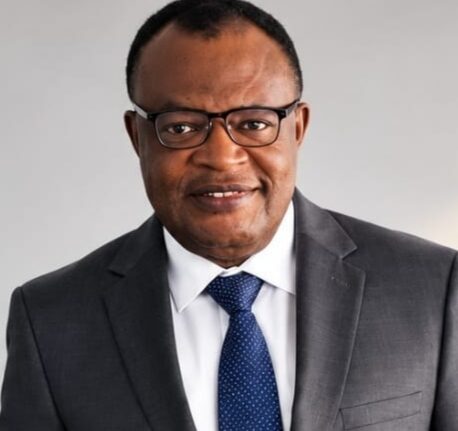
By Martin S. Mungwa, PhD, MBA, P.E., F.ASCE
Author, Ambazonia 2050 & Beyond
Commissioned Secretary of State for Communications and Diplomacy, Government-in-Exile of the Federal Republic of Southern Cameroons–Ambazonia and Contributor for The Independentist News
As Amazon associate this site earns from qualifying purchases
Go for your back to school on Amazon
My interview with Adelle Nazarian of The Western Journal centered on a fundamental question: Why should Americans care about Southern Cameroons–Ambazonia, and what could a peaceful, democratic, productive Ambazonia contribute to a future strategic relationship with the United States?
The discussion went beyond the immediate conflict. It addressed the historical roots of the Southern Cameroons question, the strategic interests of the United States, critical-mineral supply chains, the danger of extractive economic systems, the requirements for credible peace negotiations, the responsibilities of future Ambazonian institutions, and the central ideas developed in my four-volume work, Ambazonia 2050 & Beyond.
My purpose was not simply to describe what has happened to Southern Cameroons. It was to explain what Southern Cameroons–Ambazonia could become.
Why I Wrote Ambazonia 2050 & Beyond
I explained that Ambazonia 2050 & Beyond is not simply an argument for political independence. It is a four-volume blueprint for moving Southern Cameroons–Ambazonia from survival to significance.
I wrote the work because political freedom by itself does not provide electricity, hospitals, functioning courts, education, jobs, transportation, public safety or effective institutions. The harder questions begin after political freedom is achieved.
Who governs? Who signs? Who pays? Who owns the productive source? Who maintains the infrastructure? Who is accountable when a system fails? Who creates jobs? Who protects property? Who keeps the lights on? These are not secondary questions. They are the practical questions upon which the survival of a future state would depend.
My central argument is straightforward: Liberation capacity is not governing capacity. Political movements can mobilize people around freedom. Governing institutions must keep society functioning after that freedom is obtained. That is why Ambazonia 2050 & Beyond moves from the question of political sovereignty toward the more demanding questions of governing capacity and productive sovereignty. Freedom gives a people the opportunity to build a country. It does not build the country for them.
What Is the Root Cause of the Southern Cameroons Conflict?
One of the most important parts of the interview concerned the historical origins of the conflict. I emphasized that the root cause is deeper than language. Southern Cameroons was a British-administered United Nations Trust Territory. In 1961, it entered a political association with the already independent Republic of Cameroun under a federal arrangement. Southern Cameroons was the much smaller partner and lacked durable international guarantees capable of protecting its constitutional position against eventual centralization and absorption. The federation was abolished in 1972, and centralization subsequently deepened.
For that reason, describing the problem merely as an English-versus-French dispute does not adequately explain it. The underlying issues concern constitutional order, political identity, consent, self-government and the character of the 1961 arrangement. My message to Americans was therefore to study the historical record rather than accepting slogans from either side. Before calling it a language crisis, examine the constitutional history.
Why Should America Care About Southern Cameroons–Ambazonia?
I made it clear that I am not asking the United States to regard Ambazonia as another charity project. The more important question is whether American and Ambazonian strategic interests can intersect. Southern Cameroons–Ambazonia sits in the Gulf of Guinea, has Atlantic access, lies next to Nigeria and possesses natural-resource, agricultural and human-capital potential. It also has a significant English-speaking diaspora, including people already contributing professionally and economically in the United States.
Those realities create legitimate American interests involving maritime security, energy, trade, supply-chain diversification, economic development and regional stability. America needs reliable international partners capable of increasingly carrying their own weight. A peaceful, democratic, rule-of-law-oriented and economically productive Southern Cameroons–Ambazonia should therefore be evaluated not merely as a humanitarian concern, but as a potential strategic and commercial partner.
My message was: I am not asking America to rescue Ambazonia. I am asking America to evaluate a potential partner.
Partnership, Not Permanent Dependency
An important follow-up question was whether supporting Ambazonia would eventually mean asking American taxpayers to finance another nation-building project. My answer was no. The philosophy behind Ambazonia 2050 & Beyond is almost the opposite.
A future Ambazonia must develop the capacity to finance and sustain itself. America can contribute through diplomacy, private investment, university partnerships, technology, trade, institutional cooperation and business relationships. But the objective must be to build a productive Republic capable of generating its own revenue and supporting its own institutions.
The critical test of development assistance is therefore: After outside assistance leaves, what remains productive? If nothing productive remains, dependency has merely been reorganized. The objective should be partnership, not permanent dependency.
Critical Minerals and America’s Strategic Supply Chains
We also discussed the growing importance of critical minerals and strategic supply chains to the United States. I deliberately avoided making mineral claims beyond what can be supported by verified geological and commercial evidence.
The larger opportunity involves Southern Cameroons–Ambazonia’s Atlantic geography, natural resources, agriculture, potential mineral development and possible role in diversified international supply chains.
Where commercially viable critical resources are verified, any development framework should involve transparent contracts, environmental safeguards, local workforce development, competitive processing, infrastructure development and technology transfer. America needs more resilient and diversified supply chains. Ambazonia would need productive capability, infrastructure and technology.
Those two interests could potentially meet. But the central principle must be that resource development leaves something durable behind.The strategic asset is not only what comes out of the ground, but what productive capability remains behind.
Preventing Another Extractive Economy
This led directly to one of the most important ideas in Ambazonia 2050 & Beyond: productive sovereignty. Many resource-rich countries remain poor because extraction is confused with development. The important questions must therefore be asked before major contracts are signed: Who owns the productive source? Who processes the resource? Who controls the technology? Who owns the intellectual property? Who receives the recurring economic benefit? Who owns the infrastructure? Does capital circulate within the domestic economy or disappear abroad? And what happens environmentally after extraction ends?
If billions of dollars in resources leave a country while the communities surrounding those resources remain poor, technologically dependent and economically marginal, development has failed. That is why the central principle is: Extraction must leave capability behind.
A successful resource agreement should not merely generate royalties. It should contribute to skills, infrastructure, technology, businesses, institutional knowledge and productive ownership.
Is the Economic Vision Capitalist or State-Controlled?
I described the economic philosophy of Ambazonia 2050 & Beyond as fundamentally enterprise-oriented. I support private ownership, entrepreneurship, investment, enforceable contracts and competitive markets. But markets require an operating system. Businesses cannot prosper without functioning courts, reliable infrastructure, security, education, energy and transparent regulation.
Government therefore has an important but limited role. It should establish fair rules, provide essential public infrastructure and protect the legal environment within which enterprise can flourish. It should not become the permanent owner of ordinary productive life. Government establishes the playing field; citizens and businesses create the prosperity.
How Can Ambazonia Avoid Becoming Another Corrupt State?
I rejected the assumption that independence automatically produces good government. It does not. There is no automatic guarantee that an independent Ambazonia would be free of corruption. That is precisely why institutional design matters.
Public contracts must be transparent. Courts must be independent. Government finances must be audited. Procurement must be accountable. Officials must remain subject to law and removable through constitutional processes. But corruption must also be understood more broadly.
A transaction can be technically legal and still transfer a country’s productive future abroad. A contract that permanently strips a country of strategic economic capability can be damaging even if no official receives an illegal payment. So the problem is not simply preventing theft. It is also designing institutions capable of protecting the long-term productive interests of the population. Changing the flag without changing the system changes very little.
Protecting Minorities and Political Opponents
A future Ambazonian constitution must protect rights that belong to citizens regardless of ethnicity, language, religion, county or political affiliation. Freedom of speech, conscience, religion, property and political participation must protect opponents as well as supporters.
A constitution should be designed with the understanding that someday people with whom we strongly disagree may hold political power. That is precisely when constitutional rights become most important. We cannot demand rights for ourselves and make those rights smaller for somebody else.
Religious Freedom
The same principle applies to religion. Faith can help form conscience and moral responsibility, but government should protect rather than control religious belief. Christians, Muslims, adherents of traditional faiths, members of other religions and people who profess no religion should enjoy equal citizenship and protection under the law. Faith can form conscience; government must protect conscience.
How Should the Conflict End?
On diplomacy, I argued for serious dialogue between representatives of Southern Cameroons–Ambazonia and La République du Cameroun. The mediator or facilitator should be mutually acceptable to both sides.
The negotiations should begin without preconditions, because rigid preconditions can prevent meaningful negotiations from beginning at all. Given the imbalance between the parties, I would also favor an international guarantor or guarantor group capable of supporting implementation of whatever settlement is eventually reached.
The objective cannot simply be another meeting. It cannot be another photograph. It must be durable and implementable peace. Dialogue must produce more than a photograph; it must produce enforceable peace.
What Should the United States Actually Do?
I did not ask Washington to begin with military intervention. I did not ask for a blank check. I did not say the United States must begin with immediate recognition. I asked for something more practical: a serious strategic and historical assessment. Study the constitutional history. Study the humanitarian consequences. Study the Gulf of Guinea. Study the regional security implications. Study the economic potential. Study the diaspora. Study whether American diplomacy could help create space for credible mediation. The principle is simple: Study the case first, then make policy from evidence.
What Would I Tell President Donald Trump?
Asked what I would say if I had an opportunity to speak directly with President Donald Trump, my answer was: Mr. President, do not take my word for Ambazonia. Study it. Study the history. Study the Gulf of Guinea. Study our proximity to Nigeria. Study the diaspora. Study the humanitarian consequences. Study the economic potential. Then determine whether a peaceful, democratic and productive Southern Cameroons–Ambazonia could become a valuable American partner.
I would also ask the President to help create diplomatic space for credible talks through a mutually acceptable mediator, without preconditions. The request is not that America simply accept our conclusions. The request is that America examine the evidence.
Britain and France
Britain has a direct historical relationship with Southern Cameroons, while France remains highly influential within the surrounding region. Neither country should determine Ambazonia’s future. But both can contribute to historical clarity, peaceful dialogue and an internationally credible settlement. Inherited strategic relationships should not become reasons for permanent diplomatic silence. The former colonial powers should not choose our future, but they can help stop the past from imprisoning it.
What About China?
Ambazonia should welcome legitimate trade and investment from America, China, Europe, Africa and other partners. But partnership must never become strategic dependency. Ports, telecommunications, public data, energy systems, critical infrastructure and strategic resources require particular protection and diversified relationships. We should welcome partnership with the world while surrendering strategic control to no one.
Is Ambazonia Economically Viable?
Size alone does not determine whether a country can prosper. Smaller states can succeed through strong institutions, education, specialization, trade and disciplined public finance. Ambazonia would still have to demonstrate viability through productive industries, human capital, infrastructure, transparent government and strong regional economic relationships.
Smallness can even become an advantage when institutions are effective because coordination can become easier. Smallness is a constraint only when institutions fail to turn focus into capability.
What Happens the First Morning After Independence?
This may be one of the most important questions in the entire nation-building discussion. The answer is simple: Ordinary life must continue. Electricity must function. Water must flow.Hospitals must operate. Food must move. Telecommunications must work. Banks must open.Ports and customs must continue. Courts must function. Transportation must continue. Public safety must be maintained. Government must collect revenue and pay its workers. Independence must therefore be designed as an institutional transition, not merely celebrated as a political ceremony. The first test of sovereignty is whether ordinary life still works the next morning.
What Happens to Armed Groups?
A constitutional government cannot coexist indefinitely with competing private armed structures. A negotiated settlement would therefore require an agreed security transition, appropriate disarmament and reintegration, professional security-sector screening, protection of civilians and lawful accountability for serious abuses. Ultimately, legitimate coercive authority must return to institutions operating under constitutional law and civilian control. A liberation structure cannot become a permanent substitute for the rule of law.
Why Strong Provinces and Polycentric Government?
Excessive centralization creates political and economic chokepoints. If political authority, jobs, universities, investment and public resources all terminate in one capital city, the entire Republic becomes dependent upon one center.
My vision is therefore one sovereign Republic with strong provinces and empowered local institutions operating under common constitutional standards. That would distribute opportunity, administrative capability and political authority more broadly.
We cannot oppose excessive centralization in Yaoundé and reproduce it somewhere else. Preventing Another Powerful Presidency The answer is not to hope that every future president will be virtuous. The answer is to design institutions that do not require permanent presidential virtue.
That means separation of powers, independent courts, legislative oversight, transparent budgets, strong provinces, a professional civil service, free media and enforceable constitutional rights. Institutions must survive personalities. Good government should not depend upon always finding a good man.
Is Ambazonia 2050 & Beyond Realistic?
I described the work as a blueprint, not a prophecy. Some proposals will require feasibility studies. Some will require financing. Some will require constitutional authorization. Others will require democratic approval. The point of the blueprint is to identify major national questions before decisions become irreversible. It should be challenged, tested, improved and revised as evidence changes. A blueprint does not predict the future; it identifies what must work.
What Makes This Model Different?
Three ideas distinguish the model developed in Ambazonia 2050 & Beyond: Polycentric governance. Productive sovereignty. Institutional redundancy. Political authority should not depend upon one capital. The economy should not depend upon one resource. Infrastructure should not depend upon one corridor. Technology should not depend upon one foreign supplier. National continuity should not depend upon one political personality. The objective is resilience. A resilient Republic must have no single political, economic or institutional point of failure.
Could Ambazonia Reduce Migration Pressure?
A peaceful and economically productive Ambazonia could reduce migration driven by conflict and desperation. Migration itself is normal and can be beneficial. But people should not have to leave home simply in order to survive. Peace, employment, education, property rights, functioning institutions and entrepreneurship give people greater freedom to remain, return or invest. The most humane response to forced migration is to make home a place where people can build a future.
What Would Success Look Like by 2050?
Success cannot be measured only by GDP. It should be visible in ordinary life. It means constitutional freedom, functioning institutions, safe communities, reliable infrastructure, strong education, accessible healthcare, productive businesses, responsible environmental stewardship and citizens increasingly participating in ownership and wealth creation. Development must reach the household. A country’s success should be measurable at the kitchen table, not only in government statistics.
The Four Volumes of Ambazonia 2050 & Beyond The four-volume structure follows a deliberate progression.
Volume I — Building the Foundation
Volume I develops the national foundation: vision, constitutional architecture, human capital, agriculture, industry, infrastructure, transportation, energy, finance and productive ownership. Its central question is: What must be built first? Volume I designs the foundation.
Volume II — Converting Foundations Into Capability
Volume II asks how those foundations become functioning national capability. It examines institutions, resource transformation, technology and artificial intelligence, healthcare and biotechnology, and environmental resilience.
Volume II converts foundations into functioning capability.
Volume III — Protecting and Renewing the Republic Volume III places the Republic in motion through cities, culture and identity, constitutional security, innovation, entrepreneurship and strategic resilience. Its central question is how a Republic protects freedom while continuing to renew itself. Volume III protects and renews what the Republic has built.
Volume IV — Beyond 2050 Volume IV looks beyond 2050 toward 2100.
It examines strategic foresight, knowledge, technological change, institutional learning, cultural memory, environmental inheritance and responsibility toward future generations. It asks whether the Republic can continue learning after its founders have passed from the scene. Volume IV asks whether the Republic can keep learning after its founders are gone.
Why Should Anyone Believe the Blueprint?
Nobody should believe the blueprint simply because I wrote it. Test the assumptions. Examine the economics. Challenge the institutional architecture. Improve what is weak. Reject anything that cannot withstand evidence. A national blueprint becomes credible through scrutiny, not applause. I am not asking readers simply to believe the blueprint. I am asking them to test it.
The One Thing I Want Americans to Remember. If Americans remember only one thing from the conversation, I hope it is this: Do not see Southern Cameroons–Ambazonia only as another humanitarian crisis in Africa.
Ask whether a peaceful, democratic, self-reliant and productive Ambazonia could become a reliable Atlantic partner serving mutual American and Ambazonian interests. Our strongest argument is not only what happened to us. It is what we are capable of becoming. Judge Ambazonia not only by its suffering, but by its potential. From Survival to Significance
The deepest message of Ambazonia 2050 & Beyond is that the future cannot be built entirely around the question of who will save us. Political freedom matters profoundly. Historical justice matters. Peace matters.
But a durable nation must also learn to govern, produce, protect freedom, create prosperity and build institutions capable of surviving the generation that created them. We ask America to examine our history fairly, support conditions for credible peaceful dialogue and determine whether a free and productive Southern Cameroons–Ambazonia could become a valuable American partner.
We are not asking America simply to choose our side. We are asking America to examine whether our future interests can meet. That is ultimately what I mean by the movement from survival to significance: Moving from asking who will save us to asking what we are prepared to build.
As Amazon associate this site earns from qualifying purchases
Go for your back to school on Amazon
Martin S. Mungwa, PhD, MBA, P.E., F.ASCE
Author, Ambazonia 2050 & Beyond and contributor to The Independentist News





Leave feedback about this