









Commentary

We are home to news on Cameroon and the CEMAC region. We are dedicated to honest and reliable reporting. We are the voice of the Cameroonian people and their fight for freedom and democracy at a time when the Yaoundé government is silencing dissent and suppressing democratic voices.

The peoples of the Sahel understood part of it when they began questioning foreign arrangements that appeared incapable of delivering security or sovereignty. Their continuing responsibility is to scrutinize those who replaced the old order with equal determination. Ambazonia must gather these lessons into a disciplined system. The Home Front should observe without becoming a mob
By Ali Dan Ismael, Editor-in-chief The Independentist News
Part III examined Ambazonia’s costly education in infiltration: the fragmentation of successive organizations, the security catastrophe of the Nera Ten, unresolved controversies involving political money and the danger of allowing social media to become investigator, judge and executioner.
Those experiences reveal that leaders, organizations and communications systems can be penetrated. Money can influence decision-making. Ego can divide institutions. Coercion can compromise individuals. Fabricated evidence can turn patriots against one another.
But counterintelligence does not belong exclusively to governments, intelligence officers or political elites. A politically conscious population can become an extraordinary early-warning system. Citizens observe movements that officials overlook. Communities recognize unfamiliar actors. Journalists identify contradictions. Professionals trace financial and institutional relationships. Diaspora networks compare information across borders. Market women, drivers, students, clergy, traditional leaders and neighborhood residents often detect changes long before they appear in official reports.
This does not mean that citizens should become an undisciplined army of informants or social-media accusers. Popular vigilance without evidence can become mob justice. Rumor can destroy innocent people. Factional actors can manipulate public fear to eliminate rivals. The people become a genuine intelligence network only when observation is joined to political education, verification, lawful institutions and public trust.
Across Africa, governments and foreign powers are discovering that the population is no longer merely the object of intelligence operations. Citizens increasingly investigate those who govern them, question foreign relationships and resist political arrangements negotiated without their consent.
The experience of the Sahel demonstrates the power—and the danger—of popular geopolitical awakening. Senegal demonstrates how civic mobilization can help defend constitutional order. The Takembeng women of the Grassfields demonstrated something even more immediate: an organized community can physically and morally protect a leader when it believes that leader still embodies its struggle.
Together, these experiences offer Ambazonia a central lesson: The first line of national defense is not always stationed at a border or hidden inside an intelligence agency. Sometimes it stands in the marketplace, gathers outside a courthouse, watches the road into a neighborhood or surrounds the home of a threatened political leader.
Africa Is Learning to Watch Power
For generations, African citizens were expected to accept official accounts of political events with little opportunity for independent verification. Governments controlled radio and television. Security services classified almost everything. Foreign agreements were negotiated in secret. Military cooperation, mining concessions, currency arrangements and diplomatic commitments were treated as matters beyond public scrutiny.
When leaders disappeared, governments announced that they had traveled. When activists were arrested, officials denied holding them. When foreign troops entered strategic areas, citizens were told that the deployments served national security. When public resources were transferred through opaque contracts, the details remained hidden behind presidential privilege and commercial confidentiality. That environment is disappearing.
A photograph taken on a mobile phone can expose a deployment before a ministry acknowledges it. Satellite imagery can reveal construction at a military facility. Diaspora professionals can examine corporate registrations and court records abroad. Journalists can compare official statements with flight data, procurement documents and eyewitness accounts. Citizens can preserve speeches and expose contradictions years later.
Foreign powers and domestic regimes still possess enormous advantages. They control classified information, diplomatic channels, surveillance technology, financial systems and coercive institutions. But they no longer possess an absolute monopoly over political knowledge.
This transformation has changed the relationship between governments and the governed. The citizen is no longer merely watched. The citizen is also watching.
The Sahel and the Collapse of Automatic Deference
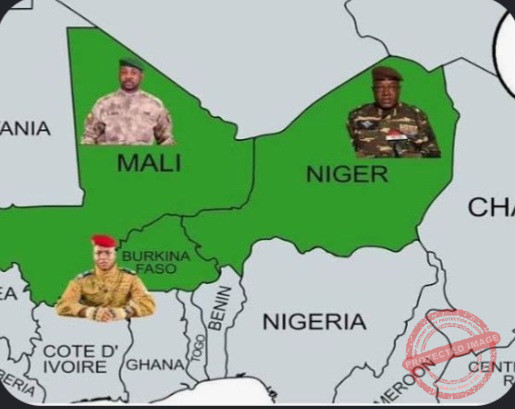
The political transformations across the Sahel have revealed a profound collapse of public confidence in both domestic elites and inherited foreign relationships. In countries such as Mali, Burkina Faso and Niger, many citizens came to believe that elected governments had failed to provide security, restrain corruption or exercise genuine sovereignty. Foreign military partnerships—particularly those involving France—were increasingly judged not by diplomatic language but by outcomes.
People asked a simple question: if foreign forces had operated in the region for years, why had insecurity continued to spread? The answer is more complicated than any slogan. Armed groups, weak institutions, local grievances, climate pressures, illicit economies and failures of governance all contributed to the deterioration. No single foreign power created the entire crisis, and replacing one external partner with another does not automatically produce sovereignty. Nevertheless, public perception became strategically decisive.
Demonstrators carried national flags, denounced foreign military influence and demanded a reorientation of state policy. Social media amplified allegations concerning foreign bases, resources and political interference. Diaspora voices challenged official narratives. Military governments then presented themselves as instruments of national recovery and anti-imperial resistance.
This popular support altered the diplomatic environment. Foreign governments could no longer assume that agreements signed by political elites would enjoy public legitimacy. Military partnerships that had once been treated as technical arrangements became subjects of mass political debate. The people had entered the geopolitical arena. Popular Sovereignty Is Not the Same as Military Rule 4t=The Sahel also offers a warning.
Public rejection of foreign domination does not automatically make every new government accountable. A population may correctly identify the failures of an old system while placing excessive trust in those promising to replace it.
Military officers may speak the language of sovereignty while restricting civil liberties. Anti-imperial rhetoric may conceal domestic incompetence. Foreign troops may leave while new foreign security actors arrive. One dependency may be exchanged for another. The presence of cheering crowds cannot, by itself, establish constitutional legitimacy.
Popular enthusiasm is politically important, but it must not become a permanent exemption from scrutiny. Citizens who defend a government against external pressure must also retain the right to question that government’s budgets, security policies, foreign agreements and treatment of dissent. Otherwise, the population does not become an intelligence network. It becomes an audience.
Ambazonia should therefore study the Sahel without romanticizing military rule. The lesson is not that armed governments are inherently liberating. The lesson is that foreign influence becomes vulnerable when citizens understand it, debate it and refuse to grant permanent legitimacy to arrangements negotiated above their heads.
A politically conscious population can force governments to explain whom they serve. But that same population must continue watching after the flags have changed and the speeches have ended.
Senegal and the Defense of Constitutional Time
Senegal offers a different illustration of popular vigilance. When the country’s 2024 presidential election was postponed, many citizens understood that the dispute involved more than an election date. It concerned whether constitutional rules could be altered to extend political power beyond its lawful limit.
Civil-society organizations, opposition parties, lawyers, journalists, religious figures, youth movements and ordinary citizens mobilized. Legal institutions were pressed to perform their constitutional responsibilities. Public resistance made it difficult to normalize the postponement as a routine administrative decision.
The Constitutional Council rejected the attempt to delay the election beyond the constitutional timetable. The election proceeded, power changed hands and Senegal avoided a deeper rupture.
The people did not act as intelligence officers in the traditional sense. They did something more fundamental: they recognized an emerging threat to constitutional order before it could harden into political permanence. They treated the calendar as a national-security instrument.
This matters because authoritarianism rarely announces itself by declaring that constitutional government has ended. It often advances through temporary measures, emergency justifications, procedural delays and supposedly exceptional decisions.
A postponed election becomes a revised timetable. A revised timetable becomes an extended mandate. An extended mandate becomes a new political reality. By the time the public recognizes the full transformation, the institutions capable of reversing it may already have been weakened. Senegal’s citizens interrupted that progression.
They demonstrated that public vigilance can defend constitutional order without replacing it. The population mobilized, but lawful institutions rendered the decisive judgment. Civic pressure and constitutional authority reinforced one another. That is the balance Ambazonia must seek.
The Population as a Constitutional Alarm System
A constitution cannot defend itself. Words written in a national charter become effective only when institutions enforce them and citizens understand what those words protect.
If the public does not know the lawful term of office, a leader can extend it without serious resistance. If citizens do not understand the separation of powers, executive interference in the judiciary may appear to be ordinary politics. If the population does not know how public money should be authorized, financial abuse can be disguised as national necessity. Civic education therefore belongs within national-security policy.
Citizens should know how leaders are selected, how they may be removed, who controls public funds, which body authorizes military action and what procedures govern a state of emergency. They should understand the difference between classified operations and unaccountable government. When citizens possess this knowledge, they become a constitutional alarm system.
They can identify when emergency authority is being normalized, when a temporary appointment is becoming permanent, when a leader is speaking beyond his mandate or when public money is being collected without lawful authorization. Their vigilance does not replace courts, auditors or legislatures. It alerts those institutions—and the nation—that constitutional boundaries are under pressure.
The Takembeng Women and the Authority of the Community
Long before social media transformed political communication, the Takembeng women of the Northwest Grassfields demonstrated how community authority could become a protective security system.
During the political upheavals of the early 1990s, John Fru Ndi emerged as one of the most powerful opposition figures confronting the Biya regime. His Social Democratic Front challenged the one-party order and mobilized citizens who believed political change had finally become possible.
Following the disputed 1992 presidential election, Fru Ndi was placed under house arrest in Bamenda. Security forces surrounded his residence. The regime possessed weapons, administrative authority and the formal machinery of the state. But Fru Ndi was not alone. Takembeng women gathered around him and created a protective wall rooted in age, gender, tradition and communal legitimacy. Their authority did not come from firearms, official rank or a written security mandate. It came from cultural institutions that state power hesitated to violate openly.
The women used their bodies, songs, rituals, presence and moral authority to raise the political cost of aggression. They were not merely protesters standing near a politician. They became a human early-warning system. They observed the movement of security forces. They maintained a community presence around the threatened leader. They signaled that an attack against him would be witnessed, remembered and interpreted as an attack against the people themselves. Their bodies became the wall. Their cultural authority became the shield. Their collective vigilance became the intelligence network.
Protection Rooted in Legitimacy
The Takembeng women could perform this role because Fru Ndi was then widely viewed as embodying the democratic aspirations of the population. Their protection was not purchased through a government contract. It was not produced by a security budget. It emerged from political identification.
The people believed that protecting the leader meant protecting their own struggle. This is one of the deepest lessons for Ambazonia. A population may defend a legitimate institution with a courage that no official security force can manufacture. Citizens can hide threatened activists, preserve documents, warn communities, expose unusual movements and refuse cooperation with hostile operations. But that protection cannot be demanded merely because someone holds a title. The wall of the people is conditional. It depends upon trust.
A leader who shares the risks of the population may receive its protection. A leader who treats the people as instruments, revenue sources or disposable followers gradually weakens the bond that makes such protection possible. The people may defend an office when they believe the office serves the cause. They will not indefinitely defend a personality who uses the cause to serve himself.
What Happens When the Leader Leaves the People?
Political legitimacy is not permanently inherited from one courageous period. Fru Ndi’s historical role in challenging one-party rule remains significant. But the relationship between a leader and the people can change. Movements may become institutionalized, compromised, exhausted or detached from their original purpose. Leaders may enter arrangements their earliest supporters do not understand or accept.
The same population that once formed a protective wall may later withdraw emotionally and politically. This does not erase earlier courage. It reveals that popular legitimacy must be renewed. A leader cannot live forever on the political capital earned during one heroic moment. The population evaluates present conduct. It observes whether the leader remains accessible, whether the organization is accountable, whether sacrifices are shared and whether negotiations serve the cause or merely preserve political status. This principle applies directly to Ambazonia.
No leader owns the loyalty of the Home Front. No organization inherits permanent authority because it once played a decisive role. No government can claim unlimited legitimacy from a declaration made years earlier while avoiding continuing accountability to the population. The people’s wall is not a personal possession. It is a public trust. The Home Front Is Not a Background Audience
Ambazonian politics has often been dominated by diaspora organizations, international advocacy and social-media platforms. The diaspora has provided essential financing, expertise, documentation and diplomatic access. It has kept the conflict visible when La République du Cameroun preferred silence.
But the Home Front is not a passive audience waiting to receive instructions from abroad. It is the territory on which the struggle is lived. The people on the Home Front know the roads, neighborhoods, institutions, traditional relationships and local power structures. They understand which officials suddenly change behavior, which armed actors enter a community, which intermediaries claim unexplained authority and which economic activities may be financing coercion. They also bear the consequences when external leaders make reckless decisions.
A declaration issued from abroad can close a school at home. A factional dispute online can produce violence in a village. An unverified accusation against a local figure can place an entire family at risk. A fundraising appeal in the diaspora can finance actions the contributing public does not fully understand. The Home Front must therefore be treated as a strategic institution, not merely as territory to be governed after independence. Its knowledge must enter national decision-making now.
Building a Community Early-Warning System
An effective community early-warning system does not require citizens to spy upon one another. It requires safe and trusted channels through which credible concerns can be reported, evaluated and acted upon. Local communities are often the first to observe: Unusual armed movement; Attempts to recruit children or vulnerable youth; Threats against teachers, clergy, journalists or traditional authorities; Extortion disguised as taxation or national contribution; Unfamiliar intermediaries claiming authority from diaspora leaders;
Efforts to provoke violence between communities; Suspicious financial inducements;
Disinformation intended to trigger retaliation; and Changes in the behavior of local officials or commanders.
These observations are valuable, but raw information is not the same as verified intelligence. A report may arise from fear, personal rivalry, misunderstanding or factional hostility. The receiving institution must therefore compare sources, assess credibility and protect the identity of those who report in good faith. No person should be punished merely because an anonymous accusation was submitted. Community reporting must initiate verification, not conclude guilt. The purpose is prevention.
If warnings reveal that tensions are rising around a school, market or traditional dispute, trusted local leaders can intervene before violence occurs. If communities report that someone is collecting money under false authority, the institution can issue a verified public notice. If unusual movements suggest a planned security operation, civilians can be warned without exposing sensitive sources. The people provide awareness. Institutions provide evaluation and lawful response.
Women as Strategic Guardians
The Takembeng experience also reveals the importance of women in community security. Women often occupy social spaces that formal political actors underestimate. They hear what is discussed in markets, schools, churches, health centers and families. They observe the effects of conflict on children, food distribution, displacement and household survival. Their knowledge is strategic.
Yet women are frequently invited into national movements only as mobilizers, fundraisers, mourners or symbols of suffering. They are praised for courage while excluded from the institutions making security and political decisions. That approach wastes national capacity.
Women should participate in community early-warning bodies, mediation structures, humanitarian oversight, financial accountability and political negotiations. Their role should not depend solely upon traditional symbolism. It should be incorporated into the constitutional and institutional architecture of the movement. The Takembeng women did not wait for permission to become defenders of the community. A future Ambazonian system should recognize the authority their example established.
The Diaspora as an Investigative Network
The Home Front possesses local knowledge. The diaspora possesses access to other forms of information. Ambazonians abroad may include lawyers, engineers, accountants, cybersecurity specialists, researchers, physicians, journalists and former public officials. They can examine foreign company records, sanctions decisions, court proceedings, lobbying activities, academic networks and international financial relationships. This expertise can help authenticate documents, trace public corporate connections and expose contradictions between official claims and available records. But diaspora investigation also carries dangers.
Distance can produce overconfidence. An online commentator may interpret a local event without understanding the relationships surrounding it. Professionals may lend their credentials to factional claims they have not independently verified. Political influencers may present speculation as intelligence because dramatic allegations attract audiences. Diaspora expertise must therefore be organized through professional standards.
Digital evidence should be preserved and examined by qualified specialists. Financial allegations should be traced through records, not inferred from political hostility. Legal claims should be reviewed by competent counsel. Findings should distinguish documented facts, reasonable inferences and unresolved questions. The diaspora should help the Home Front see farther. It should not claim to see everything.
Journalists as Democratic Counterintelligence
Independent journalism is one of the most important counterintelligence institutions available to a stateless or emerging nation. Journalists compare statements, preserve records, interview witnesses and expose relationships that political organizations may prefer to conceal. They can reveal corruption within a movement without abandoning the national cause. They can investigate hostile influence without becoming instruments of political persecution. But journalism loses its protective value when it becomes factional warfare.
A publication should not present an allegation as proven because its editors oppose the accused. Nor should it suppress credible evidence because the person implicated belongs to a favored organization. Journalists must verify recordings, protect sources, seek responses and correct errors. Headlines should not make claims stronger than the evidence supports. Anonymous sources may be necessary, but their access and possible motives should be evaluated carefully.
Independentist journalism should serve the truth of the cause, not the convenience of any leader. A nation cannot become free through information systems that reproduce propaganda, defamation and fear. Exposure Can Protect—or Destroy Public exposure has become a powerful form of defense.
A government may hesitate to arrest an activist once the person’s location and circumstances are widely known. A threatened journalist may gain protection when international organizations become aware of the danger. A suspicious operation may fail when citizens publish evidence quickly enough to prevent secrecy.
The camera can become a shield. But exposure can also become a weapon. Publishing the identity of a confidential source can lead to arrest or death. Circulating an unverified accusation can provoke violence. Revealing operational details can expose vulnerable communities. A false claim may travel around the world before a correction reaches the next neighborhood.
The decision to publish must therefore consider both truth and consequence. Not every secret is corruption. Some confidentiality protects human life. Not every act of exposure is accountability. Some disclosure assists the adversary. A disciplined public-intelligence culture must ask: Is the information authentic? Does the public need to know it immediately? Could publication endanger innocent people? Can identifying details be withheld? Has the person accused been given an opportunity to respond? Is the purpose to protect the nation or to win a factional argument? These questions separate responsible vigilance from political entertainment.
Civic Education Against Manipulation
Citizens cannot function as a reliable early-warning system if they do not understand how manipulation works. Civic education should teach the familiar vulnerabilities of money, ideology, coercion or compromise, and ego. People should recognize that recruitment may occur through cash, employment, prestige, fear, resentment, foreign access or promises of political importance.
But they must also learn how accusations of infiltration can be manipulated. A fabricated recording can be used to destroy a credible leader. A genuine photograph can be placed in a false context. An ordinary family relationship can be portrayed as evidence of espionage. A legitimate strategic disagreement can be recast as treason.
Citizens should be taught to ask for sources, dates, original documents, complete recordings and corroborating evidence. They should understand the difference between suspicion, allegation, inference and proof. Political education should make the people more difficult to deceive—not merely easier to mobilize.
Trust Is More Powerful Than Surveillance
A movement cannot monitor every citizen, intercept every hostile communication or prevent every act of betrayal. Attempting to do so would create the very authoritarian system Ambazonia claims to oppose. The alternative is not innocence. It is trusted institutions.
Citizens share information when they believe it will be handled responsibly. Communities warn legitimate authorities when they believe those authorities will protect them from retaliation. Professionals contribute expertise when they know their findings will not be distorted for factional purposes.
Trust expands the nation’s field of vision.
An untrusted government may possess surveillance technology yet remain politically blind because citizens conceal what they know. A trusted institution may possess limited technical resources yet receive early warnings from thousands of people who believe its survival protects their own future. This is why legitimacy is a counterintelligence asset.
A government protected only by weapons remains vulnerable to the people carrying those weapons. A movement protected only by secrecy remains vulnerable to whoever controls its secrets. A leader protected only by foreign recognition remains vulnerable whenever foreign interests change. But an institution rooted in an informed population possesses a deeper form of security.
The People Must Not Become a Mob Popular vigilance has constitutional limits. No crowd should decide guilt. No community committee should punish a person without lawful authority. No political leader should encourage supporters to attack critics as infiltrators. No journalist should publish private information merely to humiliate an opponent.
The people become a national intelligence network by observing, reporting, questioning and preserving evidence. They do not become a substitute police force, secret tribunal or execution squad.
This distinction is especially important in a conflict environment. Fear and grief can make communities vulnerable to accusation. A person with a family connection across the conflict line may be treated as suspicious. A teacher opposing school closures may be branded an enemy. A journalist questioning a commander may be accused of working for Yaoundé. Such practices do not protect the nation. They destroy the trust upon which popular security depends. The innocent citizen must be protected from the counterintelligence system as firmly as the nation is protected from infiltration.
From the Takembeng Wall to the National Fortress
The Takembeng women created a physical wall around a threatened leader. Ambazonia must now construct an institutional wall around the national cause. That wall should not be built from fear.
It should be built from informed communities, accountable leaders, independent journalism, professional investigation, transparent finances and constitutional procedures. The Home Front and diaspora should function as complementary sources of knowledge. Women, youth, traditional authorities, clergy and professionals should participate in early warning and civic protection.
Information should move upward without exposing citizens to retaliation. Verified findings should move outward without becoming propaganda. Political authority should remain distributed so that the capture or compromise of one leader cannot disable the entire movement.
Most importantly, public protection must attach to institutions and principles rather than personalities. The Takembeng women showed what happens when a community recognizes itself in the person under threat. Senegal showed what happens when citizens recognize themselves in the constitutional order under threat. The Sahel showed what happens when populations withdraw legitimacy from foreign arrangements and domestic elites they believe have failed them.
Each example demonstrates that power changes when the public stops behaving like a passive spectator. But each also carries a warning.
Crowds can protect democracy or celebrate its suspension. Social media can expose manipulation or manufacture it. Cultural authority can defend the vulnerable or silence dissent. Public anger can strengthen sovereignty or deliver the population into another form of dependency. Everything depends upon the institutions guiding popular power.
The Home Front Must Become the Center
Ambazonia’s future cannot be built by treating the Home Front as the final recipient of decisions made elsewhere. The Home Front must become the center of political intelligence, legitimacy and institutional design. Diaspora organizations should support its capacity, not speak permanently in its place. Foreign partners should engage credible representatives rooted in the territory, not merely the individuals most visible abroad. Security policies should be evaluated by their effect on civilians, schools, markets, farms and local institutions. A national movement that cannot hear the Home Front cannot adequately defend it.
The population knows when the struggle is strengthening the community and when it is consuming it. It knows when a commander protects civilians and when he exploits them. It knows when contributions are voluntary and when they have become extortion. It knows when political orders issued abroad are strategically realistic and when they impose suffering upon people who had no part in making them. This knowledge must enter the national decision-making system. The people are not simply the territory to be liberated. They are the nation.
When the People Stand Behind the Institution Money can purchase an individual. Coercion can silence an official. Ideology can divide an organization. Ego can capture a leader. It is far harder to purchase, intimidate or deceive an entire population that understands the national objective, knows its constitutional rights and trusts the institutions leading it.
That trust cannot be commanded by title. It cannot be inherited permanently from a declaration, election or heroic period. It must be renewed through service, transparency, competence and sacrifice.
The Takembeng women understood this truth.
Their bodies became the wall because they believed the threatened leader represented their struggle. Senegal’s citizens understood it when they defended constitutional time against political manipulation.
The peoples of the Sahel understood part of it when they began questioning foreign arrangements that appeared incapable of delivering security or sovereignty. Their continuing responsibility is to scrutinize those who replaced the old order with equal determination. Ambazonia must gather these lessons into a disciplined system. The Home Front should observe without becoming a mob. The diaspora should investigate without becoming a tribunal.
Journalists should expose without becoming propagandists. Leaders should receive trust without claiming ownership of it. Institutions should protect the nation without destroying the citizen. When these principles operate together, the people become more than supporters of a liberation movement. They become its memory, conscience, warning system and shield.
The most powerful intelligence network may not be hidden inside an embassy, military headquarters or presidential palace. It may be standing in the marketplace. It may be teaching in a village school. It may be tracing a suspicious transaction from the diaspora. It may be preserving evidence on a mobile phone. It may be surrounding the home of a threatened leader. It may be watching the road, questioning the money and guarding the Home Front.
But popular vigilance alone is not enough. Information must be received by trusted institutions. Allegations must be examined under lawful procedures. Leadership must remain accountable, authority must be distributed and counterintelligence must be subordinated to constitutional rights. The people can become the wall. The final task is to build institutions worthy of their protection.
Ali Dan Ismael, Editor-in-chief The Independentist News
Share This Post:
WHEN RELIGION BETRAYS ETHICS Part II: The Cameroonian and Ambazonian Reckoning Political Accommodation, Religious Wealth, Traditional Spiritual Revival, and a New Ethical Economy of Trust
WHO IS “MONSIEUR AFRIQUE”? Arnaud Suquet and the Reinvention of French Power on a Changing Continent. A Portrait of France’s New Man for Africa
Related Post
TRUMP’S “SUPER INTELLIGENCE” ERA: WHAT IT REALLY MEANS —
Why Is Ambazonia More Powerful Than many Imagine.
THIS DAY IN HISTORY SEPTEMBER 22, 2017: THE DAY
A President Unseen, a Country Waiting: Yaoundé’s Succession Uncertainty
BEYOND THE FLAG: THE HARDER QUESTION OF BUILDING AMBAZONIA
EKONA UNDER FIRE: THREE CIVILIANS REPORTED KILLED AS RESIDENTS