



The international community should make it unmistakable now: The presence of armed fighters in cities cannot become a license for urban collective punishment. And no political narrative—whether described as counterterrorism, counterinsurgency, self-defense or restoration of public order—can place an entire civilian population outside the protection of law.
By Lester Maddox
Guest Contributor
The Independentist News
Oakland, California
As Amazon associate this site earns from qualifying purchases
Buy books on productive Sovereignty and statecraft By Martin Mungwa on Amazon
https://www.amazon.com/s?k=Books+By+Martin+Mungwa&crid=V79NRY7JJ30O&sprefix=books+by+martin+mungwa%2Caps%2C543&linkCode=ll2&tag=njokings-20&linkId=9851cc47e3d20c3fac313e724c736088&language=en_US&ref_=as_li_ss_tl
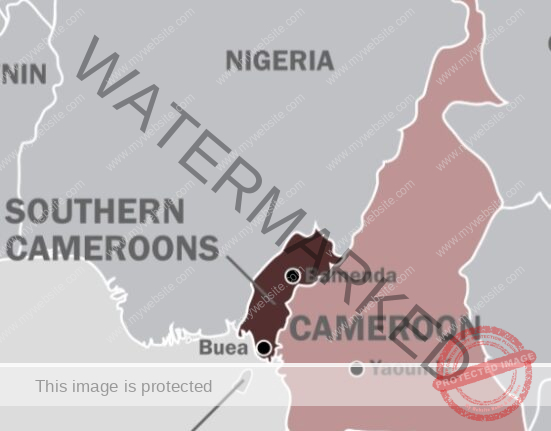
BUEA – 29 September 2026 – Something dangerous happens in an armed conflict when the distinction between an armed fighter and the civilian population begins to disappear from official language. That danger deserves particular attention in Southern Cameroons today.
On 23 September 2026, Mezam Senior Divisional Officer Simon Emile Mooh issued an order prohibiting undeclared meetings and public demonstrations throughout Mezam, effective until further notice. The measure came immediately before 1 October, a date of particular political significance to supporters of Southern Cameroons independence.
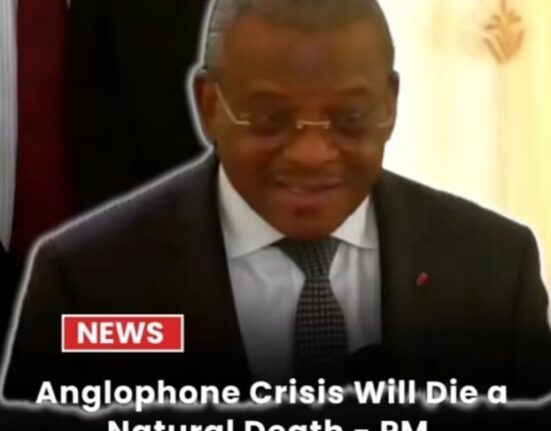
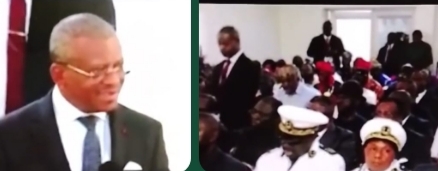
Five days later, Prime Minister Joseph Dion Ngute addressed a Southwest Community Dialogue and Peace and Security meeting in Buea. Reports of his remarks indicate that he argued that communities know many of the armed separatist fighters and should engage them directly and persuade them to abandon the struggle. He reportedly suggested that the conflict was declining and might eventually “die a natural death.”
Those remarks need to be examined carefully because they occur at a moment when fighting has increasingly touched urban areas. There is an important distinction that must not be lost. The fact that armed fighters may move through cities, meet acquaintances, enter businesses or have family and community relationships does not convert the surrounding civilian population into combatants.
Nor does knowledge of an armed fighter make a civilian a fighter. Nor does living in the same neighborhood, attending the same meeting, drinking in the same bar, belonging to the same family or expressing the same political grievance erase civilian protection. That distinction could become one of the most important human-rights questions facing Southern Cameroons in the coming months.
THE DANGER OF AN URBAN-SUSPICION DOCTRINE
Remarks attributed to the Prime Minister have circulated suggesting that fighters are no longer simply “in the bushes” but are known within communities and encountered in ordinary social environments. A complete official transcript establishing every reported formulation has not yet been independently verified, so the precise wording should be treated cautiously.
But the underlying proposition being reported is clear enough: communities know the fighters, interact with them and are being asked to help persuade them to disarm. There is nothing inherently unlawful about asking communities to participate in peacebuilding.
The danger begins when that proposition changes from: “Communities know some fighters” to: “People around those fighters should be treated as fighters.” That is the line that must never be crossed. Once the state begins describing combatants as being everywhere—inside neighborhoods, businesses, meetings and ordinary urban society—the category of the suspected enemy can expand dangerously.
A young man can become suspicious because of whom he knows. A bar can become suspicious because someone alleged to be a fighter once entered it. A meeting can become suspicious because an attendee holds separatist sympathies. A neighborhood can become suspicious because armed men are believed to pass through it. And civilians can begin dying not because authorities have established that they directly participated in hostilities, but because someone decided they looked like, lived near, associated with or might have known someone who did.
That is precisely why international humanitarian law insists upon individual distinction. Civilians remain protected from direct attack unless, and only for such time as, they directly participate in hostilities. Parties to an armed conflict must distinguish civilians from fighters, verify military targets, respect proportionality and take feasible precautions to minimize civilian harm. Urban warfare makes those obligations more important, not less.
SELF-DEFENSE DOES NOT ERASE CIVILIAN STATUS
The Southern Cameroons independence movement has organizations that openly describe armed resistance as self-defense. Whatever political characterization either side gives the conflict, the existence of armed actors does not suspend the laws protecting civilians. The same obligations run in both directions.
Armed separatist groups must not deliberately attack civilians, must distinguish themselves from the civilian population as required by applicable law, and must take precautions not to place civilians unnecessarily at risk. State forces likewise cannot treat a civilian population as collectively hostile merely because fighters operate within it.
International humanitarian law was created precisely because combatants and civilians frequently exist in the same geographic space. The presence of one does not extinguish the rights of the other.
WHY THE WARNING CANNOT BE DISMISSED
Concern about possible unlawful killings is not theoretical. For years, international human-rights organizations have documented serious abuses against civilians by both government forces and armed separatist groups in the Northwest and Southwest. Government counterinsurgency operations have faced allegations involving unlawful killings, arbitrary detention, destruction of property and the targeting of people suspected of supporting separatists.
Armed separatist groups have likewise been accused of killings, kidnappings, attacks on civilians and other serious abuses. That history is exactly why today’s language matters. Where past operations have already produced allegations of civilians being killed because they were believed to support or shelter separatists, officials must exercise extraordinary care before using rhetoric that broadens suspicion from identifiable fighters to the communities around them.
FROM THE VILLAGES TO THE CITIES
Much of the conflict’s worst violence has historically occurred in rural communities where independent observation can be difficult. Urbanization of the conflict changes that environment. Bamenda, Buea, Kumba and other population centers contain journalists, churches, businesses, hospitals, universities, civil-society organizations and humanitarian personnel.
They also contain hundreds of thousands of ordinary civilians whose daily lives inevitably bring them into contact with people holding every imaginable political view. Moving counterinsurgency methods developed for remote areas into densely populated cities would dramatically increase the danger to civilians.
Urban warfare magnifies civilian risk because military and civilian persons and objects exist in close proximity. That reality creates greater obligations to verify targets and minimize civilian harm—not permission to lower the threshold for determining who may be attacked. This is why recent official rhetoric should be monitored now. The world should not wait for photographs of bodies before asking what rules security forces are operating under.
THE GENOCIDE QUESTION MUST BE HANDLED SERIOUSLY
Some Southern Cameroonians will interpret these developments as preparation for another wave of atrocities and will use the word genocide. That concern deserves to be heard, but the legal term must be used carefully. Under the Genocide Convention, genocide requires specified acts committed with the intent to destroy, in whole or in part, a national, ethnic, racial or religious group as such.
That specific intent is a demanding legal requirement and cannot responsibly be inferred merely from inflammatory rhetoric, security restrictions or even serious human-rights violations standing alone. The absence of proof sufficient to establish genocide, however, does not mean the international community should remain silent until such proof exists.
Genocide prevention exists precisely because the world is not supposed to wait until destruction has occurred before examining warning signs. The immediate concern should therefore be stated precisely: Are official statements and security policies creating an environment in which ordinary Southern Cameroonian civilians could increasingly be presumed to be combatants, collaborators or legitimate targets merely because armed fighters live among them? That question demands an answer.
A WARNING TO BOTH SIDES
There must also be clarity toward armed groups. Operating from densely populated civilian areas carries consequences for civilians. Fighters should avoid locating military objectives close to civilians wherever feasible and must respect the laws governing distinction and civilian protection. But violations by one side never cancel the obligations of the other.
A fighter entering a neighborhood does not give an army permission to treat the neighborhood as a military target. A suspected separatist entering a bar does not transform everyone drinking there into a combatant. An armed person attending a gathering does not eliminate the civilian status of everyone else present. Political sympathy is not direct participation in hostilities. Kinship is not direct participation in hostilities. Association is not direct participation in hostilities. And suspicion is not proof.
HUMANITARIAN OBSERVERS SHOULD ACT BEFORE, NOT AFTER
Humanitarian organizations, diplomatic missions, journalists, churches and international partners should therefore pay particular attention to security operations in Southern Cameroons’ urban centers as 1 October approaches and in the period immediately afterward.
The appropriate response is not political silence. It is preventive scrutiny. Authorities should publicly reaffirm that security forces have been instructed to distinguish civilians from fighters and that mere association, geography or political opinion will not be treated as evidence of participation in hostilities. Rules governing urban security operations should comply fully with international humanitarian and human-rights law.
Allegations of unlawful killings should be promptly and independently investigated. Hospitals and humanitarian personnel should be able to document casualties without intimidation. Journalists should have meaningful access. Families should be able to identify the dead. And every person killed in circumstances involving state force should have a name, a location, an explanation and, where necessary, an investigation.
DO NOT WRITE THE JUSTIFICATION BEFORE THE KILLING
This is ultimately why Prime Minister Dion Ngute’s remarks and the tightening of administrative restrictions deserve attention together. A government may legitimately confront armed attacks. It may arrest people against whom there is lawful evidence. It may encourage fighters to disarm. It may protect cities.
What it may never do is allow the concept of “the fighter” to expand until entire communities become presumptive enemies. The most dangerous sentence in a counterinsurgency is not necessarily an order to kill. Sometimes it is the sentence spoken beforehand that tells society who may later be described as the enemy.
If civilians are subsequently killed in bars, neighborhoods, meetings or homes, the explanation cannot simply be that armed separatists were believed to be “among them.” Every casualty must be judged individually. Every target must be lawful. Every allegation must be investigated. And every civilian remains protected unless the law establishes otherwise. Southern Cameroons has endured too many years of violence for ambiguity about that principle.
The international community should make it unmistakable now: The presence of armed fighters in cities cannot become a license for urban collective punishment. And no political narrative—whether described as counterterrorism, counterinsurgency, self-defense or restoration of public order—can place an entire civilian population outside the protection of law.
As Amazon associate this site earns from qualifying purchases
By books on productive Sovereignty and statecraft By Martin Mungwa on Amazon
https://www.amazon.com/s?k=Books+By+Martin+Mungwa&crid=V79NRY7JJ30O&sprefix=books+by+martin+mungwa%2Caps%2C543&linkCode=ll2&tag=njokings-20&linkId=9851cc47e3d20c3fac313e724c736088&language=en_US&ref_=as_li_ss_tl
Lester Maddox
Guest Contributor
The Independentist News
Oakland, California