

A struggle that relies only on endurance risks allowing time, to become its enemy. A movement that converts endurance into disciplined political capacity changes the equation. After almost ten years, that may be the more important challenge confronting everyone who believes the Southern Cameroons question remains unresolved.
By Timothy Enongene
Associate Editor-in-Chief
The Independentist News
As Amazon associate this site earns from qualifying purchases
Buy books on productive sovereignty and statecraft by Martin Mungwa on Amazon
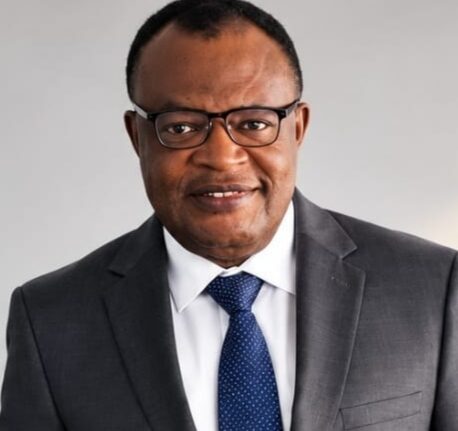
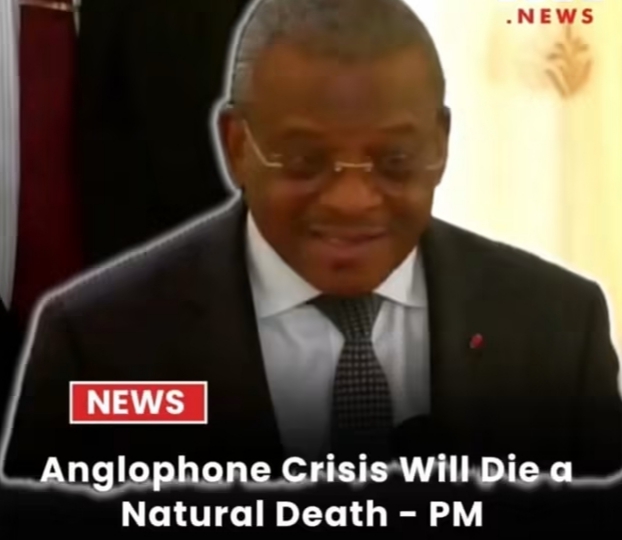
YAOUNDÉ – 28 September 2026 – If reports attributing to Prime Minister Joseph Dion Ngute the view that the Southern Cameroons independence struggle will eventually “die a natural death” over the coming decade or more are accurate, the statement deserves close examination. Not because it should trigger another round of emotional rhetoric, but because it reveals a strategic assumption worth understanding.
The assumption is simple: time favors the state.
It presumes that fatigue, fragmentation, economic pressure, displacement, leadership disputes, international indifference and the accumulated burden of a long conflict will eventually weaken the separatist movement more effectively than any single military campaign.
That is a serious proposition. And after nearly a decade of conflict, it deserves a serious answer.
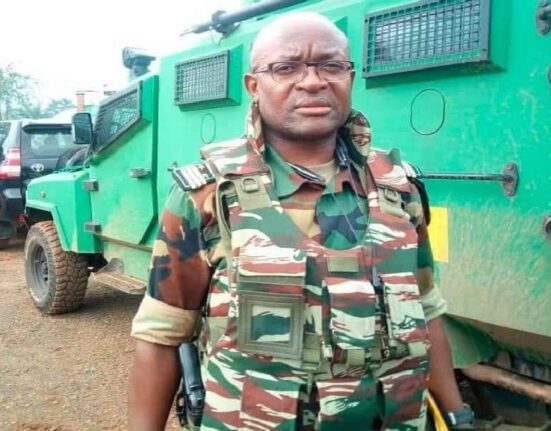
The armed conflict that emerged after the 2016 Anglophone protests has persisted since 2017. Recent violence in September 2026—including an attack in Wum that killed a police officer and resulted in the abduction of teachers—shows that the crisis remains unresolved. At the same time, Ngute has publicly said that his government is pursuing efforts to restore peace. (Al Jazeera)
The relevant question, therefore, is not simply whether one side can outlast the other. It is what each side believes time will accomplish. The politics of waiting, by States confronted by long-running separatist movements often rely on endurance. Governments generally possess deeper fiscal resources, diplomatic recognition, administrative institutions and greater ability to absorb political shocks than insurgent or separatist movements.
A state may therefore conclude that it does not need to resolve a conflict decisively if it believes the opposing movement will gradually fragment, lose public support or exhaust its resources.
Whether that calculation will prove correct in Cameroon cannot simply be assumed.
But independence movements also make a dangerous mistake when they believe that survival by itself constitutes progress. It does not.
Ten years of endurance is evidence of persistence. It is not, by itself, evidence of political advancement. That distinction should become central to any serious assessment of the Southern Cameroons movement.
The real challenge is institutional
If a movement expects to survive another decade, it must ask more difficult questions than whether its supporters remain emotionally committed. Can it maintain political coherence?
Can it resolve internal disagreements? Can it protect civilians? Can it build credible institutions? Can it communicate consistently with international audiences? Can it document its claims professionally? Can it demonstrate respect for humanitarian norms? Can it articulate an economically credible future? Can it persuade outsiders that its political project represents something more durable than resistance? These questions may ultimately matter more than slogans about who can endure longest.
A movement that survives militarily but loses political legitimacy has not necessarily advanced. A government that maintains territorial control but cannot restore durable security has not necessarily solved the underlying problem either. That is why the passage of time cuts in both directions.
Civilian protection must become central
One of the greatest dangers of prolonged conflict is normalization. Violence becomes routine. Schools become bargaining grounds.
Businesses adapt to insecurity. Displacement becomes permanent. Families learn to live around checkpoints, lockdowns, kidnappings and uncertainty. The longer that condition persists, the greater the danger that the population whose future is supposedly being contested bears the greatest cost.
Recent reporting again illustrates this reality. The September attack on the teacher-training institution in Wum killed a police officer and led to the abduction of teachers, while other reporting has continued to document insecurity affecting schools and communities. (Al Jazeera)
Any movement claiming political legitimacy must therefore treat civilian protection, education, commerce and humanitarian access as strategic priorities rather than secondary concerns. That standard should apply equally to state forces and non-state armed actors.
Time without diplomacy is not strategy
The conflict has also demonstrated the limitations of assuming that military pressure alone will determine the political outcome.
Recent initiatives have included a peace roadmap presented by religious and traditional leaders to the prime minister, while the government continues publicly to characterize restoration of peace as an objective. (Cameroon Intelligence Report)
Whether such initiatives are sufficient is a separate question. But their existence demonstrates that political channels remain relevant. For separatist leaders, therefore, the challenge posed by a supposed 10- or 15-year government horizon should not be answered merely by declaring a willingness to fight longer.
A more consequential response would be to demonstrate that the movement can become:
more politically coherent; more diplomatically capable; more accountable; more disciplined;
more economically literate; more credible internationally; and more protective of the civilians in whose name its claims are advanced.
That would constitute a strategic answer to a strategy of attrition.
The international dimension
Time also matters internationally. Foreign governments rarely make major policy changes simply because a conflict has lasted a long time.
They respond to: documented evidence; strategic interests; humanitarian consequences;
regional stability; credible interlocutors; and politically realistic proposals. Southern Cameroons advocates who want greater international engagement therefore need more than longevity. They need a coherent diplomatic case. That means professional documentation, consistent messaging, credible political representation and a willingness to answer difficult questions about governance, security, minority rights, economic viability and regional cooperation. Every additional year of conflict without such institutional development risks strengthening the argument that time favors the status quo.
Every year in which political organization becomes stronger challenges that assumption.
The question after ten years. Nearly a decade into the conflict, both Yaoundé and the separatist movement face uncomfortable questions.
For the government: If the crisis can simply be waited out, why does insecurity continue?
Why have repeated political and security measures not produced a durable settlement?
What political framework could address the grievances that originally fueled the crisis?
For separatist leaders: What measurable political progress has been achieved? What institutions have been strengthened? What diplomatic relationships have been built? What has been done to protect civilians? What mechanisms exist for accountability? What is the strategy for transforming endurance into a political outcome? Those questions are harder than declaring victory or predicting an opponent’s disappearance. But they are the questions serious political movements eventually have to answer.
The answer to the 15-year challenge
If the reported statement about a 10- to 15-year horizon accurately reflects official thinking, the most consequential response is not simply: “We can fight for another 15 years.” It is: “What will we have built during those 15 years?” Political organization? Diplomatic credibility? Institutional capacity? International relationships?
Civilian trust? An economic program? A functioning governance philosophy? A record of accountability? Those are the assets through which political movements survive history.
A struggle that relies only on endurance risks allowing time to become its enemy.
A movement that converts endurance into disciplined political capacity changes the equation. After almost ten years, that may be the more important challenge confronting everyone who believes the Southern Cameroons question remains unresolved.
As Amazon associate this site earns from qualifying purchases
Buy books on productive sovereignty and statecraft By Martin Mungwa on Amazon
https://www.amazon.com/s?k=Books+By+Martin+Mungwa&crid=V79NRY7JJ30O&sprefix=books+by+martin+mungwa%2Caps%2C543&linkCode=ll2&tag=njokings-20&linkId=40ea34ed767bbec0cd046334f268e155&language=en_US&ref_=as_li_ss_tl
Timothy Enongene
Associate Editor-in-Chief
The Independentist News