

Time is not a peacemaker. Peace is made by people who choose it. As Nelson Mandela observed: “If you want to make peace with your enemy, you have to work with your enemy. Then he becomes your partner.”
By Abdulkarim Ali, Contributor to The Independentist News
As Amazon associate this site earns from qualifying purchases
Buy books on productive sovereignty and statecraft by Martin Mungwa on Amazon
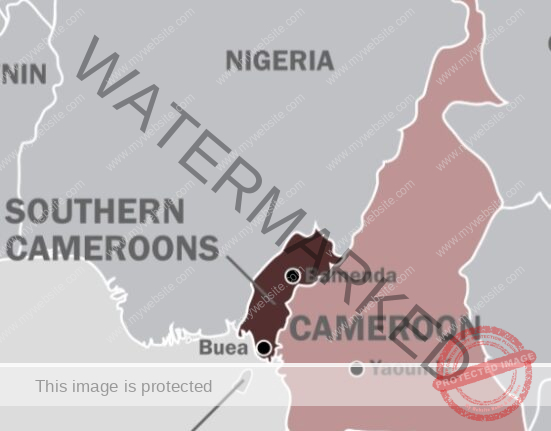
YAOUNDÉ – 29/9/2026 – Not all wars are the same. There are conventional wars between states fought for territory or policy. There are asymmetric wars where a weaker non-state actor uses guerrilla tactics against a stronger state army. And there are existential wars where at least one side believes it is fighting for its survival as a distinct people.
The Southern Cameroons conflict, which escalated after 2016, is both asymmetric and existential. It is asymmetric in its methods, with Southern Cameroons fighters relying on guerrilla warfare against the far stronger military of La Republique du Cameroun. It is existential in its drivers, rooted in the conviction that the identity, institutions, and right to self-determination of the Southern Cameroons people face erasure.
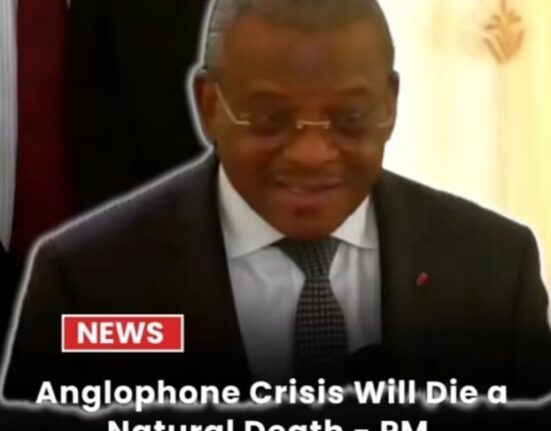
The claim that such a war will die a “natural death” in 10-15 years, 15-50 years or 1 century to 6 centuries if left to run its course is self-serving and analytically weak. It rests on the assumption that time will exhaust the fighters, that younger generations will forget, and that economic incentives will displace political conviction. Whether the horizon is short, generational, or measured in centuries, the flaw is identical. This is not a strategy for resolution; it is a strategy for avoidance. It allows beneficiaries of the status quo to present inaction as wisdom, while the core political question, the status of the Southern Cameroons, remains unresolved.
History is clear: existential asymmetric wars do not simply fade away. They are either resolved through negotiation, or they freeze and later reignite.
Recent cases confirm this. The confrontation between Iran and the USA and Israel, which escalated sharply with the June 2025 12-Day War of direct strikes, did not end because of superior firepower. Despite massive asymmetry in military technology, Iran’s network of regional allies and its narrative of resistance and sovereignty allowed the conflict to survive and re-emerge, because the underlying political questions of security, nuclear capability, and regional influence were never negotiated to a conclusion.
The same is true of the Palestinians vs. Israel. After more than seven decades, and most starkly after the Gaza war that began in October 2023, the idea that overwhelming force or blockade would produce a natural death of Palestinian resistance has been disproven. Each round of destruction without a political settlement on statehood, occupation, and self-determination has only reproduced a new generation committed to the struggle. Time has not diluted the existential stakes for either side; it has deepened them.
Older cases point in the same direction. In Northern Ireland, three decades of violence did not evaporate; they were ended by the 1998 Good Friday Agreement on power-sharing, identity, and policing. In Mozambique, the RENAMO insurgency ended with the 1992 Rome General Peace Accords on political inclusion. In Colombia, the long FARC insurgency was contained not by waiting, but by the 2016 Havana Accords on land reform and political participation.
Where root causes have been ignored, calm has proved deceptive. The Casamance conflict in Senegal, closely parallel to the Southern Cameroons case, has persisted since 1982. Lulls in fighting were mistaken for peace, only for violence to return because autonomy grievances were never negotiated. Nagorno-Karabakh froze after 1994 and erupted again in 2020 and 2023. Western Sahara froze after the 1991 ceasefire, but without a settlement on its political status, it remains volatile.
Even 50 committed fighters can sustain an existential insurgency where the narrative of survival endures. All they require is collective memory, grievance, and limited support from terrain or diaspora. Time alone does not dissolve that, whether in 10-15 years, 15-50 years or 1 century to 6 centuries. What history prescribes is the creation of conditions ripe for addressing the root cause through negotiated settlement between La Republique du Cameroun and representatives of the Southern Cameroons.
Delay does not extinguish an ideology. It hardens it, teaches a new generation that dialogue was denied, and ensures that any renewed fighting will be waged with greater resolve.
The Unavoidable Path to Resolution
There is no substitute for direct engagement with the root cause. Any credible process must include these essential steps:
- Ceasefire
- Release all Southern Cameroons prisoners of conscience.
- Guarantee the right to return for those in exile
- Sit on a mediated table of negotiations and dialogue the issues to their logical end.
Conclusion
Time is not a peacemaker. Peace is made by people who choose it. As Nelson Mandela observed: “If you want to make peace with your enemy, you have to work with your enemy. Then he becomes your partner.”
This insight is affirmed across faith traditions. Jesus (pbuh) taught: “Blessed are the peacemakers, for they will be called children of God.” Prophet Muhammad (pbuh) taught: “Shall I not inform you of something more excellent than fasting, prayer and charity? It is putting things right between people.”
The war in the Southern Cameroons will not die a natural death. It must be brought to an end by a deliberate moral choice: to cease fire, to release, to allow return, and to reason together.
As Amazon associate this site earns from qualifying purchases
Buy books on productive sovereignty and statecraft by Martin Mungwa on Amazon
https://www.amazon.com/s?k=Books+By+Martin+Mungwa&crid=V79NRY7JJ30O&sprefix=books+by+martin+mungwa%2Caps%2C543&linkCode=ll2&tag=njokings-20&linkId=edaf0a813e050c62e353c184473e5f97&language=en_US&ref_=as_li_ss_tl
Abdulkarim Ali, Contributor to The Independentist News