

Political conflicts rarely disappear merely because governments wait long enough. They may change form. Armed organizations may fragment. Leadership may change. Public support may rise or fall. But where fundamental disagreements about political authority, identity, governance and constitutional structure remain unresolved, the underlying dispute can survive long after particular armed formations disappear.
By Timothy Enongene
Associate Editor-in-Chief
The Independentist News
As Amazon associate this site earns from qualifying purchases
Get Books on Ambazonian Sovereignty by Martin Mungwa on Amazon
https://www.amazon.com/s?k=Books+By+Martin+Mungwa&crid=V79NRY7JJ30O&sprefix=books+by+martin+mungwa%2Caps%2C543&linkCode=ll2&tag=njokings-20&linkId=d4c0cace247ac87a8d6c823641d21e58&language=en_US&ref_=as_li_ss_tl
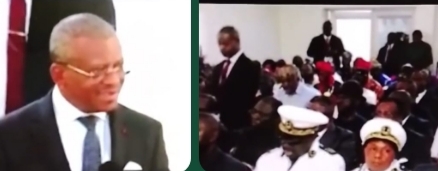
BUEA – 28 September 2026 – When Cameroonian Prime Minister Joseph Dion Ngute reportedly suggested during a community dialogue in Buea that the Ambazonian conflict could “die a natural death” within the next 10 to 15 years, he appeared to be expressing a familiar theory of conflict management: contain the insurgency, outlast its combatants, reduce its sources of support, encourage defections, and allow time to accomplish what force alone has been unable to achieve.
If that is Yaoundé’s calculation, however, history offers reasons for caution. Cameroon has confronted major internal political and armed challenges before. During the UPC insurgency of the late colonial and early post-independence period, French and Cameroonian forces relied heavily on military repression, administrative control and political consolidation. Scholars have documented extensive violence during the conflict, including executions, population displacement and the destruction of communities. After independence, President Ahmadou Ahidjo progressively centralized political authority and ultimately consolidated a one-party system.
Political co-optation was also part of the broader state-building strategy. Opposition parties and regional elites were gradually absorbed into an increasingly centralized political order. By the early 1970s, armed UPC resistance had largely been defeated and the central government had consolidated its authority.
It is therefore understandable why some officials in Yaoundé might believe that time, military pressure, political incorporation and economic incentives can eventually produce a similar outcome in the North-West and South-West. But that comparison has limits.
The present conflict emerged from very different historical and political conditions. It began in 2016 with protests by Anglophone lawyers and teachers concerned about the erosion of English-language legal and educational institutions. The government’s response contributed to an escalation of the confrontation, and by 2017 armed separatist organizations had emerged. International Crisis Group and other observers have repeatedly traced the conflict to longstanding disputes over centralization, political representation, identity and the constitutional relationship between the Anglophone regions and the central state.
Yaoundé has attempted several approaches.
The government convened the Major National Dialogue in 2019, subsequently granting a “special status” to the North-West and South-West regions. It has also established Disarmament, Demobilization and Reintegration programs intended to persuade armed fighters to leave the conflict. Yet major separatist organizations did not participate in the 2019 dialogue, and independent assessments have questioned how much political traction the subsequent measures have achieved.
International mediation efforts have struggled as well. A Swiss-facilitated initiative failed to produce negotiations, while a later Canadian effort also stalled. International Crisis Group concluded in 2023 that attempts to resolve the conflict had made little progress and that the parties remained far apart. This is where the theory of a “natural death” encounters its central problem.
An armed organization can be weakened militarily. Its financial networks can be disrupted. Fighters can defect. Leaders can quarrel. Diaspora enthusiasm can diminish. Communities exhausted by years of insecurity may increasingly demand normal life.
But those developments do not automatically resolve the political grievances that produced a conflict. The Ambazonian movement also operates in an environment very different from that of the insurgencies of the 1950s and 1960s. Diaspora organizations, digital communication and transnational political networks allow activists outside Cameroon to participate directly in political organization and advocacy. Analysts have identified the diaspora as an important factor in sustaining the separatist movement since the conflict began.
That does not mean that the separatist movement is unified or guaranteed to prevail. Far from it. Armed groups have experienced serious internal divisions, and some have fought one another. International observers have also documented killings, kidnappings, attacks on schools and other abuses committed by separatist fighters. Government security forces, meanwhile, have been accused of unlawful killings, village burnings and other serious abuses during counter-insurgency operations. Civilians have repeatedly borne the consequences of violence from multiple sides.
These realities complicate any simple prediction about how the conflict will end. They also expose the weakness of assuming that endurance alone constitutes a political strategy. A decade of fighting can weaken an insurgency without eliminating the political dispute beneath it. Conversely, the continued existence of armed resistance does not by itself demonstrate that independence is inevitable. What the persistence of the conflict does demonstrate is that neither military pressure nor separatist armed action has yet produced a durable political settlement. That distinction matters.
If Yaoundé’s strategy is ultimately based on waiting for the movement to exhaust itself, the government is betting that military attrition will move faster than the reproduction of political grievance. Nearly a decade into the conflict, that proposition remains unproven.
For Ambazonian leaders, there is an equally important lesson. Longevity alone is not victory. Sustaining an armed struggle is different from constructing the political legitimacy, institutional cohesion, civilian protection and diplomatic credibility required to achieve a lasting political outcome.
The consequences of miscalculation on either side are measured primarily in civilian lives. International Crisis Group has described the conflict as prolonged and unresolved, while the United Nations has repeatedly emphasized the importance of addressing its underlying grievances through inclusive dialogue. That is why the language of a conflict simply dying a “natural death” is misleading.
Political conflicts rarely disappear merely because governments wait long enough. They may change form. Armed organizations may fragment. Leadership may change. Public support may rise or fall. But where fundamental disagreements about political authority, identity, governance and constitutional structure remain unresolved, the underlying dispute can survive long after particular armed formations disappear.
Cameroon’s earlier conflicts therefore offer lessons—but not necessarily the lesson Yaoundé may wish to draw from them. History does not repeat itself mechanically. And a political conflict cannot safely be declared terminal while the political questions that gave birth to it remain unanswered.
As Amazon associate this site earns from qualifying purchases
Get books on Ambazonian Sovereignty by Martin Mungwa on Amazon
https://www.amazon.com/s?k=Books+By+Martin+Mungwa&crid=V79NRY7JJ30O&sprefix=books+by+martin+mungwa%2Caps%2C543&linkCode=ll2&tag=njokings-20&linkId=d4c0cace247ac87a8d6c823641d21e58&language=en_US&ref_=as_li_ss_tl
Timothy Enongene
Associate Editor-in-Chief
The Independentist News