

Because once human rights become selective, they cease to be universal. Every victim must matter. Every credible allegation must be investigated. And the political question behind this devastating crisis must eventually be confronted.
By Lester Maddox
Guest Contributor
The Independentist News
Oakland, California
As Amazon associate this site earns from qualifying purchases
By Books on Ambazonian Sovereignty by Martin Mungwa on Amazon.
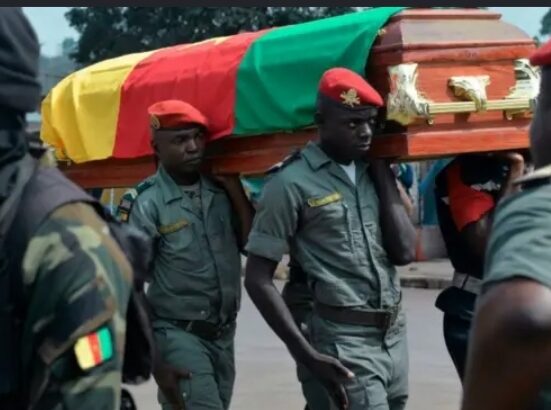
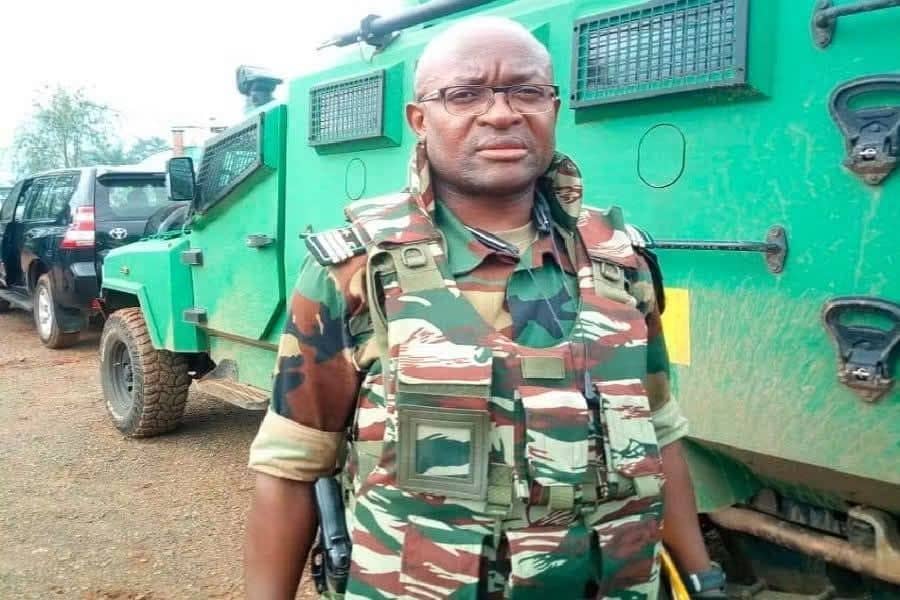
YAOUNDÉ – 27 September 2026 – Navy Captain Cyrille Serge Atonfack, the Cameroonian Ministry of Defence’s communications chief, has raised a question that deserves an answer: Why, in his view, have human-rights organizations not spoken loudly enough when Cameroonian soldiers and civilians are attacked?
It is a legitimate question. But from an Ambazonian perspective, it immediately raises a larger one: Can human rights be invoked selectively—only when the victims belong to one side of a conflict?
There should be no ambiguity about the principle. Civilians deserve protection. The killing of civilians is a tragedy regardless of who commits it. Soldiers, too, are human beings whose deaths devastate parents, spouses, children and communities. But human rights do not begin when a Cameroonian soldier is killed. They begin with the first victim.
If Captain Atonfack wants human-rights organizations to speak, then the same standard must apply to every victim of this crisis: Cameroonian soldiers, Cameroonian civilians, Ambazonian civilians, detainees, displaced families and others trapped between the competing forces.
This is where his argument becomes difficult to accept from an Ambazonian perspective. Official Cameroonian discourse has repeatedly described the violence largely through the language of terrorism, secession and criminality. Ambazonians who support independence understand the crisis very differently: as a political struggle over sovereignty, self-determination, governance and the future status of the former British Southern Cameroons.
One may reject the Ambazonian independence objective. One may also condemn killings, kidnappings, intimidation or other abuses committed by armed separatist groups. But neither political disagreement nor condemnation of abuses makes the underlying political dispute disappear.
One Standard for Every Victim
The human-rights question therefore cannot be reduced to asking why NGOs have not condemned attacks on Cameroonian troops loudly enough.
The same question must be asked when civilians are unlawfully killed, villages and homes are destroyed, people are displaced, detainees are mistreated or allegations of abuse by security forces emerge.
If particular human-rights defenders remained silent when any of these victims needed them, that silence deserves scrutiny. But where human-rights organizations have investigated abuses by both government forces and separatist fighters, their independence should be respected rather than measured by whether their findings support the political narrative of either side. Human-rights advocacy is not supposed to function as a public-relations department for a government, an army, a separatist movement or any other political cause. Its responsibility is to victims and to evidence.
An organization can condemn the killing of a Cameroonian soldier without endorsing Yaoundé’s political position. It can condemn the killing of an Ambazonian civilian without endorsing independence. It can investigate alleged abuses by government forces without supporting armed resistance. And it can condemn killings, kidnappings and intimidation attributed to separatist fighters without accepting the proposition that every political claim associated with Ambazonia is thereby illegitimate. That is what impartial human-rights work should seek to do: Investigate everyone. Document everyone. Protect civilians. Demand accountability from everyone.
The Political Question Remains
Perhaps the question should not simply be: Where are the human-rights organizations when Cameroonian soldiers are killed? The broader question is: Where are human-rights organizations for every victim of this crisis?There is also another question that Cameroon cannot avoid indefinitely. If the crisis is fundamentally a terrorism problem, as official security language often suggests, why has its political dimension remained unresolved after years of military operations?
Security measures may confront armed groups. They may disrupt attacks and protect communities in particular circumstances. But military action alone cannot answer questions concerning political representation, historical grievances, constitutional arrangements, identity and self-determination.
Calling adversaries terrorists may form part of a government’s security narrative. It does not, by itself, resolve the political dispute from which the confrontation arose. From an Ambazonian perspective, the crisis involves two profoundly incompatible political visions. Yaoundé insists on Cameroon’s territorial integrity and rejects separation. Ambazonian independence advocates reject the existing political arrangement and assert a right to self-determination based on their interpretation of Southern Cameroons’ history and political status. Those positions are sharply contested.
But the disagreement exists whether one side recognizes the legitimacy of the other’s argument or not. That is precisely why the crisis cannot be understood exclusively through the vocabulary of counterterrorism. A political dispute does not disappear merely because one party gives its adversary a security label.
Every Victim Must Matter
Captain Atonfack wants the world to hear the cries of Cameroonian victims. It should. But Ambazonians also ask the world to hear the cries of their victims: the mother whose child never returned home; the family whose house was destroyed; the civilian caught between armed actors; the detainee wondering what tomorrow will bring; the displaced family starting life again somewhere else; and the soldier’s family receiving news that a loved one will never return.
None of their grief becomes less real because of the flag under which they live. Human rights have no uniform. Human dignity has no flag. If human-rights organizations are going to speak, let them speak for everyone. Let them investigate everyone. Let them document violations wherever credible evidence leads. Let them condemn abuses regardless of the identity of the perpetrator. And let every party understand that the protection of civilians cannot depend upon political allegiance.
The Question Beyond Condemnation
Ultimately, the greatest question is not which side can produce the loudest condemnation of the other. It is how the violence ends. A durable resolution will require more than demanding that the international community condemn one party while accepting the political narrative of another. It requires protection of civilians, credible accountability for abuses, serious examination of the grievances that produced the crisis and a political process capable of addressing the competing claims at its center.
There will be profound disagreement over what such a settlement should ultimately look like. But no lasting settlement can be built by pretending that the political question does not exist. So Captain Atonfack’s challenge to human-rights organizations deserves an answer.
Yes, human-rights organizations should speak when Cameroonian soldiers are unlawfully killed. They should speak when Cameroonian civilians are killed. They should speak when Ambazonian civilians are killed. They should speak when armed separatists commit abuses. They should speak when government forces are credibly accused of abuses. They should speak whenever human dignity is violated.
Because once human rights become selective, they cease to be universal. Every victim must matter. Every credible allegation must be investigated. And the political question behind this devastating crisis must eventually be confronted.
As Amazon associate this site earns from qualifying purchases
Buy Books on Ambazonian Sovereignty by Martin Mungwa on Amazon
https://www.amazon.com/s?k=Books+By+Martin+Mungwa&crid=V79NRY7JJ30O&sprefix=books+by+martin+mungwa%2Caps%2C543&linkCode=ll2&tag=njokings-20&linkId=3c70e2e7b03a1c8fd1b2b15b33d94ff5&language=en_US&ref_=as_li_ss_tl
Lester Maddox
Guest Contributor
The Independentist News
Oakland, California