

What happens when the United Nations supervises a people’s passage out of trusteeship, helps define the conditions under which their new political relationship will begin, and then history changes the structure that emerged from that process? Before writing off the institution, Washington should at least understand the files it helped create. For Southern Cameroons, the most important questions of 1961 may not be settled questions after all. They may simply be unfinished ones.
By Martin S. Mungwa, Ph.D., F.ASCE Contributor to The Independentist News
As Amazon associate this site earns from qualifying purchases
By books on Ambazonian Sovereignty and statecraft by Martin Mungwa on Amazon
Eric Wargotz recently argued in the Washington Examiner that the United Nations has become so ineffective that the United States should defund and ultimately dismantle it. His indictment is sweeping. But before Washington decides what the United Nations has become, Americans might profit from examining something more concrete: what the institution actually did in one unfinished case of decolonization. That case is Southern Cameroons.
The point is not to use Southern Cameroons as another slogan against the United Nations. It is to examine the institution by its own documents. And those documents raise questions that, 65 years later, deserve serious attention.
The United Nations Charter made the purpose of the international trusteeship system unusually clear. Article 76 called for the political, economic, social, and educational advancement of inhabitants of trust territories and their progressive development toward self-government or independence according to their circumstances and their freely expressed wishes. Southern Cameroons was one of those territories.
In 1959, the U.N. General Assembly determined the questions that would eventually be put to its people. Voters would be asked whether they wished to achieve independence by joining the independent Federation of Nigeria or by joining the independent Republic of Cameroun. There was no third ballot option for separate independence. That distinction matters.
On Feb. 11, 1961, the people voted. According to the official record, 233,571 — 70.49% of valid votes — chose the option of joining the Republic of Cameroun, while 97,741 — 29.51% — chose Nigeria. The United Nations accepted the plebiscite as a valid expression of the choice presented to the electorate. The historical argument therefore should not be built on denying the plebiscite result. It should begin with what happened next.
On April 21, 1961, the General Assembly adopted Resolution 1608 (XV). The resolution determined that the British trusteeship over Southern Cameroons would terminate on Oct. 1, 1961, “upon its joining the Republic of Cameroun.” But Resolution 1608 did not stop there.
Paragraph 5 invited the United Kingdom, as administering authority, the government of Southern Cameroons, and the Republic of Cameroun to undertake urgent discussions aimed at finalizing, before Oct. 1, the arrangements through which the parties’ “agreed and declared policies” would be implemented.
That provision should be at the center of any serious examination of the Southern Cameroons question. What, precisely, were those agreed and declared policies? What arrangements were contemplated? Which documents embodied their final form? And what was the legal and political relationship between those arrangements and the federal structure that came into existence on Oct. 1, 1961? The archival record provides part of the answer — and makes the remaining questions more interesting.
Contrary to some contemporary claims that the required discussions never occurred, the official U.N. record shows that they did. In July 1961, the United Kingdom representative informed the Trusteeship Council that representatives of Southern Cameroons, the Republic of Cameroun, and Britain had met in Buea in mid-June. He reported that “some progress” had been made and that additional informal discussions were continuing.
The British Parliament was still discussing the matter on Aug. 1. Speaking in the House of Commons, the British government acknowledged Resolution 1608’s requirement that arrangements be finalized before Oct. 1. It reported several discussions between Southern Cameroons Premier John Ngu Foncha and Republic of Cameroun President Ahmadou Ahidjo, as well as further tripartite discussions involving Britain. The government said many issues remained to be settled, while “quite a large number of matters” had already been agreed.
That debate contains another significant statement. The British minister told Parliament that the two sides had indicated their intention to establish a federation, under which their distinct identities would be maintained. And that is essentially what occurred.
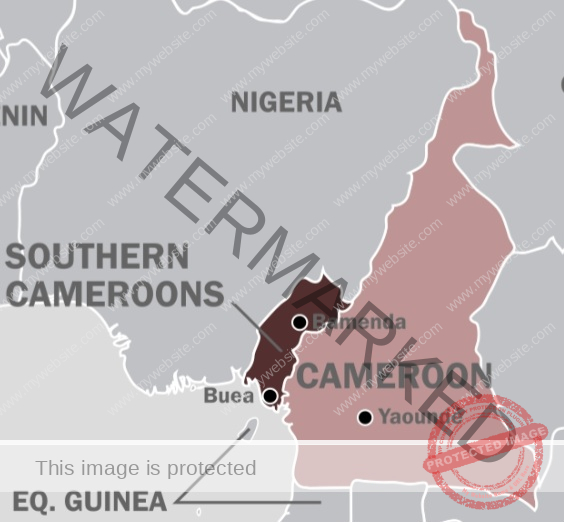
Southern Cameroons became West Cameroon within the Federal Republic of Cameroon, while the former Republic of Cameroun became East Cameroon. The federal structure preserved substantial autonomy between the formerly British and French-administered territories. U.S. State Department historical accounts similarly describe the two regions as maintaining substantial autonomy under the federation. Yet the federation did not last.
In 1972, a new constitution replaced the federal structure with a unitary state. That historical transformation is not seriously disputed; U.S. State Department accounts record it directly. This is where the 1961 record becomes more than archival history.
If federation formed part of the “agreed and declared policies” contemplated by Resolution 1608, what was the international significance, if any, of its later abolition?
If the arrangements requested by paragraph 5 were finalized before Oct. 1, where is the authoritative documentary chain showing precisely what was agreed?
If several documents collectively constituted that settlement rather than a single treaty or agreement, which documents were they? And did the United Nations regard its responsibility as ending simply because trusteeship formally terminated, or did the political settlement it helped create carry any continuing implications? Those questions should not be answered by slogan. They should be answered by records.
There is another remarkable fact in the U.N. file. Resolution 1608 passed by 64 votes to 23, with 10 abstentions. The United States and United Kingdom voted for it. The Republic of Cameroon voted against the resolution as a whole. That vote requires caution in interpretation. Resolution 1608 addressed both Northern and Southern Cameroons, and the Republic of Cameroon contested the outcome involving Northern Cameroons. Its negative vote therefore cannot simply be presented as proof that it rejected the provisions concerning Southern Cameroons. But America’s affirmative vote matters.
The United States was not a distant observer to Resolution 1608. It participated in the international decision that endorsed the plebiscite results, terminated trusteeship, and called for arrangements governing implementation of the new relationship.
That should make the historical record relevant in Washington. The issue is also not merely academic. Cameroon’s English-speaking North-West and South-West regions have experienced a grave political and armed conflict since protests by lawyers and teachers erupted in late 2016. Government forces and armed separatist groups have both been accused of serious abuses against civilians. Human Rights Watch reported in 2025 that violence had persisted in the two regions since 2016.
History alone does not dictate how that conflict should be resolved. But history can tell us what commitments were made, what institutions were created, what changed afterward, and why competing narratives of legitimacy remain so powerful. That is why the Southern Cameroons file deserves something more rigorous than either romanticizing or condemning the United Nations. It deserves a documentary audit.
Retrieve Resolution 1608. Retrieve the plebiscite commission records. Retrieve the Buea discussions. Retrieve the British parliamentary record. Examine the constitutional negotiations. Identify precisely what the parties understood federation to mean and determine which arrangements were completed before Oct. 1, 1961. Then place those records beside what followed in 1972 and afterward. Wargotz asks whether the United Nations has outlived its usefulness. Southern Cameroons presents a different question.
What happens when the United Nations supervises a people’s passage out of trusteeship, helps define the conditions under which their new political relationship will begin, and then history changes the structure that emerged from that process?
Before writing off the institution, Washington should at least understand the files it helped create. For Southern Cameroons, the most important questions of 1961 may not be settled questions after all. They may simply be unfinished ones.
Martin S. Mungwa, Ph.D., F.ASCE, is the author of Southern Cameroons 2050: Why America Should Care — Peace, Productive Sovereignty, and the Opportunity for a New U.S.–African Partnership.
As Amazon associate this site earns from qualifying purchases
Buy books on Ambazonian Sovereignty and statecraft by Martin Mungwa on Amazon
Martin S. Mungwa, Ph.D., F.ASCE Contributor to The Independentist News