









Commentary

We are home to news on Cameroon and the CEMAC region. We are dedicated to honest and reliable reporting. We are the voice of the Cameroonian people and their fight for freedom and democracy at a time when the Yaoundé government is silencing dissent and suppressing democratic voices.

As Ambazonians envision the future through initiatives such as Ambazonia 2050 and Beyond, the Nigerian experience offers valuable lessons. Strong nations are not built solely through elections. They are built through institutions. Prosperity requires accountability. Stability requires inclusion. National unity requires respect for diversity, local autonomy, and constitutional safeguards.
By Ali Dan Ismael Editor-in-Chief The Independentist News
More Than Just a Neighbor
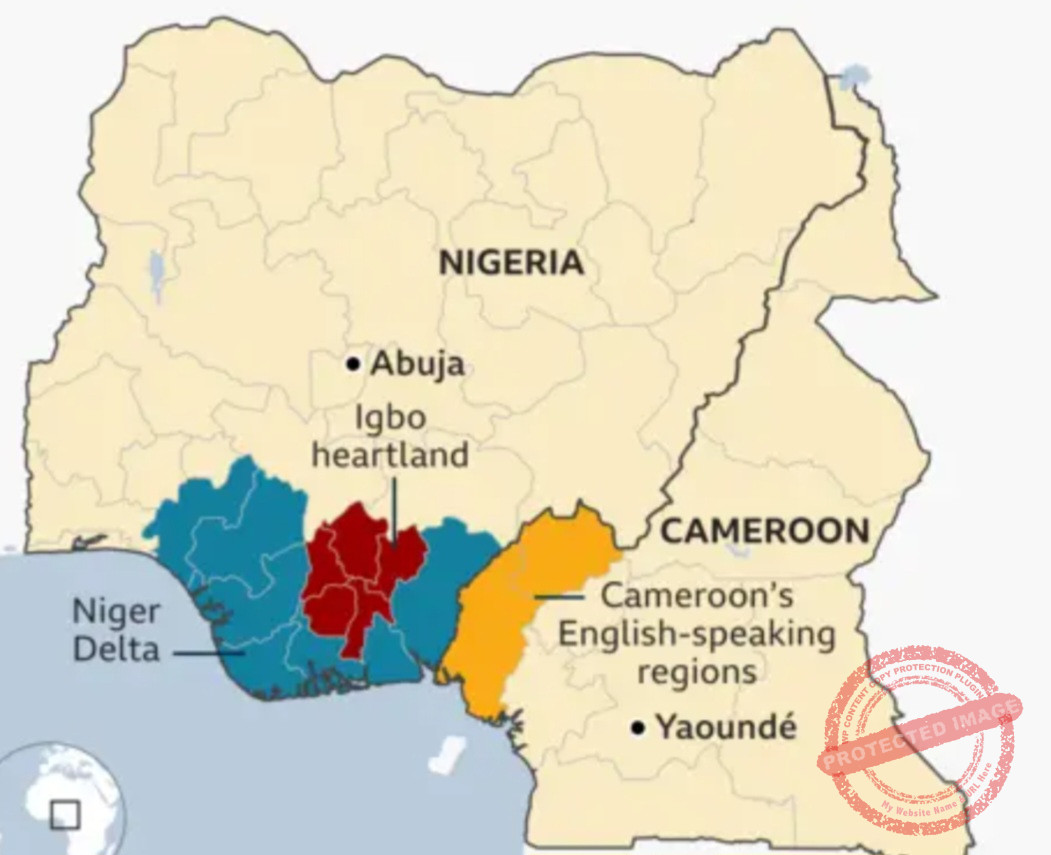
When Ambazonians discuss international affairs, attention often gravitates toward Washington, London, Brussels, Paris, or the United Nations. Yet the country that may ultimately have the greatest influence on the future of Southern Cameroons lies directly to the west. Nigeria is not merely Africa’s most populous nation or one of its largest economies. It is the strategic neighbor whose political choices, security policies, and diplomatic posture have shaped the trajectory of the Southern Cameroons question for decades.
For this reason, developments in Nigerian politics should never be viewed as distant events. What happens in Abuja has direct implications for Ambazonian refugees, diplomatic engagement, regional security, trade, and ultimately the prospects for a peaceful resolution of the conflict.
The Refugee Lifeline
Since the outbreak of the current conflict, tens of thousands of Southern Cameroonians have sought refuge across the border in Nigeria. Communities in Cross River State, Taraba State, and Benue State have provided sanctuary for families fleeing violence and instability. For many refugees, Nigeria has served as the first and often only line of protection. Their welfare depends heavily upon the policies adopted by Nigerian authorities and the willingness of Nigerian institutions to uphold humanitarian commitments.
A politically stable and institutionally accountable Nigeria is therefore not merely desirable; it is essential for the protection of thousands of Southern Cameroonian families who continue to rely upon Nigerian hospitality and international assistance. Any significant shift in Nigeria’s domestic political environment inevitably affects the broader humanitarian landscape facing Southern Cameroons.
The Diplomatic Gatekeeper
Nigeria occupies a unique position in the Southern Cameroons question. As a regional power and immediate neighbor, it possesses influence that few other countries can match. Historically, Nigeria has alternated between sympathy, neutrality, and cooperation with Yaoundé depending on broader geopolitical considerations. The arrest and transfer of prominent Ambazonian leaders from Nigerian territory demonstrated the extent to which decisions taken in Abuja can directly affect the movement.
Any future negotiations concerning Southern Cameroons are unlikely to succeed without some degree of Nigerian involvement. Whether acting as facilitator, observer, guarantor, or regional stakeholder, Nigeria’s role will remain central. The nature of that role will depend significantly upon the strength, independence, and democratic character of Nigerian institutions.
Democracy and Regional Leadership
Nigeria has long projected itself as one of Africa’s leading democratic powers. Despite numerous challenges, it has maintained competitive elections, a vibrant media environment, an active civil society, and a tradition of political contestation that distinguishes it from many of its regional counterparts.
When democratic institutions function effectively, governments become more responsive to public opinion, constitutional principles, and legal accountability. When those institutions weaken, decision-making can become increasingly centralized and less transparent.
For Ambazonians, this distinction matters greatly. A Nigeria governed by strong institutions is more likely to approach regional conflicts through dialogue, diplomacy, and legal frameworks. A Nigeria characterized by excessive political centralization may be more inclined to prioritize short-term security calculations over long-term democratic principles.
Lessons from Centralization
The Southern Cameroons experience offers a powerful lesson about the consequences of excessive centralization. Many Ambazonians argue that the gradual erosion of regional autonomy following the abolition of the federal system in 1972 contributed significantly to the grievances that eventually evolved into today’s conflict.
This historical experience should encourage Ambazonians to pay close attention whenever political pluralism, institutional independence, or democratic accountability appear to weaken anywhere in the region. The issue is not whether one political party wins elections. Democracies routinely produce dominant parties. The real issue is whether institutions remain strong enough to ensure accountability, protect dissenting voices, and preserve meaningful political competition.
These lessons apply not only to Nigeria and Cameroon but also to any future Ambazonian state.
Economic Interdependence
Beyond politics and diplomacy, Nigeria represents the natural economic partner of Southern Cameroons. The historical commercial corridors linking Calabar, Ikom, Mamfe, Bamenda, Victoria, and numerous border communities existed long before the modern political boundaries of today.
A peaceful, democratic, and economically dynamic Nigeria would create enormous opportunities for trade, investment, infrastructure development, manufacturing, agriculture, and regional integration. Conversely, instability or political uncertainty in Nigeria would inevitably create challenges for the wider Gulf of Guinea region.
The future prosperity of Southern Cameroons cannot be separated from the economic health and stability of Nigeria. Geography alone guarantees that the destinies of both peoples will remain interconnected.
The Strategic Importance of Abuja
For Ambazonians, following Nigerian political developments should not be viewed as interference in another country’s affairs. It is a matter of strategic awareness. The future of Southern Cameroons will be influenced not only by decisions made in Yaoundé but also by those made in Abuja.
Refugee protection, border management, regional diplomacy, economic integration, humanitarian assistance, and future peace initiatives all depend, to varying degrees, upon Nigeria’s political trajectory. The question is therefore not whether Nigeria matters to Ambazonia. The question is how prepared Ambazonians are to understand and respond to developments in the country that will remain their most important neighbor regardless of future political outcomes.
The Ambazonia 2050 Perspective
As Ambazonians envision the future through initiatives such as Ambazonia 2050 and Beyond, the Nigerian experience offers valuable lessons. Strong nations are not built solely through elections. They are built through institutions. Prosperity requires accountability. Stability requires inclusion. National unity requires respect for diversity, local autonomy, and constitutional safeguards.
If Ambazonia is to emerge as a democratic and prosperous nation, it must avoid reproducing the governance failures that have hindered development elsewhere on the continent. It must build institutions that are stronger than individuals, laws that are stronger than political parties, and a political culture that values accountability over patronage and participation over political conformity.
Conclusion
Nigeria’s democratic future matters to Ambazonia because Nigeria matters to Ambazonia. The two peoples share geography, commerce, culture, history, and increasingly intertwined futures.
Whether Southern Cameroons ultimately achieves self-determination, negotiated independence, or another political arrangement, Nigeria will remain a critical actor in shaping the regional environment in which those outcomes unfold. The stability of Nigeria, the strength of its democratic institutions, and the direction of its political evolution will influence refugee protection, economic opportunities, diplomatic initiatives, and regional security for years to come.
For that reason, every Ambazonian should pay close attention to developments in Abuja. The future of Nigeria may not determine the destiny of Ambazonia, but it will undoubtedly influence the conditions under which that destiny is pursued.
Ali Dan Ismael Editor-in-Chief
Share This Post:
THE NEW SCRAMBLE FOR CAMEROON’S SOIL: Foreign Concessions, Resource Sovereignty, and Africa’s Industrial Awakening
HELLO! HELLO! HELLO! Coming soon, A mind blowing picture of Ambazonia tomorrow.
Related Post
WHEN INDEPENDENCE BECOMES STATECRAFT: What Scotland, Wales and Ireland’s
Dr. Martin Mungwa publishes Southern Cameroons 2050 : why
Adelle Nazarian of the Western Journal calls on the
NKAMOUNA, WASHINGTON, AND THE NEW POLITICS OF AFRICA’S STRATEGIC
When Conflict Becomes an Economy The Political Economy of
THE POLITICAL ECONOMY OF THE SOUTHERN CAMEROONS CONFLICT: Who