








Commentary

We are home to news on Cameroon and the CEMAC region. We are dedicated to honest and reliable reporting. We are the voice of the Cameroonian people and their fight for freedom and democracy at a time when the Yaoundé government is silencing dissent and suppressing democratic voices.

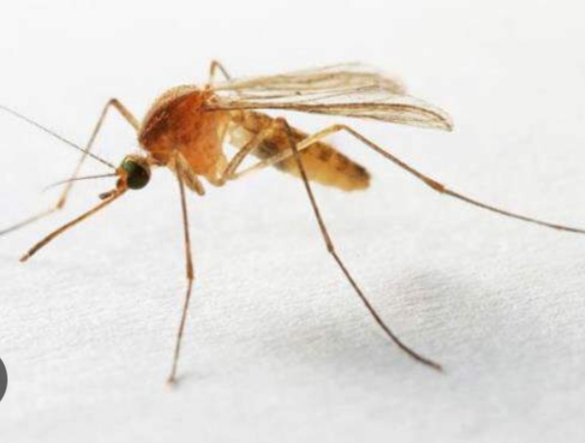
The colonial-era mosquito operated a more efficient immigration system. It required no visa forms, interviews, residency permits, biometric records, border posts, or parliamentary appropriations. It applied one entry requirement to every European visitor: Survive if you can. Portuguese, British, French, Dutch, Danish, or Spanish—the mosquito made no distinction.
By A Patriot
Contributor, The Independentist News
There is a disturbing possibility that African historians have overlooked one of the continent’s most effective anticolonial actors. It did not attend a Pan-African Congress, compose a liberation manifesto, establish a resistance movement, request recognition from the United Nations, organize a diaspora fundraiser, wear military fatigues, or appoint itself president of a government in exile. It possessed no doctorate, diplomatic passport, official vehicle, press secretary, foreign bank account, honorary title, or constitutional amendment extending its mandate. It was the mosquito.
For centuries, European maritime powers possessed ships, weapons, capital, missionary networks, commercial ambition, and an almost theological confidence in their right to control other people’s lands. Yet across large parts of tropical West Africa, these mighty imperial adventurers encountered a tiny resident that had not read the colonial memorandum. The mosquito did not recognize the British Crown. It did not respect the French civilizing mission. It did not salute the Portuguese flag. It did not distinguish among merchant, missionary, soldier, governor, explorer, geographer, or commercial agent. It simply arrived, landed quietly, collected its blood tax, and left the visitor to negotiate with malaria or yellow fever. The historical question is therefore unavoidable. Did the mosquito resist European territorial conquest more effectively than many members of Africa’s later political class?
If so, should the continent finally erect a monument to its smallest, least diplomatic, and most unintentional defender? A Candidate for National Recognition The proposed monument should be modest but unmistakable. At its center should stand a giant bronze mosquito, its wings stretched proudly above a broken colonial map. Beneath one leg should lie an abandoned imperial helmet. Beneath the other should rest a bottle of quinine, the medical instrument that eventually weakened its defensive authority.
The inscription could read: “To the Mosquito: Unappointed Guardian of African Territory, Defender Without Salary, and the Only Public Official Who Never Asked Europe for Permission to Perform Its Duty.” A second inscription might add: “It served without a convoy, consumed no development budget, awarded no contract to its relatives, and never requested a constitutional amendment to remain in office.” The monument should be unveiled by Africa’s surviving intellectuals, presidents, military governments, opposition leaders, professors, traditional rulers, foreign consultants, development experts, and permanent ministers of temporary programs.
They should stand in respectful silence before the insect that accomplished accidentally what many of them failed to achieve deliberately: making the cost of external occupation intolerably high.Naturally, the mosquito must not be romanticized.
Malaria and yellow fever killed and debilitated Africans in enormous numbers, especially children. Disease destroyed families, reduced productivity, burdened communities, and continues to inflict suffering across the continent. The mosquito was not an African nationalist. It was an equal-opportunity parasite without political ideology, national consciousness, or respect for human dignity.
History, however, is filled with unintended consequences. The mosquito did not intend to defend West Africa, but the disease environment it helped create delayed sustained European settlement and made large-scale territorial occupation extraordinarily dangerous. It deserves no moral praise. But it may deserve historical recognition.
The White Man’s Grave
European merchants reached the West African coast centuries before the formal Scramble for Africa. They constructed forts, established trading posts, participated in the slave trade, exported gold and ivory, purchased agricultural commodities, and manipulated relationships among African states. Yet for long periods, many Europeans remained close to the coast. They did not remain there because they respected African sovereignty. They remained because moving farther inland could amount to a death sentence.
Parts of West Africa acquired the European reputation of being the “White Man’s Grave.” Soldiers, missionaries, merchants, explorers, and colonial officials died at frightening rates from malaria, yellow fever, and other tropical diseases. An imperial adventurer might survive an African army but still fail to negotiate successfully with a fever.
He could arrive with rifles, flags, commercial agreements, religious confidence, and letters from his monarch, only to spend his final days trembling beneath a mosquito net while the empire searched for a replacement. The replacement often suffered the same fate. European companies could rotate employees. Missionary organizations could dispatch new volunteers. Governments could send additional soldiers.
But the mosquito maintained a remarkably consistent administrative policy. Every foreign occupier received individual attention. The Mosquito’s Immigration Service Modern African governments frequently struggle to control their borders.
The colonial-era mosquito operated a more efficient immigration system. It required no visa forms, interviews, residency permits, biometric records, border posts, or parliamentary appropriations. It applied one entry requirement to every European visitor: Survive if you can. Portuguese, British, French, Dutch, Danish, or Spanish—the mosquito made no distinction.
It may have been the first genuinely nonaligned institution in African history. It accepted no military-cooperation agreement, development package, cultural-exchange program, diplomatic immunity, or foreign-aid conditionality. It did not attend the Berlin Conference. Had mosquitoes been invited, the Scramble for Africa might have ended before the first substantive agenda item.
European delegates could have sat around a conference table dividing African territory while a delegation of Anopheles mosquitoes entered through an open window and raised a procedural objection. The official minutes might have recorded that the meeting was adjourned indefinitely because all imperial representatives had developed unexplained fevers.
West Africa as the Productive Goose West Africa was never an empty wilderness awaiting European discovery. It contained kingdoms, political institutions, commercial networks, farms, crafts, markets, rivers, forests, mineral resources, intellectual traditions, and communities possessing extensive knowledge of their environments. It was a productive goose laying valuable economic eggs.
Those eggs included gold, salt, kola nuts, palm products, ivory, ironwork, textiles, food crops, labor, commercial access, and later cocoa, rubber, petroleum, and other resources.
European powers wanted the eggs. But they could not initially capture the goose with ease. Disease functioned like an invisible fence around the farm. Europeans could reach through the fence from coastal forts and trading stations. They could purchase, pressure, threaten, raid, negotiate, and manipulate. They could participate in the monstrous trafficking of human beings across the Atlantic.
But remaining inside the territory long enough to establish complete administrative control was expensive and dangerous. European traders and officials therefore depended heavily upon African rulers, merchants, brokers, interpreters, guides, soldiers, healers, transporters, and political institutions. The productive goose remained substantially under African management, even as outsiders carried away increasing quantities of its eggs.
The mosquito did not prevent exploitation.
It limited the foreign exploiter’s ability to become the permanent owner of the farm. A Better Public Servant Than the Postcolonial Elite? The mosquito’s record of public service deserves examination. It accepted no salary. It owned no mansion in Europe. It sent no children to foreign universities at public expense. It secured no import license. It deposited no public funds in Switzerland. It awarded no contracts to cousins. It created no ruling party. It arrested no journalist. It organized no constitutional referendum to remain in office. It did not explain that the population must remain patient while it completed another seven-year development plan. It performed its biological function with terrifying consistency.
Compare that record with sections of the African intelligentsia and political class that inherited independence. Many possessed advanced education, political experience, international contacts, and access to state power. Yet instead of dismantling the colonial system, they frequently occupied it.
They inherited colonial borders, emergency laws, intelligence services, centralized administration, foreign trade arrangements, and educational systems designed to produce clerks and intermediaries.
The mosquito had made occupation expensive. The postcolonial broker made foreign influence comfortable. The mosquito raised the cost of extraction. The broker reduced it. The mosquito forced the European trader to remain near the coast. The broker invited the foreign corporation into the presidential palace. The mosquito demanded blood. The broker demanded a commission. Quinine as the Imperial Passport The mosquito’s defensive monopoly eventually encountered technological competition.
Quinine, derived from the bark of South American cinchona trees, improved European resistance to malaria. Europeans had known about cinchona for generations, but its extraction, distribution, and increasingly systematic use during the nineteenth century altered the calculations of empire. Quinine was not perfect. Dosages were inconsistent, supplies could be unreliable, side effects were serious, and many Europeans resisted taking it regularly.
Nevertheless, it gave soldiers, explorers, missionaries, engineers, merchants, and administrators a better chance of surviving in tropical Africa. Quinine became an unofficial imperial passport. Before its systematic use, the European visitor entered West Africa asking whether he would survive. After quinine, he increasingly asked how much territory his country could claim. The bottle accomplished what the rifle alone could not. It allowed the person carrying the rifle to remain alive long enough to use it.
The mosquito had not been defeated completely. Its protective wall had been breached. When the Mosquito Met Industrial Europe Quinine did not arrive alone. Steamships allowed Europeans to travel along rivers more quickly and move against strong currents. Improved firearms expanded military power. Telegraphs accelerated communication. Better logistics supplied troops over greater distances. Sanitation, drainage, screened housing, mosquito nets, and advances in tropical medicine gradually improved survival.
European imperialism combined medical science, industrial machinery, finance, military organization, and political ambition. The mosquito was an effective guerrilla defender, but it had no research-and-development department. It could not redesign its strategy when the enemy introduced quinine.
It did not diversify its portfolio, issue a patent, organize a scientific conference, or maintain diaspora researchers in Paris and London who could warn it that imperial powers were developing medical countermeasures. This is where the satire becomes painfully serious. European imperialism studied the obstacles preventing conquest and invested in overcoming them.
African political systems did not always study the technologies that would soon be deployed against them with equal urgency. Europe treated knowledge as an instrument of power. Africa too often treated knowledge as an ornament of status. The mosquito defended the territory through biology. Europe breached the biological barrier through science, industry, capital, and organization.
From Collecting the Eggs to Capturing the Goose
Once European powers improved their ability to survive in tropical Africa, their strategy changed. They no longer wanted merely to purchase commodities at the coast. They wanted the land, mines, forests, plantations, taxation authority, labor systems, and the power to determine what Africans would produce and where the resulting wealth would go. They wanted the goose, the farm, the eggs, and the authority to appoint the farmer.
The Berlin Conference of 1884–1885 became the great European auction of African sovereignty. European representatives established rules for claiming African territories without meaningful African participation. Africa was treated like an estate whose owners had failed to attend the reading of the will. Military expeditions, coercive treaties, punitive campaigns, colonial administrations, forced taxation, labor recruitment, land appropriation, and economic restructuring followed.
Railways frequently connected mines and plantations to ports rather than connecting African communities to one another. Roads followed the direction of exports. Schools produced clerks for colonial administration. Agriculture was redirected toward foreign markets.
The mosquito had delayed occupation. Quinine helped make it possible. The Quinine Bottle Must Appear on the Monument Any honest monument to the mosquito must include the quinine bottle. Without it, the monument would tell only half the story. The mosquito delayed conquest, but European science eventually reduced the effectiveness of that natural defense.
The mosquito represents the environmental barriers that protected African political space. The quinine bottle represents Europe’s capacity to combine research, capital, manufacturing, logistics, medicine, and state power in pursuit of expansion. Africa must study both.The lesson is not that disease is beneficial. The lesson is that sovereignty depends upon controlling the knowledge and technologies that determine who can enter, survive, produce, communicate, govern, and dominate. The society that studies its obstacles and develops solutions eventually gains power over the society that merely celebrates its natural advantages.
The Mosquito Could Not Complete Liberation
The mosquito delayed European conquest, but it could not build African unity, create continental defense institutions, manufacture weapons, finance industries, establish research universities, negotiate trade agreements, protect intellectual property, or develop constitutional government. It could not prevent the Atlantic slave trade. It could not stop African rulers, merchants, and intermediaries from sometimes cooperating with foreign exploitation. It could not protect Africans from African collaborators. The mosquito could raise the physical cost of European occupation. It could not eliminate the political, economic, and intellectual weaknesses that made conquest possible. No insect could perform that work. The responsibility belonged to human beings.
The Intellectual Who Arrived After the Mosquito
After independence, African intellectuals inherited a continent that had already paid an enormous price.
They understood colonial extraction, foreign control, the destruction of local institutions, and the dangers of dependency. They had access to the writings of Fanon, Nkrumah, Cabral, and other anticolonial thinkers.
Yet sections of the educated elite became intermediaries for the same external system. They defended foreign-designed economic programs. They managed commodity exports. They validated unequal contracts. They supervised imported technology. They sought legitimacy abroad. They converted government into a career. The mosquito possessed no university degree, yet it understood one strategic principle instinctively: Make occupation expensive.
The postcolonial broker reversed that principle by making extraction convenient, provided that a percentage reached the ruling class. The mosquito blocked the road. The broker paved it. The mosquito prevented the foreign administrator from remaining. The broker offered him an air-conditioned office. When the Mosquito Became a Merchant of Death History has now turned the satire upon itself.
The mosquito that once functioned as Europe’s accidental border guard is being recruited by modern science to participate in the destruction or reproductive suppression of its own species.
The former defender has been converted into a merchant carrying sterility, incompatible bacteria, self-limiting genes, or engineered reproductive instructions into mosquito populations. The mosquito once demanded blood from the imperial visitor. Today, the laboratory asks it to deliver reproductive defeat to its own relatives. Scientists can release sterile male mosquitoes that mate with wild females but produce no viable offspring. Other approaches use male mosquitoes carrying Wolbachia bacteria, which can make reproduction unsuccessful when they mate with females that do not carry a compatible strain. Genetically modified mosquitoes may carry self-limiting traits that prevent female offspring from surviving to adulthood. Researchers are also studying gene-drive approaches intended to suppress malaria-vector populations or reduce their capacity to transmit the parasite.
The language of public health describes these interventions as vector control. The satirist might describe them differently. The mosquito has been recruited as a commercial agent of its own demographic collapse. It enters the village not merely as a blood collector but as a reproductive messenger. It carries no briefcase, invoice, customs declaration, or pharmaceutical license. Its product is reproductive failure, delivered to the next generation of mosquitoes.
The advertisement might read: “Mate once. Produce nothing. Help eliminate malaria.” The same insect that once denied Europeans permanent access to West Africa has now been persuaded—or genetically programmed—to help human beings dismantle the biological empire of malaria. Is this justice? Is it revenge? Has modern medicine decided to punish the mosquito for having delayed colonial conquest?
Has the descendant of quinine returned to finish an argument that began centuries ago? The humorous answer is tempting. The scientific answer must be more disciplined. It Is Not a Vaccine, and It Is Not Evidence of Human Sterilization The male mosquito carrying a reproductive-control trait is not literally delivering a vaccine to other mosquitoes. It is participating in a biological control strategy intended to interrupt reproduction, reduce vector populations, or limit disease transmission. Nor is there credible evidence that these mosquito-control programs are secretly injecting African men or women with an infertility poison.
The reproductive mechanisms targeted by sterile-male, Wolbachia, self-limiting-gene, and proposed gene-drive systems concern mosquitoes. Male mosquitoes used in these programs do not bite humans, and the released traits are intended to affect the targeted insect population rather than human reproduction.
A satire may ask whether the mosquito has been converted into a merchant of death to its own family. It should not turn a rhetorical question into a medical accusation unsupported by evidence. That distinction is important.
Once unsupported allegations are presented as established science, legitimate African concerns about experimental technologies become easier to dismiss. African communities have every right to ask questions about ecological risk, informed consent, patents, biological data, foreign ownership, regulatory authority, and long-term monitoring. Those serious questions should not be weakened by attaching them to claims that evidence does not support. The Real Question Is Who Controls the Science
Africa has historical reasons to distrust interventions presented as benevolent gifts while their ownership, data, intellectual property, risks, and long-term consequences remain controlled elsewhere. Colonial medicine was not always organized primarily for the health and dignity of African communities. It frequently protected soldiers, officials, settler enclaves, plantations, mines, labor systems, and the economic machinery of empire.
Public-health language can therefore never substitute for public accountability. Who owns the modified mosquito? Who owns the genetic construct? Who controls the laboratory? Who approves the release? Who bears liability if ecological effects differ from projections? Who collects the biological and environmental data? Who determines whether the experiment continues? Who possesses the authority to stop it? Who benefits financially from eventual deployment? Will African scientists, universities, governments, traditional institutions, environmental specialists, healthcare professionals, and affected communities possess genuine decision-making authority? Or will they merely be invited to attend a consultation workshop after the central scientific and commercial decisions have already been made?
The World Health Organization supports research into potentially beneficial mosquito technologies but stresses that their evaluation must address safety, ethics, effectiveness, affordability, environmental effects, risk assessment, and meaningful community engagement. It also calls for clear criteria before projects advance from one testing phase to another. Africa should therefore reject two equally dangerous positions.
The first is automatic conspiracy: the assumption that every unfamiliar technology is secretly designed to destroy Africans. The second is automatic submission: the assumption that every intervention carrying the language of global health must be accepted because a prestigious foreign institution endorses it. Scientific sovereignty requires disciplined skepticism. Independent African laboratories should test the organisms.
African universities should examine the ecological assumptions. National regulators should review the complete technical files. Communities should receive explanations in languages they understand. Long-term monitoring should be public. Conflicts of interest should be disclosed. Data should not disappear into foreign institutions. Consent should be real rather than ceremonial. No village should become a biological laboratory merely because its residents are poor, burdened by malaria, and politically distant from the institutions making the decisions.
The Mosquito and Africa’s Real Infertility Burden
Africa also faces genuine reproductive-health challenges. Infertility is neither imaginary nor a trivial concern. The World Health Organization estimates that approximately one in six people of reproductive age worldwide experiences infertility during a lifetime. The causes may involve male or female reproductive conditions, low sperm count or motility, disorders of the ovaries or reproductive tract, endocrine conditions, infections, and other medical factors.
In many African communities, infertility carries additional burdens of stigma, family pressure, marital conflict, financial hardship, and inadequate access to diagnosis and treatment. But the existence of a real infertility problem does not prove a hidden connection to modified-mosquito programs. The mosquito-control project concerns mosquito reproduction. Human infertility concerns human reproductive health.
The two cannot be joined merely because both discussions contain the word “fertility.” To make that leap without evidence would allow governments to avoid addressing the documented causes of infertility while directing public anger toward an unsupported theory. It could also allow foreign scientific institutions to dismiss every African objection as conspiracy, including legitimate concerns involving community consent, ecological uncertainty, intellectual-property control, data ownership, and regulatory sovereignty.
Africa must therefore defend two truths simultaneously. There is no credible evidence that sterile or genetically modified mosquitoes are being used to inject infertility into African populations. There is also no justification for treating African communities as passive recipients of experimental technologies developed, owned, and regulated elsewhere. Scientific honesty and political sovereignty are not enemies. They require one another.
Africa’s Demographic Anxiety
The fear surrounding infertility also reflects a larger African anxiety. Families see changing patterns of marriage, delayed childbirth, economic insecurity, reproductive illness, migration, urban stress, and unequal access to healthcare. Communities worry about whether future generations will remain numerous, healthy, culturally rooted, and capable of sustaining national life.
Those anxieties should be addressed through reproductive healthcare, environmental research, maternal and paternal health, diagnosis of male and female infertility, treatment of infections, honest public education, and stronger scientific institutions. They should not be converted automatically into accusations against every mosquito-control experiment.
A sovereign society investigates before it accuses. It regulates before it releases. It monitors after it acts. It owns enough scientific capacity to distinguish a genuine threat from a rumor—and enough political courage to stop a genuine threat when one is found.
The Former Defender on Trial
The proposed bronze monument must now contain a third symbol. On one side should lie the colonial helmet, representing the empire the mosquito once delayed. On the other should stand the quinine bottle, representing the science that breached its defensive wall. Behind them should appear a modern laboratory cage containing a male mosquito prepared to carry reproductive failure into the population of its own species.
The revised inscription might read: “It once defended Africa without intending to. Science later defeated it. Science has now recruited it against its own descendants. Africa must ensure that the war against malaria does not become another system in which African land, African data, African institutions, and African consent are controlled from abroad.”
The mosquito has travelled an extraordinary historical distance. It began as an accidental barrier to colonial settlement. It became one of Africa’s greatest public-health enemies. It is now being transformed into an instrument of public health—and potentially into an agent of its own biological suppression.
The irony is complete. The former guardian has become the carrier of a death sentence addressed to members of its own family. But the human lesson remains unchanged. Technology is never sovereign by itself. Sovereignty belongs to the people who understand it, regulate it, own it, monitor it, and retain the authority to say yes or no.
The Order of the Mosquito
Perhaps Africa should establish a new national distinction called the Order of the Mosquito. It should not be awarded to anyone who spreads disease. Public-health professionals combating malaria deserve a far more serious honor. The Order of the Mosquito should recognize citizens who increase the cost of exploitation without increasing the suffering of their own people.
It should honor the engineer who designs national infrastructure without surrendering control to foreign contractors. It should honor the scientist who transforms local resources into manufactured products. It should honor the journalist who exposes corrupt concessions. It should honor the teacher who develops independent thought. It should honor the farmer who creates value rather than exporting only raw crops. It should recognize the lawyer who protects public assets, the public servant who refuses a commission, the architect who reconnects housing with culture, and the political leader who leaves office when the constitution requires it. It should also recognize African scientists who fight malaria while defending community dignity, scientific transparency, ecological responsibility, and national control over biological data.
In other words, the Order of the Mosquito should honor human beings who accomplish consciously, ethically, and productively what the mosquito accomplished accidentally and destructively.
The Final Inscription
The monument’s final inscription should not glorify malaria. It should remind Africa of an unfinished responsibility: “Disease delayed the colonizer. Science enabled his return. African disunity completed the conquest. Intellectual dependency preserved the extraction. Sovereignty will return only when Africans build the knowledge, institutions, industries, and courage required to protect the productive source of their prosperity.”
The mosquito deserves no worship or national holiday. Its history must never become an excuse for neglecting malaria prevention, sanitation, drainage, medical research, vector control, and the protection of African children. It may, however, deserve a satirical monument because it exposes the failures of those who came after it.
The smallest creature in West Africa imposed a greater biological cost upon colonial occupation than many postcolonial governments imposed upon neo-colonial extraction. It defended without understanding freedom. Africa’s educated elite understood freedom but too often failed to defend it. That is the joke. It is also the tragedy.
The Verdict
Did the mosquito decolonize West Africa? No. It delayed the complete territorial conquest of the region and forced European powers to remain dependent upon coastal commerce, African intermediaries, and indirect political relationships longer than they would have preferred.
Did it resist occupation more effectively than some later African leaders and intellectuals? The evidence is embarrassingly favorable. Does it deserve a monument? Perhaps—but only if the monument stands beside a university, research laboratory, factory, public-health institute, African-owned biotechnology center, and constitutional court. Otherwise, Africa will once again celebrate a symbol while neglecting the productive institutions that give the symbol meaning. Let the bronze mosquito stand with its wings stretched above the broken imperial helmet.
Let the quinine bottle rest beneath it as a reminder that natural defenses can be defeated by superior science and organization. Let the laboratory cage stand behind it as a reminder that the former defender has now been recruited into the war against its own species. And let every African leader, professor, scientist, and foreign consultant who passes the monument confront its final question: The mosquito delayed the empire without a budget. What have you done with the Republic?
Share This Post:
HOW BRITAIN TRIED TO ERASE SOUTHERN CAMEROONS: The Humanitarian Afterlife of Empire, Development and Diplomacy Under One Institutional Roof
THE BBC IS NOT DEAD—BUT ITS AUTHORITY IS ON TRIAL: What Trump’s $10 Billion Lawsuit Should Teach Ambazonia About Media Power, Editorial Accountability, and Narrative Sovereignty
Related Post
TRUMP’S “SUPER INTELLIGENCE” ERA: WHAT IT REALLY MEANS —
Why Is Ambazonia More Powerful Than many Imagine.
THIS DAY IN HISTORY SEPTEMBER 22, 2017: THE DAY
A President Unseen, a Country Waiting: Yaoundé’s Succession Uncertainty
BEYOND THE FLAG: THE HARDER QUESTION OF BUILDING AMBAZONIA
EKONA UNDER FIRE: THREE CIVILIANS REPORTED KILLED AS RESIDENTS