









Commentary

We are home to news on Cameroon and the CEMAC region. We are dedicated to honest and reliable reporting. We are the voice of the Cameroonian people and their fight for freedom and democracy at a time when the Yaoundé government is silencing dissent and suppressing democratic voices.

The lesson is severe but necessary. Peoples do not obtain justice merely by appealing to another state’s memory or conscience. They must build institutions, alliances and strategic value capable of changing that state’s calculation. Britain has no eternal ally in Yaoundé and no perpetual enemy in Ambazonia. It has interests.
By M. C. Cryton
On Assignment The Independentist News
Britain did not try to erase Southern Cameroons by destroying every colonial record or denying that the territory ever existed. It pursued something quieter and politically more effective: replacing a people with two administrative regions, a constitutional conflict with an “Anglophone crisis,” and an unfinished decolonization question with a humanitarian emergency.
In contemporary British diplomatic vocabulary, the Former British Southern Cameroons has largely disappeared. What remains are the “North-West and South-West regions of Cameroon”—two internal subdivisions whose suffering can be acknowledged without questioning the sovereignty claimed by Yaoundé. Their inhabitants may receive food, medicine, shelter, development assistance and carefully worded expressions of concern, but the political history from which their suffering emerged is rarely allowed to enter international diplomacy on equal terms.
This is the humanitarian afterlife of empire. Britain returns to the territory it once administered not as a former administering authority confronting the consequences of an incomplete constitutional transition, but as an aid donor, diplomatic partner, Commonwealth power and defender of the existing international order.
Humanitarian assistance remains indispensable. It saves lives and should never be dismissed as meaningless. But humanitarian intervention can also become a substitute for political courage. It can feed displaced people without addressing the arrangements that displaced them. It can treat wounds while avoiding the question of who created the battlefield. It can preserve life while preserving the diplomatic order under which that life remains endangered.
Britain did not merely leave Southern Cameroons in 1961. It helped dissolve the territory as an internationally visible political subject and has since participated in a diplomatic vocabulary that makes its reappearance increasingly difficult.
The Territory Britain Once Knew
Southern Cameroons is not a name invented by the present independence movement. It was a distinct United Nations Trust Territory administered by Britain, with its own government, legislature, judiciary, public service, political leadership, territorial boundaries and evolving constitutional identity.
In February 1961, the United Nations organized a plebiscite in which the people were offered only two routes to independence: joining the Federation of Nigeria or joining the already independent Republic of Cameroun. Separate sovereign independence was not placed on the ballot.
United Nations General Assembly Resolution 1608 (XV) subsequently provided for the termination of the trusteeship on October 1, 1961, when Southern Cameroons would join the Republic of Cameroun. The resolution also invited Britain, the Government of Southern Cameroons and the Republic of Cameroun to begin urgent discussions to finalize the arrangements through which the declared policies of the parties would be implemented before trusteeship ended.
The political understanding presented to Southern Cameroonians was federal. They did not vote to disappear into a centralized state governed exclusively from Yaoundé. The proposed union was understood as an association of political communities in which the institutions, legal tradition, educational system and internal autonomy of Southern Cameroons would be preserved. Yet Britain withdrew at the decisive moment.
It terminated its trusteeship role and treated the outcome as completed decolonization. It did not remain as guarantor of the constitutional bargain. It established no durable international mechanism for verifying whether the agreed federal protections were respected. It provided no enforceable international remedy if the political identity and autonomy of Southern Cameroons were subsequently dismantled.
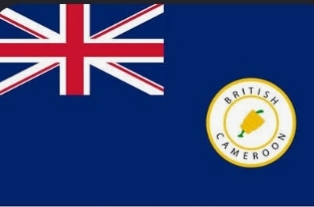
The territory entered the union with a government, a history and a constitutional identity. Britain left it without an international seat, sovereign guarantor, neutral dispute-resolution mechanism or lawful exit provision. The British flag came down. The administrative files were closed. Responsibility was declared finished.
Erasure Through Vocabulary
Political erasure does not always require censorship. Sometimes it occurs through renaming. “Southern Cameroons” identifies a former United Nations Trust Territory and recalls Britain’s direct administrative responsibility. “North-West and South-West regions” identifies two internal administrative units of La République du Cameroun. “Southern Cameroons conflict” suggests an unresolved territorial and constitutional question. “Anglophone crisis” reduces that question to language and cultural accommodation within an otherwise settled state.
The modern terminology may be geographically intelligible, but it is politically reductive. A people are transformed into language speakers. A former government becomes a distant cultural memory. The dismantling of federal autonomy becomes a decentralization problem. A question of consent, state formation and political identity becomes a disagreement about bilingualism. The subordination of Common Law institutions and English-language education becomes an administrative defect requiring technical reform.
Once “Southern Cameroons” disappears from diplomatic vocabulary, Britain’s historical role changes as well. Britain is no longer the former administering authority whose decisions helped produce the disputed political order. It becomes merely one concerned international partner among many.
This is why naming matters.
“People have been displaced” describes suffering while deleting the actor responsible for the displacement. “Schools have closed” may conceal the distinct responsibilities of state forces, armed separatists, boycott enforcers and a government that militarized communities or failed to protect education. “Clashes occurred” may place a heavily armed state, armed resistance groups and vulnerable civilians inside the same fog of passive grammar.
A humanitarian emergency creates beneficiaries who require assistance. A constitutional conflict creates parties who require negotiation. An atrocity-risk framework demands prevention, investigation, evidence preservation and scrutiny of assistance that might facilitate abuse. The vocabulary chosen does not simply describe policy. It determines which policies become imaginable.
Development and Diplomacy Under One Roof
In June 2020, the British Government announced the merger of the Department for International Development with the Foreign and Commonwealth Office. The resulting Foreign, Commonwealth & Development Office brought foreign policy, diplomacy and development assistance under one institutional roof.
The merger did not make British humanitarian aid fraudulent. British-funded programs continue to relieve suffering and save lives around the world. But the institutional change made something explicit that development scholars had long recognized: aid does not exist above foreign policy. It operates within national strategy, donor priorities, diplomatic relationships and geopolitical interests.
The same department responsible for assisting victims is also responsible for maintaining bilateral relationships, preserving diplomatic access, promoting trade, managing sanctions and advancing Britain’s international strategy. This creates a structural tension whenever a partner government is accused of producing or aggravating the suffering that British assistance is intended to relieve.
Britain may fund food for displaced families while maintaining a cooperative diplomatic relationship with the government accused of displacing some of them. It may support education programs while describing the destruction of an inherited educational order as an “Anglophone” grievance. It may finance humanitarian relief without demanding a neutral political process capable of addressing the causes of the emergency.
This is not necessarily hypocrisy by individual aid workers. Humanitarian personnel may act with courage, professionalism and integrity. The problem lies in the larger institutional arrangement that limits the political meaning of their work.
Humanitarian assistance can become political anesthesia: sufficient to reduce the most visible suffering, but insufficient to disturb the order generating it.
When Legal Caution Becomes Political Delay
Britain’s longstanding position is that a formal determination of genocide belongs to a competent national or international court rather than to governments or nonjudicial institutions. That position has legal merit. Genocide is a precisely defined international crime and should not be reduced to a casual political slogan. This article makes no judicial determination that genocide has occurred in Southern Cameroons.
The difficulty is temporal. Courts may reach final judgments only after years of litigation, while prevention must begin when a serious risk first becomes apparent. Waiting for a court to confirm completed destruction may protect legal vocabulary while defeating the preventive purpose of international law.
Britain already understands the distinction between final adjudication and forward-looking risk assessment. In arms-export decisions, the government may evaluate whether weapons could be used to commit or facilitate serious violations of international humanitarian law. It does not always wait for a final criminal conviction before assessing danger.
The relevant question is therefore not whether British ministers should casually declare genocide. It is whether deference to a future court becomes a rhetorical shield against early prevention, independent investigation and timely diplomatic action.
A permanent member of the United Nations Security Council possesses diplomatic, legal and economic instruments unavailable to humanitarian organizations. When such a state confines itself to humanitarian vocabulary, neutrality may become an effect of political framing rather than the absence of policy.
Technical Assistance Without Political Transformation
The Commonwealth has provided capacity-building support to Cameroon’s election-management institutions, including workshops presented as strengthening credible, transparent and inclusive elections. Such training may improve professional administration. Secure ballots, properly trained officials and transparent procedures matter. But technical competence and political equality are not the same thing.
An election may have well-trained officials while the electoral body lacks genuine independence. Ballots may be counted accurately while access to public media, state resources, courts, security institutions and campaign space remains profoundly unequal. Technical assistance may improve democratic capacity, but it may also provide procedural legitimacy to a political structure whose deeper inequalities remain untouched.
The correct measure is not merely whether workshops occurred or participants learned useful methods. It is whether citizens acquired a genuine and enforceable capacity to change their government through a free and credible process. Britain and the Commonwealth have become present enough to claim support for democracy, yet distant enough to deny responsibility for the political architecture in which that democracy is expected to function.
This is low-cost influence: workshops without constitutional confrontation, assistance without enforceable accountability and dialogue without neutral mediation.
Patricia Scotland and the Diplomacy of “Unity”
Commonwealth Secretary-General Patricia Scotland visited Cameroon in December 2017 as the conflict was intensifying. Official records show that she met President Paul Biya, opposition representatives, civil-society organizations and stakeholders in Buea. She called for dialogue, peace and inclusion.
The visit therefore should not be inaccurately described as having ignored Buea or every nongovernmental actor. Its political symbolism, however, deserves scrutiny. President Biya hosted Scotland at a state luncheon and decorated her as Grand Officer of the Order of Valour, described by the presidency as the highest Cameroonian distinction awarded to a foreign dignitary. The decoration is not evidence of bribery, but diplomacy operates through symbols as well as formal statements.
A mission undertaken amid state repression, separatist escalation and mass political grievances was ceremonially incorporated into a public performance of partnership with the internationally recognized government. The images of honor, friendship and institutional continuity inevitably competed with the mission’s supposed urgency.
More consequentially, Commonwealth diplomacy repeatedly framed the objective around “peace” and “unity.” Unity sounds neutral, but within a sovereignty conflict it establishes the limits of acceptable discussion before negotiations begin. If unity is the predetermined destination, decentralization and federalism may be discussed, but independence is excluded before the parties enter the room.
In 2019, the African Union, Commonwealth and Organisation internationale de la Francophonie encouraged implementation of the conclusions of the government-organized Grand National Dialogue. They welcomed decentralization, special status and institutional reforms while emphasizing peace, national cohesion and unity.
Yaoundé remained the organizer, gatekeeper and principal interpreter of the process. That was engagement, but it was not neutral mediation. It operated within boundaries established by one party to the conflict.
Britain’s Northern Ireland Double Standard
Britain knows that a deeply rooted constitutional conflict cannot be resolved merely through humanitarian assistance, technical workshops and appeals for national unity. It learned this in Northern Ireland. The 1998 Good Friday Agreement did not begin by criminalizing one constitutional aspiration. It recognized competing identities and accepted that Northern Ireland’s future must rest on consent. It created power-sharing institutions, cross-border structures, protections for cultural identity and a lawful process through which constitutional status could change.
Britain did not permanently exclude Irish nationalism from political negotiations because the territorial integrity of the United Kingdom had supposedly settled the question. It eventually recognized that lasting peace required placing the constitutional dispute inside the negotiating process.
Yet in Southern Cameroons, Britain supports dialogue bounded by Cameroon’s “unity” and territorial integrity. The constitutional aspiration at the center of the conflict is treated as an obstacle to dialogue rather than a legitimate subject for negotiation.
The contrast is striking.
At home, Britain accepted parity of esteem, power sharing, international involvement, institutional safeguards and the principle of consent. In Cameroon, it has largely accepted special status, decentralization, technical assistance and government-managed dialogue. At home, constitutional status could be negotiated. In Southern Cameroons, the same discussion is condemned as secession.
Britain applied political imagination to Northern Ireland because the conflict directly affected its territory, security and citizens. It applies humanitarian management to Southern Cameroons because Africans bear most of the political and human costs.
Britain and France: Alignment Without a Secret Treaty
France maintains the denser military, commercial, linguistic and diplomatic relationship with Yaoundé. Britain occupies a less visible position through humanitarian assistance, trade, diplomacy and Commonwealth institutions. No secret Anglo-French conspiracy is necessary to explain this arrangement. National interests can align without covert coordination.
France benefits from continuity in a longstanding strategic partner. Britain benefits from stability, diplomatic access, commercial opportunity and avoidance of renewed scrutiny of its Southern Cameroons record. Yaoundé receives recognition and cooperation from both. France performs more of the visible strategic labor and bears more of the reputational cost, while Britain remains inside the same state-centered international order with a softer humanitarian and technical image. France undertakes the heavy lifting of strategic proximity. Britain receives many of the benefits of continuity. Southern Cameroons bears the cost of both.
Palmerston’s Britain: Permanent Interests and Disposable Relationships
Britain’s conduct becomes clearer when examined through the foreign-policy realism associated with Lord Palmerston. In 1848, Palmerston declared that Britain had no permanent allies or perpetual enemies; its interests were enduring, and those interests had to be pursued.
The statement should not be misrepresented as a formally codified doctrine governing every subsequent British decision. It is better understood as a durable philosophy of statecraft: alliances, moral commitments and political friendships remain subordinate to what the British state considers its national interest.
During Palmerston’s era, that philosophy was supported by naval power, commercial pressure and coercive diplomacy—methods later associated with “gunboat diplomacy.” Britain demonstrated that its power could cross oceans whenever British commerce, property or geopolitical access was threatened.
The modern lesson for Southern Cameroons is uncomfortable. Britain’s former administrative relationship did not create an eternal obligation in British policy. When continued responsibility ceased to serve an immediate interest, Southern Cameroons became diplomatically expendable. Britain could terminate trusteeship, accept the emerging relationship with Yaoundé and later treat the resulting constitutional conflict as an internal Cameroonian matter.
Southern Cameroonians may remember Britain through education, Common Law, parliamentary traditions, language and public administration. Palmerstonian statecraft does not operate through historical affection. It asks what serves Britain now.
That calculation helps explain why London can celebrate Cameroon’s Commonwealth membership while avoiding sustained scrutiny of the conditions under which Southern Cameroons entered the union. It can praise English-language education without recognizing those who inherited it as a distinct political community. It can celebrate Common Law as shared heritage while remaining quiet when its institutional autonomy is weakened. It can provide humanitarian assistance while refusing to place its trusteeship history at the center of conflict resolution.
The same logic explains Britain’s relationship with France. Britain and France have been rivals, enemies, competitors, allies and strategic partners. Palmerston’s reasoning anticipated such flexibility: yesterday’s adversary may become today’s indispensable collaborator when interests converge.
In Cameroon, Britain does not need a secret agreement instructing it to follow France. It needs only compatible interests. France wants continuity in a strategically connected government. Britain wants stability, diplomatic access, commerce, Commonwealth influence and freedom from renewed responsibility for Southern Cameroons. Recognition of Yaoundé’s authority serves both governments more conveniently than reopening the constitutional foundations of the state.
Palmerstonian realism also helps explain the contrast with Northern Ireland. Britain accepted the principle of consent there because continued conflict directly threatened British security, territory, citizens and international relations. Political compromise served Britain’s interests. In Southern Cameroons, London bears fewer direct consequences. Humanitarian management costs less than confronting Yaoundé, France and the inherited interstate order.
The difference is not necessarily that Britain discovered morality at home and forgot it in Africa. Its interests were different. Southern Cameroonians must therefore resist the belief that shared language, education, Common Law or Commonwealth membership automatically guarantees British loyalty. These connections can produce access, cultural sympathy and occasional assistance, but they do not override strategic calculation.
Britain’s policy must be judged by its consequences, not its sentimental language. The empire may offer affection when affection is inexpensive. It offers decisive action when interests demand it. Southern Cameroons inherited British institutions. It did not inherit a permanent British friend.
Speak Pidgin, Learn Lamnso, Wear the Regalia—and Negotiate With Yaoundé
Britain’s contemporary policy has acquired a culturally sophisticated face. British diplomats and representatives may speak Pidgin English, use greetings in Lamnso, wear traditional regalia and present themselves as respectful friends of local communities. These gestures can reduce distance, create familiarity and demonstrate appreciation for the cultural heritage of the Former British Southern Cameroons.
But cultural intimacy must not be confused with political solidarity. While Britain speaks the languages of Southern Cameroonians and wears their traditional attire, its hardest diplomacy—concerning trade, security, regional stability and strategic access—is conducted with Yaoundé. Local communities receive cultural recognition; the central government receives diplomatic recognition. The people receive symbolic visibility; the state controlling their territory remains Britain’s principal negotiating partner.
This is not proof of a secret policy or conspiracy. It is a familiar method of diplomacy: speak locally, listen carefully, cultivate trust and gain access, while negotiating national interests with the government possessing internationally recognized authority. Language and regalia may therefore represent both genuine cultural respect and instruments of diplomatic access.
Speaking Pidgin does not mean supporting Southern Cameroonian self-determination. Learning Lamnso does not mean recognizing the wider constitutional claims of Southern Cameroons. Wearing traditional regalia does not compel Britain to confront the consequences of the 1961 transition. Cultural fluency can coexist comfortably with strategic alignment with Yaoundé.
The British imperial and educational systems have long understood the value of language. Curricula, scholarship and examination traditions gave institutional space to languages extending from Yoruba to Urdu. This could preserve and develop linguistic knowledge, but it also improved administration, communication, commercial access and political intelligence. A power that understands how communities speak is better positioned to understand how they think, organize, negotiate, trade and resist.
The contemporary technique is softer than Palmerston’s gunboat diplomacy, but its strategic logic remains recognizable. Where nineteenth-century Britain deployed naval power, twenty-first-century Britain may deploy cultural fluency, development assistance, Commonwealth relationships, technical cooperation and symbolic inclusion.
The methods have changed. The pursuit of access and advantage has not. Southern Cameroonians may welcome sincere cultural respect, but they should not mistake it for a change in policy. The true test is not whether a diplomat can speak Pidgin, pronounce a Lamnso greeting or wear embroidered traditional regalia. The test is whether Britain will acknowledge the Former British Southern Cameroons by its historical name, confront the record of its trusteeship and support an impartial process in which the people’s constitutional future is not predetermined by Yaoundé.
Britain may speak the language of the people. But it still discusses hard diplomacy, trade and security with the government in Yaoundé. That is the difference between cultural engagement and political power.
Erasure Is Not Absence
Britain’s approach is frequently described as neglect, but neglect is too passive a word. Britain has not been absent. It maintains diplomatic relations with Yaoundé, participates through the Commonwealth, finances humanitarian programs, supports electoral processes, engages local communities and calls for dialogue. Its influence remains real.
The central issue is the form that influence has taken. Britain is present as a donor but absent as the former administering authority. Present as a diplomatic partner but absent as a guarantor of the historical transition. Present in election workshops but absent from a credible, internationally facilitated process addressing the constitutional roots of the conflict. Present when English, Common Law and Commonwealth heritage create cultural or commercial value, but hesitant when that inheritance raises questions of trusteeship, political identity and historical responsibility. Present in Pidgin, Lamnso and traditional regalia, but strategically aligned with the recognized government in Yaoundé.
That is how a territory is erased without denying that it once existed. Its history is selectively remembered. Its institutions are celebrated as cultural heritage but denied political consequence. Its people are recognized as vulnerable beneficiaries, but not necessarily as a political community entitled to enter negotiations under their historical name.
What Britain Must Now Do
Britain cannot reverse 1961, but it can stop using humanitarian engagement as a substitute for political responsibility. It should restore “Former British Southern Cameroons” to its diplomatic and analytical vocabulary. Doing so would not automatically recognize Ambazonian independence. It would acknowledge the historically documented identity of the territory at the center of the conflict.
Britain should release, organize and make readily accessible all relevant colonial, trusteeship and diplomatic records concerning the 1961 transition. Historical transparency is not hostility toward Cameroon. It is a minimum requirement of democratic accountability.
London should support an impartial and internationally facilitated political process in which no constitutional option is excluded before negotiations begin. Dialogue cannot be credible when one party organizes the meeting, selects the participants and declares unity to be the only permissible outcome.
Britain should support independent atrocity-risk assessment, evidence preservation and accountability for abuses committed by all parties. Legal caution about genocide must not become an excuse for delayed prevention.
Electoral, military, policing and technical assistance should be evaluated against their human-rights consequences, institutional independence and real political outcomes—not merely the number of workshops delivered or participants trained.
Britain must apply abroad the central lesson it learned through Northern Ireland: peace becomes possible when identity is respected, competing constitutional aspirations are allowed into the political process and government rests upon demonstrable consent.
Palmerstonian realism need not condemn Britain to permanent inaction. It means that advocates for Southern Cameroons must connect historical responsibility with Britain’s contemporary interests: regional stability, secure commerce, atrocity prevention, accountable government, Commonwealth credibility and peaceful conflict resolution.
Diplomatic avoidance must carry a reputational and strategic cost. A just constitutional settlement must be presented not only as a moral obligation but also as the most durable path to stability.
The Name That Refuses to Disappear
Britain tried to reduce Southern Cameroons to an administrative memory. Yaoundé attempted to absorb it into a centralized republic. International diplomacy translated it into an “Anglophone crisis.” Humanitarian vocabulary transformed its people into displaced beneficiaries. Cultural diplomacy learned to speak Pidgin and Lamnso while political diplomacy continued to negotiate with Yaoundé. Yet the name survives.
It survives because political identity cannot be permanently erased by administrative decree. It survives in Common Law traditions, educational memory, community organization, cultural inheritance, diaspora advocacy and the continuing demand for a settlement founded upon consent. Aid can keep a displaced person alive. Only justice can make return safe. Diplomacy can preserve access. Only honest negotiation can create legitimacy. Technical assistance can improve an election. Only political equality can make the vote sovereign. Speaking a people’s language can create familiarity. Only respecting their political agency can create trust.
Britain cannot claim to have completed its duty merely because its colonial flag no longer flies over Buea. The humanitarian afterlife of empire will continue for as long as Britain helps manage the suffering while refusing to confront the political history beneath it.
Britain’s vocabulary may have changed, but the Palmerstonian calculation remains recognizable: relationships are temporary; interests endure. Southern Cameroons was useful when it served Britain’s imperial administration and expendable when withdrawal became convenient.
The lesson is severe but necessary. Peoples do not obtain justice merely by appealing to another state’s memory or conscience. They must build institutions, alliances and strategic value capable of changing that state’s calculation. Britain has no eternal ally in Yaoundé and no perpetual enemy in Ambazonia. It has interests.
The task before Southern Cameroons is to ensure that truth, justice, regional stability and a legitimate constitutional settlement can no longer be separated from those interests. Southern Cameroons was not born as the “North-West and South-West regions.” It was not created by the conflict that erupted in 2016. It existed in international law, British administration and the constitutional history of 1961. Britain may have helped remove it from diplomatic vocabulary. It did not remove it from history. And it has not removed it from the consciousness of its people.
M. C. Cryton
On Assignment The Independentist News
Share This Post:
PAUL BIYA’S PROLONGED ABSENCE: Conflicting Ministerial Defenses Deepen Cameroon’s Constitutional Debate
DID THE MOSQUITO DO A BETTER JOB OF DECOLONIZING WEST AFRICA? Does Africa’s Smallest and Most Unintentional Defender Deserve a Monument?
Related Post
TRUMP’S “SUPER INTELLIGENCE” ERA: WHAT IT REALLY MEANS —
Why Is Ambazonia More Powerful Than many Imagine.
THIS DAY IN HISTORY SEPTEMBER 22, 2017: THE DAY
A President Unseen, a Country Waiting: Yaoundé’s Succession Uncertainty
BEYOND THE FLAG: THE HARDER QUESTION OF BUILDING AMBAZONIA
EKONA UNDER FIRE: THREE CIVILIANS REPORTED KILLED AS RESIDENTS