



The Independentist News believes that the public interest would be served by clear, documented responses to the following questions: Who appointed Anchi Elizabeth as Chairlady of the Traditional Council, and what instrument or customary procedure establishes her authority?
By Ali Dan Ismael
Senior Editor, The Independentist News
MONDONI, SOUTH-WEST REGION, CAMEROON | INVESTIGATIVE COMMENTARY
As Amazon associate this site earns from qualifying purchases
Follow the Amazon link below and get your copies of other publications on Ambazonia’s productive Sovereignty by Martin Mungwa
WHO GOVERNS MONDONI? WHO GAVE THEM THE AUTHORITY? AND WHO HOLDS THEM ACCOUNTABLE?
Traditional leadership is supposed to represent service, cultural stewardship, community unity and the protection of ancestral heritage. It should inspire confidence, not fear; promote development, not hardship; and defend the dignity of the people, not place their rights at the mercy of unexplained decisions.
Yet serious allegations emerging from Mondoni village, in the South-West Region of Cameroon, raise troubling questions about the exercise of traditional authority, the management of community resources and the treatment of ordinary residents.
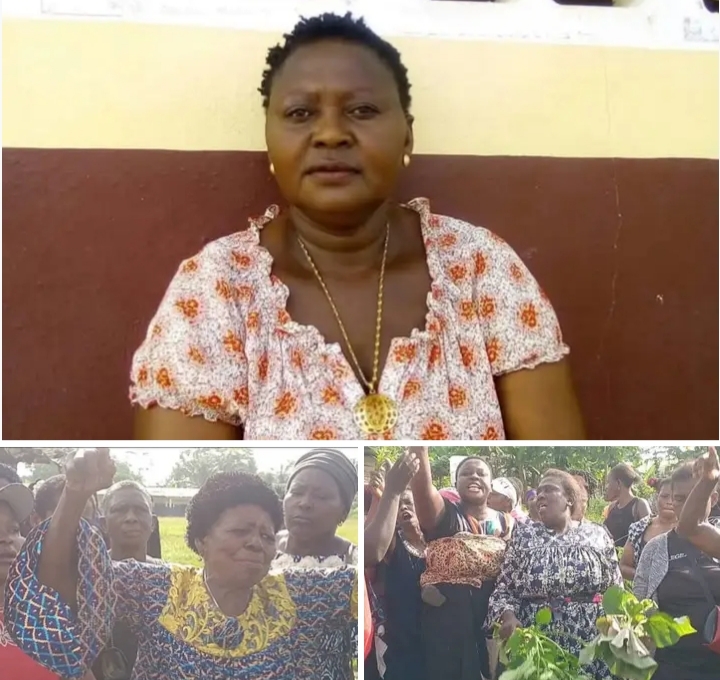
At the centre of these complaints is Anchi Elizabeth, identified by residents as Chairlady of the Traditional Council, alongside questions concerning the responsibilities and oversight of Mondoni’s traditional ruler, Chief Richard Kombe Ndike.
Residents allege years of electricity shortages, unaccounted-for development contributions, disputed land transactions, excessive financial demands and restrictions on community gatherings, funerals and burial arrangements.
These allegations have not been independently verified. Nevertheless, they raise questions serious enough to warrant an impartial investigation and public responses from those concerned.
WHO IS ANCHI ELIZABETH, AND WHAT IS THE LEGAL BASIS OF HER AUTHORITY?
The first question is fundamental: Who appointed Anchi Elizabeth to her position, under what authority, and with what clearly defined responsibilities?
Residents identify her as Chairlady of Mondoni’s Traditional Council. However, The Independentist News has not independently obtained documentation confirming the circumstances of her appointment, the scope of her delegated responsibilities or the legal and customary limits of her office. Does her authority originate from the traditional ruler, the council itself, an established customary procedure or an administrative decision? And, most importantly, to whom is she answerable?
Chief Richard Kombe Ndike is identified as Mondoni’s traditional ruler. Reports of his election in December 2025 as President of the House of Chiefs and Vice-President of the South-West Regional Assembly make the question of institutional accountability particularly important. Those reported appointments should be corroborated through official records.
Cameroon’s Decree No. 77/245 of 15 July 1977 establishes a regulatory framework for traditional chiefdoms. But traditional authority, however deeply rooted in custom, must operate within applicable law. No position of traditional responsibility should be interpreted as an unlimited licence to impose financial demands, interfere arbitrarily with community life or exercise power without accountability.
THE ELECTRICITY CONTRIBUTIONS: WHO COLLECTED THE MONEY, AND WHERE DID IT GO?
Among the most serious complaints is the alleged failure of a community electricity initiative. According to residents, Mondoni has experienced more than eight years without reliable electricity. They further claim that approximately five years ago, funds were collected from households for a proposed electricity project.
The reported contributions were: FCFA 25,000 from households represented by men. FCFA 10,000 from households represented by women. Yet, according to the complainants, the promised electricity project has not materialised. If these accounts are accurate, residents deserve answers.
Who authorised the collection? Who received the contributions? How many households paid? What was the total amount collected? Was the money deposited into an identifiable account? Were expenditures documented? Was an agreement signed with an electricity provider or contractor? And if the project was abandoned, delayed or deemed unfeasible, why were contributors reportedly not provided with a transparent explanation?
There may be legitimate explanations, but those explanations should be supported by records. Community development money is not private money. Every contribution collected in the name of public improvement creates an obligation to account for its use. An independent financial review, supported by receipts, bank records and project correspondence, would help establish the facts.
LAND TRANSACTIONS: HAVE COMMUNITY RIGHTS BEEN PROTECTED?
Even more disturbing are residents’ allegations concerning payments associated with land acquisition in Mondoni. Some complainants allege that prospective land purchasers are required to provide FCFA 500,000, two bottles of Hennessy and two bottles of Johnnie Walker Black Label.
Others claim that payments have been made without the issuance of adequate documentation establishing the purchaser’s rights or the legal status of the land. Additional allegations concern the purported appropriation or allocation of community land in the name of the traditional ruler.
These claims remain unverified and must not be treated as findings of wrongdoing. Nevertheless, they warrant investigation. Who establishes these charges? Are they recognised customary obligations, officially approved fees or demands imposed without documented authority? Who receives the payments? What receipts are issued? What rights are transferred, and what legal documentation protects purchasers?
Land is not merely a commercial asset in a traditional community. It represents ancestry, family continuity, livelihood, identity and the inheritance of future generations.Customary authority over land must be distinguished from personal ownership and must be exercised consistently with applicable land laws and the rights of families and other legitimate stakeholders. No community should be left uncertain about who controls its ancestral land, on what legal basis, and for whose benefit.
MUST FAMILIES SEEK PERMISSION TO GATHER, MOURN OR BURY THEIR DEAD?
The allegations extend beyond money and land into some of the most sensitive areas of communal life. Residents claim that traditional council decisions have restricted Njangi meetings, youth gatherings, funeral arrangements and other customary activities.
Particularly troubling are accounts suggesting that some families have encountered obstacles when attempting to bury deceased relatives, including alleged demands for payments before graves could be dug. These claims require careful verification, including the identification of specific incidents, affected families, applicable customary rules and any payments requested.
But the underlying principle is clear. The dignity of the dead and the grief of the living must never become instruments of arbitrary control or financial exploitation. Njangi associations and traditional gatherings are important elements of community solidarity. They provide economic assistance, mutual support and social continuity.
Where restrictions are imposed, residents have a right to ask whether those restrictions are lawful, reasonable, consistently applied and genuinely necessary. Traditional leadership should preserve cultural institutions, not undermine the community relationships upon which those institutions depend.
WHERE IS THE CHIEF, AND WHO SUPERVISES THE TRADITIONAL COUNCIL?
Residents also question the availability and involvement of Chief Richard Kombe Ndike in Mondoni’s day-to-day affairs. Some complainants allege that the chief does not reside permanently in the village and has visited only three times during the past five years. The Independentist News has not independently verified the frequency of those visits.
A traditional ruler’s physical absence does not, by itself, demonstrate neglect or misconduct. However, where administrative responsibilities are delegated, residents are entitled to know who exercises those responsibilities and what safeguards exist against abuse. This brings the investigation back to Anchi Elizabeth.
What authority has she actually received? Is that delegation documented? Does the traditional council maintain financial and administrative records? Are important decisions subject to consultation or review? What mechanisms exist for residents to challenge decisions they consider unfair?
And when complaints arise, does the chief intervene to ensure that the matter is addressed? Delegating responsibility does not eliminate the need for oversight. Residents further allege that grievances have been reported to administrative authorities in Tiko without satisfactory intervention.
The Divisional Officer of Tiko, the Senior Divisional Officer for Fako and other competent regional and national authorities should therefore examine the complaints within their respective legal responsibilities.
An impartial inquiry should protect complainants from retaliation while ensuring that all accused persons receive a fair opportunity to respond.
THE QUESTIONS ANCHI ELIZABETH AND CHIEF NDIKE MUST ANSWER
The Independentist News believes that the public interest would be served by clear, documented responses to the following questions: Who appointed Anchi Elizabeth as Chairlady of the Traditional Council, and what instrument or customary procedure establishes her authority?
What powers have been delegated to her, and what limits and oversight mechanisms apply? How much money was collected for Mondoni’s proposed electricity project, where was it deposited and how was it spent? Who determines the reported land-related payments, and what legal or customary authority supports them? What procedures protect community and family land rights, and what documents are issued to purchasers?
Have restrictions been imposed on community gatherings, funerals or burials? If so, by whom and under what authority? What formal complaint mechanisms are available to residents, and what action has been taken on grievances reportedly submitted to administrative officials? These are not declarations of guilt. They are questions arising from allegations that deserve examination.
Both Anchi Elizabeth and Chief Richard Kombe Ndike must be afforded a meaningful opportunity to present their accounts, produce records and correct any inaccurate claims.
MONDONI DESERVES ANSWERS, NOT FEAR
Mondoni does not need a war between its residents and traditional institutions. It needs transparency, lawful administration, credible leadership and confidence that community resources are being protected.
A constructive response would include verification of traditional appointments, an independent accounting of electricity contributions, a review of disputed land transactions and an impartial examination of alleged restrictions on communal activities.
Where financial or administrative irregularities are established, the appropriate authorities should determine the remedies and any lawful consequences. Where allegations prove unfounded, that too must be publicly acknowledged.
Accountability is not an attack on tradition. It is one of the conditions for preserving the legitimacy of traditional leadership. A chief is a custodian of the community’s heritage, not the unrestricted owner of its people, property or future.
A traditional council should be a forum for service, reconciliation and collective development—not an institution whose decisions are beyond legitimate scrutiny.
MONDONI IS NOT ANYBODY’S PRIVATE KINGDOM.
Its land is part of its collective inheritance. Its people deserve dignity. Its development resources must be accounted for. Its customs deserve protection, and its traditional institutions must remain answerable to the law and the communities they serve.
Leadership must mean service, not domination; development, not unexplained demands; unity, not intimidation; and accountability, not silence. The fundamental question remains:
WHO AUTHORISED THE EXERCISE OF THESE POWERS IN MONDONI, UNDER WHAT MANDATE, WITH WHAT SAFEGUARDS—AND IN WHOSE INTERESTS?
Until those questions are answered, the concerns raised by Mondoni residents deserve serious, impartial and transparent attention.
EDITORIAL NOTE
This article is investigative commentary based on allegations communicated by persons identifying themselves as Mondoni residents. The Independentist News has not independently verified the alleged financial collections, land transactions, restrictions on community activities, burial-related demands or frequency of visits by the traditional ruler.
No finding of criminal, financial or administrative wrongdoing is made against Anchi Elizabeth, Chief Richard Kombe Ndike or any other person mentioned.
All named individuals and relevant institutions are entitled to respond and to provide documentary evidence. The Independentist News welcomes receipts, financial accounts, land records, appointment documents, official correspondence and verifiable eyewitness testimony. Any material inaccuracies established through reliable evidence will be corrected.
The Independentist News — Investigating Power. Defending Accountability. Giving Communities a Voice.
As Amazon associate this site earns from qualifying purchases
Follow the Amazon link below to get your copies of the many publications on Ambazonia’s productive Sovereignty By Martin Mungwa
By Ali Dan Ismael
Senior Editor, The Independentist News