




The challenge to Prime Minister Burnham is therefore clear. – Open the historical record. Support independent examination of the 1961 arrangements. Encourage meaningful political dialogue. Insist upon respect for human rights. And help ensure that the future of Southern Cameroons is addressed through democratic legitimacy rather than indefinite constitutional confrontation.
By Ali Dan Ismael | Senior Editor-in-Chief, The Independentist News
As Amazon associate this site earns from qualifying purchases
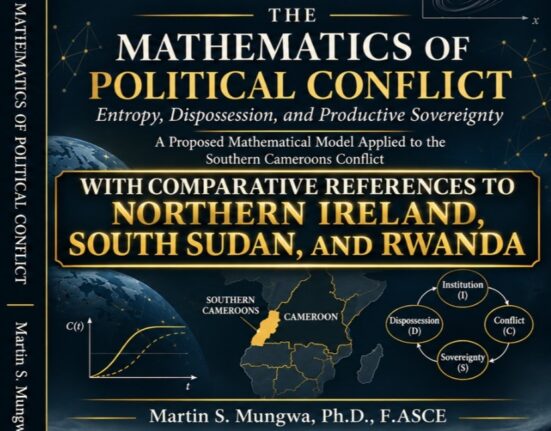
Follow the Amazon link below to get your copies of many publications on the Ambazonian revolution By Martin Mungwa
LONDON / BUEA | INTERNATIONAL POLITICAL COMMENTARY | November 13, 2026
BRITAIN WANTS THE RIGHT TO RECONSIDER EUROPE. WHAT ABOUT THE PEOPLE IT ONCE GOVERNED?
Britain is reopening one of the most consequential political debates in its modern history: whether its departure from the European Union was a mistake and whether closer European integration should once again become a national objective.
Prime Minister Andy Burnham believes Britain’s economic interests demand a reconsideration of its relationship with Europe. Former Prime Minister David Cameron, the architect of the 2016 referendum, warns that reopening the question could plunge the country into another painful political struggle.
But thousands of miles from Westminster, another people have been asking a question that Britain has yet to confront with comparable urgency. If the British people can reconsider their relationship with Europe, why should the people of the former British Southern Cameroons be expected to accept indefinitely a constitutional relationship whose legitimacy they have contested for decades?
That is the uncomfortable question at the heart of Britain’s Brexit paradox. It is a question about democratic consistency, colonial responsibility, and the unfinished constitutional business of African decolonization.
THE DEMOCRACY BRITAIN CLAIMS FOR ITSELF
In June 2016, approximately 51.9 percent of British referendum voters chose to leave the European Union. The consequences were profound. Britain withdrew from an economic and political relationship that had shaped its international position for decades.
The decision generated extraordinary political disagreement, economic uncertainty, institutional disruption, and prolonged negotiations. Yet the fundamental principle prevailed: the electorate had been asked to decide, and the government ultimately implemented the decision.
Now, in November 2026, Britain is openly reconsidering the economic and political consequences of that choice. Burnham has argued that Brexit contributed to Britain’s economic difficulties, while Cameron maintains that reopening the question of membership would be politically damaging.
The important issue for Southern Cameroons is not which British politician is correct. It is that Britain considers the future of its political relationships a legitimate subject of democratic reconsideration.
Why should that principle become less important when the political future being discussed belongs to an African people whose constitutional history was shaped by British administration?
THE UNFINISHED BUSINESS OF 1961
Southern Cameroons was not an ordinary British colony simply absorbed into a neighboring country without an international process. It was a United Nations Trust Territory administered by Britain.
In February 1961, its people participated in a United Nations-supervised plebiscite concerning their political future. The choices presented were independence through joining Nigeria or independence through joining the Republic of Cameroun. A separate option for sovereign independence was not on the ballot.
The majority in Southern Cameroons voted to achieve independence by joining the Republic of Cameroun. On April 21, 1961, the United Nations General Assembly adopted Resolution 1608 (XV), endorsing the plebiscite results and providing for termination of the trusteeship on October 1, 1961.
But the resolution contained another provision deserving sustained international attention. Its Paragraph 5 invited Britain, the Government of Southern Cameroons, and the Republic of Cameroun to undertake urgent discussions to finalize arrangements implementing their agreed and declared policies. – What precisely was agreed?– How were the constitutional guarantees understood? – Which commitments were fulfilled, modified, or subsequently abandoned?
These questions cannot be resolved through slogans, political declarations, or selective interpretations of history. They require documentary evidence, constitutional analysis, and an independent examination of the transition from trusteeship to reunification.
The 1961 plebiscite was a genuine historical expression of political choice. But whether subsequent constitutional developments preserved the substance of that choice remains an important and contested question.
FROM FEDERATION TO THE CONSTITUTIONAL CRISIS
The federation established in 1961 provided a constitutional framework within which the former Southern Cameroons retained a distinct political identity. That framework changed dramatically in 1972, when a national referendum replaced the federal structure with a unitary state.
For many Southern Cameroonians, this transformation represents a decisive moment in the erosion of the constitutional understanding associated with reunification. Cameroon’s authorities have historically treated the transformation as part of the country’s sovereign constitutional development.
Southern Cameroonian critics have challenged both the legitimacy and the consequences of that transformation. These competing positions deserve examination rather than dismissal. A constitutional relationship cannot acquire lasting public legitimacy simply because those exercising state power declare the question permanently settled. Nor does every disputed constitutional transformation automatically establish a legal right to unilateral secession.
The central problem is whether legitimate political grievances can be examined, negotiated, and resolved through institutions that the affected population can trust.
THE AFRICAN COMMISSION HAS ALREADY SPOKEN
There is an important legal development that Britain’s policymakers should not overlook. In Kevin Mgwanga Gunme and Others v. Cameroon, Communication 266/2003, the African Commission on Human and Peoples’ Rights recognized Southern Cameroonians as a people possessing a distinct historical, linguistic, territorial, and political identity.
The Commission found violations of rights protected under the African Charter on Human and Peoples’ Rights. It also recommended constructive dialogue to address constitutional disputes and longstanding grievances.
The Commission did not recognize a right to unilateral secession in the circumstances before it. It emphasized territorial integrity and identified constitutional dialogue as the appropriate avenue for resolving the dispute. This distinction matters.
The decision cannot legitimately be presented as an international judicial declaration of Ambazonian independence. But neither can its recognition of Southern Cameroonians as a people, its findings of rights violations, or its recommendations for constitutional dialogue be ignored.
Recognition of a people’s identity is not the same as recognition of an independent state. Yet it establishes that the people’s grievances deserve substantive attention under international human-rights principles. The unresolved question is whether Cameroon and the international community have done enough to create a credible and durable process for addressing those grievances.
THE BREXIT COMPARISON: NOT IDENTICAL, BUT IMPOSSIBLE TO IGNORE
There is an essential legal distinction between Britain’s relationship with the European Union and Southern Cameroons’ relationship with Cameroon. Britain was a sovereign member state of a treaty-based European organization. Its withdrawal took place through a recognized treaty mechanism.
Southern Cameroons’ constitutional history concerns decolonization, reunification, state sovereignty, and competing interpretations of self-determination. The two situations are not legally interchangeable. Nevertheless, the democratic principle behind the comparison remains powerful.
Britain acknowledges that the legitimacy of political relationships can be reconsidered when the governed believe their interests are no longer adequately served. That acknowledgment raises a serious political question: why should comparable concerns over consent and representation be excluded from an examination of the Southern Cameroons dispute?
The answer cannot simply be that one political relationship is European and the other African. Nor can Britain alone determine the outcome of a dispute involving Cameroon and Southern Cameroonians. But as the former administering power, Britain has a particular historical connection to the arrangements through which Southern Cameroons became part of the Republic of Cameroun.
That connection creates a compelling case for transparency, historical accountability, and responsible diplomatic engagement.
MR. BURNHAM, WILL BRITAIN APPLY ITS DEMOCRATIC PRINCIPLES CONSISTENTLY?
Prime Minister Andy Burnham has inherited a British political debate in which economic performance, national sovereignty, democratic consent, and political identity remain inseparable. His government is now seeking closer cooperation with Europe without presently proposing that Britain rejoin the European Union during this Parliament. But the broader debate has returned.
For Southern Cameroonians, this development offers an opportunity to ask Britain several direct questions. – Will the British government support the release and systematic examination of relevant colonial, trusteeship, and diplomatic records concerning the 1961 transition? – Will it support an independent historical and legal assessment of the constitutional arrangements envisaged under UN General Assembly Resolution 1608 (XV)? – Will it encourage renewed international attention to the African Commission’s findings and recommendations concerning Southern Cameroons? – And will it support a credible, inclusive, and peaceful political process through which the legitimate grievances and aspirations of the affected population can be addressed?
These are not unreasonable demands. They do not require Britain to prejudge the ultimate constitutional outcome. They require Britain to take seriously the principles of accountable government, democratic participation, and international responsibility that it routinely invokes in its own political affairs.
CAMEROON’S TERRITORIAL INTEGRITY CANNOT BE THE END OF EVERY DISCUSSION
Territorial integrity is a fundamental principle of international relations. It protects states against external threats and destabilizing attempts to redraw boundaries through force.
But territorial integrity does not cancel a government’s obligations to protect human rights, provide meaningful political participation, or respond to the legitimate concerns of distinct populations. Equally, self-determination does not automatically confer an unrestricted right of unilateral secession.
The challenge is to reconcile these principles through lawful and credible institutions. The Southern Cameroons conflict demonstrates the dangers that arise when constitutional grievances remain unresolved and political mistrust deepens.
Any durable settlement must prioritize civilian protection, accountability for abuses, meaningful representation, and a political process capable of addressing the underlying constitutional dispute. Britain should support such a process rather than regard the matter as a historical question beyond its concern.
A MORAL QUESTION THAT WESTMINSTER CANNOT ESCAPE
Imagine Britain being told that its 2016 decision must remain permanently beyond reconsideration, regardless of changing economic circumstances, public opinion, or democratic preferences. Such an instruction would almost certainly be rejected as incompatible with Britain’s political traditions.
Yet the constitutional concerns of Southern Cameroonians have persisted across generations without a mutually accepted settlement. Their circumstances are legally different, but the underlying issue of political legitimacy is no less deserving of examination.
A democracy should not fear historical scrutiny. A responsible former administering power should not fear transparency. And an international community committed to peaceful conflict resolution should not treat constitutional grievances as irrelevant merely because they are politically difficult.
THE FINAL QUESTION: WHO HAS THE RIGHT TO DECIDE?
The people of Southern Cameroons cannot obtain a credible settlement through historical arguments alone. Their aspirations must be considered alongside international law, the rights of other affected populations, territorial integrity, and the practical requirements of peaceful political change.
But neither should those aspirations be dismissed without a meaningful process of examination and dialogue. Britain’s continuing debate over Europe demonstrates that political relationships are not insulated from democratic questioning simply by the passage of time.
The former British Southern Cameroons deserves a serious and informed examination of its own constitutional history. Britain cannot claim an exclusive privilege to reconsider its political future while treating comparable questions raised by peoples affected by its colonial administration as matters unworthy of scrutiny.
The challenge to Prime Minister Burnham is therefore clear. – Open the historical record. Support independent examination of the 1961 arrangements. Encourage meaningful political dialogue. Insist upon respect for human rights. And help ensure that the future of Southern Cameroons is addressed through democratic legitimacy rather than indefinite constitutional confrontation.
Because the question that history will ultimately ask Britain is not merely why it left Europe. It is whether, when confronted with the unresolved consequences of its own colonial administration, Britain was prepared to uphold the democratic principles it claimed for itself.
The Independentist News | International Political Commentary with Senior Editor-in-chief Ali Dan Ismael
Principal documentary references
United Nations General Assembly Resolution 1608 (XV), April 21, 1961.
African Commission on Human and Peoples’ Rights, Kevin Mgwanga Gunme and Others v. Cameroon, Communication 266/2003, decision of May 27, 2009.
African Charter on Human and Peoples’ Rights, particularly Article 20.
United Kingdom Electoral Commission, Official Results of the 2016 European Union Referendum.
British government statements and reporting on the November 2026 UK–EU relationship debate.