

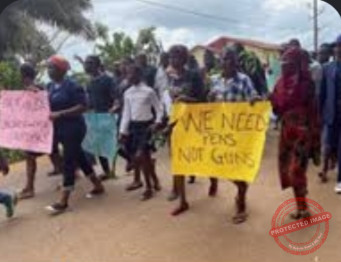


Ten years on, the fundamental challenge remains unchanged. The question facing Cameroon is not whether the conflict has caused enough damage to warrant attention. The question is whether those with the power to influence events possess the courage and imagination necessary to pursue a genuine and lasting solution.
By Lester Maddox. Guest Contributor, The Independentist News, Oakland County, California
A decade after the outbreak of the conflict in the Northwest and Southwest regions, Cameroon remains trapped in one of the most destructive political crises in its modern history. What began as protests over governance, legal representation, and cultural identity has evolved into a prolonged conflict whose consequences have spread far beyond the original grievances. Entire communities have been transformed by violence, displacement, economic collapse, and deepening political polarization.
At the center of the crisis lies a fundamental question that remains unresolved: can a political dispute rooted in historical, constitutional, and identity-based grievances be solved primarily through military means? For the past ten years, successive authorities in Yaoundé have largely relied upon a security-centered approach designed to restore state authority and suppress armed resistance. Yet despite extensive military operations, emergency measures, and administrative initiatives, the conflict has endured.
The human cost has been staggering. Tens of thousands of lives have been lost, countless families have been separated, and entire generations have grown up amid insecurity and uncertainty. Large numbers of people have been displaced from their homes, while many others have sought refuge beyond Cameroon’s borders. Communities that once formed the social and economic backbone of the region continue to struggle with the consequences of disrupted livelihoods, damaged infrastructure, and fractured social networks.
What makes the situation particularly troubling is that the underlying political issues remain largely unresolved. Measures such as administrative reforms, decentralization initiatives, and special governance arrangements have been presented as solutions capable of addressing long-standing grievances. However, many critics argue that these measures have failed to confront the deeper questions concerning political representation, constitutional arrangements, identity, and self-governance that continue to drive the conflict.
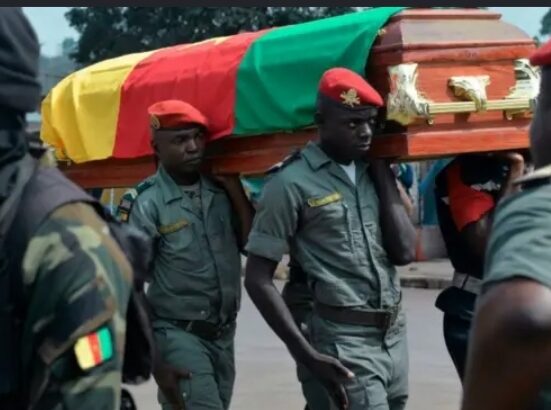
The persistence of these unresolved issues has created a widening gap between official narratives and realities on the ground. Government officials frequently point to state institutions, development projects, and public ceremonies as evidence that stability is gradually returning. Yet for many affected communities, normalcy remains elusive. Security concerns, economic hardship, and political uncertainty continue to shape everyday life across significant portions of the region.
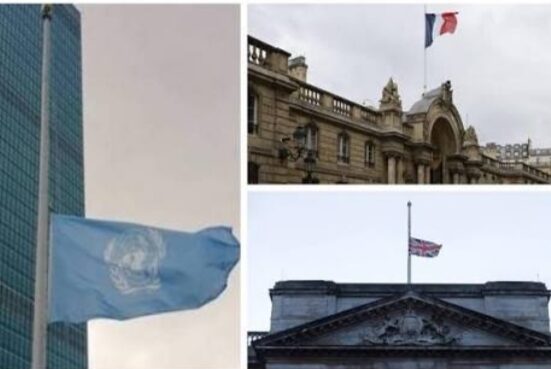
The international community has also faced criticism for its response. While humanitarian organizations have provided assistance and diplomatic actors have periodically called for dialogue, many observers believe that international engagement has fallen far short of what the scale of the crisis demands. Statements of concern have often been issued without corresponding efforts to facilitate meaningful political negotiations or establish a comprehensive framework for conflict resolution.
This perceived lack of urgency has contributed to growing frustration among many affected populations. Some view the international response as evidence of a broader tendency to tolerate prolonged conflicts so long as they do not threaten major geopolitical interests. Whether that assessment is fair or not, it reflects the disappointment felt by many who expected stronger international involvement after years of suffering.
For supporters of the Ambazonian cause, the central lesson of the past decade is that military pressure alone cannot extinguish a political movement rooted in collective identity and historical grievances. They argue that movements driven by deeply held beliefs rarely disappear simply because they face superior force. Instead, unresolved grievances often continue to generate new forms of resistance, even after significant setbacks.
Others maintain that any lasting solution must preserve Cameroon’s territorial integrity while addressing legitimate concerns through political reform, dialogue, and institutional change. Regardless of one’s position, there is growing recognition that the conflict cannot continue indefinitely without imposing further costs on both the affected regions and the nation as a whole.
As Cameroon enters an uncertain political period marked by questions about leadership succession and the future direction of the state, the conflict remains a profound challenge to national stability. The wounds created by ten years of confrontation cannot be healed through symbolism, administrative decrees, or military operations alone. Lasting peace requires more than the absence of violence; it requires a political settlement capable of addressing the causes that produced the conflict in the first place.
History demonstrates that deeply rooted political crises rarely disappear on their own. They either evolve toward meaningful resolution or continue to generate instability across generations. The tragedy of the past decade is not simply the scale of suffering that has occurred, but the reality that opportunities for dialogue and reconciliation remain constrained by competing visions of legitimacy, sovereignty, and political identity.
Ten years on, the fundamental challenge remains unchanged. The question facing Cameroon is not whether the conflict has caused enough damage to warrant attention. The question is whether those with the power to influence events possess the courage and imagination necessary to pursue a genuine and lasting solution.
Adapted from commentary on the humanitarian, political, and constitutional dimensions of the decade-long conflict in the Northwest and Southwest regions of Cameroon.
Lester Maddox. Guest Contributor, The Independentist News, Oakland County, California