

Never build the republic around one man. Never allow foreign partners to value the ruler more than the institutions. Never exchange political dignity for somebody else’s definition of stability. And never permit bananas, oil, minerals, ports, or any other productive asset to become more valuable than the people whose land produced them.
By Timothy Enongene, Associate Editor-in-chief The Independentist News
For more than four decades, Paul Biya was presented to Cameroon and much of the outside world as the indispensable center of stability. His government repeatedly invoked peace, order, continuity, national unity, and territorial integrity. Foreign governments learned the system. Diplomats knew where decisive authority ultimately rested. Investors understood that sensitive files moved upward. Ministers waited for instructions. Foreign presidents knew whom to call. That arrangement appeared durable because Paul Biya was there.
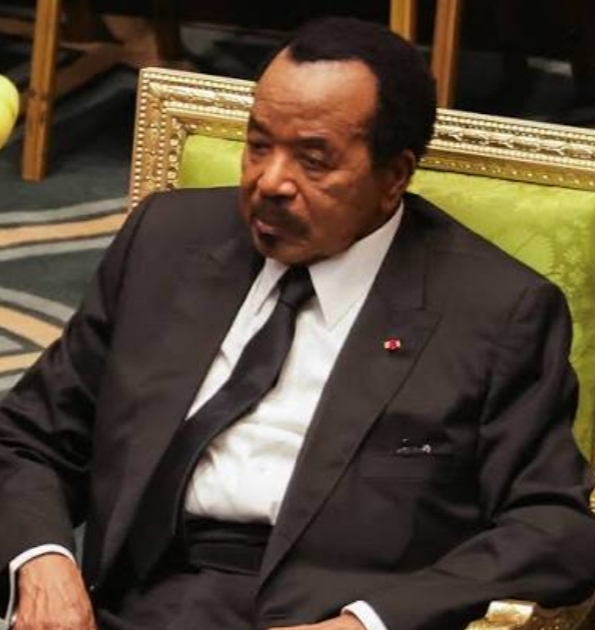
Now the man around whom so much authority was concentrated has been outside Cameroon for two months, and the very personalization that once gave foreign partners a form of predictability is producing the opposite result. Biya left Cameroon on June 7, 2026, for what his Civil Cabinet described as a “brief private stay in Europe.” Reuters reported on August 4 that he had not been seen publicly for 58 days. AP reported two days later that his absence had reached two months and that the government had confirmed he was in Switzerland. No publicly announced return date had been provided. Yet presidential authority continued to be exercised in his name, including through three decrees reorganizing significant portions of the military command structure.
As of August 8, I found no independently verified report establishing that Biya had returned to Cameroon or resumed a normal schedule of public presidential engagements. Semafor reported on August 7 that the two-month absence continued to generate speculation about his health and questions about who was effectively exercising executive authority. The issue therefore has moved beyond the number of days Paul Biya has spent outside the country. It is becoming a question of whether Cameroon can demonstrate where final executive judgment resides. A signature can remain visible while confidence in the authority behind that signature begins to deteriorate. That distinction now matters.
WHEN THE QUESTION REACHES FOREIGN CAPITALS
Reports attributed to Jeune Afrique have alleged that foreign diplomatic missions have begun asking more pointed questions about Biya’s health, the reliability of instructions originating in Yaoundé, and the identity of officials who can genuinely speak with presidential authority. Those anonymously sourced allegations require caution. They should not be presented as established diplomatic fact without independent confirmation. But the larger institutional problem no longer depends upon anonymous sources.
Reuters has independently established that Biya left on June 7 for what was announced as a short European stay, remained absent well beyond that description, and that the government supplied no timetable for his return. The CPDM convened a rare senior leadership meeting on July 22 amid mounting criticism of his prolonged absence. AP has independently documented the two-month absence and the resulting debate over whether the country is effectively operating without a visibly present head of state. The verified question is therefore strong enough without embellishment: Can a highly centralized presidential state continue to inspire confidence when the president around whom that centralization was built is no longer publicly accessible?
WHEN THE MARKET STARTS PRICING THE SUCCESSION
There is now something more difficult for Etoudi to dismiss than opposition speeches, diaspora criticism, diplomatic rumor, or social-media speculation. The market is beginning to assign a price to uncertainty. Business Insider Africa, reporting Bloomberg’s market findings, said in early August that Cameroon’s dollar-denominated sovereign bonds had recorded the weakest performance among African sovereign bonds since early June, with investors increasingly concerned about Biya’s prolonged absence and the possibility of a political transition. This development must be interpreted carefully.
Bond-market weakness does not prove that investors possess secret knowledge about Paul Biya’s medical condition. Investors are not necessarily better informed about his health than the public. What bond prices do reveal is something different: investors are changing their assessment of risk. That distinction is important. A sovereign bond does not belong to the opposition. It does not vote. It does not attend a political rally. It does not care whether government spokesmen or opposition politicians win a television argument.It is bought and sold by investors asking whether the return offered by Cameroon adequately compensates for the risks associated with lending money to the state. When political uncertainty begins appearing in the pricing of sovereign debt, the controversy has crossed from politics into finance.
FITCH HAD ALREADY IDENTIFIED THE SUCCESSION PROBLEM
The concern did not begin with Biya’s June departure. Fitch Ratings had already identified political transition as an important sovereign-risk issue. In November 2025, Fitch stated that an eventual transfer of political power involved “significant risks,” citing the absence at that time of a credible succession plan and political divisions.
Cameroon subsequently amended its constitutional arrangements to reintroduce the office of vice president. In April 2026, Fitch affirmed Cameroon’s long-term foreign-currency rating at B with a Negative Outlook. Fitch concluded that the constitutional change reduced the risk surrounding an eventual transfer of power but did not eliminate it. That distinction goes to the heart of Cameroon’s present difficulty. A country may possess a legal succession mechanism. Markets must still believe the mechanism will work. A constitution can describe who should succeed.
Investors still ask whether competing centers of power will accept that person, whether the military chain of command will remain coherent, whether contracts will survive, whether fiscal policy will continue, and whether political struggle will interrupt government. Formal procedure is necessary. Institutional credibility is something more.
THE PRICE OF POLITICAL UNCERTAINTY CAN BECOME NATIONAL DEBT
The timing is particularly sensitive because Cameroon remains active in debt markets. Financial Afrik reported on August 5 that Cameroon was preparing an ESG-linked bond transaction of about 400 billion CFA francs, approximately US$692 million, with support involving the African Development Bank, ATIDI, Africa Finance Corporation, and Matha Capital. The publication identified political risk among the factors that could complicate investor assessment of the issuance. This is where political theory becomes arithmetic.
Suppose a government wants to borrow hundreds of millions of dollars. If investors regard the state as institutionally predictable, they may accept one yield. If they regard the same state as politically uncertain, they demand more. The difference may appear modest when written as percentage points.Multiply it across hundreds of millions of dollars and years of debt service. Now political uncertainty has a price. Citizens eventually pay it. Through taxes. Through debt service. Through reduced fiscal room. Through postponed infrastructure. Through projects that cannot achieve financial close. Through investment that chooses another jurisdiction. That is why presidential opacity is not merely a question for politicians. It can enter the national balance sheet.
THE STRONGMAN DISCOUNT BECOMES A STRONGMAN PREMIUM
For years, Cameroon may have benefited from what could be called a strongman discount. Foreign partners knew where power was concentrated. Whatever they thought about the democratic quality of the political system, they understood the hierarchy. Policy could be frustratingly slow, but the location of final authority was rarely mysterious. Foreign leaders knew Paul Biya. Businesses knew the government around him. Security partners understood the political order. Diplomats knew the networks.
The same concentration that weakened institutional independence provided outsiders with a particular form of predictability. But every highly personalized state contains a hidden maturity date. Eventually the individual ages. Eventually succession becomes unavoidable. Eventually the country must prove that authority can move from the person into the institution without disrupting the state. Then the strongman discount reverses. It becomes a strongman premium. The same concentration that once reassured outsiders becomes the reason they demand compensation for risk.
CAMEROON’S CENTRALIZATION IS NOT AN OPPOSITION INVENTION
Even the British government’s own business-risk assessment describes Cameroon as having a highly centralized presidential system, with much executive power concentrated in the head of state. The president appoints the prime minister and other ministers. This matters because the present crisis should not be reduced merely to Biya’s age. A young president could create the same structural weakness. The problem is system architecture.
An engineering system with one indispensable element contains a single point of failure, even when that component functions perfectly for decades. Cameroon placed exceptional authority at the summit. Government may continue issuing decrees. Ministries may remain open. Taxes may be collected. Security institutions may function. Public employees may report for work. But on every sufficiently sensitive matter, one question eventually appears: Has the president approved it? When the answer becomes difficult to demonstrate, the system slows.
THE MAN OF PEACE AND THE ROAD TO WAR
The contradiction becomes sharper when Biya’s longstanding language of peace is placed beside the history of Southern Cameroons. There is no need to invent a quotation and claim that Biya literally declared himself “the man of peace.” The documentary record is strong enough without doing so.
His official presidency repeatedly presented peace as a central national objective. In September 2017, his government described his UN intervention as one advocating peace. In his December 31, 2017 national address, Biya said it was his duty to guarantee republican order, “social peace,” national unity, and territorial integrity. But by then Southern Cameroons was moving rapidly toward war. The sequence matters. The crisis did not begin with armies confronting one another.
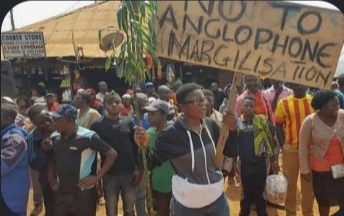
Reuters documented that the political confrontation grew from grievances expressed by Anglophone lawyers and teachers in 2016 over perceived political, economic, educational, and legal marginalization. Security forces responded to protests; Reuters reported protesters killed, hundreds arrested, and an internet shutdown that lasted months.
By late 2017 the situation had changed. Armed separatist organizations emerged, security personnel were killed, and violence escalated. Reuters reported in December 2017 that the government expanded its military crackdown and that the heavy-handed response to the earlier peaceful protests had helped increase support for separatism.
Biya’s own December 31 address stated that those who had taken up arms would be “fought relentlessly,” while simultaneously insisting that dialogue remained the preferred means of resolving problems within what he called republican legality. That is the contradiction history will have to examine.
A president publicly associated with peace presided over the transformation of a political grievance into an armed conflict. This does not absolve separatist organizations. Human Rights Watch documents serious abuses by both sides: separatist attacks against civilians, teachers, students, and aid workers, alongside killings of civilians, destruction of property, torture, sexual violence, and other abuses attributed to government security forces. A credible Southern Cameroons account must acknowledge both.
But acknowledging separatist abuses does not erase the earlier political failure. Lawyers did not begin with an army. Teachers did not begin with an army. Political demands preceded insurgency. The legitimate historical question is therefore not simply whether the government eventually confronted armed groups. It is whether political decisions made before that point contributed to creating the battlefield.
PEACE IS NOT THE SAME THING AS CONTROL
This distinction deserves emphasis. A frightened village can be quiet.An abandoned village can be quiet. A heavily militarized region can be quiet. A cemetery is quiet. None of these conditions automatically constitutes peace. Political peace requires more than the state’s ability to suppress resistance. It requires legitimacy. It requires mechanisms for disagreement. It requires civilian protection. It requires institutions capable of absorbing grievances before people conclude that institutional politics has failed. It requires a government strong enough to tolerate political challenge without interpreting every challenge as an attack upon the existence of the state. If Biya’s legacy is to be associated with peace, Southern Cameroons remains one of the hardest tests of that claim.
THE MAN THE INTERNATIONAL SYSTEM LEARNED TO LIVE WITH
Biya did not survive politically for more than four decades in an international vacuum. His longevity was first and foremost produced by Cameroon’s own political system. But it operated inside a wider ecosystem of foreign relationships. France had strategic interests. Britain maintained diplomatic and commercial interests. The Commonwealth had an institutional relationship with Cameroon. The European Union maintained development and investment partnerships.mAfrican governments and the African Union dealt with Biya as the recognized head of a member state.
Security partners valued regional cooperation. Investors valued predictability. None of this requires a conspiracy. There is no evidence of France, Britain, the British Crown, Brussels, the Commonwealth, and the African Union secretly meeting to designate Paul Biya their “personal investment.” The more defensible argument is more interesting. Biya became a strategic investment in predictability. Different institutions, pursuing different interests independently, discovered that they knew how to deal with the same man and the same system. That can create an ecosystem of protection without producing a conspiracy.
FRANCE: THE VALUE OF THE KNOWN INTERLOCUTOR
France’s connection is the most historically obvious. Its relationship with post-independence Cameroon has included political, security, commercial, cultural, and diplomatic dimensions. France has also increasingly confronted difficult parts of this history; in 2025 it acknowledged French responsibility in violent repression surrounding Cameroon’s struggle for independence.
Yet states are capable of criticizing aspects of a ruler’s behavior while continuing to value the predictability of dealing with that ruler. That is normal foreign policy. The question is not whether France personally loved Paul Biya. The question is whether continuity under Biya repeatedly appeared less risky than uncertainty after Biya. That is how a ruler becomes strategically valuable.
BRITAIN’S DIFFERENT AND MORE UNCOMFORTABLE RESPONSIBILITY
Britain’s problem is different because Southern Cameroons was administered under British authority. That fact is not partisan interpretation. It is part of the historical record. More importantly, Britain’s interest in Southern Cameroons was not merely constitutional. It was also commercial. Bananas matter here. Not because bananas explain every political decision. But because they reveal what colonial administrators and companies understood about the productive value of the territory.
BRITAIN, BANANAS, AND THE ECONOMY OF SOUTHERN CAMEROONS
United Nations trusteeship records document the importance of plantation production in Southern Cameroons and identify the Cameroon Development Corporation, Elders and Fyffes, and Pamol among the major economic actors. The records discuss banana production and marketing and show that British-linked commercial interests participated substantially in the plantation economy.
That changes the way claims about Southern Cameroons’ supposed economic weakness should be examined.The territory possessed productive land. It produced bananas. It produced palm products. It produced rubber. Thousands worked within its plantation economy. International businesses understood the value. This gives rise to a simple question: If Southern Cameroons was supposedly such an economically doubtful proposition, why were its productive assets sufficiently valuable to sustain substantial international commercial interests?
That question does not prove that Britain exchanged Southern Cameroons for bananas. No credible article should make that allegation without documentary evidence demonstrating such a bargain. But it does justify scrutiny of the relationship between economics and decolonization. Britain was able to withdraw from direct political responsibility. The land remained. The plantations remained. The bananas remained. The labor remained. The political consequences remained with the people.
DID BRITAIN HIDE BEHIND FRANCE?
The phrase can be defended if its meaning is stated carefully. There is no evidence cited here of a secret British-French agreement in which Britain transferred Southern Cameroons in return for commercial access to bananas. The stronger argument does not require one. Once trusteeship ended and Southern Cameroons entered the post-1961 constitutional arrangement with the Republic of Cameroon, Britain no longer had to administer the political problem directly.
France possessed the much deeper strategic relationship with Yaoundé. The difficult constitutional question gradually became something Britain could increasingly describe as the internal affair of another sovereign state. In that institutional sense, Britain could stand behind a French-centered postcolonial order while its own earlier trusteeship role receded into the archives. The bananas continued to grow. The plantation assets remained economically useful. Britain’s political responsibility became more distant. That is the historical contradiction worth investigating.
THE CROWN AND COMMONWEALTH: SYMBOLISM DOES NOT EQUAL GOVERNMENT POLICY
The British Crown should also be discussed accurately. The monarch does not independently direct British foreign policy. There is no evidence that the Crown personally guaranteed Paul Biya’s political survival. But institutions carry symbolism and continuity. Cameroon joined the Commonwealth in 1995, even though only the former British-administered part of the country derived directly from Britain’s colonial and trusteeship tradition. For Southern Cameroonians, that raises reasonable questions. What exactly did Commonwealth membership protect? Did it safeguard the Anglophone legal inheritance? Did it protect the educational system? Did it prevent the progressive centralization that Anglophone lawyers and teachers later protested? Did it create a serious mechanism for examining Britain’s unfinished historical relationship with Southern Cameroons? Or did Commonwealth membership confer additional international respectability upon Cameroon while the underlying constitutional grievance remained unresolved? These are legitimate questions. They are stronger than unsupported allegations about royal conspiracy.
EUROPEAN VALUES AND EUROPEAN INTERESTS
The European Union presents another contradiction. The EU speaks about democracy, human rights, governance, and rule of law. It also conducts diplomacy and development within the government structures that actually exist.
The European Commission states that the EU allocated €244 million in grants for its partnership with Cameroon over 2021–2027, in addition to multi-country programs and major infrastructure initiatives. That is not evidence that the European Union endorsed repression. Development assistance benefits citizens and can be entirely legitimate. The more difficult question is institutional: At what point does continuous adaptation to highly personalized governance make personalized governance appear normal?
External institutions can condemn abuses in one statement and work through the same centralized executive apparatus the next morning. That is diplomacy. But diplomacy produces incentives. If continuity repeatedly wins the practical contest against accountability, then the person supplying continuity acquires international value.
AFRICA AND THE POWER OF RECOGNITION
African institutions face a similar dilemma. The African Union speaks of constitutionalism, democracy, peace, and human rights. It is also an organization composed of existing sovereign governments. Following the official proclamation of Cameroon’s October 2025 presidential election result, the Chairperson of the African Union Commission formally congratulated Paul Biya on his re-election. That did not mean the AU assumed personal responsibility for Biya. But recognition matters.
A ruler facing profound domestic contestation can still appear abroad as the internationally recognized president of a sovereign state. International recognition is political capital. It strengthens incumbency. The African system therefore cannot be excluded from any analysis of how exceptionally durable rulers become normalized internationally.
THERE DID NOT HAVE TO BE A SECRET PACT
This is perhaps the most important analytical point. Foreign protection does not require coordination. France can pursue French interests. Britain can pursue British interests. The European Union can pursue European interests. The Commonwealth can preserve institutional relationships. African governments can defend territorial stability. Companies can pursue contracts. Investors can pursue returns. Security establishments can pursue counterterrorism cooperation. Every actor can act rationally and independently. The accumulated effect may still favor the same ruler. That is not necessarily conspiracy. It is an ecosystem.
THE MAN THEY CALLED STABILITY PREPARED FOR WAR
Southern Cameroons exposes the moral cost of that ecosystem. While Biya’s presidency sold the language of stability abroad, the Anglophone political crisis hardened at home. First there were grievances. Then demonstrations. Then repression. Then radicalization. Then separatist violence. Then military escalation. Then years of conflict. Both government forces and separatist actors have since committed serious abuses.
But outside governments too often encountered Cameroon through another vocabulary: stability, counterterrorism, development, trade, regional security, territorial integrity, diplomatic continuity. Those concepts matter. But they can also conceal the political cost paid by communities living beneath the arrangement. The relevant questions therefore remain: Stability for whom? Peace under what political settlement? Unity through whose consent? Territorial integrity maintained by what degree of force?
WHEN BANANAS MATTER MORE THAN POLITICAL VOICE
Colonial political economy could separate the value of territory from the political dignity of the people living upon it. The land could be valuable. Bananas could be valuable. Rubber could be valuable. Palm products could be valuable. Ports could be valuable. Labor could be valuable. Yet the people themselves could still be treated as an administrative difficulty. That is the historical concern Southern Cameroonians are entitled to investigate. Did outside institutions value the productive geography more consistently than they valued the political voice of the population? That question must be answered through archives and evidence, not slogans. But the question is legitimate.
THE INTERNATIONAL INVESTMENT IN PREDICTABILITY IS LOSING VALUE
This is where the present bond-market development becomes so revealing. For decades, foreign partners could regard Biya’s predictability as an asset. Now markets are beginning to price the succession risk hidden inside that asset. Fitch identified transition risk before the current absence. Business Insider Africa’s account of Bloomberg’s market reporting says Cameroon’s dollar bonds subsequently underperformed African peers as investors became increasingly uneasy about political uncertainty.
Financial Afrik reports that this uncertainty arrives as Cameroon prepares another substantial international financing operation. The progression is now visible presidential opacity → succession uncertainty → investor concern → weaker sovereign-bond performance → potentially higher financing costs. That is a far more significant development than political gossip.
THE MARKET DOES NOT NEED TO KNOW WHETHER BIYA IS SICK
This is another point government defenders may misunderstand.An investor does not have to prove that Paul Biya is incapacitated. The investor does not need to know his diagnosis. The investor does not need access to medical records. The investor does not have to settle the constitutional argument. Risk management occurs before certainty. The investor asks: Will contracts survive a transition? Will debt continue to be serviced? Will ministries continue operating? Will competing elites accept succession? Will fiscal policy remain predictable? Could political instability disrupt economic activity? Could uncertainty delay multilateral financing? How much additional compensation is required for taking that risk? That is how political opacity becomes an interest rate.
THE MAN FOREIGN CAPITALS COULD ALWAYS DEAL WITH HAS BECOME THE QUESTION THEY CANNOT ANSWER
This may ultimately be the central irony of the Biya era. For decades everyone knew where final authority was located. Paris knew. London knew. Brussels knew. African presidents knew. Foreign investors knew. Cameroonian ministers certainly knew. All roads eventually led toward Etoudi. Paul Biya was the familiar signature. The known quantity. The fixed point. The man associated with stability. The man whose longevity made succession easy to postpone. Now the central question is the reverse: What happens when the man is no longer publicly present? France cannot answer that for Cameroon. Britain cannot. The Crown cannot. The Commonwealth cannot. Brussels cannot. The African Union cannot. A rating agency cannot. Bond traders cannot. Only functioning Cameroonian institutions can.
SOUTHERN CAMEROONS SHOULD STUDY THE FAILURE RATHER THAN CELEBRATE IT
Ambazonians should resist the temptation simply to celebrate weakness in Yaoundé. Higher sovereign borrowing costs ultimately harm ordinary people. Institutional failure creates suffering. The more valuable lesson concerns state design. A future Ambazonia must never allow its creditworthiness to depend upon whether foreign investors have recently seen its president. Markets should trust the Constitution. They should trust the Treasury. They should trust parliament. They should trust the courts. They should trust audited accounts. They should trust professional public servants. They should trust the succession mechanism.
They should trust that a contract signed today will remain enforceable after the president who signed it has left office. A president must be replaceable. A cabinet must be replaceable. A political party must be replaceable. The republic must remain.
NEVER BECOME ANOTHER POWER’S INVESTMENT
There is a second lesson. Southern Cameroons must not spend decades resisting dependence only to become another foreign government’s strategic possession. Not France. Not Britain. Not America. Not China. Not the European Union. Not the Commonwealth. Not the African Union. Partnership is necessary. Diplomacy is necessary. Foreign capital is necessary. Security cooperation may be necessary. Dependency is not. A movement that becomes someone else’s geopolitical investment eventually discovers that investors expect returns. The same principle applies to natural resources.
Never allow bananas, timber, oil, ports, minerals, strategic geography, diplomatic access, or promised stability to become more valuable internationally than the political dignity of the people who own the land.
DO NOT REPLACE EVIDENCE WITH RUMOR
The credibility of this argument depends upon discipline. There is no responsible evidentiary basis at present for declaring Paul Biya dead. There is no basis for declaring another official president merely because presidential documents continue to circulate. There is no verified basis for claiming a secret British-French banana bargain. There is no proof that the British monarch personally protected Biya.Those claims are unnecessary. The verified record is already powerful.
Biya has remained outside Cameroon since June 7 and had been absent for two months by August 6. The state continues exercising presidential authority in his name. Fitch has independently identified transition risk in Cameroon’s sovereign-credit profile. Financial reporting indicates that political uncertainty is affecting investor perceptions and sovereign-bond performance. Britain’s own government describes Cameroon as highly presidential and centralized. UN trusteeship records document Britain’s colonial administration and the commercial significance of Southern Cameroons’ plantation economy, including CDC, Elders and Fyffes, and Pamol.
Reuters documents the progression from Anglophone lawyers’ and teachers’ protests to escalating confrontation. Human Rights Watch documents serious abuses by both government forces and separatist groups. The EU’s financial partnership with Cameroon is publicly documented. The African Union’s recognition of Biya’s 2025 re-election is documented. The case does not need rumor.
THE INTERNATIONAL SYSTEM HAS A QUESTION TO ANSWER TOO
When the Biya era eventually ends, Cameroonians will have to ask how political authority became so concentrated around one individual for so long. Outside institutions should ask another question: What did we reward when we called this stability? France should examine what strategic predictability came to mean.
Britain should examine whether ending trusteeship exhausted its moral responsibility toward Southern Cameroons. The Commonwealth should ask what its institutional values accomplished in practice.
The European Union should ask whether development partnerships sufficiently encouraged durable institutions rather than adaptation to presidential centralization.
African institutions should examine whether preserving recognized states too often became indistinguishable from preserving incumbent political arrangements. None carries identical responsibility. None should be accused of directing every decision taken at Etoudi.
But none should pretend that external recognition and diplomatic normalization have no value to long-lived political systems. Recognition matters. Access matters. Money matters. Silence matters.And the international preference for stability can itself influence political outcomes.
THE FINAL BILL FOR PERSONALIZED STABILITY
Paul Biya’s great political achievement may have been making himself appear indispensable. His great institutional failure may ultimately prove to be the same thing. For decades, his longevity was presented as evidence of stability. Now the bond market, rating agencies, investors, opposition politicians, diplomats, and ordinary citizens are confronting the question hidden inside that claim:
Was Cameroon stable—or was Paul Biya simply permanent? Those are not the same thing. A stable state survives the disappearance of its president. A stable state does not require foreign governments to guess who can authorize a railway. A stable state does not require investors to search for evidence that executive authority still functions. A stable state does not become more uncertain simply because the man at the top is out of public view. The signature may remain. The seal may remain. The decree may still be read over national radio. But when markets begin charging the country for uncertainty about the authority behind those instruments, the problem has moved beyond presidential health. It has become a judgment on the design of the state.
And for Southern Cameroons, the lesson should be permanent: Never build the republic around one man. Never allow foreign partners to value the ruler more than the institutions. Never exchange political dignity for somebody else’s definition of stability. And never permit bananas, oil, minerals, ports, or any other productive asset to become more valuable than the people whose land produced them.
Principal Information Sources
This editorial is grounded primarily in Reuters and Associated Press for Biya’s current absence and exercise of presidential authority; Fitch Ratings for sovereign-credit and succession-risk analysis; Business Insider Africa citing Bloomberg for the reported bond-market performance; Financial Afrik for the planned approximately US$692 million ESG financing and political-risk discussion; UK Government material on Cameroon’s centralized presidential structure; United Nations Trusteeship Council archives for the Southern Cameroons plantation economy and British-linked commercial actors; European Commission records for EU financial cooperation; African Union records concerning Biya’s 2025 re-election; and Human Rights Watch and Reuters for the documented evolution and abuses of the Anglophone conflict. No social-media news page is used as an evidentiary source.
Timothy Enongene, Associate Editor-in-chief The Independentist News