








News commentary

We are home to news on Cameroon and the CEMAC region. We are dedicated to honest and reliable reporting. We are the voice of the Cameroonian people and their fight for freedom and democracy at a time when the Yaoundé government is silencing dissent and suppressing democratic voices.

Yaoundé cannot ask exhausted communities whether ten years is enough without answering the same question itself. Is ten years not enough to confront the political dispute directly and commit to credible third-party mediation? Peace is urgent. Human life is precious. And the Ambazonia question cannot be wished away.
By Carl Sanders
Guest Writer, The Independentist News
Soho, London
As Amazon associate this site earns from qualifying purchases
Buy copies of books on Ambazonia’s productive Sovereignty and statecraft By Martin Mungwa from Amazon
https://www.amazon.com/s?k=martin+mungwa&crid=3ASZUKJG4IRKV&sprefix=Martin+mungwa%2Caps%2C439&linkCode=ll2&tag=njokings-20&linkId=505384659e9e8ef2057a8fa37fccc483&language=en_US&ref_=as_li_ss_tl
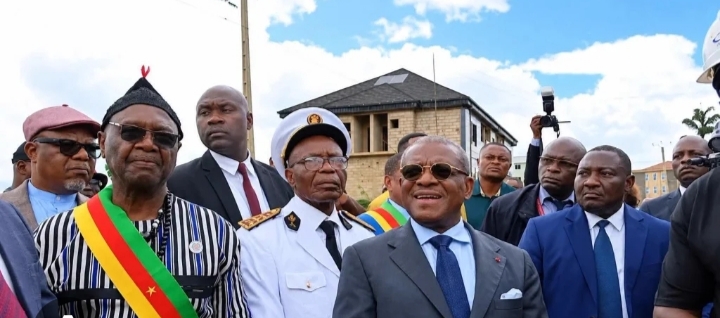
BAMENDA – 15 October 2026 – La République du Cameroun (LRC) Prime Minister Joseph Dion Ngute is in Bamenda asking: “Is ten years not enough?”
Yes. Ten years is more than enough suffering for the people of Ambazonia: grief, displacement, destroyed livelihoods, interrupted education, and a generation growing up amid conflict.
But the question must also be directed at Yaoundé: Is ten years not enough for the LRC government to recognise that this conflict requires a substantive political solution?
If ten years is too long for civilians to endure war, it is also too long for those exercising state power to keep avoiding the political question at its heart. A political conflict cannot be reduced to a community dispute
The Ambazonia conflict cannot reasonably be explained as a quarrel between neighbouring communities. Its central issues concern political status, historical grievances, competing claims to sovereignty, and the use of military force.
The principal armed confrontation is between LRC government forces and Ambazonian armed groups, including those identified by independence supporters as the Ambazonian State Army (ASA). Ordinary civilians bear the consequences: insecurity, bereavement, displacement, and the destruction of their means of survival.
Traditional rulers, civil society organisations, and community representatives have legitimate roles in protecting civilians and supporting peace. But their involvement cannot substitute for negotiations addressing the fundamental political dispute.
Recasting that dispute as a community problem risks turning a question of political destiny into an administrative exercise—something to be managed through meetings, local appeals, and development announcements. It also risks easing pressure on Yaoundé without securing the commitments needed to end the conflict.
What has changed since the 2019 dialogue?
In 2019, the LRC government organised the Major National Dialogue and presented it as a route towards resolving the crisis. Yet the conflict continued. Now, in 2026, the emphasis has shifted to “community dialogue.”
The government therefore owes the public a clear explanation: What will this process address that the 2019 dialogue did not? Who will participate? What can be negotiated? And how will any commitments be implemented?
Community meetings may identify local needs and give residents opportunities to express their concerns. Their value, however, depends on whether those concerns can influence meaningful political decisions.
Without a credible connection to substantive negotiations, another dialogue initiative risks creating the appearance of engagement while leaving the central dispute untouched.
After ten years of suffering, the measure of seriousness must be more than the number of meetings held or speeches delivered. It must be whether the process can bring the parties closer to an enforceable political settlement.
Development cannot replace a political settlement
Roads, hospitals, schools, and other public services are necessary. Communities should not have to choose between development and peace. But infrastructure cannot, by itself, settle a dispute over political status. A construction inspection cannot replace negotiations, and a development announcement cannot answer the grievances that sustain a conflict.
A credible pathway requires independent third-party mediation: a process in which the LRC government and credible representatives of the Ambazonian side can engage under agreed rules, with meaningful participation and safeguards against coercion.
Such a process should address civilian protection, humanitarian access, steps towards ending hostilities, and the underlying political question. It must also establish how agreements will be monitored and implemented.
Peace requires a process capable of confronting the dispute—not merely discussing its consequences. A peaceful appeal: decline participation and respect the stay-at-home call
We therefore call on the people of Ambazonia to decline participation peacefully in a process that, as presently presented, does not offer a credible route to resolving the fundamental political question.
Those observing the stay-at-home call issued by the Government of the Federal Republic of Ambazonia should do so voluntarily and peacefully. No civilian should face threats, intimidation, or punishment for choosing differently. Access to emergency care and essential humanitarian services must remain protected.
The purpose of peaceful non-participation should be clear: to insist that public engagement lead to substantive negotiations, rather than lend legitimacy to another initiative without a convincing path to settlement.
Ten years is enough suffering. Enough displacement. Enough lost schooling and shattered livelihoods. Enough dialogue announcements followed by continuing conflict.
Yaoundé cannot ask exhausted communities whether ten years is enough without answering the same question itself. Is ten years not enough to confront the political dispute directly and commit to credible third-party mediation? Peace is urgent. Human life is precious. And the Ambazonia question cannot be wished away.
As Amazon associate this site earns from qualifying purchases
Buy copies of books on Ambazonia’s productive Sovereignty and statecraft By Martin Mungwa on Amazon
https://www.amazon.com/s?k=martin+mungwa&crid=3ASZUKJG4IRKV&sprefix=Martin+mungwa%2Caps%2C439&linkCode=ll2&tag=njokings-20&linkId=505384659e9e8ef2057a8fa37fccc483&language=en_US&ref_=as_li_ss_tl
Carl Sanders, Guest Writer for The Independentist News, Soho, London.
Share This Post:
Can The Nso Fondom solve the ongoing Southern Cameroons problem? An Anonymouse Elite of the Nso community ponders aloud.
Related Post
Can The Nso Fondom solve the ongoing Southern Cameroons
FROM GRAND NATIONAL DIALOGUE, THROUGH BLOODSHED, TO ALLEGED CO-OPTION
A PATRIOT, Pa Che Alias (AMBA WARRIOR), PUTS DABNEY
PROPHECY, POLITICS, AND THE AMBAZONIAN QUESTION (PART V) —
ARCHBISHOP NKEA AND THE LRC MIND GAME: WHO SAYS
PROPHECY, POLITICS, AND THE AMBAZONIAN QUESTION (PART IV) BUSINESS