









News commentary

We are home to news on Cameroon and the CEMAC region. We are dedicated to honest and reliable reporting. We are the voice of the Cameroonian people and their fight for freedom and democracy at a time when the Yaoundé government is silencing dissent and suppressing democratic voices.

The people of Ambazonia need more than another cycle of announcements followed by disappointment. They need an honest accounting of previous failures and a process whose design reflects the dispute it is supposed to resolve. The question is no longer how many dialogue programmes can be launched. It is whether those shaping them are prepared to confront the issues that previous initiatives left unanswered.
By Timothy Enongene
Associate Editor-in-Chief, The Independentist News
As Amazon associate this site earns from qualifying purchases
Buy your copies of books on Ambazonia’s productive Sovereignty and statecraft, By Martin Mungwa from Amazon
https://www.amazon.com/s?k=martin+mungwa&crid=3ASZUKJG4IRKV&sprefix=Martin+mungwa%2Caps%2C439&linkCode=ll2&tag=njokings-20&linkId=18de9f7e7eee0b929fd4a74397607bf8&language=en_US&ref_=as_li_ss_tl
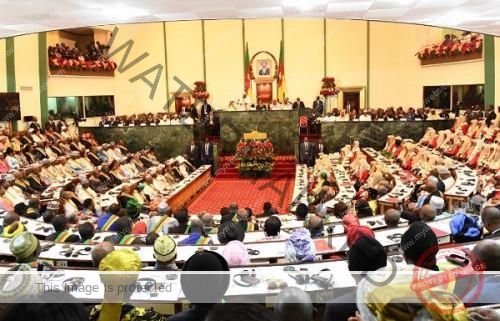
YAOUNDÉ – 14 October 2026 – Cameroon’s handling of the Ambazonia question raises a troubling question: are successive dialogue initiatives intended to resolve the conflict, or to manage its consequences while leaving the fundamental political dispute untouched?
The sequence deserves scrutiny. The 2019 Grand National Dialogue raised expectations of a settlement. Years of violence and displacement followed. Allegations of efforts to buy the cooperation of some Ambazonian leaders and activists have further strained public trust. Community dialogue is now being presented as another avenue towards peace. But what, precisely, is this latest approach expected to resolve and what will be the next in this series?
For those demanding the restoration of Ambazonia’s independence, the conflict has never been simply a breakdown in relations between neighbours. It concerns the political status of the former British Southern Cameroons and its relationship with La République du Cameroun. A process that excludes that question may address some consequences of the conflict, but it cannot reasonably claim to have settled the dispute itself.
The Grand National Dialogue illustrates this limitation. Convening a national gathering did not reconcile the government’s position with the independence demands of Ambazonian movements. Recommendations and implementation mechanisms could not, by themselves, create agreement between parties whose central political positions remained unresolved.
The appropriate response to that failure should have been an honest examination of the process: who was represented, what could be discussed, which demands were excluded, and why the resulting framework failed to secure a settlement. Changing the venue or introducing another programme cannot substitute for answering those questions.
Meanwhile, civilians continue to bear the cost. Families have lost relatives, homes, livelihoods, schooling, and the security on which ordinary life depends. Their suffering must remain central to any assessment of peace initiatives.
The term genocide has a specific legal meaning. It requires evidence establishing the relevant acts and intent; it should not be treated as an established finding merely because the suffering is immense. That distinction does not diminish the urgency of investigating alleged atrocities, protecting civilians, and holding perpetrators accountable. Abuses must be examined irrespective of who commits them.
A dialogue process earns credibility through its effects: whether violence declines, civilians can move safely, displaced families can return voluntarily, and victims can seek justice. Meetings, speeches, photographs, and communiqués are evidence of activity. They are not, on their own, evidence of peace.
Allegations of bribery and political co-option introduce another serious concern. Such claims require verifiable evidence. A change in political position does not establish that money changed hands, and support for negotiations does not automatically make anyone a collaborator.
Nevertheless, those claiming to represent Ambazonian aspirations owe their constituencies clear explanations. If their position changes, what changed in their assessment? What terms are they supporting? What mandate authorises them to negotiate? What commitments, benefits, or obligations accompany their participation?
These are legitimate questions of public accountability. They should be answered through facts and transparent explanations rather than accusations unsupported by evidence.
There is a consequential distinction between negotiating a settlement and securing the cooperation of selected individuals. Negotiation addresses the dispute between parties. Co-option, where substantiated, may secure personal acquiescence while leaving collective grievances unresolved. A process built around private understandings risks deepening mistrust and dividing the people whose interests it claims to serve.
Credible negotiations therefore require transparent objectives, accountable representation, and a clear means of assessing any proposed agreement. No leader should be allowed to treat a public cause as personal property. The ongoing Community dialogue must be evaluated against the same standard of honesty about its purpose.
Local dialogue can perform valuable work. Traditional authorities, religious leaders, civil society organisations, and residents can help address local tensions, support displaced families, rebuild trust, and restore livelihoods. Communities do not have to wait for a comprehensive political agreement before undertaking efforts that reduce suffering.
But those efforts have limits. A community meeting cannot determine the political status of a territory, settle competing claims to sovereignty, or provide a negotiating mandate that participants were never asked to confer.
The danger arises when local reconciliation is presented as a substitute for political negotiations. Asking wounded communities to restore normal life while the larger dispute remains unresolved places an unreasonable burden on those who have already suffered most.
Attendance must also be interpreted carefully. People may participate because they want safety, need assistance, hope to reopen schools, or wish to protect their families. None of these motives automatically constitutes acceptance of a constitutional arrangement or abandonment of an independence demand. Participation in a peace initiative is not a blank cheque for political consent.
If community dialogue is intended to address local needs, its organisers should say so clearly and demonstrate what it delivers. If it is intended to secure acceptance of existing political arrangements, that objective should also be stated openly. A process cannot claim an agreed political outcome when the central political question was never genuinely open for negotiation.
Yaoundé therefore faces a direct test: is it prepared to support a credible, third-party-mediated process in which the parties can address the questions dividing them? Or will successive initiatives continue to operate within a framework whose political outcome has already been prescribed?
Ambazonian leaders face an equally demanding test. They must explain whom they represent, how their mandates are established, what they are prepared to negotiate, and how the people concerned would assess a proposed settlement. Internal accountability is essential to credible representation.
The practical requirements are clear: protection for civilians; credible investigations into alleged abuses; transparent negotiating mandates; meaningful participation by the parties to the dispute; and an agreed process for addressing the underlying political questions.
Community dialogue can support these efforts. It cannot carry their entire weight. The people of Ambazonia need more than another cycle of announcements followed by disappointment. They need an honest accounting of previous failures and a process whose design reflects the dispute it is supposed to resolve. The question is no longer how many dialogue programmes can be launched. It is whether those shaping them are prepared to confront the issues that previous initiatives left unanswered.
Peace is not a public-relations exercise. It requires civilian safety, truth, accountability, and political engagement capable of producing a durable settlement. Every new initiative should be judged by that standard: what does it resolve, whose consent does it obtain, and how does it improve the lives of the people living with this conflict?
As Amazon associate this site earns from qualifying purchases
Buy your copies of books on Ambazonia’s productive Sovereignty and statecraft, By Martin Mungwa from Amazon
https://www.amazon.com/s?k=martin+mungwa&crid=3ASZUKJG4IRKV&sprefix=Martin+mungwa%2Caps%2C439&linkCode=ll2&tag=njokings-20&linkId=18de9f7e7eee0b929fd4a74397607bf8&language=en_US&ref_=as_li_ss_tl
Timothy Enongene
Associate Editor-in-Chief, The Independentist News
Share This Post:
A PATRIOT, Pa Che Alias (AMBA WARRIOR), PUTS DABNEY YERIMA AND THE NEW APLA UNDER THE SCANNER
Related Post
A PATRIOT, Pa Che Alias (AMBA WARRIOR), PUTS DABNEY
PROPHECY, POLITICS, AND THE AMBAZONIAN QUESTION (PART V) —
ARCHBISHOP NKEA AND THE LRC MIND GAME: WHO SAYS
PROPHECY, POLITICS, AND THE AMBAZONIAN QUESTION (PART IV) BUSINESS
Dr. Martin Mungwa shares the mile stone of the
DION NGUTE’S DIALOGUE NARRATIVE: AMBAZONIA AND LRC ARE NOT