








Commentary

We are home to news on Cameroon and the CEMAC region. We are dedicated to honest and reliable reporting. We are the voice of the Cameroonian people and their fight for freedom and democracy at a time when the Yaoundé government is silencing dissent and suppressing democratic voices.

Ambazonians, do not surrender your judgment to somebody else’s narrative. Ask for evidence, distinguish fact from propaganda, and remain committed to a peaceful and credible resolution of the conflict. The future of Ambazonia cannot be determined by who speaks most loudly about the people’s exhaustion, but by the actual positions of the parties and the substance of the political process.
By Lester Maddox
Guest Contributor,
The Independentist News
Oakland, California
As Amazon associate this site earns from qualifying purchases
Buy your copy of books on Ambazonia’s productive Sovereignty and statecraft By Martin Mungwa from Amazon
https://www.amazon.com/s?k=martin+mungwa&crid=3ASZUKJG4IRKV&sprefix=Martin+mungwa%2Caps%2C439&linkCode=ll2&tag=njokings-20&linkId=73e0c9a2a28ef7118921f4dbdc028419&language=en_US&ref_=as_li_ss_tl
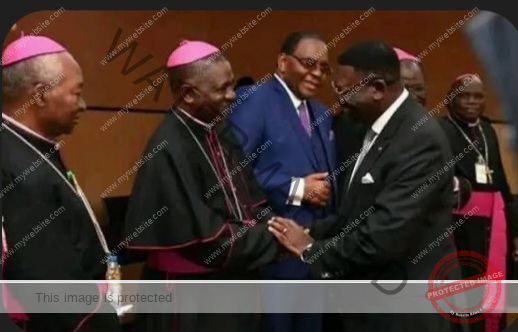
YAOUNDÉ – 13 October 2026 – Who authorised Archbishop Andrew Fuanya Nkea to speak as though the Ambazonian State Army (ASA) has grown tired of fighting? Has the ASA issued an official statement to that effect, or are Ambazonians being asked to accept a narrative presented by someone whose opposition to the independence objective has been publicly expressed?
Nkea is entitled to advocate peace, but advocating peace does not make him the spokesperson of the ASA. His previously stated position against preaching independence is a legitimate reason for Ambazonians to scrutinise his claims carefully. If the ASA has a change of position to communicate, its authorised command and the Government of the Federal Republic of Ambazonia are the appropriate channels.
This is where the psychology of war comes in. War is not fought only with weapons and ammunition; it is also fought through narratives, perceptions, morale, and attempts to influence an opponent’s calculations. Convince your opponent that he is exhausted, tell the world that his fighters are losing the will to continue, and hope that the narrative weakens morale and creates pressure for concessions. Such messaging can serve a political purpose even when the claim itself has not been independently verified.
Could this be the message Yaoundé wants the world to believe? It is a reasonable question to investigate, but motive and coordination must not be presented as proven without evidence. What is clear is that a statement attributed to a third party is not an official declaration by the ASA.
The argument that Ambazonians are tired also demands a distinction. Our people are tired of suffering, displacement, insecurity, and the destruction of normal life. That does not automatically mean they have abandoned their political aspirations. Nor does it establish that the ASA has surrendered its objective.
If the ASA has internal difficulties, grievances, or a change in strategy to communicate, its authorised command should do so through the appropriate channels. The Government of the Federal Republic of Ambazonia is the relevant political authority to address the army’s institutional position. An outside voice cannot substitute for an official communication simply by claiming to know what fighters are thinking.
There is a familiar feature of political messaging: a party may attempt to convince its own supporters that it is winning while portraying its opponent as exhausted or close to collapse. The louder the claim, however, the more important it becomes to ask for evidence. A noisy declaration of success does not establish success, just as a repeated claim of an opponent’s exhaustion does not prove that the opponent has given up.
The October 1, 2026, Independence Day commemorations are a reminder that the independence aspiration remains visible among those who participated. They should encourage Ambazonians to take stock, strengthen civic participation, deepen international advocacy, and remain engaged in the pursuit of a credible political resolution. The commemorations are evidence of public expression, not conclusive proof of the military situation—and they should be understood in that context.
Archbishop Nkea is entitled to advocate peace. But peace must not become a convenient label for persuading one side to abandon its political position while the underlying dispute remains unresolved. A credible peace process requires clarity about the parties, their representatives, the framework for negotiations, and the political issues to be addressed.
Ambazonians must distinguish between being tired of suffering and being tired of the struggle for independence. They are not the same thing. Our people deserve peace, security, and a credible process that addresses the conflict. They also deserve accurate information rather than unverified claims presented as the settled position of their army.
The way forward is to strengthen lawful political organisation, civic mobilisation, international advocacy, and the institutions representing the independence objective. Confidence must be grounded in facts, not manufactured narratives; commitment must be accompanied by clear thinking, responsible leadership, and a realistic assessment of developments.
Ambazonians, do not surrender your judgment to somebody else’s narrative. Ask for evidence, distinguish fact from propaganda, and remain committed to a peaceful and credible resolution of the conflict. The future of Ambazonia cannot be determined by who speaks most loudly about the people’s exhaustion, but by the actual positions of the parties and the substance of the political process.
Do not mistake the noise surrounding a struggle for proof that its cause has disappeared.
As Amazon associate this site earns from qualifying purchases
Buy your copy of books on Ambazonia’s productive Sovereignty and statecraft By Martin Mungwa from Amazon
https://www.amazon.com/s?k=martin+mungwa&crid=3ASZUKJG4IRKV&sprefix=Martin+mungwa%2Caps%2C439&linkCode=ll2&tag=njokings-20&linkId=73e0c9a2a28ef7118921f4dbdc028419&language=en_US&ref_=as_li_ss_tl
LESTER MADDOX
Guest Contributor
The Independentist News
Oakland, California
Share This Post:
PROPHECY, POLITICS, AND THE AMBAZONIAN QUESTION (PART IV) BUSINESS OF PROPHECY — Social Media, Attention, Influence, Donations, and the New Economics of Spiritual Authority
Related Post
PROPHECY, POLITICS, AND THE AMBAZONIAN QUESTION (PART IV) BUSINESS
Dr. Martin Mungwa shares the mile stone of the
DION NGUTE’S DIALOGUE NARRATIVE: AMBAZONIA AND LRC ARE NOT
AMBA WARRIOR (Hon Che) ADDRESSES A MESSAGE TO ERIC
An Ambazonian Patriot writes to the editor from home
Dr. DAVID MAKONGO: CALLS FOR DIALOGUE WITH AYUK TABE,