

Dion Ngute came to Buea projecting confidence that time is working in Yaoundé’s favor. History will determine whether that confidence was justified. But one principle should already be clear: A political question does not acquire a natural death merely because a government declares that its armed expression eventually will. And until the political question itself is credibly addressed, declarations of normalcy will continue to compete with the realities that made such declarations necessary in the first place.
By Carl Sanders
Guest Writer
The Independentist News
Soho, London
As Amazon associate this site earns from qualifying purchases
Get books on productive Sovereignty and statecraft By Martin Mungwa on Amazon
YAOUNDÉ – September 29, 2026 – In prolonged political and military conflicts, governments do not fight only with soldiers, institutions, and weapons. They also fight over perception. When battlefield realities become difficult, political communication assumes greater importance: setbacks are reframed, endurance is presented as victory, and carefully choreographed public events are deployed to project control.
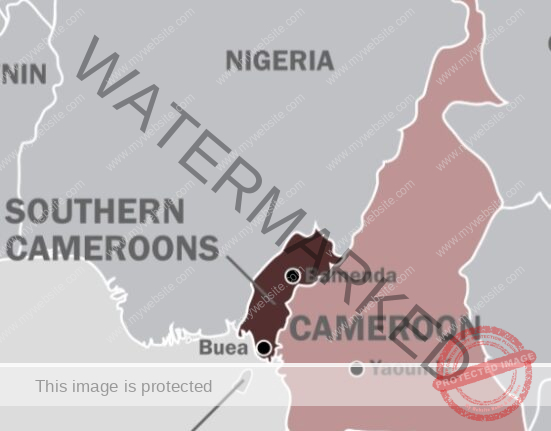
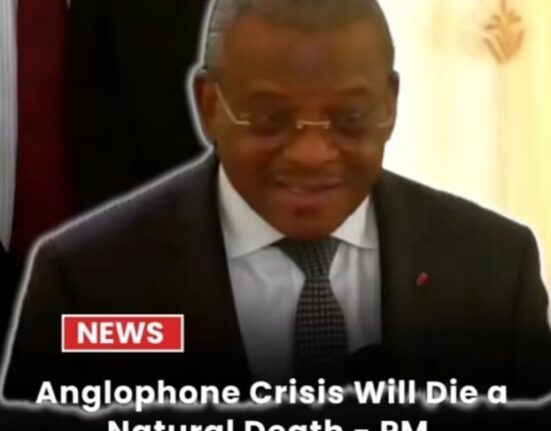
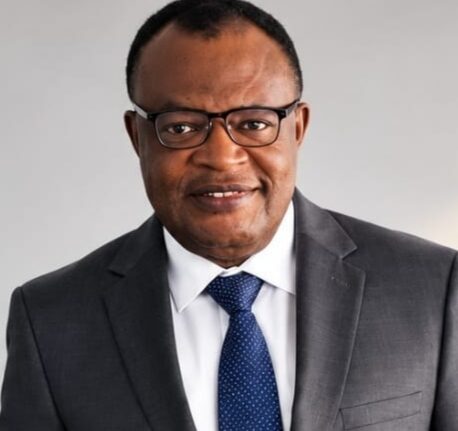
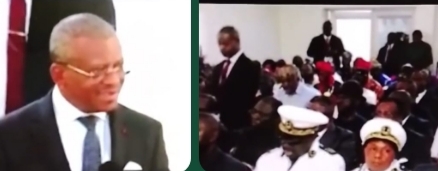
That is the lens through which Prime Minister Joseph Dion Ngute’s September 28 appearance in Buea deserves examination. During a Southwest Community Dialogue, Peace and Security meeting in Buea, Dion Ngute reportedly argued that the conflict in Cameroon’s Northwest and Southwest should be resolved now rather than allowed to continue indefinitely. He was quoted as saying that, if it continued, it might eventually “die a natural death” in another ten or fifteen years, while maintaining that the conflict was already declining. That statement is politically significant.
After nearly a decade of armed conflict, displacement, economic disruption, ghost towns, school interruptions, military deployments, and continuing insecurity, declaring that the conflict is approaching a “natural death” does not by itself demonstrate that the political dispute underlying it has been resolved. Indeed, the government’s own continuing security meetings tell a more complicated story.
Only eleven days earlier, on September 17, Dion Ngute chaired another government meeting specifically evaluating security conditions in the Northwest and Southwest. Government reporting acknowledged the continuing economic consequences of ghost towns and the need for sustained security measures around schools. That raises an unavoidable question: If the conflict is naturally dying, why does it continue to require extraordinary political, administrative, and security attention?
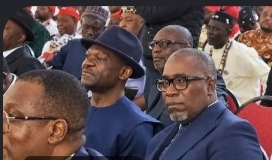
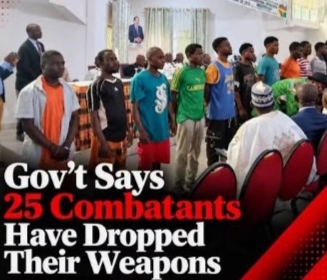
The Buea gathering itself was designed to project normalcy and momentum toward peace. Administrative officials, municipal authorities, traditional rulers, religious leaders, civil-society representatives, economic operators, and other community figures attended. Reports also indicate that approximately twenty separatist fighters publicly surrendered during the gathering.
The government is entitled to present those developments as evidence supporting its strategy. But critics are equally entitled to ask whether such ceremonies demonstrate resolution of the underlying political problem or merely provide useful images of progress. That distinction matters.
THE BATTLE OVER PERCEPTION
Psychological warfare does not necessarily require falsehood. Its most effective form often consists of selecting particular facts, magnifying them, and arranging them into a narrative intended to influence how populations interpret a conflict.
From Yaoundé’s perspective, surrendered fighters, reopened schools, functioning markets, community-dialogue meetings, and reduced participation in ghost towns can be presented as evidence that the separatist movement is weakening.
From the perspective of Ambazonian independence advocates, however, the continued armed confrontation, recurring shutdowns, continuing military deployments, displacement, and unresolved constitutional dispute suggest something very different: an underlying political conflict that has survived repeated predictions of its disappearance. Neither interpretation becomes true simply because it is repeated more loudly. The relevant test is what is actually happening on the ground and whether the political causes of the conflict have been addressed.
THE INVESTMENT CONTRADICTION
There is also an economic contradiction that deserves closer scrutiny. Political leaders understandably want investors to believe that the Southwest is stable, predictable, and open for business. Yet continuing high-level security consultations, extraordinary administrative interventions, disrupted commercial activity, and repeated appeals for communities to help restore normalcy simultaneously communicate that serious security concerns remain. This creates a credibility problem.
Investors do not evaluate security through political speeches alone. They examine insurance risk, transportation reliability, workforce mobility, supply chains, infrastructure exposure, business continuity, contract enforcement, and the probability of sudden disruption.
If political authorities themselves continue convening exceptional meetings to address insecurity, school protection, ghost towns, and economic disruption, investors will notice. Consequently, Dion Ngute’s remarks may inadvertently reinforce the very concern officials seek to dispel: that the government has not yet produced a durable political settlement capable of guaranteeing long-term stability.
A CONFLICT CANNOT BE DECLARED AWAY
There is another weakness in the “natural death” argument. Political conflicts do not necessarily disappear because governments expect exhaustion eventually to overcome resistance. They end through some combination of military outcomes, political settlement, constitutional restructuring, negotiation, reconciliation, institutional reform, or changes in the grievances that sustained them. Time alone is not a peace strategy.
A government may believe that insurgent organizations are weakening. Separatist leaders may believe that state forces are failing. Each side can point to individual events supporting its preferred narrative. But neither tactical success nor political messaging substitutes for resolving the central dispute.
For Southern Cameroons, that dispute concerns history, political status, governance, identity, constitutional arrangements, security, and competing claims of sovereignty. Those issues existed before the latest military operations, and they will not automatically disappear because a prime minister predicts that armed resistance will eventually exhaust itself.
YAOUNDÉ’S NORMALCY CAMPAIGN
The government’s broader strategy appears increasingly focused on demonstrating normalcy: schools functioning, businesses opening, administrative institutions operating, defections being publicized, and community leaders appearing alongside government representatives.
That approach has an understandable objective. Governments everywhere seek to demonstrate territorial control and institutional continuity during internal conflicts. But political optics and political settlement are different things. A hotel conference can demonstrate that officials can convene a meeting. A surrender ceremony can demonstrate that some combatants have chosen to leave the armed struggle. An open marketplace can demonstrate economic activity. None, by itself, demonstrates that the underlying dispute has been settled.
For that reason, the most consequential part of Dion Ngute’s Buea remarks may not be his prediction that the conflict could eventually “die a natural death.” It is what the statement appears to reveal about the government’s strategic assumption: that time and exhaustion can ultimately accomplish what nearly a decade of political initiatives and military pressure have not conclusively achieved. That is a gamble, not a settlement.
THE QUESTION AFTER BUEA
The real question following the Buea meeting therefore should not be whether Yaoundé or the Ambazonian movement won the weekend’s battle of narratives. The more important question is this: What political mechanism exists to address the dispute itself?
Religious and traditional leaders have continued advocating reconciliation, justice, dialogue, and social cohesion. Earlier in September, representatives from the Northwest and Southwest presented the Prime Minister with proposals aimed at advancing those objectives. That offers a more consequential test of government policy than declarations about when resistance might disappear.
If Yaoundé believes the conflict is declining, it has an opportunity to explain what political settlement should follow that decline. If independence advocates believe their movement remains resilient, they likewise face the responsibility of articulating a viable political, diplomatic, economic, and humanitarian path forward. After nearly ten years, slogans from either side are insufficient.
Dion Ngute came to Buea projecting confidence that time is working in Yaoundé’s favor. History will determine whether that confidence was justified. But one principle should already be clear: A political question does not acquire a natural death merely because a government declares that its armed expression eventually will. And until the political question itself is credibly addressed, declarations of normalcy will continue to compete with the realities that made such declarations necessary in the first place.
As Amazon associate this site earns from qualifying purchases
Get books on productive Sovereignty and statecraft By Martin Mungwa on Amazon
Carl Sanders
Guest Writer
The Independentist News
Soho, London