

No one can say with certainty what will happen in Cuba over the coming months or years. The government may survive and reform. It may negotiate a gradual opening. It may face deeper instability..Or it may experience a more profound political transformation. What is certain is that events once considered impossible are now being openly discussed.
By Ali Dan Ismael
Editor-in-Chief, Independentist News
For more than six decades, Cuba has stood as one of the world’s most enduring political systems. It survived the Cold War. It survived economic embargoes. It survived the collapse of the Soviet Union. It survived countless predictions of its imminent downfall. Yet today, something remarkable is unfolding.
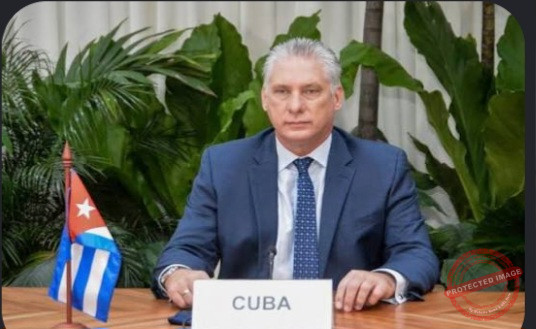
President Miguel Díaz-Canel has publicly acknowledged negotiations with the United States. In ordinary circumstances, such diplomatic discussions would not attract global attention. But Cuba is not an ordinary case. This is a state whose political identity was forged in opposition to American influence. For a government built upon the revolutionary legacy of Fidel and Raúl Castro, public recognition of negotiations with Washington represents a significant moment.
At the same time, Cuba faces severe economic hardship. Rolling blackouts have become commonplace. Fuel shortages have disrupted daily life. Food scarcity continues to test the patience of ordinary citizens. Public protests, once rare, have become increasingly visible. Whether these developments represent the beginning of a political transformation remains uncertain. But they reveal an important truth that many governments around the world would be wise to study.
The Power of Pressure
History teaches that political systems are rarely defeated solely by military force. More often, they are transformed by the cumulative weight of economic pressure, diplomatic isolation, institutional weakness, and public dissatisfaction. These forces operate slowly, often invisibly, until suddenly they become impossible to ignore.
The administration of President Donald Trump, supported by Secretary of State Marco Rubio, has pursued a more aggressive approach toward Havana than many previous administrations. Supporters argue that this strategy has increased pressure on the Cuban leadership at a moment when the island’s economy is already under enormous strain. Whether one agrees with the policy or not, the lesson is clear: sustained pressure can eventually produce results that once appeared impossible.
The Long Game
One of the greatest mistakes in politics is assuming that today’s reality will remain permanent. The Soviet Union appeared permanent until it collapsed. The Berlin Wall appeared permanent until it fell. Apartheid South Africa appeared permanent until it ended. Political systems often project strength right up until the moment they begin to change.
The world is full of examples where patience ultimately proved more powerful than force. Movements that survive are often not the strongest. They are the most resilient. Nations that endure are not always the richest. They are the most determined.
A Lesson for Ambazonia
For the people of Southern Cameroons (Ambazonia), the developments in Cuba offer a reminder of a principle that has guided their struggle for decades. Patience matters. Since the restoration movement gained momentum, many observers have repeatedly predicted either rapid victory or complete defeat. Neither occurred. Instead, the struggle evolved into a contest of endurance.
The people of Southern Cameroons inherited a tradition of parliamentary governance, institutional development, and civic participation that stretches back generations. From the Eastern House in Enugu to the House of Assembly in Buea, they learned that lasting political change is built through institutions, persistence, and collective determination. The lesson is not that Cuba and Ambazonia are identical. They are not. The lesson is that history rewards those who understand the long game. The Future Is Never Fixed
No one can say with certainty what will happen in Cuba over the coming months or years. The government may survive and reform. It may negotiate a gradual opening. It may face deeper instability..Or it may experience a more profound political transformation. What is certain is that events once considered impossible are now being openly discussed.
That alone should remind the world of a timeless truth: That political realities are never permanent. That the future belongs not to those who surrender to circumstances, but to those who patiently shape them. And that history often turns when the world least expects it.
Ali Dan Ismael Editor-in-Chief The Independentist news