

The rise of AES represents one of the most political experiments in modern African history. It has already changed the conversation. It has already challenged assumptions. It has already forced institutions to examine themselves. Yet the true test still lies ahead. The ultimate measure of success will not be speeches. It will not be symbolism. It will not be geopolitical alignment. It will be productive sovereignty.
By Ali Dan Ismael
Editor-in-Chief The Independentist News
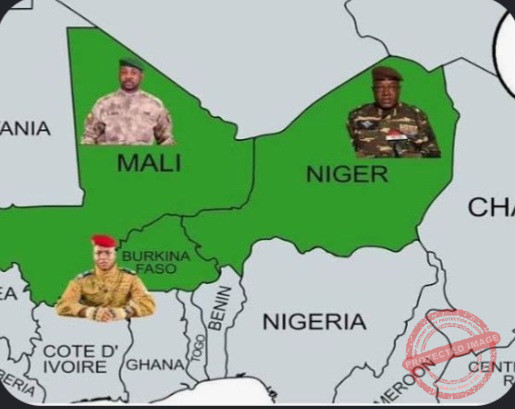
A quiet geopolitical earthquake is moving across Africa. It did not begin in Addis Ababa. It did not begin in Brussels. It did not begin in Paris, London, Washington, Moscow, or Beijing. It began in the Sahel. What started as a security alliance between Mali, Burkina Faso, and Niger has evolved into something much larger. The Alliance of Sahel States (AES) has become a symbol of a growing African desire for sovereignty, self-determination, and institutional independence.
To its supporters, AES represents a new African awakening. To its critics, it represents a dangerous gamble. Both views contain elements of truth. Yet the real significance of AES lies elsewhere. The emergence of the alliance is forcing Africa to confront one of the most important questions of the twenty-first century: Can existing continental institutions continue to meet the aspirations of African citizens? And perhaps more importantly: Can an institution defend Africa if it cannot fully finance itself?
More Than a Security Alliance
The mistake many observers make is viewing AES solely through a military lens. Certainly, security concerns played a major role in its formation. However, the growing interest surrounding AES is not primarily about military cooperation. It is about sovereignty. It is about economic independence. It is about control over resources. It is about institutional self-determination. Across the continent, increasing numbers of Africans are asking whether existing structures are adequately serving the interests of the people they were created to represent. The debate now extends far beyond Mali, Burkina Faso, and Niger.
AES has become an idea. And ideas often travel faster than governments. Reports and political discussions across the continent increasingly point to growing interest in the AES model. Whether such interest eventually translates into formal membership is less important than the broader reality that AES has become a reference point in discussions about Africa’s future. Influence often moves before treaties. Ideas often move before governments. And legitimacy often shifts before institutions recognize the change.
The Challenge to ECOWAS
For decades, ECOWAS stood as one of Africa’s most respected regional organizations. It promoted trade. It facilitated movement. It mediated disputes. It provided an important framework for regional cooperation. Yet the withdrawal of the AES states exposed tensions that had been quietly building for years. Disagreements over sovereignty. Disagreements over governance. Disagreements over security. Disagreements over external influence. The challenge facing ECOWAS is not simply the departure of three member states. The challenge is the growing perception that alternative regional models may be possible.
Institutions survive on legitimacy.
Legitimacy depends upon results. If citizens begin believing that newer institutions are more responsive than older ones, pressure for reform becomes inevitable. This does not mean ECOWAS is collapsing. But it does mean competition has entered the marketplace of African governance. And competition often forces improvement.
The African Union’s Independence Question
The rise of AES has also exposed a deeper and more uncomfortable debate. How independent is the African Union itself? The African Union remains indispensable to the continent. Africa needs continental diplomacy. Africa needs continental coordination. Africa needs continental conflict-resolution mechanisms. Yet many Africans increasingly question whether political independence can truly exist without financial independence.
For years, significant portions of the AU’s programs have relied upon support from external partners. While such support has funded important initiatives, it has also raised difficult questions. Can an institution be fully autonomous when others finance a significant part of its activities? The symbolism extends even further. The headquarters of the African Union in Addis Ababa—one of the most recognizable symbols of continental unity—was financed and constructed by China as a gift.
Many view this as a generous act of international partnership. Others view it as evidence of Africa’s continuing dependence upon external powers.The building itself is not the issue. The issue is the question it raises. How can a continent blessed with immense natural resources struggle to finance the very institutions designed to represent it? This is not merely an African Union problem. It is an African development problem.
The Missing Pillar: Financial Sovereignty
Perhaps the greatest weakness of the African Union is not political authority. It is financial authority. Unlike some other supranational organizations around the world, the AU possesses limited independent revenue-generating power. It does not control a continental treasury. It does not operate a continental central bank. It does not command significant autonomous taxation powers. It does not possess large continental sovereign wealth funds capable of financing strategic priorities independently.
As a result, many of its ambitions remain dependent upon contributions from member states and external partners. This creates a structural vulnerability. An institution that does not control productive capital cannot fully control its future. The same principle applies to nations. And the same principle applies to continents. Political sovereignty without financial sovereignty remains incomplete.
Why AES Resonates
Part of AES’s growing popularity stems from this reality. Many Africans increasingly define sovereignty differently than previous generations. To them, sovereignty is not merely a flag. It is not merely a seat at the United Nations. It is not merely a national anthem. True sovereignty means financing your own priorities. Defending your own borders. Developing your own resources. Building your own institutions. Making strategic decisions without fear of financial pressure from outside actors.
Whether AES ultimately succeeds remains uncertain. But its popularity reveals a growing desire for greater economic self-determination across Africa. The Productive Sovereignty Test This is where the real challenge begins. Political sovereignty is important. But productive sovereignty is decisive. A nation may possess a flag, a constitution, an army, and international recognition. Yet if it lacks the ability to finance its priorities, develop its resources, educate its citizens, and sustain its institutions, its sovereignty remains incomplete.
The central question facing AES is therefore not whether it can assert political independence. The central question is whether it can build productive systems capable of sustaining that independence across generations. Political sovereignty can be declared. Productive sovereignty must be built. That distinction may determine the future of the alliance.
The Resource Trap
One of the greatest dangers confronting AES is the same danger that has confronted many resource-rich countries throughout history. The resource trap. Natural resources create wealth. But wealth is not development. Gold extracted from the ground does not automatically create factories. Uranium exported abroad does not automatically create research centers. Mineral wealth does not automatically create innovation. Without deliberate reinvestment, resources can become a substitute for development rather than a catalyst for development.
The principle of productive sovereignty teaches that natural resources should function as development capital rather than consumption capital. The objective is not merely to extract wealth. The objective is to transform wealth into productive systems. Infrastructure. Manufacturing. Technology. Agriculture. Education. Financial institutions. Research and innovation. Resources become valuable not when they are exported, but when they are transformed into lasting productive capacity.
The Next Battle: From Resistance to Production
The AES has already won one battle. It has won the battle of narrative. Millions of Africans now view it as a symbol of sovereignty and self-confidence. The next battle will be much harder. The battle of production. The battle of industrialization. The battle of energy generation. The battle of food security. The battle of infrastructure. The battle of domestic investment.
Political movements succeed through inspiration. Nations succeed through systems. This is the transition AES must now make. From resistance to production. From sovereignty to prosperity. From symbolism to systems. The nations that ultimately shape the future of Africa will not necessarily be those with the loudest political rhetoric. They will be those capable of building productive economies that continuously generate opportunity, innovation, and wealth for future generations.
Can the AU Survive? The answer is yes. The African Union can survive the rise of AES. In fact, the AU may emerge stronger because of it. Competition often forces institutions to improve. The emergence of AES should serve as a wake-up call. Not a threat. A challenge. A challenge to build stronger institutions. A challenge to build financial independence. A challenge to connect continental aspirations with practical results. A challenge to move from dependency toward self-sufficiency.
The future of Africa is unlikely to belong exclusively to either the AU or AES. More likely, it will belong to those institutions that successfully combine political legitimacy with economic self-reliance.
Final Thought
The rise of AES represents one of the most political experiments in modern African history. It has already changed the conversation. It has already challenged assumptions. It has already forced institutions to examine themselves. Yet the true test still lies ahead. The ultimate measure of success will not be speeches. It will not be symbolism. It will not be geopolitical alignment. It will be productive sovereignty. Civilizations rise when they continuously expand the productive assets that sustain future generations.
They decline when they consume those assets faster than they can replace them. The Alliance of Sahel States now stands at that crossroads. Its leaders have won the battle of narrative. The next challenge is to win the battle of production. Because in the end, nations and institutions are not judged by what they resist. They are judged by what they build.
Ali Dan Ismael
Editor-in-Chief The Independentist News