

The Geneva ghost is therefore not merely the absent image of Paul Biya. It is the absence of accountable institutions capable of functioning without him. That is the constitutional crisis Yaoundé can no longer conceal.
By Lester Maddox
Guest Contributor, Independentist News
Oakland, California
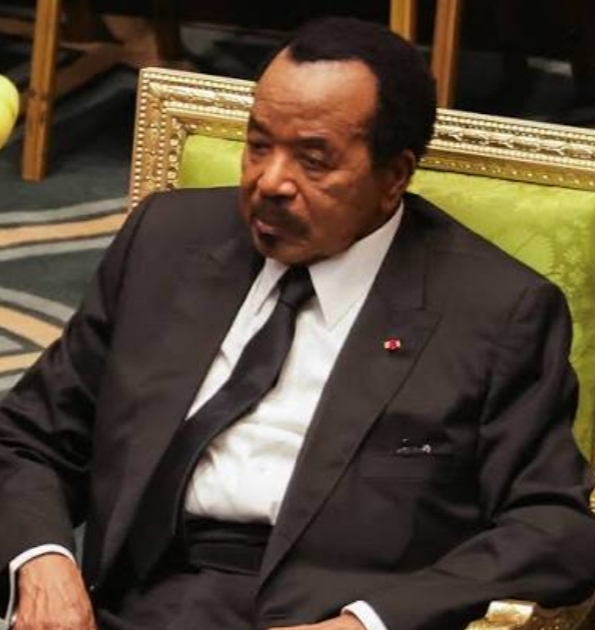
YAOUNDÉ – July 19, 2026 – Paul Biya’s prolonged absence from Cameroon has again plunged the country into uncertainty, revived speculation about presidential health, and exposed the extraordinary opacity surrounding the exercise of executive power.
The 93-year-old ruler, who has governed Cameroon since November 1982, reportedly left the country for Geneva on June 7, 2026. The government has confirmed his presence in Switzerland but rejected reports that he was admitted to a private clinic after experiencing health difficulties around the May 20 National Day celebrations.
In a June 18 statement, Communication Minister René Emmanuel Sadi described reports of hospitalization as malicious and unfounded. He said Biya remained capable of overseeing state affairs, might undergo routine medical examinations, and would return to Cameroon “as soon as possible.”
That statement settled very little. The government did not produce a live presidential appearance, medical report, press conference, or other independently verifiable evidence of Biya’s condition. Presidential decrees and official messages continued to appear, but the public was left unable to determine where, how, and under whose physical direction executive decisions were being made.
The constitutional issue is serious—but it is not the one circulating through some political commentary. Cameroon’s Constitution does not impose a 40-day limit on presidential travel. Biya’s extended stay abroad does not automatically create a vacancy, and the Constitutional Council is not required to remove him merely because he has remained outside the country for 40 days.
The real crisis is more troubling: Cameroon has no transparent mechanism through which citizens can determine whether the president remains capable of exercising his duties, while the newly created office designed to ensure succession reportedly remains unfilled. There is no 40-day constitutional clock. There is instead a constitutional vacuum sustained by secrecy.
What the Constitution Actually Says
The Constitution provides that the presidency becomes vacant through death, resignation, or permanent incapacity duly established by the Constitutional Council. Nothing in that provision states that remaining outside Cameroon for 40 days constitutes incapacity. Nor does the Constitution establish a maximum number of days the president may spend abroad. Previous claims of such a limit have been examined and found unsupported by the constitutional text. #237Check
The confusion may arise from the constitutional timetable governing succession and presidential elections. The April 2026 constitutional amendment restored the office of vice president and significantly changed the succession system.
Under the revised Article 6, a vice president appointed by the president would complete the presidential term if the office became vacant through death, resignation, or permanent incapacity. If the vice president were also unable to serve—or if no vice president had been appointed—a presidential election would be held within a constitutionally prescribed period after the vacancy was officially established.
The relevant timeframe is between 20 and 120 days. It concerns the election following an officially declared vacancy where no vice president is available. It does not measure how long the president may remain in Geneva.
This distinction is decisive. An article claiming that Biya automatically loses office after 40 days abroad would be legally false and would distract from the genuine constitutional danger.
A Vice Presidency Without a Vice President
In April 2026, Cameroon amended its Constitution to restore the office of vice president, a position abolished when the federal system was dismantled in 1972.
The government presented the reform as a mechanism for continuity. Critics saw something else: a system permitting Biya to appoint and dismiss a potential successor without requiring that person to receive an independent national mandate.
The vice president would assume the presidency if Biya died, resigned, or became permanently incapacitated. The unelected appointee could then complete the remainder of the seven-year term. Opposition legislators and the Cameroon Bar Association warned that the arrangement weakened democratic legitimacy and concentrated even greater authority in the presidency.( Associated Press) But Biya reportedly left the office vacant.
That omission has created the precise institutional uncertainty the amendment was supposedly designed to prevent. If the president is healthy and fully functioning, why has he not appointed a vice president? If his health is uncertain, the failure becomes even more consequential A constitutional office cannot guarantee continuity when no one occupies it.The government constructed a succession bridge and then left out its central span.
How Incapacity Is Established
Extended absence, advanced age, or rumors of illness do not by themselves create a presidential vacancy. Permanent incapacity must be formally established through the constitutional process.
This raises the next question: who can initiate that process, and under what conditions? The Constitutional Council cannot simply respond to public speculation. The procedures governing vacancy require action through designated state institutions, including the leadership of the National Assembly. The process is therefore dependent upon officials whose political careers and institutional influence have developed under Biya.
This creates a formidable conflict of interest. Those with the legal capacity to initiate a determination of incapacity may also have the strongest political reasons to avoid doing so.
A declaration of vacancy would begin a transfer of power whose outcome could threaten the positions of ministers, military commanders, party officials, business interests, and presidential advisers. Silence preserves the existing balance. A formal determination disrupts it. The Constitution may describe a legal procedure, but political dependence can prevent that procedure from being activated. This is the real constitutional trap—not the expiration of an imaginary 40-day period.
Government by Communiqué
Yaoundé’s principal response has been to insist that Biya continues working from Geneva. In the digital age, a head of state can communicate, sign documents, receive briefings, and issue instructions from abroad. Physical presence inside the national territory is not necessarily required for every presidential act.
But remote government requires transparency concerning identity, capacity, and authentication. Who briefs the president? Who witnesses his decisions? Who verifies his signature? How does the public know whether a decree reflects Biya’s informed instruction rather than the preferences of officials around him? A presidential document does not answer those questions merely because it carries an official seal.
Cameroon’s extreme concentration of authority makes the issue particularly serious. The presidency dominates defense, senior appointments, administration, public corporations, and large areas of national policy. If the person occupying that office becomes incapable of acting, informal actors can exercise enormous power without constitutional authority.
The longer Biya remains absent without a live public appearance, the more citizens will question whether Cameroon is governed by its president, by the secretary-general of the presidency, by members of the presidential family, or by competing security and political factions.
Government by communiqué is not the same as constitutionally accountable government. Absence Is Not Incapacity—but Secrecy Creates Suspicion Biya’s critics must avoid turning unanswered questions into unsupported declarations. The fact that he has not appeared publicly does not prove that he is unconscious, terminally ill, or incapable of making decisions.
The government acknowledges that he is in Geneva but denies hospitalization. Other reports claim that he has received treatment in a private clinic. Neither the president nor an independent medical authority has publicly resolved the contradiction. Cameroon News Agency
The responsible conclusion is not that Biya is certainly incapacitated. It is that the government has failed to provide sufficient transparency regarding the capacity of a 93-year-old president exercising unusually concentrated power from abroad.
Citizens have a legitimate interest in the health of their head of state when illness could affect constitutional governance, national security, and succession. Treating such questions as malicious rumor or a national-security offense deepens rather than eliminates suspicion.
In 2024, the government prohibited public discussion of Biya’s health during another prolonged absence. That approach demonstrated how the regime manages uncertainty: not through disclosure, but through censorship and official denial. (Reuters)The same governing instinct is visible today.
Reports From Geneva
Some reports claim that members of Biya’s family and senior officials, including his son Franck Biya, traveled urgently to Switzerland. These accounts have intensified speculation that the president’s condition may be more serious than the government admits. They remain reports, not established proof of incapacity.
Family members may visit an elderly relative for many reasons. Ministers may travel to brief a president working abroad. The presence of Franck Biya or other officials in Geneva would therefore not independently prove a medical emergency.
But the government could end much of the speculation through a live appearance or credible briefing. Its failure to do so leaves the information vacuum open to rumor, political manipulation, and competing succession narratives. Secrecy has become the oxygen of the crisis.
The Succession Struggle
Even before the latest absence, Cameroon’s political elite had begun positioning itself for life after Biya. The creation of an appointed vice presidency intensified speculation about whether the office was intended for a family member, trusted loyalist, regional ally, or compromise candidate among competing factions.
A fabricated decree circulated in April claiming that Franck Biya had already been appointed vice president. The document was false, but its rapid circulation revealed the level of public expectation surrounding dynastic succession.
Other attention has focused on Presidency Secretary-General Ferdinand Ngoh Ngoh, members of the government, senior military figures, the presidential family, and rival networks within the ruling Cameroon People’s Democratic Movement.
No publicly verified evidence currently establishes that Ngoh Ngoh, Chantal Biya, Franck Biya, or any other faction has initiated a palace coup. Those claims remain political speculation.
What can be stated with confidence is that a highly personalized system must eventually confront succession. Biya has remained the central reference point of state authority for more than four decades. Institutions have been weakened precisely because loyalty to the president has often mattered more than autonomous constitutional responsibility. When such a ruler disappears from public view, uncertainty spreads through the entire system.
The Failure of Personalized Government
Cameroon’s vulnerability is not caused merely by Biya’s age. It is the result of a political order built around one individual. A resilient state does not depend upon daily proof that a single elderly ruler remains alive and capable. It possesses functioning institutions, transparent succession rules, an independent judiciary, an accountable legislature, professional public administration, and established limits upon executive power.
Cameroon formally possesses many of these bodies, but their practical independence remains doubtful. Parliament is dominated by the ruling party. The Constitutional Council is widely perceived as loyal to the existing order. Senior officials depend upon presidential appointment. The vice presidency exists in law but reportedly remains vacant. This is why one man’s stay in Geneva can become a national crisis.
The institutional machinery has not necessarily stopped functioning. Ministries continue operating, security forces remain deployed, and official decisions continue to appear. But administration without transparent presidential capacity raises the possibility that unelected intermediaries are exercising power without public accountability. A personalized system can continue moving after its center weakens, but no one can be certain who controls the direction.
Symbolic Inclusion and the Illusion of Power
The crisis also exposes the weakness of what Yaoundé has long presented as Anglophone inclusion. The appointment of English-speaking officials to ministries or senior offices has repeatedly been advertised as evidence that Southern Cameroonians share national power. Paul Atanga Nji’s appointment as minister of territorial administration in 2018 was treated by regime defenders as a major elevation of an Anglophone politician to a so-called sovereignty ministry. But proximity to office is not the same as constitutional power.
An official whose authority depends entirely upon presidential favor does not represent an autonomous Ambazonian mandate. The appointment does not restore the parliament, executive authority, judiciary, or federal institutions abolished after the union. Nor does it give the population of Southern Cameroons control over security, taxation, resources, or political destiny.
The uncertainty created by Biya’s absence demonstrates where power truly resides. It does not flow upward from the people through accountable institutions. It flows downward from the presidency through appointments, decrees, patronage, and command. When the president disappears, appointed officials wait. That is not inclusion. It is dependency.
What the Constitutional Council Should Do
The Constitutional Council should not declare the presidency vacant merely because Biya has spent more than 40 days abroad. There is no constitutional basis for doing so. But the institutions responsible for continuity should not ignore credible questions about presidential capacity. If reliable evidence indicates permanent incapacity, the legally authorized process should be initiated without political obstruction.
At minimum, the government should provide a live and verifiable presidential appearance or an official briefing sufficient to demonstrate that Biya understands and performs his constitutional duties. Any medical disclosure should respect personal privacy while addressing the public question of capacity.
The president should also appoint a vice president or explain why the office created only months ago remains vacant. A succession mechanism that exists only on paper cannot provide institutional stability.
Parliament should demand answers rather than merely repeat executive assurances. The Constitutional Council should clarify the procedures for establishing incapacity under the amended Constitution. Citizens should not be required to decipher succession law during a crisis.
What the 20-to-120-Day Rule Means
If the presidency were formally declared vacant and no vice president were available to complete the term, the amended Constitution provides for the election of a new president between 20 and 120 days after the vacancy is notified. This is the constitutional clock that matters.
It begins only after a vacancy is officially established. It is not triggered by travel, absence, rumor, or the number of days spent in Switzerland. The absence of an appointed vice president would therefore become critical if Biya died, resigned, or was declared permanently incapable. Rather than an appointed successor completing the term, Cameroon could face a presidential election within the constitutional period.
Whether the existing institutions could organize a credible election during an elite succession struggle is another question. The 2025 election was already deeply contested. A hurried succession election could intensify regional, military, party, and public tensions.
The danger is not an automatic constitutional expiration on the fortieth day. It is that the officials responsible for declaring a vacancy may delay action while rival factions negotiate control behind closed doors.
What Biya’s Absence Means for Ambazonia
For Ambazonians, the uncertainty in Yaoundé should neither produce celebration nor distract from the central national objective. A succession crisis in La République du Cameroun will not automatically deliver Ambazonian freedom. Biya’s departure could create an opening for negotiation, but it could also produce military escalation, elite competition, emergency rule, or a new leader determined to demonstrate authority through force. Ambazonia must therefore prepare rather than speculate.
Its political institutions should evaluate possible succession scenarios, strengthen diplomatic communication, document the legal and historical case for self-determination, and establish clear positions regarding ceasefire, negotiations, prisoners, humanitarian access, and international mediation.
Ambazonia should not tie its future to the health of one ruler. The conflict concerns the dismantling of Southern Cameroons’ autonomy and the denial of its right to determine its political status. Those issues will remain after Biya. The struggle is with a system, not merely a man.
A Foreign Crisis With Domestic Consequences
It would be inaccurate to describe succession in Yaoundé as entirely irrelevant to Ambazonia. Decisions taken by La République du Cameroun directly affect Ambazonian prisoners, civilians, territory, and security. A change in leadership could alter military policy, diplomatic strategy, or the possibility of negotiations. Ambazonians must therefore monitor developments carefully.
But they should not become participants in the internal contest over who inherits Biya’s centralized state. Supporting one Yaoundé faction against another risks exchanging strategic independence for another unfulfilled promise of reform. Ambazonia’s responsibility is to articulate its own political future, not select the next manager of the system it rejects.
The Real Panic in Yaoundé
The regime is not confronting a constitutional deadline created by 40 days of absence. It is confronting something more fundamental: the possibility that a state constructed around one ruler may soon have to function without him.
The vice presidency was restored but left empty. The process for establishing incapacity depends upon institutions dominated by Biya’s political order. The government confirms his presence abroad but provides limited transparency about his capacity. Rival succession narratives circulate, while decrees continue to emerge from an executive system whose internal operation remains hidden. This is the real panic.
It is not caused by an automatic legal countdown. It is caused by the collision between biological reality and personalized power.
No leader is immortal. A constitution cannot preserve stability if officials refuse to use it honestly. And a state cannot remain credible when asking millions of citizens to accept government by unseen authority.
Paul Biya may return and resume public appearances, as he has after previous prolonged absences. Such a return would end the immediate speculation but not the underlying crisis. Cameroon would still be governed by a 93-year-old president, an unfilled vice presidency, weak succession institutions, and an elite preparing for an uncertain transfer of power. The Geneva ghost is therefore not merely the absent image of Paul Biya. It is the absence of accountable institutions capable of functioning without him. That is the constitutional crisis Yaoundé can no longer conceal.
Lester Maddox
Guest Contributor, Independentist News
Oakland, California