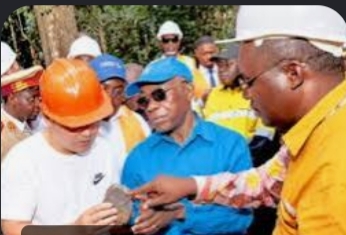


If Ghana’s twentieth-century lesson was that nations rise when they create builders, then Ambazonia’s twenty-first-century opportunity is to create the most skilled reconstruction generation Africa has ever seen.
By Dr. Martin Mungwa, PhD., F.ASCE
Guest Contributor | The Independentist News
I have spent much of my life watching political debates, studying history, analysing economics, and observing how nations rise and fall. One lesson stands above all others: countries are not built by speeches. They are built by people who know how to do things.
Today, the world stands at the edge of one of the greatest economic transformations in human history. Artificial intelligence is changing industries at a speed few imagined possible. Jobs once considered secure are being automated. Reports are written by machines. Data is analysed by algorithms. Customer service is increasingly handled by software. Even professions that required years of university education are beginning to feel the pressure.
Naturally, many young people are worried. They should be. But they should not be afraid. They should be prepared. As I reflect on the future of Ambazonia, I find myself returning to a simple truth that our grandparents understood instinctively: the person who can build, repair, grow, create, and solve practical problems will always be valuable.
AI can write an essay. AI cannot repair a broken water system in a village. AI can analyse engineering drawings. AI cannot pour concrete for a bridge. AI can design a solar installation. AI cannot climb a pole during a storm and restore electricity. AI can recommend agricultural practices. AI cannot harvest crops. The distinction matters. It means that many of the most important jobs in a future Ambazonia will not disappear. In fact, they may become more valuable than ever.
What My Own Experience Has Taught Me
As an engineer, I have always respected practical skills. Some of the most impressive people I have ever met did not possess the longest list of academic credentials. They were the men and women who knew how to solve real-world problems.
The technician who could diagnose a complex electrical failure. The welder whose craftsmanship held together critical infrastructure. The equipment operator who could accomplish in a day what others could not achieve in a week. The construction foreman who understood both people and projects. These individuals often receive less recognition than politicians, academics, or corporate executives. Yet without them, nothing functions.
Roads are not built by theories. Ports are not constructed by slogans. Power grids are not repaired through political speeches. Nations depend on skilled people. That reality will not change because AI exists.
The Reconstruction Generation
When I think about Ambazonia’s future, I do not merely think about independence. I think about reconstruction. Millions have been affected by conflict. Communities have been displaced. Infrastructure has suffered. Economic opportunities have been disrupted. One day, whether sooner or later, the rebuilding will begin. When that day comes, Ambazonia will need an army. Not an army of soldiers. An army of builders.
Electricians. Plumbers. Welders. Carpenters. Masons. Heavy-equipment operators. Solar technicians. Surveyors. Mechanics. Construction managers. Agricultural specialists. Water-system technicians. Telecommunications installers. These men and women will rebuild schools, hospitals, homes, roads, bridges, power systems, ports, airports, and industrial facilities. The future prosperity of Ambazonia will depend heavily upon their work.
Why Vocational Education Must Become a National Priority
One of Africa’s greatest mistakes has been teaching young people that success comes only through university education. University education is important. But it is not the only path. In many cases, a highly skilled tradesperson can earn more income, enjoy greater job security, and contribute more directly to national development than someone holding a degree in a field with limited practical demand. We must stop treating vocational education as a second-class option. It should be regarded as nation-building education.
Every county in a future Ambazonia should have technical training centres. Every secondary school should expose students to practical skills. Every reconstruction project should include apprenticeship opportunities. Every displaced young person should have access to skill-development programmes. The goal should not simply be employment. The goal should be capability.
Ghana’s Lesson: Nkrumah Understood the Secret of Creating Builders
As I reflect on the future of Ambazonia, I am reminded of one of Africa’s greatest nation-builders, Kwame Nkrumah. Long before artificial intelligence, long before Silicon Valley, and long before the digital revolution transformed the global economy, Nkrumah understood a secret that many African leaders failed to grasp. Nations are not built by politicians alone. Nations are built by builders.
Builders of roads. Builders of power stations. Builders of schools. Builders of factories. Builders of ports. Builders of industries. Builders of institutions. Most importantly, builders of people. Nkrumah understood that political independence without technical capability would eventually become dependency under a different name. He invested heavily in education, engineering, science, industrialisation, technical training, infrastructure, and national development because he understood that a nation that can build can survive. The lesson for Ambazonia could not be more relevant.
Artificial intelligence is now exposing a reality that many societies ignored for decades. The future will not belong exclusively to those who write reports. It will belong increasingly to those who can solve problems. AI can generate a document. It cannot build a deep-water port in Victoria. AI can analyse infrastructure plans. It cannot construct a highway linking Mamfe, Kumba, Bamenda, and Nkambe. AI can recommend solutions. It cannot install a solar grid in a remote village. AI can design a water-treatment system. It cannot physically build one. Builders do these things. And builders are becoming more valuable, not less.
As Ambazonia prepares for reconstruction, we must adopt a simple national principle: every young person should graduate with at least one productive skill. Every county should have technical and vocational training centres. Every reconstruction project should include apprenticeships. Every refugee resettlement programme should include workforce development. Every school should teach not only knowledge, but capability. Because flags do not build nations. Builders do.
Ten Skills I Believe Will Matter Most
If I were advising a young Ambazonian today, I would encourage serious consideration of the following fields: First, electrical systems and renewable energy. Second, plumbing and water infrastructure. Third, welding and fabrication. Fourth, road and bridge construction. Fifth, heavy-equipment operation. Sixth, automotive and machinery maintenance. Seventh, telecommunications and fibre-optic installation. Eighth, surveying and geospatial technology. Ninth, agricultural technology and mechanised farming. Tenth, construction management and project supervision. These professions combine technical knowledge with practical execution, making them far less vulnerable to automation.
AI Is Not the Enemy
Many people speak about AI as if it is something to fear. I see it differently. The real threat is not AI. The real threat is refusing to adapt. The electrician who learns to use AI-assisted design tools will become more productive. The surveyor who uses drone technology will become more effective. The engineer who combines technical expertise with AI analysis will outperform competitors. The farmer who uses precision agriculture will increase productivity.
The future belongs to those who learn how to work with technology rather than compete against it. Ambazonia must therefore embrace both technical trades and technological innovation. This is not an either-or decision. It is a both-and opportunity.
A Final Thought
If I could speak directly to every young Ambazonian, I would tell them this: Do not underestimate the value of knowing how to build something. Do not underestimate the value of solving practical problems. Do not underestimate the dignity of skilled work. The world may be entering the age of artificial intelligence, but it will still need roads. It will still need electricity. It will still need water systems. It will still need homes. It will still need farms. It will still need ports. It will still need builders.
If Ghana’s twentieth-century lesson was that nations rise when they create builders, then Ambazonia’s twenty-first-century opportunity is to create the most skilled reconstruction generation Africa has ever seen.
And when the day comes for Ambazonia to fully rebuild and prosper, it will not be remembered primarily for the speeches that were given. It will be remembered for the people who picked up tools, acquired skills, solved problems, and transformed a wounded homeland into a thriving nation. Those are the people who will shape the future. Those are the people who will survive the AI revolution. And those are the people who will build Ambazonia.
Dr. Martin Mungwa, PhD., F.ASCE
Guest Contributor | The Independentist News