

French Cameroun did not go dark because the world refused to praise its president. It went dark because the survival of the ruler became more important than the success of the nation—and foreign acceptance helped make that failure sustainable.
By Ali Dan Ismael, Editor-in-chief The Independentist News
As Amazon associate this site earns from qualifying purchases
Get your smart home devices from Amazon
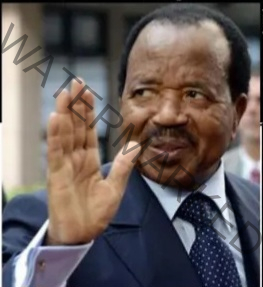
YAOUNDÉ – August 18, 2026 – For more than three decades, Paul Biya has governed French Cameroun according to a revealing political doctrine: seek legitimacy abroad while demanding obedience at home. Whenever his authority requires reassurance or his prolonged absence raises questions, the presidency turns outward—to Paris, Geneva, foreign summits and international media—while the people who supposedly elected him are left with silence, speculation and carefully managed statements from political proxies.
This is not merely the eccentric conduct of an aging president. It is a governing system. Foreign acceptance has repeatedly substituted for domestic accountability. Diplomatic recognition has been presented as evidence of political legitimacy. Ceremonial appearances in foreign capitals have been treated as proof of effective leadership, even while the economy has underperformed, public institutions have deteriorated and millions of citizens struggle to obtain basic services.
The contradiction is unmistakable. The government declares that its authority comes from Cameroonian voters, yet its conduct suggests that approval from Paris, accommodation in London and acceptance within international institutions matter more than accountability in Yaoundé, Douala, Bamenda, Buea, Maroua or Garoua.
When the Economy Collapsed, the Presidency Looked Abroad
The foundations of this political culture became particularly visible during the economic crisis of the late 1980s and 1990s. French Cameroun entered that period with substantial advantages: petroleum revenues, fertile agricultural land, productive plantations, forests, minerals, hydropower potential and access to the Atlantic Ocean. Yet the country fell into a devastating economic crisis.
An International Monetary Fund assessment concluded that Cameroon experienced a decade-long recession from 1985 to 1994, during which per-capita income fell by approximately half and poverty increased. Following drastic wage reductions and the 1994 devaluation of the CFA franc, average real wages declined by approximately 50 percent between 1990–91 and 1995–96.
These were not merely technical adjustments recorded in international financial reports. They represented lost purchasing power, collapsing household security, declining public services, unemployment and the destruction of economic expectations for an entire generation.
Yet the political survival of the government was not measured primarily by whether citizens recovered. It was measured by whether international financial institutions continued lending, France remained diplomatically supportive and influential foreign governments continued treating the Biya administration as a reliable partner.
A dangerous incentive was thereby created. A government capable of securing its survival through external accommodation did not have to earn legitimacy through domestic performance. It needed only to preserve sufficient stability, protect strategic relationships and remain useful to external partners. The economy could weaken. Public institutions could decay. Citizens could become poorer. But the president would remain internationally acceptable.
Radio Monte Carlo and the Externalization of Authority
Biya’s affinity for communicating through foreign platforms became an early symbol of this externally oriented presidency. Many Cameroonians remember the political importance once attached to presidential pronouncements transmitted through Radio Monte Carlo.
The location and medium carried a message. National power could speak from outside the country while citizens living under that power waited at home to learn what their president had said. A president claiming authority from Cameroonians should ordinarily regard those citizens as his primary political audience. He should address them through accountable national institutions, submit himself to serious domestic questioning and explain consequential decisions inside the country whose executive power he exercises. Instead, the people frequently became the secondary audience. The foreign platform spoke first; the population received the message afterward.
Technology has changed, but the governing instinct has endured. When questions arise concerning Biya’s health, location or capacity to exercise presidential power, authoritative answers do not consistently come through transparent constitutional procedures. They are supplied by ministers, party officials and presidential intermediaries who instruct the population on what it must believe.
In October 2024, after an extended absence generated widespread speculation, the government announced that Biya was on a private visit in Geneva and remained in good health. Rather than provide continuing institutional transparency, the interior minister prohibited public media discussion of the president’s condition, classified it as a national-security matter and threatened offenders with prosecution.
That response exposed the system’s governing philosophy. The president could remain outside the country, but citizens inside it were forbidden to discuss whether he remained capable of performing the duties entrusted to him. The problem is not that a president travels abroad or receives medical treatment in another country. It arises when executive power becomes physically distant, institutionally opaque and constitutionally unverifiable.
Who is governing? Who is signing official instruments? Who is issuing presidential instructions? Which decisions originate from the president, and which are produced by unelected intermediaries? What lawful procedure determines presidential incapacity? To whom are those exercising delegated authority accountable? In a functioning constitutional republic, these questions have clear legal answers. Under government by secrecy, proxy and rumor, asking them can be treated as an act of disloyalty.
Paris and the Architecture of Regime Protection
France’s relationship with French Cameroun did not begin as an ordinary partnership between equal sovereign states. It emerged from a colonial order in which political authority, military power, monetary arrangements and commercial privilege were deeply interconnected.
In 2025, French President Emmanuel Macron formally acknowledged France’s role in the violent repression of Cameroon’s independence movement before and after formal independence. The historical commission behind that acknowledgment documented a war involving French repression and support for the political order constructed after independence.
That history matters because it reveals the foundations upon which the relationship was built. France did not simply become a friendly foreign government after independence. It helped shape the architecture of the postcolonial state and supported a political system designed to preserve strategic continuity after the formal colonial administration ended.
Biya inherited that architecture and refined it. His value to Paris has not depended primarily on whether French Cameroun became prosperous, industrialized or democratically accountable. It has rested substantially on predictability: preservation of established relationships, protection of strategic interests and prevention of political change that could disrupt France’s position in Central Africa.
This does not mean that Paris dictates every decision made in Yaoundé. Nor does it relieve the Biya administration of responsibility for its failures. The governing elite made its choices, benefited from them and must bear primary responsibility for their consequences. The more defensible indictment is that France repeatedly accommodated and legitimized a political order whose authoritarianism, opacity and democratic deficiencies were impossible to overlook.
The embrace of a president at the Élysée Palace could communicate more reassurance to the regime than thousands of complaints from citizens at home. In July 2024, Biya was received by Emmanuel Macron at the French presidency before the opening of the Paris Olympic Games. The images conveyed the message the regime needed: international access and presidential respectability remained intact.Domestic legitimacy could be questioned. International acceptance would continue.
Britain’s Pidgin-English Diplomacy and the Humanitarian Buffet
Britain’s role has been less direct than France’s, but it is not beyond historical or moral scrutiny. Cameroon was admitted to the Commonwealth in 1995 despite controversy surrounding its democratic credentials and human-rights record. Membership gave the Biya government something politically valuable: admission into an organization publicly associated with constitutional government, democracy, human rights and the rule of law. But membership did not produce the transformation those principles should have required. It conferred international respectability without compelling constitutional accountability.
The Commonwealth connection is particularly troubling because Cameroon’s eligibility arose substantially from the history and identity of the former British Southern Cameroons. The territory’s English-speaking identity and British institutional inheritance opened the Commonwealth’s door, but membership ultimately strengthened the international position of the centralized government that progressively dismantled that inheritance. Southern Cameroons supplied the eligibility. Yaoundé received the legitimacy.
That is the historical betrayal.
Britain administered Southern Cameroons as a United Nations Trust Territory. Decolonization was therefore not merely an act of colonial discretion; it was an international responsibility governed by the United Nations Charter and the trusteeship system. Yet Britain departed without ensuring that the political relationship entered in 1961 was completed through an unambiguous, democratically ratified and durable constitutional settlement.
The consequences of that unfinished process did not disappear when the British flag was lowered. They resurfaced through the dismantling of the federal arrangement, the erosion of Southern Cameroons’ institutions, the marginalization of its legal and educational systems and, ultimately, the present conflict.
Britain now appears to substitute symbolic familiarity for historical accountability. British diplomats communicate in Pidgin English, exchange greetings in the language of ordinary Ambazonians and present themselves as culturally accessible. The gesture may be friendly and, on its own terms, commendable. Language can reduce diplomatic distance and demonstrate respect for the people being addressed. But Pidgin English is not a policy for completing decolonization.
A diplomatic greeting in the people’s language cannot substitute for an honest examination of Britain’s trusteeship responsibilities. Pronunciation cannot replace constitutional accountability. Cultural familiarity cannot answer the historical question Britain continues to avoid: what obligations remain when a former administering authority leaves a trust territory without securing a clear, lawful and sustainable constitutional destination?
Pidgin-English diplomacy risks becoming political theater when Britain speaks the language of the victims while continuing to dine diplomatically with the government responsible for much of their suffering.
Dining with Yaoundé at the Humanitarian Buffet
Britain has provided humanitarian assistance to civilians affected by the conflict. In 2018, the United Kingdom announced £2.5 million for the United Nations response, including immediate support delivered through UNICEF. By 2020, Britain reported that its humanitarian support for crisis-affected populations in Cameroon had reached £13.5 million.
That assistance matters. Food, medicine, shelter and protection can save lives, and the suffering of civilians should never be trivialized merely to make a political argument. But humanitarian relief cannot become a substitute for political responsibility.
Britain appears willing to help purchase food for displaced families without adequately confronting the political conditions that displaced them. It finances emergency relief while maintaining cordial relations with Yaoundé. It treats the wounds while avoiding a full reckoning with the unfinished decolonization that helped create the constitutional vulnerability from which the crisis emerged.
This is the humanitarian buffet: foreign governments gather around the consequences of a catastrophe, announce assistance, commission reports, attend conferences and display their compassion—while carefully avoiding the political responsibility required to address the cause.
Humanitarian agencies receive support to manage suffering, but insufficient political backing is mobilized to end the conditions continually producing it. Victims are counted, categorized, fed and photographed. The government responsible for protecting them remains diplomatically accommodated. The conflict becomes a permanent humanitarian program rather than an urgent political failure demanding resolution.
Britain cannot indefinitely speak Pidgin English to Ambazonians with one side of its diplomacy while sharing the banquet of state relations with La République du Cameroun on the other. The question is not whether a British diplomat can say, “How wuna dey?” The question is whether Britain is prepared to say plainly what happened to the former British Southern Cameroons, what constitutional guarantees were absent or abandoned and what responsibility Britain now carries in helping secure a peaceful, credible and internationally supported resolution. Pidgin English may create familiarity. Humanitarian assistance may alleviate suffering. Neither completes decolonization.
Symbolic Recognition Without Political Courage
Britain’s approach illustrates a broader failure of Western diplomacy. Powerful governments prefer gestures that impose little political cost: speaking local languages, funding workshops, issuing humanitarian statements and visiting affected communities. These activities may have value. But they become instruments of avoidance when they replace engagement with the foundational political dispute.
The unresolved Southern Cameroons question cannot be reduced permanently to a humanitarian emergency or an “Anglophone crisis.” Humanitarian language describes the suffering but can obscure the historical and constitutional origins of the conflict. Nor should humanitarian assistance become a moral-laundering mechanism through which foreign governments finance relief while preserving normal diplomatic and commercial relations with Yaoundé.
A former administering authority does not discharge an unfinished trusteeship responsibility by paying for emergency food after the constitutional arrangement collapses. It does not fulfill its historical duty by speaking the people’s language while refusing to confront the political question being expressed through that language.
The people of Ambazonia do not need Britain merely to imitate their speech. They need Britain to tell the truth about its record. They need access to the historical documents, diplomatic correspondence and legal reasoning through which the 1961 transition was managed. They need Britain to support credible international dialogue, civilian protection, historical accountability and an impartial political process. Above all, they need Britain to stop behaving as though humanitarian funding has extinguished the obligations created by unfinished decolonization.
London must not be confused with the Commonwealth as a whole. The Commonwealth is a multilateral association rather than an institution controlled exclusively by the British government. Nevertheless, British diplomacy and the wider Commonwealth system failed to translate Cameroon’s membership into sustained accountability.
The essential question therefore remains: what did Commonwealth membership protect—its declared democratic principles or the international respectability of the Biya regime? Southern Cameroons supplied Cameroon’s Commonwealth credentials. Britain supplied symbolic familiarity. Yaoundé received diplomatic legitimacy. Humanitarian organizations were left to distribute relief among the ruins. That is not completed decolonization. It is unfinished responsibility served beside a humanitarian buffet.
A Country Made Poorer Than Its Potential
Cameroon is not poor because it lacks resources. It possesses oil and gas, forests, fertile land, minerals, hydropower potential, agricultural capacity and a strategically valuable coastline. Its geographic position gives it access to the Gulf of Guinea and considerable importance within Central Africa. The true measure of governance, however, is not what lies beneath the soil. It is what political institutions create from those resources.
The World Bank reported that Cameroon’s GDP per person in 2024 had still not recovered to its 1986 high. Average economic growth from 2021 through 2024 was approximately 3.4 percent—far below the government’s own target of 6.6 percent—because of infrastructure deficiencies, weak governance, insufficient investment and internal conflicts. Goods exports declined from 19.1 percent of GDP in 2012 to 13.2 percent in 2024. This is the decisive economic indictment of the Biya system.
After more than four decades in office, the administration cannot plausibly attribute every failure to colonial history, international markets or political opponents. It has had sufficient time to build reliable electricity systems, modern transportation corridors, competitive industries, productive cities and accountable public institutions. Instead, the country remains trapped between abundant resources and inadequate execution.
While the presidency cultivated prestige abroad, citizens endured deteriorating roads, unreliable electricity, corruption, unemployment, conflict and failing public services. The state perfected the politics of international presentation without mastering the economics of national transformation. It learned how to appear stable in foreign capitals while becoming increasingly fragile at home.
Citizens During Elections, Spectators Thereafter
The central political failure of the Biya era is not merely the extraordinary length of one man’s rule. It is the gradual relocation of accountability away from the people. The presidency has behaved as though its most consequential constituencies were abroad: French officials, international financial institutions, foreign governments, diplomatic partners and external investors. The citizen became someone to be managed rather than someone to whom the government must answer.
This reversal explains the regime’s combination of foreign diplomacy and domestic control. Abroad, it seeks approval. At home, it restricts scrutiny. Abroad, it presents stability. At home, it criminalizes uncomfortable questions. Abroad, it announces development plans. At home, citizens experience incomplete projects and unfulfilled promises. Abroad, the president appears at carefully managed ceremonies. At home, citizens debate whether he is present, healthy or governing.
A government cannot describe citizens as sovereign during elections and then reduce them to spectators after power has been secured. Foreign governments may recognize a regime. They cannot make it representative. International organizations may admit a state. They cannot make it democratic. Diplomatic ceremonies may preserve appearances, but they cannot generate electricity, build industries, create accountable institutions or restore public trust.
The Moral Exhaustion of the Commonwealth and La Francophonie
The moral deterioration of the Commonwealth and La Francophonie did not begin with the emergence of today’s multipolar world. The cracks were visible decades ago. Both organizations proclaimed democracy, human rights, constitutional government and cooperation among sovereign peoples. Yet they repeatedly tolerated member governments that violated those principles. Their declarations became increasingly impressive while their willingness to enforce them became progressively weaker. Cameroon exposes this contradiction with unusual clarity.
La Francophonie provided cultural and diplomatic respectability to a governing order rooted in France’s postcolonial sphere of influence. The Commonwealth admitted Cameroon substantially because of the historical connection created by the former British Southern Cameroons, but it did not adequately defend the institutional, legal and cultural inheritance that made Cameroon eligible for membership.
One organization helped preserve French influence. The other conferred Anglophone legitimacy. Neither consistently converted its professed principles into meaningful protection for the people whose histories justified Cameroon’s presence within it. The failure reflected a preference for governments over peoples, diplomatic continuity over constitutional accountability and ceremonial unity over difficult questions of justice.
Authoritarian rulers learned that they could attend summits, sign declarations and pose for official photographs without changing how they governed at home. Membership became a certificate of international respectability rather than a measurable obligation. If a government can remain inside these organizations while suppressing dissent, weakening institutions and denying citizens meaningful accountability, what does membership actually certify? It certifies that the government exists—not that it governs legitimately.
Multipolarity Is Widening the Cracks
The emerging multipolar world is now revealing the cost of this hypocrisy. African states possess more diplomatic and economic options than they did during the Cold War or the immediate postcolonial period. China, Russia, India, Türkiye, Brazil, the Gulf states and other actors offer financing, markets, infrastructure, security cooperation and political partnerships—often without demanding cultural loyalty to Paris or London.
These alternative powers are not charitable liberators. They pursue their interests, sometimes aggressively. Their contracts may create debt, dependency, environmental damage or strategic vulnerability. Multipolarity does not automatically produce justice. What it produces is choice. That choice has weakened the ability of Britain and France to present their institutional networks as Africa’s unavoidable gateways to trade, diplomacy and development. African governments can now negotiate among competing partners rather than accept a single inherited relationship.
The Commonwealth and La Francophonie may therefore be brought to their knees—not necessarily through formal dissolution, but through irrelevance. Organizations lose authority when their principles no longer influence conduct, their warnings carry no consequences and younger generations regard their ceremonies as remnants of an unequal order. An organization may retain its secretariat, hold expensive summits and publish carefully worded communiqués while losing the moral authority that once justified its existence. Multipolarity did not create the cracks. It is widening them.
Changing Patrons Is Not Sovereignty
African countries must avoid confusing a change of patrons with the achievement of sovereignty. Replacing French contracts with Chinese contracts is not necessarily liberation. Replacing British advisers with Russian advisers does not automatically create institutional capacity. Replacing Western debt with Gulf financing does not guarantee productive ownership.
A linear financial structure extracts wealth regardless of whether the external beneficiary comes from the West or East. Money enters through loans or foreign investment, finances imported equipment and foreign contractors, and then departs through debt service, profit repatriation and continued dependence on external expertise.
A productive circular structure works differently. It requires foreign investment to generate domestic enterprises, skilled employment, locally owned assets, technical capability, tax revenue and supply chains through which capital continues circulating inside the national economy.
The relevant question is not whether a partner comes from East or West. It is what remains after that partner leaves. Did local engineers acquire the capability to design, construct, operate and maintain the infrastructure? Did domestic companies receive measurable participation? Were resources processed locally? Were citizens given ownership opportunities? Did the contract create productive assets, or merely another repayment obligation?
African governments must use geopolitical competition deliberately. Every major development agreement should require transparent procurement, local participation, professional training, domestic processing and measurable transfers of capability. Without these conditions, multipolarity will merely diversify dependency.
The Questions French Cameroun Is Forbidden to Ask
The political culture of secrecy survives because basic questions are treated as acts of hostility. Who signs? Who pays? Who benefits? Who owns the productive asset? Who exercises presidential power during prolonged absences? Where does public capital go? Does that capital circulate within the economy, creating employment, enterprises and domestic ownership, or does it leak outward through imports, corruption, debt service and privileged foreign contracts?
Why should a country rich in energy resources remain unable to guarantee reliable electricity? Why should a resource-rich state depend indefinitely on external contractors without requiring deliberate and measurable transfers of technical capability? Why should citizens accept promises of emergence while national income per person struggles to recover levels attained four decades earlier? These are not opposition questions. They are governance questions. Any administration confident in its performance should welcome them.
The Warning for Ambazonia
Ambazonians must study this history for more than the satisfaction of condemning Yaoundé, Paris or London. Its deeper purpose must be to prevent the reproduction of the same political culture in a future Ambazonian republic. Ambazonia must not become another country whose leaders seek foreign applause while neglecting citizens at home. Diplomacy must serve domestic development rather than substitute for it. International partnerships must transfer knowledge, develop productive capacity and strengthen accountable institutions.
A future Ambazonian leader should not be permitted to disappear abroad while unelected intermediaries govern through rumor. Presidential health and incapacity must be governed by transparent constitutional procedures. Public decisions must be traceable. Public money must be accounted for. No individual should become more powerful than the institutions of the republic.
Foreign contracts must contain deliberate, enforceable and measurable requirements for local employment, technology transfer, domestic participation and national ownership. Ambazonia must engage the United States, Europe, Africa, Asia, the Commonwealth and other international partners—but it must do so from a position of clearly defined national interest.
Recognition must not be purchased with dependency. Membership must not replace sovereignty. Partnership must not become extraction. The republic must always ask: Who signs? Who pays? Who owns the productive source? Does capital circulate through Ambazonian households and enterprises, or does it disappear from the economy? That is how Ambazonia can avoid becoming another flag erected over the same failed governing structure. When the Lights Go Out
For more than thirty years, the Biya system repeatedly looked outside the country for validation while the economy and institutions weakened from within. Paris accommodated it. London and the Commonwealth did too little to challenge it. La Francophonie supplied diplomatic familiarity. International institutions continued lending. Foreign companies continued doing business.
But the greatest responsibility remains with the governing order in Yaoundé. It chose political survival over productive transformation. It preferred controlled appearances to institutional accountability. It sought legitimacy in foreign capitals while leaving citizens at home without answers.
A president can be welcomed in Paris while his people live without reliable electricity. He can receive diplomatic courtesies in London while public institutions crumble. His proxies can reassure the world from foreign locations while citizens at home are forbidden to question whether their government is functioning.
British diplomats can speak Pidgin English while Britain avoids the unfinished constitutional consequences of its trusteeship. Donor governments can finance emergency food while continuing to dine with Yaoundé around the humanitarian buffet.
But ceremonial recognition is not development. Diplomatic accommodation is not democratic legitimacy. Linguistic familiarity is not completed decolonization. Humanitarian relief is not a political settlement. Foreign approval cannot illuminate a country whose institutions have been deliberately left in darkness.
The Commonwealth and La Francophonie may continue holding summits, issuing declarations and celebrating their values. But the emerging multipolar world is asking whether those values were ever applied consistently. If these organizations are eventually reduced to ceremonial clubs without moral authority, their decline will not have been caused by China, Russia or any other rising power. It will have been caused by decades of selective morality.
French Cameroun did not go dark because the world refused to praise its president. It went dark because the survival of the ruler became more important than the success of the nation—and foreign acceptance helped make that failure sustainable.
As Amazon associate this site earns from qualifying purchases
Get your smart home devices from Amazon
Ali Dan Ismael, Editor-in-chief The Independentist News