

The conflict will not end because one side repeatedly announces that it has already ended. It will end when civilians are protected, political grievances are addressed, abuses are investigated, legitimate representatives can participate freely, and an enforceable settlement commands sufficient public consent.
By Lester Maddox
Guest Contributor, The Independentist News
As Amazon associate this site earns from qualifying purchases
Shop for your Kitchen from Amazon
BUEA – August 17, 2026 – For years, Yaoundé has promoted a narrative in which the war in the former British Southern Cameroons has been reduced to scattered “pockets of resistance.” Officials and government supporters have repeatedly suggested that armed conflict has effectively disappeared from the territory officially called the South West Region and survives principally in parts of the North West. The sustained gunfire reported in Muea, Buea, on Saturday, August 15, 2026, has again exposed the fragility of that narrative.
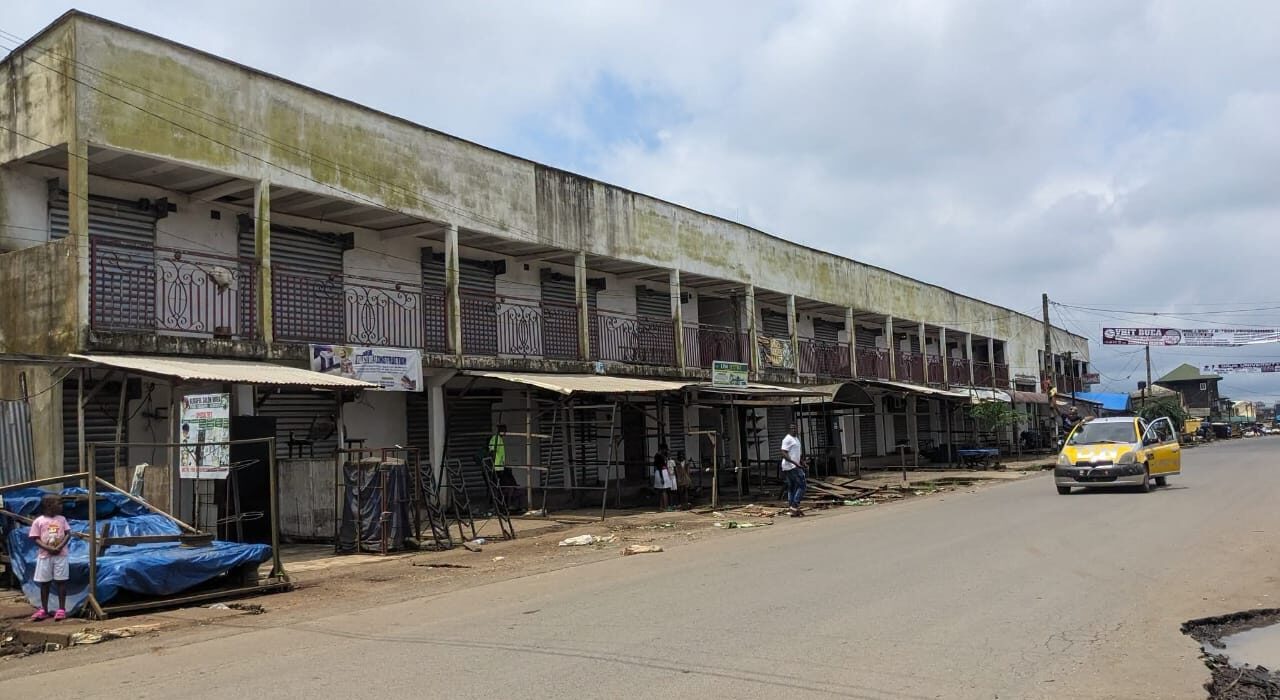
According to MMI News, shooting began at approximately 5:25 p.m. and continued until around 6 p.m. Muea Market was closed, commercial activity stopped, and frightened residents rushed home or lay on the floor to protect themselves. MMI reported that the shooting was believed to involve Cameroonian security forces and suspected Ambazonian fighters, but it could not independently confirm the identities of the combatants or whether anyone had been injured.
Those qualifications matter. Responsible reporting must distinguish between what witnesses experienced, what reporters could verify and what remained uncertain. The sustained gunfire was real. The shutdown of the market was real. The fear experienced by civilians was real. The identity of every combatant and the consequences of the confrontation had not been independently established when the initial report was published.
That is sufficient to raise a serious question: if the war has ended in the territory Yaoundé calls the South West, why was sustained gunfire again heard in Muea?
Normalcy Cannot Be Declared into Existence
The significance of the incident extends beyond the sound of gunfire. Muea is a densely populated and commercially important community in Buea, Fako County. In the political and territorial framework advanced by the Ambazonian restoration movement, Fako forms part of the Atlantic Zone, while Buea is regarded as the prospective federal capital.
The weekend incident therefore occurred not in a remote and inaccessible rural area but within one of the most politically symbolic urban spaces in the conflict. Yaoundé’s familiar vocabulary includes “normalcy,” “peace,” “terrorists,” “pockets of resistance” and repeated claims that government forces have restored effective control. But official declarations cannot substitute for measurable conditions on the ground.
Normalcy must mean more than the reopening of administrative offices or the presence of security forces. It must mean that residents can trade, travel, attend school, operate businesses and sleep without fear of sudden gunfire, arbitrary arrest, retaliation or forced displacement. By that standard, the experience reported in Muea was not normal. When gunfire continues for approximately 35 minutes, a major market closes and residents seek shelter on the floor, the claim that the underlying conflict has disappeared becomes difficult to sustain.
A Conflict Cannot Be Divided by Propaganda
Yaoundé has repeatedly attempted to describe the conflict as geographically contained. In this narrative, resistance survives mainly in the North West, while the South West has been largely pacified. That distinction may serve an information strategy, but it cannot determine the facts.
Periods of calm do not prove that a political conflict has been resolved. They may reflect shifting tactics, reduced operations, community exhaustion, security deployments, temporary disengagement or conditions that are not visible to the public. Relative quiet is not the same as political settlement.
Muea’s residents reportedly said they had not experienced gunfire of such intensity for years. That observation should not be interpreted as evidence that residents welcome renewed confrontation. It demonstrates instead that an area may appear calm while the causes and capacities underlying the conflict remain unresolved.
The incident also warns against assuming that geography can be divided neatly into zones of war and peace. Armed conflict is dynamic. It moves, recedes, resurfaces and changes form. A government may exercise administrative control over a city while remaining unable to resolve the political dispute that generated the violence. The Incident Does Not Prove Every Claim
The Muea shooting should not become an excuse for competing propaganda. One incident does not prove that every government claim is false, that every armed group possesses broad territorial control or that every reported gunshot represents an organized Ambazonian military operation. Nor should an armed group claim responsibility without evidence merely to create the impression of strength.
The initial report did not independently confirm casualties or conclusively identify the combatants. Those uncertainties should remain visible until credible information becomes available. But uncertainty about the identities of the shooters does not erase the event. It does not reopen Muea Market, remove the fear from households or make 35 minutes of reported gunfire compatible with sweeping claims that the conflict has been defeated.
A government confident in its normalcy narrative should have no difficulty supporting an impartial account of what occurred. Who fired? What triggered the confrontation? Were civilians harmed? Were arrests made? Was property damaged? What measures were taken to protect residents? Silence and propaganda cannot answer those questions. Civilians Must Not Become Evidence for Either Side
The people of Muea deserve more than being used as supporting evidence in competing political narratives. They are not instruments through which Yaoundé should advertise military control. Neither should they become human scenery through which armed separatist groups attempt to demonstrate continued relevance.
They are civilians with the right to security, livelihood, education, movement and truthful information. Every party to the conflict has obligations toward them. Government forces must distinguish civilians from combatants, avoid indiscriminate force, respect due process and prevent retaliatory arrests or collective punishment. Armed groups must avoid operating in ways that expose populated communities to attack, coercion or reprisals.
No credible struggle for liberation can treat civilian fear as proof of success. No credible government can describe a frightened population as evidence of restored peace. The proper measure is civilian protection. The “War Is Over” Claim Avoids the Political Question Even if Yaoundé were able to suppress every armed confrontation, military control would not by itself resolve the constitutional and political dispute.
The conflict developed from longstanding grievances concerning the legal, educational, administrative and political institutions inherited by the former British Southern Cameroons. Those grievances intensified when lawyers and teachers protested in 2016 and the state responded with force, arrests, restrictions and repression. The later armed conflict did not emerge in a historical vacuum.
A claim that resistance has been militarily reduced does not answer the underlying questions. What became of the federal safeguards associated with the 1961 union? Why were the inherited institutions of Southern Cameroons progressively centralized? How can citizens freely determine their political future? What settlement can protect civilians while establishing a legitimate and accountable political order? Those questions cannot be defeated with gunfire.
The Information War Matters
Yaoundé has strong incentives to convince domestic and international audiences that the crisis has been contained. The appearance of normalcy lowers diplomatic pressure, reassures investors, supports official events and allows the government to represent the conflict as a law-enforcement problem rather than an unresolved political crisis.
Ambazonian activists also have incentives to interpret every confrontation as proof that the restoration struggle remains militarily powerful. Both sides therefore operate within an information war.
That is why independent verification matters. Reports should distinguish witnessed events from political interpretation. Casualty figures should not be invented. The identities of combatants should not be assumed. Old images and videos should not be republished as current evidence. Claims of responsibility should be tested rather than repeated automatically. Truth is not a concession to the opposing side. It is the foundation of public credibility.
The International Community Must Look beyond Official Language
International organizations and foreign governments should not assess the conflict solely through official declarations of calm or through dramatic claims circulated by activists. They should examine civilian displacement, school disruption, market closures, arbitrary detention, attacks on communities, restrictions on movement, verified confrontations and the absence of a credible political process.
The reported incident in Muea matters because it demonstrates the distance that may exist between official language and civilian experience. A locality can be described as pacified while residents still live with the possibility of sudden violence.
International engagement should therefore prioritize civilian protection, humanitarian access, independent investigation, accountability for abuses by all parties and a credible political process addressing the conflict’s underlying causes.
A Political Conflict Requires a Political Settlement
The fundamental lesson from Muea is not that renewed gunfire should be celebrated. It is that military declarations have not produced an accepted political settlement. Yaoundé may continue to use the terms “separatists,” “terrorists” and “pockets of resistance.” Ambazonian movements may continue to describe Fako as part of the Atlantic Zone and Buea as the Federal Capital Territory. Neither vocabulary alone can protect the people living between the opposing forces.
The conflict will not end because one side repeatedly announces that it has already ended. It will end when civilians are protected, political grievances are addressed, abuses are investigated, legitimate representatives can participate freely, and an enforceable settlement commands sufficient public consent.
Until then, periods of calm will remain vulnerable to interruption. The question raised by August 15 therefore remains: if the war has disappeared from the territory Yaoundé calls the South West, what caused sustained gunfire to close Muea Market and drive residents into shelter? That question deserves a factual answer.
The people of Muea deserve security rather than propaganda. And Cameroon’s English-speaking conflict requires a political solution—not another declaration that a war still experienced by civilians is already over.
As Amazon associate this site earns from qualifying purchases
Shop for your Kitchen from Amazon
Lester Maddox
Guest Contributor, The Independentist News