

The greatest victories of peoples are rarely born from the belief that victory will be easy. They are born from the conviction that justice is necessary and from the discipline required to make justice sustainable. Let Osun be the message. Let 2027 be the test. Let the people rise. Let the ballots speak. Let democracy breathe. And let every people struggling for freedom remember the enduring words attributed to Nelson Mandela: “It always seems impossible until it’s done.” Osun has spoken. Nigeria must listen. Ambazonia must prepare, organize and persevere.
By Lester Maddox
Guest Contributor, The Independentist News
As Amazon associate this site earns from qualifying purchases
shop with Amazon
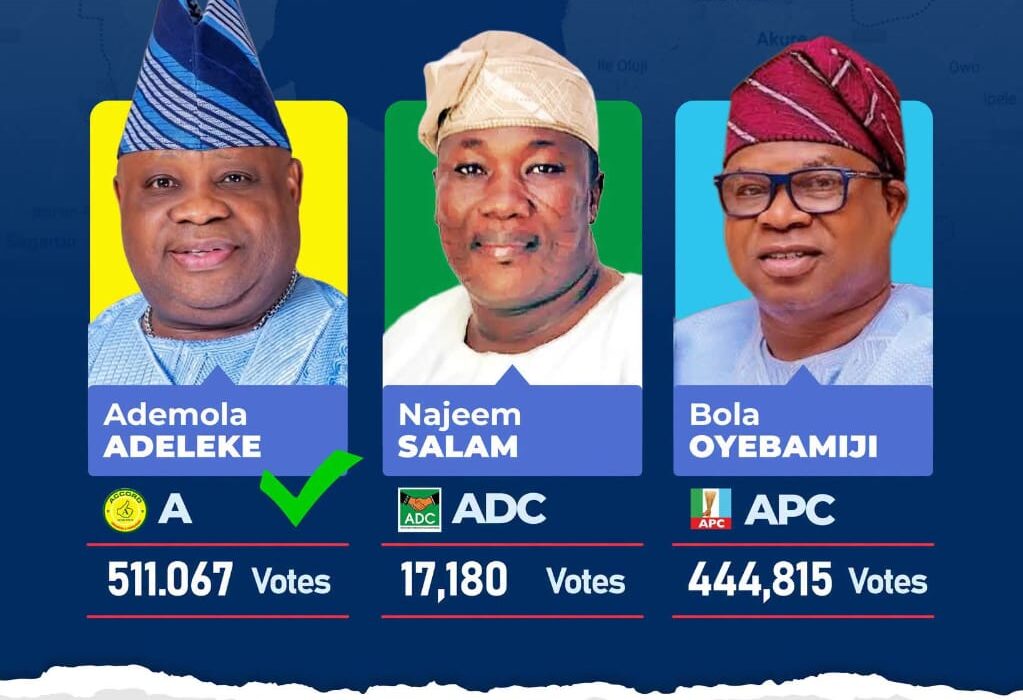
Abuja – August 17, 2026 – The people of Osun State have delivered a message Nigeria cannot afford to ignore: possessing political power is not the same as possessing the people. In an election watched closely across Nigeria, Governor Ademola Adeleke secured another mandate, defeating the All Progressives Congress candidate, Munirudeen Bola Oyebamiji. According to the result declared by the Independent National Electoral Commission, Adeleke received 511,067 votes against Oyebamiji’s 444,815 and prevailed in 19 of the state’s 30 local government areas.
This victory is bigger than Adeleke. It is bigger than the Accord Party, and it is bigger than the APC. It is about what can happen when citizens decide that their votes belong to them—not to the ruling party, the federal government or the machinery of political intimidation.
The APC entered the contest with the advantages of controlling the federal government, enjoying access to influential political networks and possessing a formidable national organization. Powerful federal and state actors mobilized behind its campaign. Yet when the votes were counted, the electorate had the final word. A government may control institutions, appointments and political resources, but it cannot permanently control the conscience of the people. That is why Osun deserves its flowers.
Victory Does Not Eliminate the Need for Scrutiny
The election was not free from controversy. The Socio-Economic Rights and Accountability Project has called on INEC, the Economic and Financial Crimes Commission and the Independent Corrupt Practices and Other Related Offences Commission to investigate reported allegations of vote-buying, financial inducement, illegal campaign financing, voter intimidation, violence, misuse of public resources and other electoral offences. Those allegations must be investigated impartially.
A democratic victory becomes stronger, not weaker, when credible allegations are subjected to transparent scrutiny. If electoral crimes occurred, those responsible should face the law regardless of their political affiliation. If the allegations cannot be substantiated, the evidence should establish that as well.
Democracy cannot survive on propaganda from either the governing party or the opposition. It survives when institutions are strong enough to investigate, establish the truth and enforce the law without fear or political instruction. Whatever those investigations eventually reveal, one political fact is already clear: Osun’s electorate was not overwhelmed by the weight of federal power.
The Long Struggle between Osun and Abuja
The election followed an extraordinary period of political and institutional tension between the Adeleke administration and the federal establishment. At the center of that struggle was the withholding of statutory allocations intended for Osun State’s 30 local governments. A review of Federal Account Allocation Committee figures reported that approximately ₦201.962 billion due between March 2025 and May 2026 was withheld amid a dispute over which elected local-government officials were legally entitled to control the councils.
The controversy reached the Supreme Court. Osun State’s action challenging the withholding was dismissed, but the Court reportedly reiterated that the federal government remained bound by its earlier judgment requiring local-government allocations to be paid directly to constitutionally recognized councils rather than withheld indefinitely.
The legal and political dispute therefore cannot be reduced to the simple claim that one side won everything. It exposed unresolved questions concerning local-government legitimacy, federal authority and the use of public revenue during partisan conflict.
Shortly before the election, the EFCC obtained a court order freezing Osun State Government accounts in connection with an investigation into alleged financial misconduct. The timing generated widespread concern about whether a federal anti-corruption institution was becoming entangled in a state political contest.
President Bola Tinubu subsequently directed the EFCC to return to court and seek the removal of the freezing order, acknowledging that its timing could create the impression of federal interference. The episode raised a fundamental democratic question: what happens when the enormous machinery of the federal state becomes entangled with a state-level electoral contest? Osun has now provided part of the answer. The people vote. And sometimes, the people say no.
The Lesson for Nigeria in 2027
More than 2.3 million people were registered to vote in Osun, but approximately one million votes were cast. That turnout was sufficient to produce a decisive result, yet it also shows that more than half of the registered electorate did not participate. The lesson for Nigeria in 2027 is therefore not complacency. It is mobilization.
Register. Collect your Permanent Voter Card. Know your polling unit. Vote. Remain peacefully alert. Document irregularities. Demand that results posted at polling units correspond with those entered into the official system. Support credible election monitoring and refuse to exchange four years of political authority for a momentary payment.
The vote is strongest when the voter is present.
If tens of millions more Nigerians participate in 2027, the political mathematics of the country could change dramatically. A massive, informed and determined electorate creates a democratic force that becomes extraordinarily difficult to manipulate. Osun has reminded Nigerians that incumbency is not invincibility. Money is not omnipotence. Federal authority is not popular sovereignty. Political intimidation is not democratic legitimacy. A government may possess enormous institutional advantages and still discover at the ballot box that the people have the final word.
The Message to Nigeria’s Opposition
The Osun lesson must reach every political force seeking democratic change. It must reach Peter Obi. It must reach Rabiu Musa Kwankwaso. It must reach opposition parties, civic organizations, youth movements, professional associations, traditional institutions, religious leaders and every Nigerian who believes that government should remain accountable to the governed.
What happened in Osun should not remain an isolated electoral episode. It should become a democratic template. The objective for 2027 should not merely be to remove one party and install another. Nigeria does not need a change of political uniforms while the underlying machinery of impunity remains intact. The objective must be to create an electorate so large, informed and vigilant that no political party believes control of the federal government gives it ownership of the Nigerian people.
Real democratic change requires more than anger. It requires organization, polling-unit presence, legal preparedness, disciplined messaging, credible candidates and the ability to protect the electoral process peacefully.
What Osun Means for Ambazonia
The lesson becomes more complicated when viewed from the perspective of Ambazonia, the former British Southern Cameroons. Nigeria’s election, despite its imperfections, occurred within an established constitutional framework. Osun voters could organize, campaign, vote and seek legal remedies within a recognized federation. The Ambazonian dispute concerns something deeper: the constitutional and territorial relationship between the former British Southern Cameroons and the Republic of Cameroon.
Ambazonia’s struggle therefore cannot be reduced to an ordinary electoral contest. It concerns political existence, self-determination, inherited legal and educational institutions, governance and the right of a people to participate meaningfully in deciding their political future.
The circumstances are different, but Osun still offers an important lesson: ordinary people can alter political calculations when they refuse to surrender their agency. For years, Ambazonians have watched elections organized by the centralized authorities in Yaoundé and asked what happens when citizens speak but the governing system refuses to listen. An election has little democratic meaning when the rules, institutions, security environment and final authority remain concentrated in the hands of the same political establishment.
Osun demonstrates the importance of institutions capable of registering political rejection. Ambazonia demonstrates the danger that arises when those institutional pathways cease to command public confidence. Political Agency Must Be Matched by Institutional Readiness
Ambazonians cannot afford political exhaustion. They cannot abandon their aspirations simply because the road is long and powerful interests oppose them. But perseverance must be disciplined, strategic and accountable.
Historical grievance alone will not produce a viable political outcome. Ambazonia must demonstrate constitutional legitimacy, administrative effectiveness, civilian protection, productive capacity and credible external relations.
The movement must organize communities, educate citizens, strengthen diplomacy, protect civilians, document abuses and develop institutions capable of carrying public trust. It must pursue its objectives through legitimate and peaceful means while rejecting internal intimidation, factional violence, financial opacity and attacks on dissent.
A movement demanding accountability from Yaoundé must also practice accountability within its own institutions. A people seeking self-determination must show that it is preparing not merely to claim a state, but to govern one responsibly. There Can Be No Surrender of Political Agency
The people of East Timor, Namibia and other territories that emerged from prolonged struggles for self-determination did not succeed because history offered them an easy road. Their circumstances were not identical to Ambazonia’s, and their experiences should not be copied mechanically. Their broader lesson is that political conditions can change when a people preserves its identity, documents its case, builds international understanding and develops institutions capable of sustaining a lawful outcome.
For Ambazonians, the destination remains clear, but the methods must remain disciplined. We must continue the journey through political organization, international engagement, civic education, community resilience, civilian protection and every legitimate and peaceful means available to a people seeking to determine its future.
We must continue until Buea becomes not merely a slogan, but the coordinating center of a constitutional, accountable and productive political order. The destination cannot justify every method. The future republic must be visible in the conduct of those seeking to build it.
Let Osun Be the Message
Osun has reminded Africa of something fundamental: when people organize, participate and refuse to surrender their political voice, even powerful political machines can be resisted. Yesterday, Osun spoke. Nigeria must now listen.
The election should become a lesson for 2027: turn out, remain vigilant, reject inducement, defend democratic institutions and refuse to allow federal power to substitute itself for popular sovereignty.
Ambazonia must learn a related lesson. Political agency must never be surrendered, but determination must be supported by ethical leadership, institutional preparation, civilian protection and disciplined diplomacy.
The greatest victories of peoples are rarely born from the belief that victory will be easy. They are born from the conviction that justice is necessary and from the discipline required to make justice sustainable. Let Osun be the message. Let 2027 be the test. Let the people rise. Let the ballots speak. Let democracy breathe. And let every people struggling for freedom remember the enduring words attributed to Nelson Mandela: “It always seems impossible until it’s done.” Osun has spoken. Nigeria must listen. Ambazonia must prepare, organize and persevere.
As Amazon associate this site earns from qualifying purchases
Shop with Amazon
https://www.amazon.com/s?k=Consumer+Electronics+%E2%80%8BStudy+%26+Everyday+Devices&i=specialty-aps&srs=121082092011&crid=FVKBVPKHZNTN&sprefix=consumer+electronics+study+%26+everyday+devices%2Cspecialty-aps%2C367&linkCode=ll2&tag=njokings-20&linkId=522d5e0cba1adc6fe54dcba63349d94f&language=en_US&ref_=as_li_ss_tl
Lester Maddox
Guest Contributor, The Independentist News