








Editorial commentary

We are home to news on Cameroon and the CEMAC region. We are dedicated to honest and reliable reporting. We are the voice of the Cameroonian people and their fight for freedom and democracy at a time when the Yaoundé government is silencing dissent and suppressing democratic voices.

Before asking wounded communities to embrace “love,” responsible civil society must first defend their right to grieve, dissent, protest, and refuse symbolic participation in systems they no longer trust. Because genuine reconciliation is not built by silencing protest. It is built by understanding why the protest exists in the first place.
By Ali Dan Ismael, Editor-in-Chief, The Independentist News
As Southern Cameroonians continue their long-standing boycott of Cameroon’s May 20th National Day celebrations, many citizens are asking an increasingly uncomfortable question: when a people are protesting pain, dispossession, and violence, is the role of civil society to amplify their grievances — or to soften them beneath the language of “love,” “dialogue,” and “national unity”?
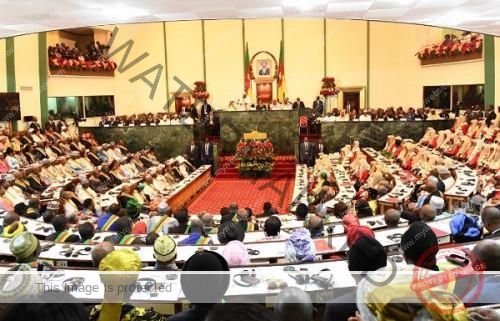
For years, large segments of Southern Cameroons have rejected participation in the annual May 20th celebrations because they no longer view the event as a symbol of unity, but as a political celebration of a state structure they believe has failed them. To many, the boycott itself has become a nonviolent act of political expression — a declaration that unresolved grievances cannot simply be buried beneath ceremonial nationalism and official rhetoric. And oppressed people have that right.
The right to protest, boycott, dissent, and withdraw symbolic participation from institutions perceived as unjust is not extremism. It is one of the oldest political rights in human history. From India’s anti-colonial boycotts to the American civil rights movement to anti-apartheid resistance in South Africa, peaceful non-cooperation has always been a legitimate political language of wounded communities.
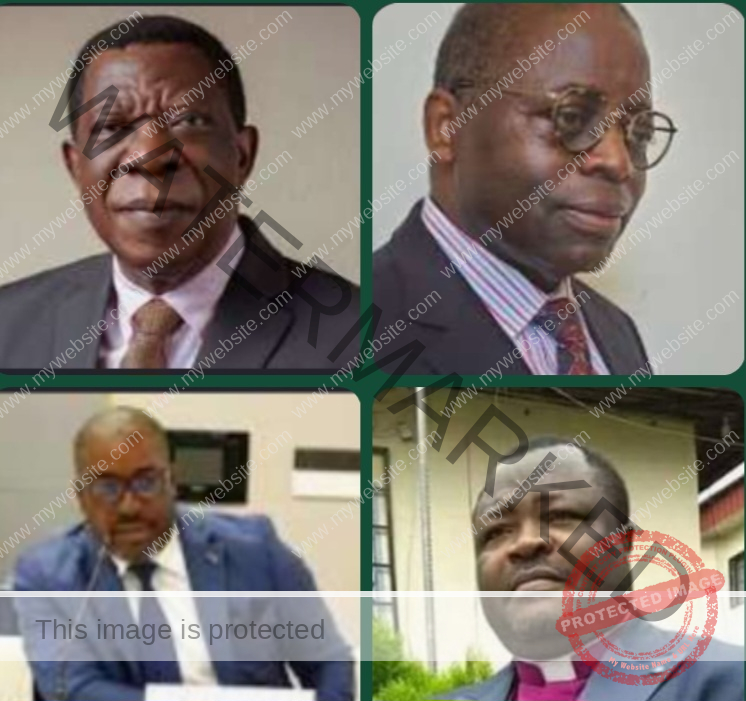
This is why the posture increasingly adopted by figures such as Nico Halle, Agbor Balla, Simon Munzu, Fonki Samuel and other elite reconciliation advocates has unsettled many Southern Cameroonians. To critics, their interventions increasingly project the attitude that protest itself has become the problem rather than the conditions that produced the protest.
At a moment when traumatized communities are expressing political pain through boycott, silence, non-participation, and open distrust of state institutions, many expected civil society voices first to acknowledge the legitimacy of that pain before preaching emotional reconciliation. Because there is a difference between peacebuilding and moral pressure. There is a difference between reconciliation and asking wounded people to suppress outrage for the comfort of the political establishment.
Civil society advocacy, at its highest moral level, is supposed to defend civic space, protect dissent, challenge abuses of power, and give voice to populations who feel politically abandoned. It is not merely to calm tensions whenever state legitimacy is questioned.
Yet many Southern Cameroonians increasingly feel that sections of Cameroon’s elite peace discourse now prioritize stability over justice, emotional restraint over accountability, and national image over uncomfortable truth.
The concern is not that these figures speak about peace.The concern is what they often avoid speaking about with equal force: militarization, impunity, displacement, fear, political exclusion,
and the accumulated trauma driving public anger. Under such conditions, calls for “love” can begin to sound less like solidarity with the oppressed and more like pressure on the oppressed to become politically quiet. But silence is not always peace. Sometimes silence is exhaustion. Sometimes silence is fear. And sometimes boycott itself is the final peaceful language left to a wounded population.
No serious observer can deny that hatred alone cannot build a future. Southern Cameroonians, like all peoples, will eventually require healing, coexistence, and some form of political settlement. But reconciliation cannot begin by demanding emotional surrender from those who still feel unheard, unprotected, and politically violated.
Martin Luther King Jr. did not condemn protest because it disturbed national comfort. Nelson Mandela did not ask Black South Africans to celebrate apartheid institutions in the name of unity. Protest itself became part of the moral force that eventually compelled the world to confront injustice.That is the deeper issue many Southern Cameroonians are raising today. When people boycott May 20th, they are not necessarily rejecting peace. They are rejecting the normalization of unresolved pain.
And before asking wounded communities to embrace “love,” responsible civil society must first defend their right to grieve, dissent, protest, and refuse symbolic participation in systems they no longer trust. Because genuine reconciliation is not built by silencing protest. It is built by understanding why the protest exists in the first place.
AliDan Ismael, Editor-in-Chief, The Independentist News
Share This Post:
Kemi Badenoch and the Battle for Britain’s Post-Populist Future
FOUNDATIONS OF AMBAZONIAN RECONSTRUCTION — PART VI Capital and Control: The Financial Engine of Independence
Related Post
THE SECOND RETURN: FROM THE PAIN OF SEPARATION TO
WHEN THE REGULATOR BENDS: WHAT THE VISION 4 AFFAIR
PROPHECY, POLITICS, AND THE AMBAZONIAN QUESTION (PART II) :
IF SOMALILAND MATTERS TO WASHINGTON, WHY NOT SOUTHERN CAMEROONS?
A CALL FOR GENERATIONAL RENEWAL: From Individual Leadership to
The Government of the Federal Republic of Ambazonia (in