









News commentary

We are home to news on Cameroon and the CEMAC region. We are dedicated to honest and reliable reporting. We are the voice of the Cameroonian people and their fight for freedom and democracy at a time when the Yaoundé government is silencing dissent and suppressing democratic voices.

No serious analyst can predict whether Badenoch will eventually become Prime Minister. Political careers are shaped as much by timing, economic conditions, party unity, international crises, and electoral luck as by individual brilliance. But history often turns on figures who first master the internal battles before confronting the national one.
By M. C. Folo The Independentist News contributor
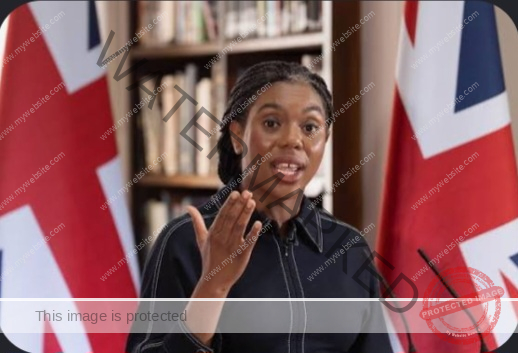
In the unforgiving theatre of Westminster politics, moments of clarity rarely arrive softly. They emerge through confrontation, sharpened by ideology, amplified by crisis, and tested under the relentless glare of parliamentary combat. Kemi Badenoch’s recent performance at Prime Minister’s Questions was one such moment: sharp, disciplined, confrontational, and unmistakably deliberate. It was not simply another exchange across the dispatch box. It was a declaration of political identity.
At a time when the Conservative Party continues to wrestle with the psychological aftershocks of electoral defeat, Badenoch has emerged as perhaps the clearest ideological voice attempting to redefine what British conservatism should look like after the populist turbulence of the Brexit era.
Her critics portray her as abrasive, confrontational, and uncompromising. Her supporters see discipline, clarity, and ideological conviction. Yet regardless of political preference, one fact has become increasingly difficult to ignore: Badenoch has positioned herself at the centre of the Conservative Party’s struggle for reinvention. The deeper question now is no longer whether she matters politically. It is whether she can ultimately reach Number 10. That question demands honesty rather than sentimentality.
Britain is unquestionably more diverse, open, and politically flexible than it was generations ago. Yet it would be intellectually dishonest to pretend that race and identity no longer shape political perception. The path to becoming Prime Minister of the United Kingdom has never been smooth for outsiders to the traditional British political establishment. For a Black woman leading a historically traditionalist centre-right party, the journey is likely to carry additional scrutiny, pressure, and resistance. And yet, politics is ultimately about thresholds.
Badenoch has already crossed the threshold that eliminates most contenders long before they approach power: she leads a major governing party. In parliamentary democracies such as Britain’s, that alone transforms political possibility into political plausibility. Many politicians dream of national influence. Few ever command a major party. Fewer still become the principal opposition voice in the House of Commons. Badenoch now occupies that battlefield.
The significance of this moment becomes even more apparent when viewed against the fractures currently reshaping the British right. Since assuming leadership of the Conservatives, Badenoch has had to navigate pressure not only from the governing Labour Party, but also from the insurgent pull of Nigel Farage and Reform UK.
Reform’s appeal is rooted in political disaffection: anti-establishment anger, cultural anxiety, distrust of institutions, and resentment toward mainstream elites. It draws energy from the same populist currents that reshaped politics across Europe and the United States during the past decade. For years, that wave appeared unstoppable.
From Brexit in Britain to nationalist movements across continental Europe and the rise of populist rhetoric in the United States, the political centre seemed increasingly fragile. Established parties struggled to contain voter anger over immigration, economic insecurity, national identity, and globalisation. But political eras rarely last forever.
Recent developments across Europe suggest that parts of the populist tide may be weakening, or at minimum evolving into something less electorally dominant than before. Several right-wing nationalist movements that once projected inevitability now face internal fragmentation, coalition fatigue, demographic pressures, or voter exhaustion.
If the broader political climate gradually shifts away from confrontational populism toward institutional conservatism, figures like Badenoch may benefit from that transition. Unlike many populist insurgents, Badenoch combines culturally conservative instincts with an explicitly institutional political style. She speaks the language of statecraft rather than revolution. Her arguments are framed less around dismantling the system than around reclaiming and re-disciplining it. That distinction matters.
Populist politics often thrives during periods of national frustration and institutional distrust. But once voters begin seeking stability rather than disruption, a different kind of political figure can emerge as more electorally attractive. Badenoch appears keenly aware of this possibility.
Her parliamentary style reflects neither apology nor ideological retreat. She has chosen confrontation deliberately, particularly on issues involving identity politics, free speech, state bureaucracy, education, and national cohesion. To supporters, this projects courage and clarity. To opponents, it signals unnecessary polarisation. Either way, it is strategic.
Modern politics rewards recognisable political identities. Ambiguity rarely survives media warfare. Badenoch’s confrontational style is therefore not merely personality; it is positioning. She is constructing herself as a politician who refuses managerial caution in favour of ideological directness. That approach carries both opportunity and risk.
The opportunity lies in energising voters who believe modern conservatism became intellectually timid or disconnected from cultural anxieties within the electorate. The risk lies in Britain’s electoral arithmetic itself.
General elections are not won solely by energising a political base. They are won by assembling broad coalitions across regions, classes, ethnic groups, generations, and ideological moderates. The same sharpness that consolidates party activists can alienate centrist swing voters if not balanced carefully.
Whether Badenoch can navigate that balance remains one of the defining unanswered questions of modern British conservatism. Yet perhaps the most fascinating aspect of her rise is symbolic rather than electoral.
Her leadership complicates simplistic narratives surrounding race, nationalism, conservatism, and British identity. She does not fit comfortably within older ideological frameworks. She challenges assumptions held by both the left and the right regarding who represents conservatism and what modern British identity should look like.
That complexity explains why reactions to her are often unusually intense.To some, she represents proof that British democracy remains open and fluid despite its historical baggage. To others, she represents a hardening cultural conservatism wrapped in a modern face. To many voters, she remains an unfinished political project still being defined in real time. What is undeniable, however, is that her rise reflects a Britain still negotiating its place after Brexit, after populism, and after the collapse of many old political certainties.
No serious analyst can predict whether Badenoch will eventually become Prime Minister. Political careers are shaped as much by timing, economic conditions, party unity, international crises, and electoral luck as by individual brilliance. But history often turns on figures who first master the internal battles before confronting the national one.
That first battle, the battle for leadership, authority, and ideological ownership within her own party, is already behind her. The larger war for Britain’s post-populist future still lies ahead.
M. C. Folo The Independentist News contributor
Share This Post:
The Myth of One and Indivisible Cameroun: Re-Examining German Kamerun and the Legal Status of Southern Cameroons
The Oppressed Also Have the Right to Protest
Related Post
THE SECOND RETURN: FROM THE PAIN OF SEPARATION TO
WHEN THE REGULATOR BENDS: WHAT THE VISION 4 AFFAIR
PROPHECY, POLITICS, AND THE AMBAZONIAN QUESTION (PART II) :
IF SOMALILAND MATTERS TO WASHINGTON, WHY NOT SOUTHERN CAMEROONS?
A CALL FOR GENERATIONAL RENEWAL: From Individual Leadership to
The Government of the Federal Republic of Ambazonia (in