











We remember him as one of the heroes of Ambazonian freedom. He may have fled the country. But history increasingly suggests he understood the future better than those who drove him out.
By Ali Dan Ismael
Editor-in-Chief, The Independentist News
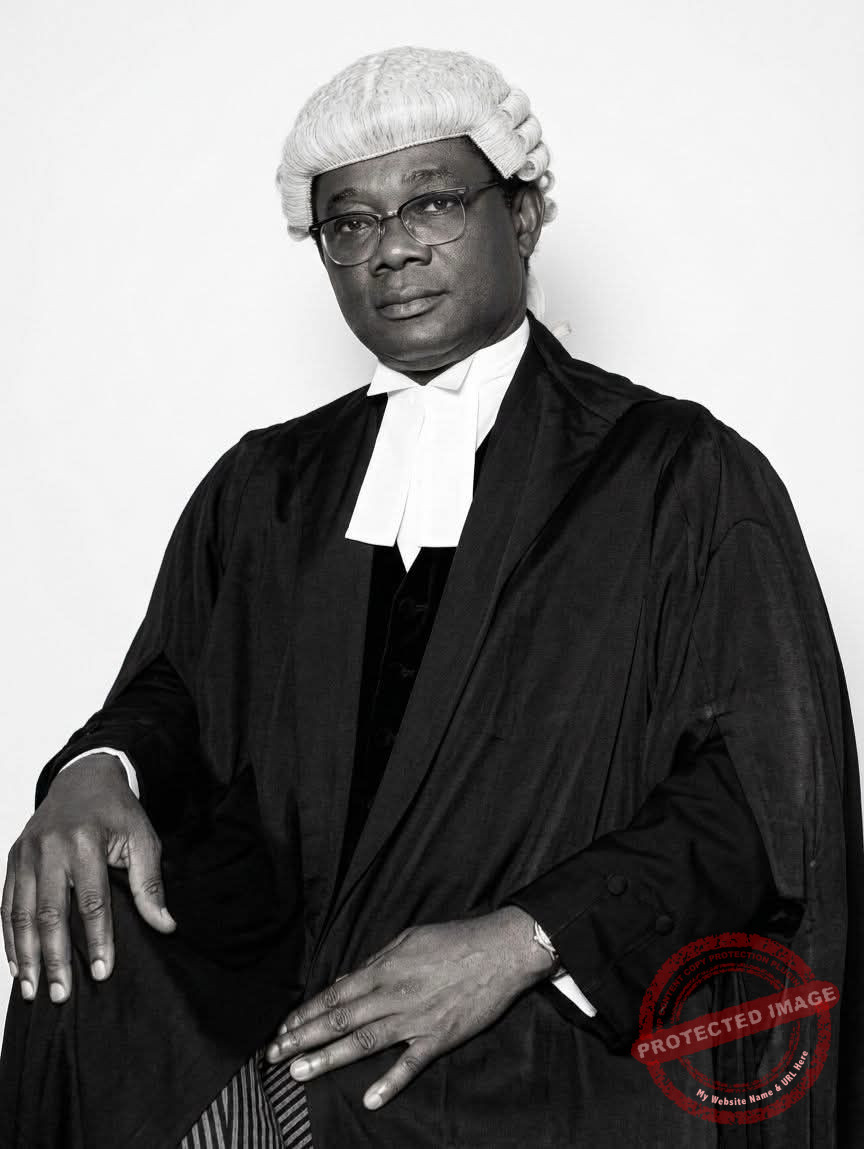
History often remembers presidents, politicians, and military strongmen. Yet sometimes, the fate of nations quietly turns on the courage of a single judge. In the long and painful story of the destruction of Southern Cameroons’ autonomy, few figures embodied resistance to authoritarian centralisation more profoundly than Chief Justice Emmanuel Kofi Mensah. Long before the streets of Buea and Bamenda became theatres of protest and resistance, before the contemporary Anglophone Crisis erupted into international headlines, there existed a legal war behind closed courtroom doors — a war between two civilizations of governance.
On one side stood the Anglo-Saxon tradition of liberty under common law. On the other stood the highly centralized post-colonial state machinery inherited by La République du Cameroun. At the center of that collision stood one man: Chief Justice Emmanuel Kofi Mensah. The Commonwealth Jurist Who Guarded West Cameroon
Chief Justice Emmanuel Kofi Mensah was no ordinary magistrate. Trained within the British common-law tradition and shaped by Commonwealth judicial culture, he emerged as one of the most formidable legal minds serving the Federated State of West Cameroon after the 1961 reunification.
At a time when Southern Cameroons still functioned within a distinctly Anglo-Saxon legal architecture inherited from British administration, Mensah represented the institutional backbone of judicial independence. He reportedly became Attorney General at the remarkably young age of twenty-eight, a reflection of both his brilliance and the immense trust placed in him during the formative years of Southern Cameroons governance.
Unlike the administrative culture evolving in Ahidjo’s Cameroon, Mensah believed that the state itself must remain subordinate to law. This was not merely a technical disagreement over legal philosophy. It was a civilizational conflict.
The Federation That Was Never Truly Federal
The tragedy of the Foumban process remains one of Africa’s least understood constitutional betrayals. Southern Cameroons entered reunification negotiations under the understanding that two equal political entities would form a loose federation capable of preserving their distinct legal, educational, and administrative systems. Legal minds within Southern Cameroons understood the dangers immediately.
A true federation required enforceable constitutional protections. It required institutional sovereignty. It required judicial independence insulated from executive manipulation. But according to long-standing criticisms of the Foumban arrangements, President Ahmadou Ahidjo arrived with a pre-drafted constitutional framework already designed to consolidate power within the presidency.
To many West Cameroonian constitutionalists, Foumban was not the birth of a partnership. It was the beginning of absorption. Mensah saw the danger early. He understood that once executive authority captured the judiciary, the Anglo-Saxon safeguards protecting individual liberty would eventually collapse beneath the weight of centralized francophone administrative rule. History would prove him devastatingly correct.
The Legal Principles Ahidjo Could Not Tolerate
Chief Justice Mensah defended principles fundamentally incompatible with the architecture of an emerging one-party state. He fiercely upheld: Habeas corpus. The presumption of innocence. Protection against arbitrary detention. Judicial review of executive abuse. Independence of the courts from political coercion. To modern democracies, such principles sound ordinary.
To Ahidjo’s rapidly centralizing regime, they were dangerous. The new federal authorities were constructing a state security apparatus designed not for constitutional balance, but for political consolidation. Arbitrary arrests, intimidation, surveillance, and administrative decrees increasingly became instruments of governance. Mensah reportedly resisted these encroachments repeatedly. He blocked abuses. He challenged unconstitutional overreach. He defended the legal autonomy of West Cameroon. And in doing so, he became intolerable to the regime.
When the State Turned Against the Judge
Authoritarian systems rarely destroy institutions openly at first. They isolate. They intimidate. They manufacture vulnerability. Because dismissing a prominent Commonwealth jurist outright risked international embarrassment with Ghana and Britain, the regime allegedly resorted to more subtle methods of neutralization.
According to historical accounts from the era, state machinery eventually targeted Mensah through administrative harassment and politically motivated pressure campaigns — including threats connected to trivial regulatory matters intended to humiliate and criminalize him. The message was unmistakable: No institution would remain above the state. Recognizing that judicial independence had effectively collapsed and fearing both persecution and arbitrary detention, Chief Justice Emmanuel Kofi Mensah fled Cameroon. His departure marked far more than the exile of a judge. It marked the beginning of the dismantling of the Anglo-Saxon legal order in Southern Cameroons.
The Fall of the West Cameroon Judiciary
Once Mensah was gone, the balance of resistance inside the legal system weakened dramatically. The federal government accelerated the harmonization and centralization of state institutions. The autonomous legal culture of West Cameroon steadily eroded beneath administrative restructuring, francophone bureaucratic expansion, and executive domination.
What disappeared was not merely procedural difference. An entire philosophy of governance was being dismantled. The common-law tradition protected the citizen from the state. The emerging centralized system increasingly protected the state from the citizen. This distinction lies at the very heart of the modern Anglophone crisis.
The Ghost of Foumban Still Haunts Cameroon
Today, many analysts discuss the Anglophone conflict as though it emerged suddenly in 2016. That interpretation is historically shallow. The roots of the crisis were planted decades earlier through the systematic erosion of constitutional guarantees promised to Southern Cameroons during reunification. Chief Justice Emmanuel Kofi Mensah understood this before most. He recognized that once judicial independence collapsed, political assimilation would inevitably follow. Without constitutional enforcement mechanisms, federalism would become ceremonial language masking centralized control. The contemporary conflict did not emerge from nowhere. It emerged from accumulated institutional betrayal.
We Remember Him
Modern Cameroon rarely speaks of Emmanuel Kofi Mensah. That silence itself is revealing. Authoritarian systems often erase the memory of those who defended institutional restraint because such individuals expose the illegitimacy of unchecked power. Yet the legacy of Mensah endures. Every debate over common law. Every protest over judicial marginalization. Every demand for institutional autonomy. Every argument about constitutional federalism. Every accusation of annexation. All echo the very warnings men like Chief Justice Emmanuel Kofi Mensah attempted to raise more than six decades ago.
We remember him as one of the heroes of Ambazonian freedom. He may have fled the country. But history increasingly suggests he understood the future better than those who drove him out.
Ali Dan Ismael
Editor-in-Chief, The Independentist News







Leave feedback about this