












The new politics of African sovereignty and resistance will succeed only if it becomes the new politics of African responsibility. Ambazonia must stand within that awakening, not as a victim begging for sympathy, but as a people preparing to build a republic worthy of recognition.
By The Editorial desk The Independentist News
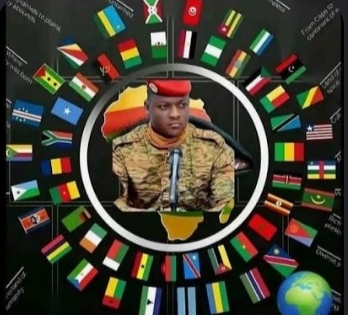
Africa is entering a new political season. Across the continent, the old language of obedience is losing its power. The era in which African peoples were expected to listen quietly while foreign capitals defined their security, resources, currencies, borders, alliances, and political futures is weakening. A new generation is asking harder questions, and those questions are no longer whispered.
Who controls Africa’s resources? Who defines Africa’s enemies? Who benefits from Africa’s instability? Who writes the contracts? Who trains the armies? Who owns the mines, ports, banks, plantations, pipelines, and strategic corridors? Who speaks of democracy while protecting systems that deny African peoples the right to determine their own future? These questions are reshaping the continent.
The Sahel has become one of the clearest signs of this shift. Mali, Burkina Faso, and Niger formally left ECOWAS after a yearlong withdrawal process, while ECOWAS said it would keep the door open and continue cooperation where possible. Their departure followed coups, sanctions, security crises, and growing hostility toward Western influence, especially French influence. France also withdrew military forces from Niger after the 2023 coup authorities demanded their departure, marking another major setback for France’s old security architecture in the region.
But this new African mood is bigger than the Sahel. It is not only about soldiers, coups, flags, or diplomatic ruptures. It is about a deeper rejection of the old arrangement in which African sovereignty existed in speeches but not always in practice.
For decades, Africa was told to be patient. Be patient with unfair trade. Be patient with foreign military bases. Be patient with extractive contracts. Be patient with weak currencies. Be patient with development promises. Be patient with postcolonial borders that separated peoples and trapped nations inside arrangements they never freely designed. Be patient while raw materials left the continent and finished goods returned at prices the poor could barely afford. That patience is ending.
The commonwealth’s inclusive Club Problem
The Commonwealth presents itself as a modern association united by values such as democracy, human rights, rule of law, good governance, transparency, accountability, inclusiveness, and concern for vulnerable peoples. Its Charter describes the Commonwealth as a voluntary association of independent and equal sovereign states, committed to free and democratic societies, peace, prosperity, and improving the lives of Commonwealth peoples. But this raises a serious question: inclusive for whom?
How can the Commonwealth call itself inclusive while Southern Cameroons remains one of the unresolved wounds of British-administered decolonization? How can it speak of democracy while the people of Southern Cameroons were never offered a clean and direct option of separate independence in the 1961 plebiscite? Historical accounts of the 1961 British Cameroons referendum show that the alternatives were union with Nigeria or union with Cameroon; full separate independence was not presented as a ballot option.
How can the Commonwealth celebrate rule of law while the constitutional fate of a former British-administered territory remains buried under diplomatic silence? How can it speak of equality while Cameroon was admitted into the Commonwealth without first resolving the historical status, consent, and constitutional grievance of the Southern Cameroons people?
The Commonwealth cannot claim moral leadership on inclusion while treating Southern Cameroons as an inconvenience. Inclusion is not a slogan for summits. It is a test of historical honesty. If the Commonwealth is truly a family, club, or community of equal peoples, then it must not behave like a household that welcomes the powerful guest while ignoring the child whose inheritance was mishandled.
Southern Cameroons is not merely an internal Cameroonian matter. It is tied to British trusteeship, United Nations decolonization, the failed federal promise, and the international management of postcolonial statehood. A Commonwealth that speaks of democracy, human rights, rule of law, vulnerable peoples, and inclusive development must be willing to ask whether Southern Cameroons was ever fully and fairly decolonized.
The question is simple: Can an inclusive Commonwealth remain silent about an excluded people? If the answer is yes, then inclusion has become ceremony without conscience. If the answer is no, then the Commonwealth must find the courage to reopen the Southern Cameroons question with honesty, legality, and moral seriousness.
This is why Africa’s new politics of sovereignty must not stop at rejecting foreign military influence or unfair economic arrangements. It must also confront the unfinished files of decolonization, including the Southern Cameroons question, which the Commonwealth cannot honestly ignore while presenting itself as inclusive.
The new politics of sovereignty is not simply anti-Western. It is anti-humiliation. It is a demand that African states and African peoples be treated as adults in world affairs. It is a demand that partnership must mean partnership, not disguised command. It is a demand that development must mean transformation, not extraction. It is a demand that security must protect African communities, not merely foreign interests. For Ambazonia, this continental awakening carries a powerful lesson.
The Ambazonian question is part of Africa’s unfinished decolonization. Southern Cameroons was not born from confusion. It had a constitutional identity, legal tradition, parliamentary culture, and historical path that were later swallowed by a centralized state that did not respect its distinct political inheritance. To speak of Ambazonia is therefore not to invent a grievance. It is to reopen a question that the international system buried without solving.
Africa’s new politics of resistance must therefore include the right of peoples to examine defective postcolonial arrangements. It must include the right to ask whether inherited borders produced justice or merely administrative convenience. It must include the right to ask whether “territorial integrity” should be used forever to silence peoples whose consent was mishandled, ignored, or betrayed.
But Ambazonia must also learn another lesson from the Sahel: sovereignty without institutions is incomplete. It is not enough to reject foreign domination. A people must also build a political order worthy of freedom. A flag alone cannot feed children. A speech alone cannot build courts. A revolution alone cannot repair hospitals. Anger alone cannot create investor confidence, public trust, commercial justice, clean water, disciplined security, or accountable government.
Africa must be free, but Africa must also be well governed. That is the challenge before Ambazonia. The future Republic must not become another state that simply replaces one elite with another. It must become a model of disciplined self-government: constitutional, transparent, decentralized, productive, lawful, humane, and serious. It must show that self-determination can produce better institutions, not merely louder slogans.
The world is changing. Former colonial powers can no longer assume that African peoples will remain silent. Old diplomatic language no longer hides old power arrangements. The African street, the African youth, the African farmer, the African intellectual, the African soldier, the African trader, the African diaspora, and the African village are all asking questions that cannot be permanently suppressed.
Africa no longer listens quietly. But the next step is not noise. The next step is construction. Sovereignty must build schools. Sovereignty must protect water. Sovereignty must govern resources honestly. Sovereignty must create jobs. Sovereignty must defend communities. Sovereignty must respect courts. Sovereignty must produce citizens, not subjects.
The new politics of African resistance will succeed only if it becomes the new politics of African responsibility. Ambazonia must stand within that awakening, not as a victim begging for sympathy, but as a people preparing to build a republic worthy of recognition.
Africa is speaking now.
The Commonwealth is also speaking of inclusion. Ambazonia must ask whether that inclusion includes Southern Cameroons. And if it does not, then the word itself must be challenged. Ambazonia must speak with clarity, discipline, truth, and purpose.
The Independentist News Editorial desk




Leave feedback about this