










Commentary

We are home to news on Cameroon and the CEMAC region. We are dedicated to honest and reliable reporting. We are the voice of the Cameroonian people and their fight for freedom and democracy at a time when the Yaoundé government is silencing dissent and suppressing democratic voices.

What is unfolding may not always be visible, but it is deeply felt. And over time, such shifts—quiet though they may be—can redefine the relationship between people, place, and power in ways that are difficult to reverse.
By Carl Sanders
Guest Writer The Independentistnews
Soho, London
3 April 2026
While global attention is drawn to visible violence in the North West and South West, a quieter and more enduring struggle is unfolding—one that does not make headlines, but reshapes realities. It is not marked by gunfire, but by paperwork. Not by explosions, but by signatures. And yet, its consequences may prove just as permanent.
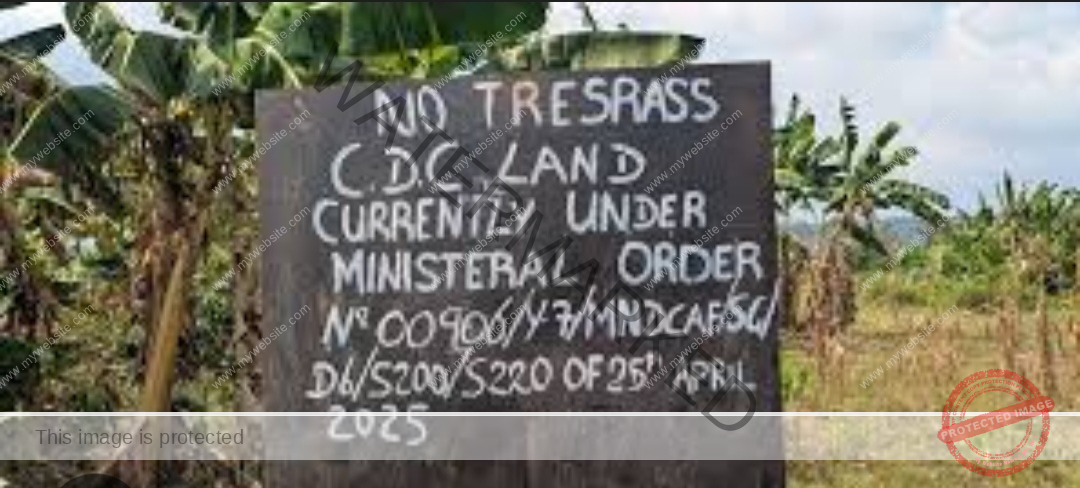
Across parts of the South West, particularly in Fako and Meme, questions are increasingly being raised about land control, administrative authority, and ownership. Under frameworks described as “public utility” or “security considerations,” land that communities consider ancestral is being reallocated through processes that many residents say they neither initiated nor fully understand.
The concern is not only about land—it is about agency. When decisions over territory are made without meaningful local participation, the issue shifts from development to dispossession. When administrative authority overrides customary ties, ownership becomes contested, and trust begins to erode.
At the same time, broader patterns of movement and settlement are being interpreted through a political lens. In some quarters, there is a growing perception that access to land and opportunity is unevenly distributed, reinforcing longstanding grievances about representation and control. These perceptions—whether debated or disputed—are shaping how communities understand current developments.
The tension becomes more pronounced when viewed alongside reports of targeted identification measures in other regions. When one population feels monitored while another is perceived to be expanding its footprint, the imbalance—real or perceived—takes on symbolic weight. It becomes part of a larger narrative about belonging, power, and protection.
Land, in this context, is more than an economic asset. It is identity. It is memory. It is continuity. When control over land shifts without consensus, the impact is not only material—it is existential. Communities begin to question not just who owns the land, but who determines the rules by which that ownership is defined.
The challenge, therefore, is not simply administrative—it is foundational. A system that seeks stability must ensure that policies affecting land are transparent, inclusive, and grounded in trust. Without that, even well-intentioned actions risk being interpreted as displacement rather than development.
What is unfolding may not always be visible, but it is deeply felt. And over time, such shifts—quiet though they may be—can redefine the relationship between people, place, and power in ways that are difficult to reverse.
Carl Sanders
Guest Writer The Independentistnews
Share This Post:
The “Cockroach” Awakening — No More Seats at the Fowl’s Table
The Foumban Deception: Why Ambazonia’s Struggle Is the Ultimate Defense of the Rule of Law
Related Post
PROPHECY, POLITICS, AND THE AMBAZONIAN QUESTION (PART III) Why
WHEN YAOUNDÉ’S ALLIES SUDDENLY ENDORSE AYUK TABE: SOLIDARITY OR
THE SECOND RETURN: FROM THE PAIN OF SEPARATION TO
WHEN THE REGULATOR BENDS: WHAT THE VISION 4 AFFAIR
PROPHECY, POLITICS, AND THE AMBAZONIAN QUESTION (PART II) :
IF SOMALILAND MATTERS TO WASHINGTON, WHY NOT SOUTHERN CAMEROONS?