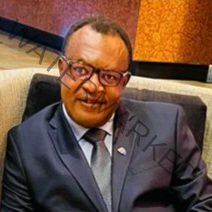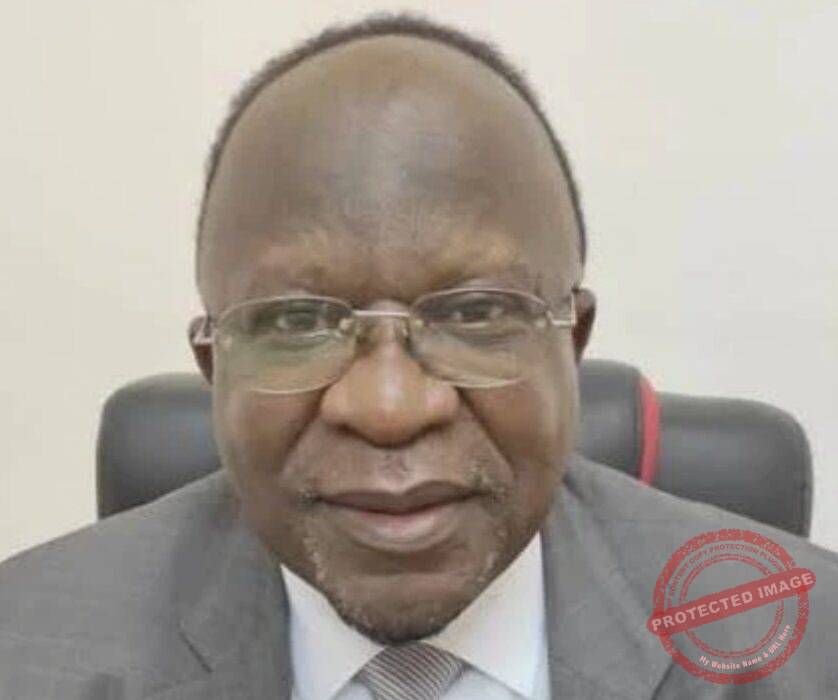


The question future generations may ask is not whether Professor Elvis Ngole Ngole was educated or polite. The question may instead become: What did he do with his influence during one of the greatest political crises affecting his people? And on that question, history may ultimately deliver a far harsher verdict than contemporary political ceremonies ever will.
By Timothy Enongene
Associate Editor-in-Chief, The Independentist News
In every collapsing political system, there are always two categories of enforcers. The first are the obvious men of force — the generals, the police commanders, the propagandists, and the bureaucrats who openly defend repression. The second category is far more dangerous. These are the intellectual decorators of oppression. The polished academics. The soft-speaking technocrats. The “peace advocates” who give moral cover to deeply corrupt systems while presenting themselves as voices of moderation and reason. Professor Elvis Ngole Ngole belongs to this second category.
For years, the Cameroonian regime has relied heavily on carefully manufactured intellectual figures from Southern Cameroons (Ambazonia) to project an illusion of inclusion, balance, and legitimacy. Their purpose is strategic: to convince the outside world that the regime is not fundamentally colonial or exploitative because a few educated Anglophones occupy visible positions within the machinery of power. Professor Ngole Ngole became one of the most polished faces of that strategy.
The Tragedy of Intellectual Collaboration
No one disputes that Professor Ngole Ngole is educated. No one disputes that he possesses academic credentials or political sophistication. But history does not judge intellectuals merely by their degrees. History judges them by the systems they choose to serve.
At the height of the destruction of Southern Cameroons villages, mass displacement, arbitrary arrests, military raids, disappearances, and the collapse of educational and economic life across the territory, Professor Ngole Ngole remained firmly embedded within the ruling CPDM structure. Not as a passive observer. But as one of its respected ideological custodians.
While entire communities in the North West and South West Regions descended into humanitarian catastrophe, many regime intellectuals perfected the language of “dialogue,” “peacebuilding,” and “national unity” without ever honestly confronting the root political question: the unresolved status and systematic marginalization of Southern Cameroons within the Cameroonian state structure. That silence was not neutrality. It was political participation.
The CPDM Academy and the Production of Loyalty
The regime often presents the CPDM Academy as a center for leadership, civic ethics, and governance education. But many critics see it differently. To them, it functions primarily as a political reproduction machine — an institution designed to manufacture ideological loyalty to a ruling structure that has remained in power for decades while presiding over institutional decay, corruption, electoral distrust, and deepening regional fractures.
Professor Ngole Ngole’s leadership within that structure cannot be separated from the broader reality of what the CPDM has become under Paul Biya. A system where political survival often matters more than institutional transformation. A system where intellectual sophistication frequently replaces moral courage. A system where carefully selected elites from marginalized regions are elevated, not necessarily to solve problems, but to stabilize public perception.
Peacebuilding Without Political Truth
One of the most repeated narratives surrounding Professor Ngole Ngole is his role as a “peace crusader” during the Anglophone crisis. But many Ambazonians ask an uncomfortable question: Can there be genuine peacebuilding without political truth? Community meetings, traditional ruler consultations, and reconciliation forums may temporarily reduce tensions. But such activities become politically hollow if they avoid addressing the foundational crisis itself.
Southern Cameroons did not descend into conflict because villagers suddenly hated peace. The conflict emerged from decades of accumulated constitutional grievances, political exclusion, cultural erosion, militarization, and unresolved questions surrounding the union between Southern Cameroons and La République du Cameroun. Any intellectual who discusses peace while avoiding these deeper structural questions risks becoming part of a containment strategy rather than a solution.
The Elite Buffer System
Cameroon’s ruling establishment has historically depended on what many now describe as an “elite buffer system.” A small class of politically connected Southern Cameroons elites are integrated into the state apparatus, granted visibility, titles, prestige, and influence, while the broader population experiences neglect, underdevelopment, and political marginalization. This arrangement serves multiple purposes. It weakens organized resistance. It creates internal division. It produces the appearance of representation. And most importantly, it allows the regime to point to elite participation as proof that no systemic problem exists. Professor Ngole Ngole became one of the respectable faces of this architecture. Not through open brutality. But through intellectual legitimization.
The Moral Burden of Educated Men
The tragedy is that educated men possess the ability to recognize structural injustice more clearly than ordinary citizens. They understand constitutional history. They understand power systems. They understand political manipulation. They understand international law. Which is why history often judges intellectual collaborators more harshly than ordinary political actors. Because they knew. And still participated.
The Difference Between Stability and Justice
The Cameroonian regime frequently speaks about stability. But history repeatedly shows that stability without justice eventually collapses under the weight of unresolved contradictions. The apartheid regime in South Africa once defended “stability.” Colonial administrations defended “order.” Authoritarian systems across the world always speak the language of peace while suppressing the language of political truth.
The question future generations may ask is not whether Professor Elvis Ngole Ngole was educated or polite. The question may instead become: What did he do with his influence during one of the greatest political crises affecting his people? And on that question, history may ultimately deliver a far harsher verdict than contemporary political ceremonies ever will.
Timothy Enongene
Associate Editor-in-Chief, The Independentist News