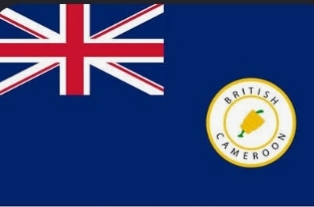


The task facing Ambazonians today is to ensure that the pursuit of peace, self-determination, regional stability, and accountable government becomes impossible for Britain—and the wider international community—to dismiss as strategically irrelevant. Britain’s interests may not be eternal in Southern Cameroons. Its historical responsibility is.
By Ali Dan Ismael
Editor-in-chief The Independentist News
Some diplomatic conversations remain in the memory because they reveal more than official speeches ever could. Shortly after Cameroon’s disputed presidential election of 1992, I discussed the situation of the former British Southern Cameroons with a British diplomat. I raised Britain’s historical relationship with the territory and the political grievances that were already becoming increasingly difficult to ignore.
His response was short, candid, and unforgettable: “Britain has no strategic interest in Southern Cameroons.” I cannot say whether he was expressing a formally approved government position or offering his personal assessment of British policy. But over the three decades since that conversation, the conduct of successive British governments has repeatedly appeared to corroborate his words.
Britain administered Southern Cameroons. Britain helped shape the process through which its political future was determined. Britain departed when its administrative responsibilities ended. Yet when the resulting constitutional arrangement began to unravel, Britain increasingly treated the territory as though its history had become somebody else’s problem. Its strategic interest disappeared. The consequences did not.
The Palmerston Doctrine in Southern Cameroons
The diplomat’s remark was consistent with an old tradition in British foreign policy. Lord Palmerston famously declared that Britain had no eternal allies and no perpetual enemies; its interests were eternal and perpetual. Palmerston was expressing the realism that has guided major powers for centuries. States generally do not organize foreign policy around gratitude, historical affection, or permanent friendship. They pursue interests. Southern Cameroons appears to have become a victim of that doctrine.
The territory mattered while it formed part of Britain’s imperial system. It became far less important once British administration ended and the United Kingdom redirected its attention toward relations with sovereign governments, regional security, commercial opportunities, European affairs, and its wider global position.
From London’s perspective, this may have represented ordinary foreign-policy adjustment. From an Ambazonian perspective, it amounted to historical abandonment. Britain exercised power when Southern Cameroons was useful to its imperial arrangements. Once the territory ceased to serve an immediate strategic purpose, responsibility appeared to end with withdrawal.That may be realpolitik. It is not justice.
The Entente Cordiale and the Politics of Imperial Accommodation
The pattern predates the Southern Cameroons plebiscite by more than half a century. The Anglo-French Entente Cordiale of 1904 settled several colonial disputes between Britain and France. The agreement did not directly determine the later status of Southern Cameroons, and it should not be presented as though it secretly allocated the territory to France. Nevertheless, it reflected a broader imperial practice: Britain and France managed African territories through strategic accommodation, treating the interests of European powers as more important than the political wishes of the African populations affected by their agreements.
The Entente helped end centuries of Anglo-French rivalry and laid the foundation for closer strategic cooperation. For Britain and France, it was a diplomatic achievement. For colonized peoples, it represented something more troubling: powerful states could negotiate spheres of influence while the people living within them remained largely absent from the table. That underlying logic did not disappear with the formal end of colonialism.
Britain continued to prioritize its wider relationship with France and internationally recognized African governments. France, meanwhile, retained extensive influence throughout much of its former African empire through political, security, commercial, cultural, and monetary relationships.
In Cameroon, many Ambazonians believe that British withdrawal left the former Southern Cameroons inside a state whose governing culture and external relationships remained heavily shaped by France. Britain withdrew from direct responsibility. France retained influence. Southern Cameroons carried the consequences.
The Phillipson Report and the Macpherson Legacy
Britain’s lack of long-term strategic commitment to Southern Cameroons was reflected not only in diplomatic attitudes but also in the administrative and economic frameworks imposed during the trusteeship period. The Phillipson Report examined the financial, economic, and administrative consequences of separating Southern Cameroons from the Federation of Nigeria. Its conclusions contributed to the argument that the territory might struggle to sustain itself as an independent state without continued economic links to Nigeria.
For many Ambazonians, the report became more than an economic assessment. It became part of a colonial narrative that presented Southern Cameroons as too small, too dependent, or too economically fragile to stand independently. That conclusion deserves scrutiny.
Britain had administered Southern Cameroons largely as an appendage of Nigeria. It had limited the development of independent institutions, integrated major administrative and economic functions into Nigerian structures, and failed to build the full governmental capacity expected of a territory being prepared for self-government.
It was therefore deeply contradictory to underdevelop the institutional foundations of the territory and then use the resulting weakness as evidence that it could not govern itself. The Phillipson Report did not merely measure conditions. It assessed the consequences of an administrative system Britain itself had created.
The Macpherson Constitution of 1951 formed part of the same pattern. Rather than granting Southern Cameroons full regional status, it retained the territory within Nigeria’s Eastern Region and provided only limited representation. Southern Cameroonians consequently remained politically subordinate within a larger system whose priorities were not their own.
The Macpherson arrangement may therefore be remembered as a constitutional burden. It gave Southern Cameroons enough representation to claim that its voice had been heard, but not enough authority to determine its own political and economic future.
Taken together, the Macpherson Constitution and the Phillipson Report appeared to lead toward the same conclusion: Southern Cameroons should not be prepared for sovereign independence but should instead remain attached to a larger neighboring political structure. The question is whether this conclusion emerged from objective analysis or from a British policy already shaped by strategic disinterest.
Was Southern Cameroons Part of Europe’s Punishment of Germany?
The deeper origins of the problem lie in the First World War. German Kamerun was conquered by British and French forces and divided after Germany’s defeat. The territory that later became British Southern Cameroons was therefore not created through the freely expressed political choice of its people. It emerged from the redistribution of Germany’s colonial possessions by victorious European powers.
The postwar settlement unquestionably punished Germany by removing its colonies. But it would be historically difficult to prove that Britain’s subsequent policies in Southern Cameroons were deliberately designed as a continuing punishment of Germany. The more defensible conclusion is equally troubling. Southern Cameroons was treated as a territorial remainder of European rivalry. Its boundaries reflected war. Its administration reflected British convenience. Its economy was tied to Nigeria. Its eventual political options were limited by international decisions. Its future was repeatedly decided according to the interests of outside powers.
Germany lost its colony. Britain and France gained mandates. But the African people living within the territory inherited the unresolved consequences. The central injustice was therefore not simply that Germany was punished. It was that Southern Cameroons became one of the instruments through which European powers settled their rivalries, redistributed territory, and protected their own strategic interests without giving sufficient weight to the long-term political future of the people concerned. That imperial settlement did not disappear when colonial flags were lowered. Its consequences survive in the conflict of the present.
An Unfinished Decolonization
Southern Cameroons was not merely an ordinary British colony. It was administered by Britain under the United Nations Trusteeship System. In the 1961 plebiscite, the people of Southern Cameroons were asked to choose between joining the Federation of Nigeria and joining the already independent Republic of Cameroun. Separate independence was not included as a ballot option. The people voted for union with the Republic of Cameroun. That historical fact must be acknowledged honestly.
But so must the fact that the form, meaning, and subsequent implementation of that union have remained deeply contested. The constitutional order that emerged did not settle the relationship permanently. Instead, disputes over autonomy, identity, legal systems, education, representation, language, governance, and political power intensified over time.
More than sixty years later, the territory is engulfed in a conflict that has killed thousands, displaced large numbers of people, interrupted education, damaged local economies, and exposed civilians to grave abuses by multiple armed actors. A decolonization process should lead to political stability, legitimacy, and freely accepted government. When its consequences produce generations of grievance and eventually armed conflict, history cannot simply declare the matter closed.
When Historical Responsibility Becomes Diplomatic Inconvenience
Britain today does not govern Cameroon and cannot unilaterally determine its constitutional future. Nor should Ambazonians expect Britain automatically to endorse their preferred political outcome merely because it once administered the territory. But there is a difference between expecting Britain to dictate an outcome and expecting it to acknowledge responsibility.
Britain had a decisive role in Southern Cameroons’ political transition. It therefore has at least a moral responsibility to support a peaceful, credible, and internationally legitimate process capable of addressing the unresolved political dispute. Instead, British engagement has too often appeared cautious, symbolic, and subordinate to its relationship with the government in Yaoundé.
Britain presents itself as a supporter of democratic reform, human rights, stability, and commercial opportunity. Yet many Ambazonians see an imbalance between these declared principles and the diplomatic energy devoted to protecting state-to-state and commercial relationships. The message they receive is familiar: Britain recognizes the suffering. Britain expresses concern. Britain encourages dialogue. But Britain will not risk significant diplomatic capital because Southern Cameroons is not considered strategically important. That is precisely what the diplomat told me in 1992.
Cultural Diplomacy Without Political Courage
British diplomats have made visible efforts to engage local communities in the former Southern Cameroons. They may speak Pidgin English, exchange greetings in Lamso and other local languages, wear traditional clothing, visit palaces, meet chiefs and Fons, attend cultural ceremonies, and support small community projects.
These gestures can be respectful and welcome. A diplomat who learns local language and culture demonstrates a degree of human interest that should not be dismissed. But cultural performance is not political engagement. Speaking Pidgin English may delight villagers and schoolchildren. Wearing local attire may create attractive photographs. Greeting a Fon in his language may generate applause. A modest grant may support a useful local initiative.
None of these actions resolves the central political question. None establishes accountability for abuses. None replaces determined diplomatic engagement. None creates a credible pathway toward self-determination or a negotiated settlement. The danger arises when ceremony is presented as substance—when cultural familiarity becomes a substitute for confronting the political reality that has produced years of conflict.
Traditional rulers themselves must also exercise caution. Chiefs and Fons are custodians of their communities, not decorative extensions of foreign embassies or state authority. External grants should be transparent, accountable, and directed toward genuine community benefit. They should never be used to purchase silence or political compliance. Claims of corruption must be proven and should not be carelessly applied to every traditional leader. But diplomatic engagement that bypasses accountable public institutions and relies excessively on patronage relationships can deepen suspicion rather than strengthen trust.
Commerce Reveals Strategic Priority
The contrast becomes especially visible when British commercial interests are involved. British-backed financing has been associated with major infrastructure projects serving the Kribi region, where Cameroon has developed a major port and related commercial infrastructure. There is nothing inherently wrong with financing roads. Cameroon needs infrastructure. Better roads can reduce transportation costs, improve safety, support trade, and create economic opportunities. The issue is what such projects reveal about diplomatic capacity.
When trade, exports, financing, and commercial opportunities are at stake, Britain can mobilize institutions, engage banks, structure credit, support exporters, and work closely with the Cameroonian state. It can act. Yet when dealing with the conflict in the territory it once administered, British diplomacy often appears limited to concern, cultural outreach, restrained statements, and modest assistance. This difference is revealing. Britain may not have a strategic interest in Southern Cameroons. It clearly has commercial and diplomatic interests in Cameroon.
For many Ambazonians, that is the meaning of abandonment: Britain has not forgotten the region entirely; it has merely concluded that relations with Yaoundé and opportunities elsewhere are more valuable than confronting the unresolved consequences of its own colonial administration.
Human Rights and the Limits of Commonwealth Values
Cameroon joined the Commonwealth in 1995 despite not having been part of the British Empire as a unified state. Its membership rested partly upon the historical connection of the former British Southern Cameroons. The Commonwealth publicly defines itself through commitments to democracy, human rights, good governance, and the rule of law.
Yet the conflict in the Anglophone regions has continued for years amid extensively documented abuses. Reports have described unlawful killings, arbitrary arrests, torture, abductions, destruction of property, attacks on education, and abuses committed by government forces, militias, and armed separatist groups.
The responsibility of armed separatist groups for serious crimes must not be minimized. Defending Ambazonian self-determination cannot require silence about abuses committed in its name. But neither should the wrongdoing of some armed groups be used to erase state responsibility or excuse international passivity.
Cameroon remains within the Commonwealth. The government continues to receive diplomatic recognition, election observation, development cooperation, and commercial engagement. For many Ambazonians, Commonwealth membership has therefore delivered symbolism without protection and declared values without meaningful enforcement.
If democracy, human rights, and the rule of law are genuine Commonwealth principles, they should apply most urgently where a member state faces prolonged internal conflict and documented civilian suffering. Otherwise, the Commonwealth risks becoming another diplomatic club in which governments protect one another while affected populations receive speeches.
France, Resources, and the Postcolonial State
Many Ambazonians describe French Cameroun as a proxy through which France continues to exercise influence and benefit from the resources of the former Southern Cameroons. That is a serious political claim and should be argued with evidence rather than slogans.
France’s continuing influence in its former African territories is widely recognized as a general phenomenon. In Cameroon, French commercial, diplomatic, cultural, and security relationships have remained significant since independence.
The stronger argument, however, is not that every French business activity constitutes plunder. It is that the political and economic structure has not given the people of Southern Cameroons meaningful control over the governance, development, and use of the resources found within their territory. The grievance is therefore fundamentally about ownership, consent, accountability, and political power.
Who decides how natural resources are developed? Who receives the revenues? Who bears the environmental costs? Who controls the institutions? Who determines the future? These are not merely economic questions. They are questions of self-determination. Britain Is Not the Only Responsible Actor. Britain should not be made the sole explanation for everything that has happened during the past six decades.
The Cameroonian governments made choices. Political elites made choices. Ambazonian leaders made choices. Armed groups made choices. Regional and international institutions made choices. Britain did not create every injustice, and it cannot alone resolve the conflict. But shared responsibility does not erase historical responsibility.
Britain administered the territory and helped shape the process through which its future was decided. That gives it a distinct relationship to the problem—one that cannot be reduced to the status of an ordinary outside observer.
The Lesson for Ambazonians
The most important lesson is not that Britain should be hated. It is that Britain should be understood. Palmerston’s doctrine remains instructive: powerful states pursue interests. Appeals based solely on history, morality, or friendship rarely transform foreign policy.Ambazonians must therefore do more than remind Britain of its past. They must demonstrate why a peaceful and lawful resolution serves present-day international interests.
An unresolved war threatens regional security. Instability discourages investment. Humanitarian crises produce displacement. Unaccountable violence weakens international norms. A negotiated settlement could create economic opportunity, protect trade routes, improve regional cooperation, reduce human suffering, and establish a credible democratic partner in the Gulf of Guinea.
The Ambazonian case must therefore be presented simultaneously as a matter of historical justice, international law, regional stability, democratic legitimacy, economic opportunity, and human security.
Moral truth matters. But diplomacy must also translate moral truth into strategic relevance. History Without Responsibility Is Abandonment Britain may insist that its colonial period is over and that the future of Cameroon belongs to those who live there. That is partly true. But former administering powers cannot invoke history when it serves ceremony and forget it when history demands responsibility.
Britain cannot celebrate Commonwealth connections, speak local languages, visit traditional rulers, finance commercial projects, and enjoy diplomatic access while behaving as though the political legacy of Southern Cameroons has nothing to do with it.
More than sixty years later, Ambazonia continues to pay the price of decisions shaped by imperial convenience, incomplete decolonization, geopolitical accommodation, and international indifference. The diplomat’s statement after the 1992 election was brutally honest: Britain has no strategic interest in Southern Cameroons. Perhaps that was true then.
The task facing Ambazonians today is to ensure that the pursuit of peace, self-determination, regional stability, and accountable government becomes impossible for Britain—and the wider international community—to dismiss as strategically irrelevant. Britain’s interests may not be eternal in Southern Cameroons. Its historical responsibility is.
And history will ultimately judge not merely what Britain gained from empire, but what it did when the people left behind by that empire demanded justice.
Ali Dan Ismael. Editor-in-chief The Independentist News