

The twilight of a political era always creates uncertainty. But uncertainty also creates possibility. For Ambazonia, the central challenge is no longer simply surviving a conflict. It is demonstrating readiness for a future. A future built not only on resistance, but on governance. Not only on grievance, but on institutional vision. Not only on historical pain, but on political preparation. The collapse of old systems alone does not automatically create freedom. What comes after collapse depends entirely on who is prepared to build what follows.
By Timothy Enongene
Associate Editor-in-Chief, The Independentist News
The Twilight of an Era
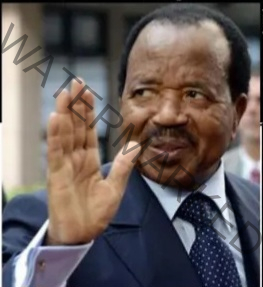
Across Yaoundé, whispers have become thunder. From diplomatic corridors to taxi parks, from military circles to international media platforms, one reality now dominates political discussion: the approaching end of President Paul Biya’s forty-three-year rule over Cameroon.
Whether through biological decline, political incapacity, or inevitable succession, the era that has shaped Cameroon for nearly half a century is entering its twilight. For many ordinary citizens, this moment carries emotional weight. For Southern Cameroons (Ambazonia), however, this is not merely a symbolic political transition. It is a moment of extraordinary geopolitical sensitivity.
Periods of regime transition often produce instability, elite struggles, military uncertainty, institutional fragmentation, and dangerous power vacuums. History repeatedly demonstrates that long-standing centralized systems rarely unwind peacefully without turbulence beneath the surface. That reality demands clarity, discipline, and strategic preparation.
Beyond Celebration: Understanding the Risk
For many Ambazonians, the possible end of the Biya era may naturally feel historic. But political transitions can create both opportunity and danger simultaneously. A weakened central state may produce: uncertainty within security institutions,
intensified elite competition, regional instability,
economic shocks, and unpredictable reactions from competing political actors. In such moments, emotional reactions are dangerous. Political maturity becomes essential. The central question is no longer simply opposition to Yaoundé. The question becomes: What kind of political future can be responsibly organized if the existing order weakens?
Prioritising Civilian Protection
The first responsibility during any major political transition must always be the protection of civilians. Communities across the Northwest and Southwest regions have already endured years of displacement, insecurity, economic disruption, and humanitarian hardship. Any future instability inside Yaoundé could intensify those vulnerabilities if local structures are unprepared.
This means local actors must prioritize: food security, healthcare continuity, education, community coordination, humanitarian logistics,
and civilian protection mechanisms. Moments of political uncertainty test whether movements are capable not only of resistance, but also of responsible governance. The world watches closely during such periods. And international legitimacy increasingly depends on demonstrated capacity for stability, restraint, and humanitarian responsibility.
The Need for Political Coherence
One of the greatest weaknesses of many liberation movements throughout history has been fragmentation. Competing voices, rival factions, overlapping authorities, and conflicting narratives often weaken international credibility. The international community generally responds more seriously to movements capable of presenting: coherent leadership, disciplined communication,
unified objectives, and realistic institutional frameworks.
For Ambazonia, this moment may require renewed efforts toward political coordination between local actors, diaspora networks, diplomatic structures, civil society voices, and technical experts. Internal political warfare weakens strategic positioning. Unity does not require uniformity. But it does require coherence.
The Gulf of Guinea Factor
The geopolitical significance of Southern Cameroons (Ambazonia) extends far beyond internal politics. The Gulf of Guinea remains strategically important for: maritime security,
energy routes, regional trade, anti-piracy operations,
migration management, and international commercial interests. Any instability in Cameroon automatically attracts international attention because the broader region carries implications for both African and global security architecture. This creates both opportunity and responsibility.
A movement perceived internationally as disciplined, stable, legally grounded, and diplomatically mature stands a far greater chance of being taken seriously than one associated primarily with chaos or fragmentation. That reality makes diplomacy critically important.
Preparing for Negotiation and Transition
Major political transitions often create openings previously considered impossible. History shows that entrenched conflicts sometimes move toward dialogue only after old political orders begin weakening internally. Preparation for dialogue is not surrender. Preparation is strategy. This means developing: legal expertise, constitutional frameworks, economic planning, governance models, humanitarian transition systems, and international diplomatic engagement strategies. Movements that fail to prepare technically often struggle when historic opportunities emerge unexpectedly. Political transitions move quickly. Prepared actors shape outcomes. Unprepared actors react to them.
Organisation Over Emotion
The possible end of the Biya era should not be approached through emotion alone. It should be approached through organization. Through discipline. Through institutional readiness. And through political maturity. History rarely gives nations unlimited opportunities to reposition themselves during moments of systemic change. The coming years may reshape the political future of Cameroon and Southern Cameroons (Ambazonia) in ways that were unimaginable only a decade ago. But moments of transition reward strategic clarity, not impulsive reaction.
Final Reflection
The twilight of a political era always creates uncertainty. But uncertainty also creates possibility. For Ambazonia, the central challenge is no longer simply surviving a conflict. It is demonstrating readiness for a future. A future built not only on resistance, but on governance. Not only on grievance, but on institutional vision. Not only on historical pain, but on political preparation. The collapse of old systems alone does not automatically create freedom. What comes after collapse depends entirely on who is prepared to build what follows.
Timothy Enongene
Associate Editor-in-Chief, The Independentist News