




The question was never whether Southern Cameroons possessed every institution required for prosperity on the day of independence. The question was whether its people should have been permitted to build those institutions under a government accountable to them. Instead, the language of non-viability converted political dispossession into economic advice. Incorporation was presented as rescue. Centralization was presented as development. Loss of political agency was presented as protection.
By Martin S. Mungwa, PhD, MBA, P.E., F.ASCE Contributor The Independentist News
I write neither as an enemy of Britain nor as a stranger to the institutions Britain left behind in Southern Cameroons. I write as a Southern Cameroonian educated partly within the British tradition, trained as an engineer, shaped by university teaching, and tested by decades of responsibility in research, infrastructure, industrial management, and public service.
Britain contributed something valuable to Southern Cameroons. It helped establish an English-speaking educational system, common-law institutions, parliamentary government, local councils, public administration, and a practical culture of professional accountability. Individual British teachers, missionaries, engineers, doctors, clergy, agricultural officers, and civil servants served our communities with dedication. Some British parliamentarians recognized the dangers surrounding the 1961 transition and raised them publicly before the trusteeship ended. Those contributions should be acknowledged. They should not, however, be used to conceal the greater moral failure.
Britain accepted responsibility for Southern Cameroons as a United Nations Trust Territory. It supervised the political transition of our people. It understood the institutional weakness of the territory it administered. It knew that major constitutional, administrative, security, and public-service questions remained unsettled. It knew that Southern Cameroons was entering a relationship with a larger, already sovereign state possessing greater diplomatic recognition, military power, administrative capacity, and international influence.
Britain nevertheless departed on 1 October 1961 and treated its formal responsibility as completed. The trusteeship ended. The moral responsibility did not. Britain Was a Trustee, Not an Auctioneer. Southern Cameroons did not belong to Britain. It was not an estate to be transferred to a neighbouring state before the colonial office closed its doors.
Britain administered the territory under the United Nations trusteeship system. Article 76 of the United Nations Charter identified the advancement of trust territories toward self-government or independence as one of the system’s central purposes. Trusteeship was therefore more than temporary territorial management. It carried a developmental and political responsibility toward the people whose future was being administered. A trustee does not simply dispose of an asset and walk away. A trustee must protect the beneficiary. A trustee must identify foreseeable risks. A trustee must ensure that the weaker party is not abandoned inside an unequal arrangement without adequate safeguards.
Britain failed that test.
For much of the trusteeship period, Britain administered Southern Cameroons through or in close association with Nigeria. That may have offered administrative convenience and access to established Nigerian institutions, but it also limited the deliberate development of Southern Cameroons as a fully prepared political, diplomatic, financial, and administrative entity.
By the time decolonization arrived, Southern Cameroons had an elected government, a parliamentary opposition, courts, schools, councils, agricultural enterprises, customary institutions, and a recognizable political identity. Yet it lacked the international standing, senior administrative depth, diplomatic machinery, financial independence, and security structures needed to negotiate as an equal with La République du Cameroun. Britain had decades to prepare the structure. Instead, it prepared the exit.
This distinction is fundamental. A territory that has been deliberately underdeveloped or incompletely prepared by its administering authority cannot then be declared incapable because it lacks the very institutions the administrator failed to build. The trustee cannot neglect the beneficiary’s preparation and use the consequences of that neglect as evidence that the beneficiary was unfit for independence. That is circular reasoning disguised as colonial wisdom.
A Vote Without the Full Freedom to Choose
The people of Southern Cameroons voted in the United Nations-supervised plebiscite of 11 February 1961. A majority selected independence by joining the Republic of Cameroun rather than independence by joining Nigeria. That recorded result must be acknowledged honestly. But the ballot excluded the most natural third possibility: separate sovereign independence. Southern Cameroonians were not asked whether they wished to govern themselves as an independent state. They were asked through which neighbouring country independence would be achieved. They could join Nigeria or join the Republic of Cameroun. They could not choose themselves. That was restricted self-determination.
United Nations General Assembly Resolution 1608 accepted the plebiscite outcomes, set 1 October 1961 as the termination date for the Southern Cameroons trusteeship, and invited Britain, Southern Cameroons, and the Republic of Cameroun to finalize the arrangements through which their declared intentions would be implemented.
Some will reasonably argue that Britain could not override the United Nations General Assembly or unilaterally maintain trusteeship indefinitely. That defence has legal weight. Britain was nevertheless not a powerless spectator. It was the administering authority. It possessed the historical records, international access, institutional knowledge, and diplomatic standing necessary to defend the interests of the people under its care.
The danger was recognized inside Britain itself. On 1 August 1961, a member of the House of Commons warned that Southern Cameroons was approaching independence in circumstances of “singular obscurity and considerable peril.” The same debate criticized the absence of a third plebiscite option, the short transition, the inadequacy of administrative preparation, and Britain’s failure to provide sufficient time for Southern Cameroons to negotiate the terms of union.
That warning was delivered before the trusteeship ended. Britain cannot therefore claim that the risks became visible only after it left. It knew. Britain Energized the System Before Completing the Design As an engineer, I cannot examine the Southern Cameroons transition without recognizing a familiar professional failure.
No responsible engineer would energize a major power system merely because the owner had approved a general concept. Before commissioning, the drawings must be completed. Interfaces must be defined. Protective devices must be coordinated. Operators must be trained. Emergency procedures must be tested. Ownership boundaries and decision-making authority must be clear. Most importantly, the engineer must determine what will happen when the system comes under pressure. Southern Cameroons was transferred into a constitutional arrangement before those protections were adequately secured.
Federation was supposed to reconcile two inherited systems: English and French; common law and civil law; Anglosaxon and Francophone education; decentralized parliamentary traditions and a more centralized presidential order. That was not necessarily a defective concept. I have worked with Francophone engineers and academics. I have experienced both the strengths of their mathematical formation and the strengths of my practical Anglosaxon engineering education.
I remember working on a structural problem involving a roof truss. I used equilibrium and the method of sections to determine the internal forces directly. Some Francophone colleagues approached the same problem through more elaborate mathematical formulations. Neither group lacked intelligence. We had been trained differently. Their analytical depth could strengthen understanding. The practical orientation of my education could shorten the path from theory to a constructible solution. We learned from one another.
That should have been the promise of the federation. Two traditions could have strengthened one country while retaining their institutional identities and integrity. Instead, one system gradually subordinated the other. Britain participated in commissioning that political arrangement without ensuring that Southern Cameroons possessed enforceable constitutional protection against absorption. It then withdrew like an engineer signing the handover certificate while critical connections remained unresolved. A deadline may terminate a contract. It does not make an unsafe structure sound.
Federation Was Not a License for Absorption
Southern Cameroonians did not vote for the disappearance of their courts, schools, administrative traditions, parliamentary culture, local institutions, and political identity. The proposed relationship was presented through the expectation that federation would accommodate and protect two inherited systems.
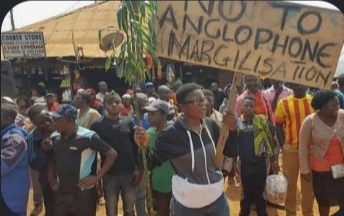
Over time, however, the federation was dismantled. Authority became increasingly centralized, and institutions associated with West Cameroon were weakened, merged, renamed, or absorbed. The complaints that later emerged from English-speaking lawyers and teachers concerned not merely the use of English but the erosion of common-law practice, educational integrity, and regional institutional autonomy. The problem was never simply whether French-speaking and English-speaking people could live together. They could. The issue was whether their institutions would be treated as equal components of the state. They were not.
A union between unequal partners requires stronger protection for the smaller party, not weaker protection. Southern Cameroons entered the relationship without independent diplomatic recognition, military power, or international machinery through which it could enforce the constitutional bargain after Britain and the United Nations withdrew from direct involvement. Once the federal safeguards were removed, the smaller party had no equivalent power to restore them.
In its decision in Gunme and Others v. Cameroon, the African Commission on Human and Peoples’ Rights recommended that Cameroon end discriminatory practices, guarantee equal use of English, stop transferring Anglophone defendants to Francophone jurisdictions, distribute development projects equitably, and engage in constructive constitutional dialogue. The Commission also urged Southern Cameroonian organizations to abandon violent or purely secessionist confrontation in favour of dialogue. That was a balanced decision. It recognized legitimate grievances without pretending that every grievance automatically established a legal entitlement to immediate separation.
The Crown Cannot Keep Only the Glory
The reference to the British Crown in this article is constitutional and historical. It does not accuse the present monarch personally of designing the 1961 transition. Ordinary British citizens should not be assigned personal guilt for decisions made by ministers, administrators, Parliament, and international institutions before many of them were born. But the British state cannot present the Crown only through royal ceremonies, remembrance services, military pageantry, palaces, national courage, and imperial nostalgia.
The Crown also travelled through colonial offices, trusteeship administrations, commercial plantations, administrative boundaries, diplomatic bargains, and decisions affecting people who possessed no equal voice in London. Institutional continuity cannot be celebrated only when it produces prestige. It must also carry responsibility.
Britain cannot praise its constitutional traditions while ignoring the constitutional disorder that followed its trusteeship. It cannot celebrate parliamentary democracy while remaining indifferent to the destruction of parliamentary and federal protections in a territory it once administered. It cannot praise the rule of law while treating the erosion of common-law institutions in Southern Cameroons as somebody else’s purely domestic affair. That is selective morality.
The Economic-Viability Smokescreen
One of the arguments used against separate independence for Southern Cameroons was that the territory was too small, administratively weak, or economically unviable to stand on its own. That argument must now face a straightforward question: Where is the proof that joining La République du Cameroun improved the economy of Southern Cameroons beyond what accountable self-government could reasonably have achieved? More than six decades have passed. Those who portrayed incorporation into a larger state as the cure for Southern Cameroons’ supposed economic weakness should be able to demonstrate the results.
They should show, through transparent regional accounting, that the union produced stronger industries, reliable infrastructure, greater local control over revenue, improved agricultural productivity, modern ports and airports, expanding employment, and a higher standard of living attributable to the constitutional arrangement itself.
National statistics are insufficient. Economic activity in Yaoundé, Douala, or the aggregate national accounts does not prove that the productive communities of Southern Cameroons benefited proportionately. The proper questions are regional: What was produced in Southern Cameroons? What revenue did those activities generate? Where did the revenue go? How much was reinvested locally? Which industries were processed and expanded within the territory? Who exercised strategic control over the productive assets? Did integration create greater economic agency for Southern Cameroonians, or did it move decision-making farther from them?
These questions do not prove automatically that an independent Southern Cameroons would have become prosperous. There is no reliable historical counterfactual showing precisely what would have happened under separate independence. Poor leadership, corruption, political division, and weak institutions can destroy the economy of any state, large or small.
But the absence of a counterfactual cuts both ways. Those who argued that union was economically necessary cannot compare the real risks of independence with an imaginary picture of perfect integration. They must compare the possible risks of self-government with the actual record of centralized rule.
A Territory Too Poor to Govern but Valuable Enough to Control
British parliamentary records themselves undermine the portrayal of Southern Cameroons as a territory without serious economic potential. In August 1961, the House of Commons discussed the Colonial Development Corporation’s investment in the Cameroon Development Corporation, which was expected to rise to £3 million—a substantial commitment at the time. Parliamentarians welcomed the CDC’s continued expansion while questioning why Britain was willing to maintain a major investment programme without providing equivalent protection for administration, security, and constitutional stability. That is an important contradiction.
Southern Cameroons was supposedly too economically fragile to govern itself, yet its plantations and agricultural enterprises were sufficiently valuable to attract large continuing investment. A territory possessing fertile agricultural land, plantation industries, coastal access, trade connections with Nigeria, an educated population, and the capacity to produce bananas, rubber, palm oil, tea, cocoa, coffee, timber, and other commodities was not naturally unviable. It was institutionally underprepared.
There is an enormous difference between the two. Economic viability is not bestowed by the physical size of a state or by attachment to a larger neighbour. It is created through institutions, infrastructure, market access, financial discipline, productive investment, accountable administration, and the ability of a population to retain and reinvest a fair share of the value it creates. If Southern Cameroons lacked sufficient roads, universities, senior civil servants, financial institutions, industrial processing, or diplomatic capacity by 1961, those weaknesses were not proof of the incapacity of Southern Cameroonians. They were also evidence of Britain’s incomplete trusteeship.
What Did Unification Actually Deliver?
The economic record is more complex than either side often admits. A World Bank assessment found that, before the present conflict, the Northwest and Southwest regions did not generally lag behind the rest of Cameroon across economic and social indicators. The regions accounted for a substantial share of Cameroon’s limited formal economy, agricultural exports, and employment, and they had among the country’s strongest human-capital and educational outcomes.
The same evidence shows important internal differences. The Southwest recorded considerable poverty reduction between 2001 and 2014, while poverty in the Northwest remained high and comparatively stagnant. Some public-service and infrastructure indicators were stronger than the national average, while others—particularly sanitation, water access, public administration, and certain transport connections—remained weak.
Fairness requires acknowledging this. It would be inaccurate to claim that no roads, schools, hospitals, businesses, employment, or social improvement appeared after 1961. But the existence of some development does not prove that the constitutional arrangement was optimal or that Southern Cameroons was inherently unviable.
Indeed, the relatively strong performance of the English-speaking regions can be read in another way: Southern Cameroons possessed durable human and productive capacity despite centralization and political grievance. Its social capital, educational traditions, agricultural economy, entrepreneurial communities, and local institutions were not evidence of helpless dependency. They were evidence of viability.
The World Bank also recorded perceptions of biased resource allocation, the erosion of regional autonomy, and systematic underinvestment in transport corridors linking important urban centres in the Northwest and Southwest. It described a weak social contract, limited accountability, poor public-service delivery, and an elite political settlement centred on access to economic rents.
These findings do not prove a deliberate conspiracy to impoverish Southern Cameroons. They do, however, undermine any simple claim that centralized integration conclusively delivered the prosperity that separate independence supposedly could not.
Britain Had Already Seen the Argument in India and South Africa
Britain cannot claim that it was unfamiliar with the use of economic language to justify political control. Its experience in India had already demonstrated how the vocabulary of order, administration, development, and imperial unity could coexist with economic policies structured around British trade, markets, taxation, and strategic interests. British parliamentary debates openly discussed the relationship between imperial policy, British manufacturing, raw materials, colonial markets, and the economic interests of the United Kingdom.
Britain also understood the relationship among political power, mineral wealth, land, and labour in Southern Africa. The United Kingdom’s National Archives describes British expansionist interests during the South African War as including the desire to control gold mining in the region. British parliamentary debates also confronted racial exclusion, mining interests, labour systems, and the allocation of political authority in Southern Africa. Southern Cameroons is not India, and its history is not identical to South Africa’s. The populations, political arrangements, economies, and forms of imperial rule were different. But Britain had already learned an essential imperial lesson: A territory can be rich in productive assets while its people remain politically weak.
Administrative dependency can be created through policy and later presented as natural incapacity. Transport systems can be designed primarily to move commodities outward rather than integrate local economies. Production statistics can conceal who controls the revenue. The language of economic protection can become a cover for political domination and extraction. Britain therefore knew—or should have known—that declaring Southern Cameroons economically unviable was not a neutral conclusion. It could serve as a smokescreen through which denial of self-government was presented as benevolent economic advice. The issue may never have been whether Southern Cameroons could produce wealth. The issue was who would control that wealth.
From Colonial Extraction to Internal Extraction
Southern Cameroons possesses important productive assets: the Cameroon Development Corporation, PAMOL, fertile agricultural lands, coastal resources, transport corridors, educational institutions, energy opportunities, entrepreneurial capacity, and human capital. A country does not survive on flags, titles, and political declarations. It survives when productive assets serve the people.
As an engineer, I understand constitutional dignity through productive capacity. Who controls the land? Who receives the revenue? Who maintains the roads? Who benefits from the ports? Who appoints the managers? Who finances the schools? Who determines development priorities? Who eats the eggs produced by the goose?
A plantation can be located in Southern Cameroons while its strategic decisions are made elsewhere. A port can sit beside a poor community. Commodities can be produced locally while revenue, processing, employment, and authority flow outward. That is not meaningful economic integration. It is internal extraction.
The union’s defenders should therefore provide a transparent accounting of the promised economic dividend. Where are the industrial processing centres that should have developed around CDC and PAMOL? Where are the modern corridors connecting Bamenda, Mamfe, Kumba, Tiko, Victoria, and their agricultural communities? Where is the maritime transformation of Victoria? Where is the development of Tiko as an airport, logistics, agro-industrial, and commercial centre? Where is the financial architecture through which locally generated value becomes intergenerational prosperity? These are not rhetorical decorations. They are tests of whether integration served the producing communities. The claim of viability cannot be separated from ownership, control, and accountability.
The Economic Cure Became Part of the Disease
The conflict that escalated after 2016 has devastated the economy and social fabric of the Northwest and Southwest. The World Bank estimated that by the end of 2019, the cost across seven assessed sectors had reached almost US$3.7 billion—close to 10 percent of Cameroon’s national gross domestic product. It also documented severe damage to agriculture, education, employment, businesses, public investment, financial services, and productive assets.
The same report found that the crisis reduced production, exports, investment, household welfare, and employment, while causing major disruption to CDC, PAMOL, farms, schools, and local businesses. It attributed economic harm to insecurity, state restrictions, displacement, and abuses by non-state armed groups, including enforced lockdowns, appropriation of crops, extortion, and attacks on economic activity. Responsibility for this destruction is shared.
State forces have faced credible allegations of unlawful violence, arbitrary detention, torture, and destruction of civilian property. Armed separatist groups have also been accused of kidnappings, attacks on schools, intimidation, killings, extortion, and coercive shutdowns. United Nations bodies have expressed concern about widespread violence involving security forces and armed separatist groups. Nevertheless, a political union defended partly through promises of order, security, and economic viability must be judged by whether it prevented constitutional collapse and protected productive capacity. It did not.
A system that culminates in armed conflict, mass displacement, destroyed schools, abandoned plantations, damaged businesses, and billions of dollars in losses cannot use the destruction produced by its own constitutional failure as retrospective proof that the people were incapable of governing themselves. That would be like damaging a machine through defective operation and then declaring that the machine was inherently defective.
The Secret-Pact Question
Many Southern Cameroonians believe that Britain and France reached a secret understanding that left Southern Cameroons inside a French-controlled political sphere and protected the governing establishment in Yaoundé from meaningful international accountability.
That belief did not emerge from nowhere. It has been nourished by more than six decades of consistent behaviour: British restraint, French influence, Commonwealth engagement without proportionate consequences, Francophonie solidarity, and the extraordinary longevity of Paul Biya’s rule. But intellectual honesty requires a distinction between what is documented and what is inferred.
There is no publicly available document proving that Britain, France, the Commonwealth, La Francophonie, and Paul Biya signed a literal agreement guaranteeing that Biya would never be prosecuted, sanctioned, removed, or otherwise held accountable. No reliable evidence presently establishes such a written guarantee. The stronger and more defensible argument is that these institutions have created a functional compact of protection through diplomatic practice. The absence of a signed agreement does not mean the absence of an operating system.
The Entente Cordiale and the Habit of Dividing Influence
The Entente Cordiale of 1904 was a series of Anglo-French agreements that settled major imperial disputes. Britain accepted French predominance in Morocco, while France accepted British predominance in Egypt. The original agreement did not concern Cameroon, Southern Cameroons, or Paul Biya. It would therefore be historically inaccurate to claim that the original Entente contained a secret clause protecting Biya. Its relevance is institutional rather than literal.
The Entente helped establish a political habit through which Britain and France reduced conflict by recognizing and accommodating each other’s strategic interests and zones of influence. A former French president later described the original arrangement as one that reconciled differences and divided spheres of influence. Southern Cameroons appears to have fallen into the postcolonial shadow of that accommodation.
Britain administered Southern Cameroons, but the territory was joined to a state whose central legal, political, military, monetary, administrative, and diplomatic systems were deeply tied to the Francophone order. France maintained its strategic relationship with Yaoundé. Britain progressively behaved as though Cameroon lay mainly within France’s established sphere of influence.
No known contemporary treaty openly assigns Southern Cameroons to France. The argument is instead an inference from repeated institutional conduct: France protects its strategic relationship; Britain avoids reopening its trusteeship record; and neither power appears willing to confront the other forcefully over the constitutional origins of the Southern Cameroons crisis. The historical Entente settled imperial disputes through mutual accommodation. Its postcolonial shadow settles moral discomfort through mutual restraint.
Paul Biya and the Meaning of “Pseudo-French Citizen”
Paul Biya should not be described as a legal citizen of France unless reliable evidence establishes that he holds French nationality. No conclusive public evidence cited in this article proves that claim. The expression “pseudo-French citizen” must therefore be understood as political characterization rather than a literal statement of nationality. It describes a ruler whose governing culture, elite relationships, diplomatic connections, and prolonged European presence have often appeared more securely embedded within Francophone and European power networks than within the daily realities of ordinary Cameroonians.
France maintains an extensive diplomatic relationship with Cameroon and has documented repeated high-level engagements between Biya and successive French governments. As of 6 August 2026, Biya remained Cameroon’s president after beginning another term following the disputed 2025 election. He had also been outside Cameroon for approximately two months, reportedly in Switzerland, intensifying public concern about presidential health, accountability, and a possible leadership vacuum.
This current situation reinforces the political force of the “pseudo-French citizen” description. It does not mean that Biya is legally French. It means that a ruler can exercise authority over Cameroon for decades while appearing more physically and institutionally secure in Europe than among the people he governs. That is political interpretation, but it is based on observable conduct.
The Commonwealth–Francophonie Shield
Cameroon joined the Commonwealth in 1995. The organization defines democracy, human rights, good governance, judicial independence, equality, and the rule of law as fundamental values, while the Commonwealth Ministerial Action Group is intended to address serious or persistent violations of those values.
Cameroon’s membership created a special institutional opportunity. The country’s connection to the Commonwealth arose substantially through the English-speaking, common-law, educational, and parliamentary heritage of the former British Southern Cameroons. The Commonwealth should therefore have treated the protection of those institutions as central to Cameroon’s standing. Instead, its response has relied heavily on visits, statements, private engagement, appeals for dialogue, and carefully framed expressions of concern.
These measures are not entirely meaningless. Diplomacy sometimes requires patience, restraint, and confidential engagement. But diplomacy must eventually produce measurable outcomes. A visit is not a constitutional settlement. A photograph is not civilian protection. A statement is not the rule of law. A meeting with government officials is not proof that the people have been heard.
In November 2019, the African Union, the Commonwealth, and the Organisation internationale de la Francophonie conducted a joint mission to Cameroon. The mission met Biya and other national actors and encouraged peace, dialogue, and national initiatives. It did not create binding international mediation, enforceable civilian-protection benchmarks, a timetable for constitutional negotiations, or proportionate consequences for continuing abuses.
This is how the shield operates.
The Commonwealth invokes its Charter. La Francophonie invokes cooperation. The African Union invokes sovereignty and stability. France preserves its strategic relationship. Britain preserves diplomatic access and avoids reopening the trusteeship question. The government in Yaoundé invokes territorial integrity. Everyone can point to a meeting, declaration, mission, or programme. The constitutional failure remains unresolved. Functional Immunity Without a Written Guarantee The protection surrounding Paul Biya does not have to be written into a treaty before it becomes real.
Functional immunity emerges when institutions repeatedly possess knowledge but decline to transform that knowledge into proportionate consequences. Britain knows about the conflict. France knows. The Commonwealth knows. La Francophonie knows. The African Union knows. The United Nations knows. The problem is not absence of information. It is the limited relationship between documented abuse and meaningful accountability.
The international system has repeatedly called for peace, dialogue, decentralization, restraint, and respect for human rights. Yet Biya has remained at the centre of the governing system since 1982, and the constitutional origins of the conflict remain substantially unresolved. This does not prove the existence of a formal conspiracy. It demonstrates an architecture of diplomatic deference.
The system operates as though an unwritten understanding exists:
France’s strategic relationship with Cameroon will not be fundamentally disturbed. Britain’s unfinished trusteeship will not be reopened with enough force to embarrass the British state. The Commonwealth will encourage dialogue while avoiding the strongest enforcement mechanisms. La Francophonie will preserve access to the governing establishment. The government in Yaoundé will continue to invoke sovereignty and territorial integrity. Southern Cameroonians will continue to be asked for patience.
In engineering, one can often identify a system through its repeated outputs even when no single drawing discloses the entire arrangement. The output here is visible: prolonged rule, documented abuses, limited accountability, international engagement without resolution, and a Southern Cameroons conflict that continues to destroy lives and productive assets. That does not prove a secret pact. It proves the practical effect of institutional protection.
The International Interface Problem
Southern Cameroons has become the victim of international institutional fragmentation. The United Nations treats the trusteeship as formally concluded. The African Union emphasizes territorial integrity. The Commonwealth emphasizes dialogue and good offices. La Francophonie protects cooperation with a member government. Britain points to bilateral diplomacy and humanitarian concern. France preserves its strategic relationship with Yaoundé.
The government of Cameroon invokes sovereignty. Armed organizations invoke the failure of peaceful remedies. Each institution performs a limited function. None accepts responsibility for the total failure. This is what engineers call an interface problem. One contractor certifies the electrical system. Another certifies the communications network. Another certifies the civil structure. Yet the facility remains unsafe because no authority has accepted responsibility for integrating the systems.
Southern Cameroons is an international interface failure. Everyone possesses an explanation. Civilians inherit the consequences. There does not need to be a secret conspiracy for injustice to continue. Bureaucratic caution, economic interest, diplomatic convenience, divided jurisdiction, and institutional cowardice are often sufficient.
The Responsibility of the Cameroon Government
A balanced account must identify the principal contemporary duty-bearer. The government of Cameroon exercises sovereign authority. It commands the armed forces, controls the central administration, manages national finances, influences public institutions, and represents the state internationally. Britain and France helped shape the historical environment, but the government in Yaoundé bears primary responsibility for its own decisions and conduct.
Sovereignty does not authorize collective punishment. Territorial integrity does not permit torture. National unity does not justify arbitrary detention, unlawful killing, destruction of civilian property, or the use of military power as a substitute for political legitimacy. A government cannot preserve unity indefinitely by denying the grievances that produced the conflict. Legitimacy requires consent, equal citizenship, fair institutions, economic participation, and confidence that the constitutional order protects communities rather than merely empowering the centre.
The Responsibility of Armed Separatist Organizations
The legitimacy of a historical grievance does not legalize every method adopted in its name. No injustice gives an armed organization the right to kidnap civilians, attack teachers, burn schools, threaten students, extort communities, kill dissenters, or punish people who reject its strategy.
A movement claiming to defend a people must be judged by how it protects that people. Schools are not instruments of political bargaining. Teachers are not enemy combatants merely because they educate children. Civilians do not lose their rights because they favour federation, oppose armed struggle, cooperate with public institutions, or disagree with a particular leader.
Southern Cameroonian organizations must also confront fragmentation, competing claims of legitimacy, financial opacity, personality-based leadership, weak administrative structures, and the substitution of slogans for institution-building. Historical entitlement does not automatically create readiness for statehood. Any institution claiming authority over Southern Cameroons should be assessed by five tests: constitutional legitimacy, administrative effectiveness, civilian protection, productive capacity, and responsible external relations.
These tests must apply to everyone. They must apply to the Cameroon government. They must apply to armed groups. They must apply to governments-in-exile. They must apply to diaspora organizations. They must apply to those who speak loudly in the name of the people but have built no accountable institution capable of protecting them.
What Britain Should Now Do. Britain cannot reverse history, but it can stop hiding behind it. First, Britain should organize, open, and, where legally possible, declassify the relevant archives concerning trusteeship, the plebiscite, constitutional negotiations, security assessments, administrative transition, economic viability, communications with France and Nigeria, and warnings raised by Southern Cameroonian leaders.
Second, the British Parliament should establish an independent historical inquiry into whether Britain adequately fulfilled the purposes of its trusteeship. The inquiry should examine not merely whether formal documents were processed but whether Southern Cameroons was politically, administratively, economically, and constitutionally prepared for the arrangement that took effect on 1 October 1961.
Third, Britain should clarify whether any formal or informal deference to French influence has limited its willingness to address Southern Cameroons. If no such understanding exists, Britain should demonstrate its independence through sustained action rather than denial alone.
Fourth, the Commonwealth should undertake a transparent assessment of Cameroon’s compliance with Commonwealth values, including common-law practice, English-language education, judicial fairness, media freedom, regional participation, local government, constitutional dialogue, and civilian protection.
Fifth, La Francophonie should explain how its declared commitments to peace, democracy, rights, and cooperation are compatible with indefinite protection of a governing system that has not resolved one of Africa’s longest-running contemporary constitutional conflicts.
Sixth, Britain, France, the Commonwealth, La Francophonie, the African Union, and the United Nations should support a credible, internationally facilitated constitutional process. The outcome should not be dictated in advance. Independence, federation, confederation, protected autonomy, decentralization, and other peaceful arrangements should be examined through evidence, negotiation, and democratic legitimacy.
Seventh, all parties must accept enforceable civilian-protection obligations. Schools, hospitals, churches, farms, markets, humanitarian workers, and transport routes must not be used as instruments of political or military coercion.
Finally, reconstruction must be built upon productive capacity. Southern Cameroons cannot be restored through ceremonial dialogue alone. It requires functioning institutions, agriculture, energy, education, technology, healthcare, infrastructure, local finance, accountable leadership, and a transparent relationship between locally produced wealth and local development.
A Message to the British and French People. I do not ask British or French citizens to hate their countries. I ask them to understand their complete histories. Britain produced ideas and institutions that influenced my life: parliamentary debate, common law, engineering professionalism, practical education, public accountability, and the belief that institutions should function in reality rather than merely on paper. France produced a tradition of mathematics, engineering theory, administrative organization, intellectual inquiry, and cultural achievement from which many Africans have also benefited. But both countries administered empires whose strategic interests frequently came before the freedom, dignity, and productive sovereignty of colonized peoples.
Both truths must stand together.
A mature country does not protect its dignity by hiding the consequences of its power. It protects its dignity by confronting them. Southern Cameroonians are not asking Britain or France to return as colonial rulers. We are asking them to behave as morally serious former imperial powers. Open the records. Acknowledge the defects. Disclose the understandings. Use your influence. Stop treating the people whose political future you shaped as a diplomatic inconvenience.
The Final Load Test
In engineering, every structure eventually reveals its true condition under load. The arrangement established in 1961 has been subjected to the loads of centralization, linguistic inequality, institutional absorption, authoritarian government, economic extraction, armed conflict, displacement, and international restraint.
The cracks are no longer theoretical. They are visible in abandoned villages, interrupted education, weakened courts, damaged businesses, ruined farms, frightened communities, refugees, prisoners, and graves. Britain cannot claim that the structure succeeded simply because Cameroon remains intact on a map. The Commonwealth cannot claim success merely because Cameroon continues to attend its meetings. La Francophonie cannot claim solidarity while avoiding accountability for a state embedded within its political and institutional network.
France cannot acknowledge colonial repression while ignoring the contemporary structures that grew from that history. The economic argument has also failed its load test. If unification with La République du Cameroun was presented as the necessary route to prosperity, its defenders must show where that prosperity is visible in the institutions, infrastructure, productive authority, and daily lives of Southern Cameroonians.
They cannot use the weaknesses created under British trusteeship as proof that the territory was incapable. They cannot use regional production as proof of shared prosperity without showing who controlled the revenue. They cannot use the destruction produced by constitutional failure as retrospective justification for denying genuine self-determination. Southern Cameroons may not have been economically perfect in 1961. Neither was La République du Cameroun. No newly independent African state was institutionally complete.
The question was never whether Southern Cameroons possessed every institution required for prosperity on the day of independence. The question was whether its people should have been permitted to build those institutions under a government accountable to them. Instead, the language of non-viability converted political dispossession into economic advice. Incorporation was presented as rescue. Centralization was presented as development. Loss of political agency was presented as protection.
More than sixty years later, the promised rescue remains unproven. The immorality of the British Crown toward Southern Cameroons did not end when the Union Jack was lowered. It continues whenever Britain denies special responsibility for the consequences of its trusteeship.
It continues whenever the shadow of the Entente Cordiale functions as a postcolonial division of responsibility—France preserving its influence, Britain avoiding its trusteeship record, the Commonwealth and La Francophonie preserving institutional access, and Southern Cameroonians carrying the consequences.
It continues whenever Paul Biya enjoys functional international immunity—not necessarily through a proven written pact, but through an architecture of diplomatic deference that has protected stability, access, and influence more effectively than it has protected justice. This is not a call for revenge. It is a call for truth, institutional courage, and moral repair. Britain can still act.
France can still confront the full consequences of its influence. The Commonwealth can still live by its Charter. La Francophonie can still prove that cooperation does not require silence. Cameroon can still replace coerced unity with legitimate constitutional consent. Southern Cameroonian leaders can still prove that they are prepared to protect civilians, build institutions, develop productive assets, and govern responsibly.
History cannot be rewritten. But an unfinished decolonization can still be confronted. That is what Britain owes Southern Cameroons. That is what France owes the people affected by the postcolonial order it helped shape. That is what the Commonwealth and La Francophonie owe their declared principles. And that is what every person claiming to lead Southern Cameroons owes the living, the displaced, the dead, and the generations still to come.
Martin S. Mungwa, PhD.