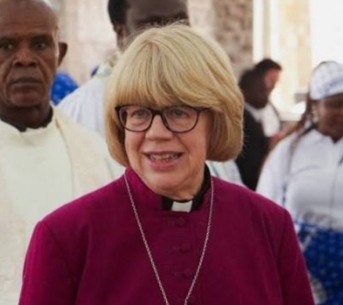


For Southern Cameroons, the first debt Britain may owe is not financial. It may be the debt of historical honesty. Archbishop Sarah Mullally has now been to Cameroon. She has been to Buea. She has spoken of suffering, displacement and conflict. She has called for genuine and inclusive dialogue.
By The Independentist News desk
Archbishop of Canterbury Sarah Mullally’s recent journey through Ghana and Cameroon deserves more attention than it has received, not because it produced some dramatic diplomatic breakthrough, but because of the historical path it traced. On July 30, 2026, she visited Cape Coast Castle in Ghana, one of the most painful monuments to the transatlantic slave trade. From there she travelled to Cameroon. Within a short time she was in Buea, in the former British Southern Cameroons, a territory whose present suffering is inseparable from a much longer history of colonial administration, decolonization and constitutional uncertainty.
There is something striking about that sequence. Cape Coast forces Britain to remember an injustice it can no longer deny. Buea presents Britain with a different kind of historical question, one that is less comfortable because its consequences are not safely buried in the eighteenth century. They are still alive.
During her visit to Cameroon, the Archbishop spoke of suffering, displacement, conflict and oppression. She called for genuine and inclusive dialogue and said people had suffered for far too long. Those are important words. She did not travel through a country at peace and pretend otherwise. She acknowledged that people remain caught in conflict and fear. She also walked on the soil of Buea.
That changes the moral question.
The Church of England has spent considerable time examining its own historical relationship with slavery. Through the Church Commissioners, it has committed £100 million to a Fund for Healing, Repair and Justice after research identified links between predecessor funds and African chattel enslavement. The language the Church has chosen is significant. Healing. Repair. Justice. These are not casual words. They suggest that institutions can inherit responsibility for the consequences of decisions and systems created by previous generations. If that principle applies to slavery, then it is fair to ask how far the principle extends.
Southern Cameroons was administered by Britain. British institutions helped shape its government, legal culture, education, political traditions and public life. Britain participated directly in the process that led to the 1961 plebiscite and the subsequent political association between Southern Cameroons and the Republic of Cameroun. The Church of England did not create that political arrangement, and Archbishop Mullally certainly bears no personal responsibility for decisions taken decades before her time. That is not the point.
The point is institutional memory.
Britain cannot treat Southern Cameroons as though it were some remote place with which it has no historical connection. It administered the territory. Its institutions were present there. Its government helped shape the political transition that followed trusteeship. When a conflict later emerges in that same territory and Britain itself acknowledges that conflict, the historical connection becomes relevant again. This is why the Archbishop’s movement from Cape Coast to Buea carries such moral weight.
At Cape Coast, Britain confronts the consequences of a system whose injustice is now widely accepted. At Buea, Britain confronts a history whose meaning remains contested. The first is easier to mourn because the old slave-trading system no longer has to be defended by a modern foreign ministry. The second is much harder because the constitutional questions surrounding Southern Cameroons remain entangled with current diplomacy, international recognition and the political interests of the Republic of Cameroon.
There is little political cost in condemning slavery today. The perpetrators are dead. The slave ships are gone. No British ambassador has to preserve diplomatic relations with an eighteenth-century trading company.
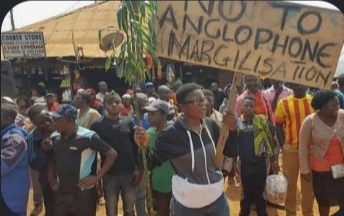
Southern Cameroons is different. Its history is not finished. Its conflict is continuing. Its displaced people are living now. Its constitutional arguments remain alive. Its productive assets remain politically relevant. Its relationship with Yaoundé is still contested. That makes historical honesty more difficult, but it also makes it more necessary.
The Church of England therefore faces a simple question of consistency. If it believes that moral institutions should examine their historical connections to injustice, why should that examination stop with slavery?
No one needs to claim that Southern Cameroons is identical to the slave trade. It is not. Historical experiences should not be forced into false equivalence. But the principle remains useful: institutions that inherit prestige, wealth and continuity from the past should be prepared to examine the difficult consequences of the past as well.
That is particularly important at a time when the Church Commissioners hold assets of roughly £11.6 billion while many Church of England parishes struggle with leaking roofs, clergy shortages, declining congregations and financial pressure. There is already a vigorous debate inside England about stewardship and institutional priorities. Some parish communities look at the enormous investment portfolio and ask why they are struggling to maintain churches while national institutions appear financially secure.
The Church responds that its endowment exists to support ministry across generations and that its reparative initiatives are funded through that wider institutional wealth rather than simply taking money from parish collections. That debate is ultimately for the Church of England to resolve. But it raises a broader question that Africans also have the right to ask: what is institutional wealth for if it cannot sometimes be used to confront institutional history?
This does not mean that the Church of England should write a cheque to Ambazonia because its Archbishop visited Buea. That would reduce a serious historical issue to a fundraising argument. Southern Cameroons should ask for something more fundamental than that.
It should ask for truth.
It should ask Canterbury to encourage a serious examination of Britain’s historical role in Southern Cameroons. It should ask that British archives be opened and studied without political defensiveness. It should ask what British officials believed they were helping to create in 1961, what protections they expected the federal arrangement to provide, what they understood when those arrangements were later dismantled, and how Britain responded as the political relationship changed.
These are not unreasonable questions. A country confident in its history should not fear its archives. The Archbishop’s own visit has made the matter more immediate because she did not simply pass through Yaoundé. She travelled into Buea. She entered a territory Britain once administered and then publicly spoke of conflict, displacement and suffering. That means Canterbury cannot plausibly treat Southern Cameroons as an obscure historical argument taking place somewhere beyond its moral horizon.
The Archbishop has now seen the territory. The question is what she understood while she was there. Did she see merely another administrative region of Cameroon, or did she understand that she was standing in the former British Southern Cameroons? Did she hear only official explanations, or did she also hear the voices of people who understand the history differently? Did she hear from displaced families? Did she hear from those who support independence, those who favor federation, those who reject both, and those who simply want their children to live without fear? Did she ask why the conflict has lasted so long?
These are not questions meant to attack Sarah Mullally. They are questions that should follow naturally from the pastoral mission she herself undertook. A religious leader can do something diplomats often cannot. She can ask questions without first calculating their strategic usefulness. She can listen to people whom governments may find inconvenient. She can insist that suffering deserves explanation, not merely sympathy.
That is why the Church must also be careful not to become a ceremonial extension of British foreign policy. A pastoral visit should not become another photograph beside officials, another sermon about peace, another prayer for reconciliation, and then silence.
Prayer matters. Comfort matters. Pastoral presence matters. But reconciliation without truth eventually becomes another word for forgetting. The danger is particularly serious in conflicts where international organizations become very good at managing suffering. Humanitarian agencies feed displaced families. Schools are supported. Clinics receive assistance. Delegations arrive. Statements are issued. Workshops are organized.
All of this may be necessary. But none of it answers the question of why the conflict continues. There is a difference between helping a wounded person and stopping the machine that keeps producing the wounds. That distinction should matter to the Church.
Canterbury’s moral authority will not be measured by whether it can solve the Southern Cameroons conflict. It cannot do that alone. Nor should the Church attempt to impose a political settlement. Its contribution should be different.
It can insist that history be examined honestly. It can insist that civilians matter. It can encourage genuine dialogue rather than ceremonial dialogue. It can help create space for voices that do not reach diplomatic rooms. It can encourage Britain to revisit its own role without assuming in advance what the historical record will show.
And it can resist the temptation to treat peace as merely the absence of uncomfortable discussion. There is another responsibility as well. Southern Cameroonians must be willing to apply the same moral standard to themselves.
We cannot demand accountability from Britain while excusing wrongdoing among ourselves. We cannot condemn abuses committed by state forces and then minimize abuses committed in the name of liberation. We cannot demand truthful institutions abroad while building personality-driven institutions at home. We cannot condemn intimidation by others and then intimidate those who disagree with us.
The moral credibility of a political cause depends not only on the injustice it opposes, but also on the kind of society it is preparing to build. That is one reason a serious religious voice could still matter.
The Church need not decide whether Southern Cameroons should become independent. It need not choose federalism, confederation or any other constitutional formula. But it should care deeply about whether truth, human dignity, justice, civilian protection and conscience survive the political struggle.
Project Spire therefore matters not primarily because of £100 million. It matters because the Church of England has publicly accepted the principle that historical wrongdoing may create present moral obligations. That principle should not end at Cape Coast Castle.
The Archbishop’s journey unintentionally created a moral bridge between Cape Coast and Buea. One place is associated with a historical injustice Britain now openly acknowledges. The other represents a colonial and decolonization history whose consequences remain unresolved.
One history is carved into stone. The other is still producing political pain. Canterbury should not be asked to equate them. It should be asked to remember both. Sometimes repair means money. Sometimes it means institutional reform. Sometimes it means acknowledging what previous generations refused to acknowledge. Sometimes it simply begins with opening records and listening carefully.
For Southern Cameroons, the first debt Britain may owe is not financial. It may be the debt of historical honesty. Archbishop Sarah Mullally has now been to Cameroon. She has been to Buea. She has spoken of suffering, displacement and conflict. She has called for genuine and inclusive dialogue.
Canterbury therefore cannot say that it has not seen. The question is what it will now do with what it has seen. History remembers those who looked away. But it also remembers those who had the courage to look again.