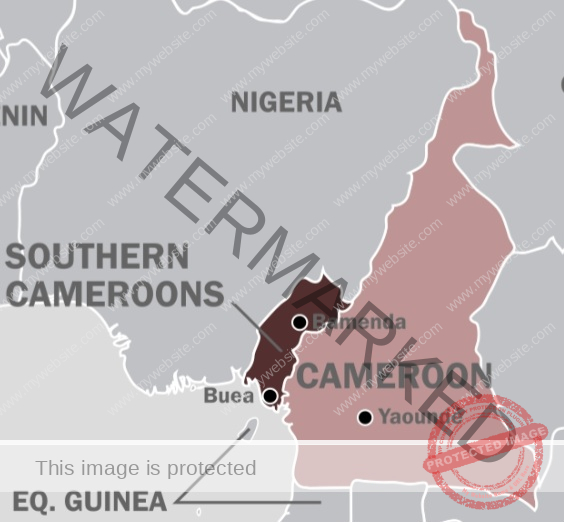


The debate over labels is not superficial. It shapes how issues are understood, discussed, and addressed. Whether one speaks of “Anglophone regions” or “Southern Cameroons,” the terminology carries implications for how the situation is interpreted and what solutions are considered viable.
By Timothy Enongene
Guest Editor-in-Chief, The Independentistnews
4 April 2026
For decades, a quiet but calculated transformation has been underway. A people once defined by a distinct political history and territorial identity—the Southern Cameroons—have been gradually reframed as a linguistic minority: “the Anglophones.” This is not semantics. It is strategy. It is the systematic reduction of a political identity into a cultural label, and in that reduction lies the architecture of erasure.
Once a people are defined only by language, their claim to statehood dissolves into a plea for inclusion. Once a territory is renamed into administrative fragments—“North West” and “South West”—its historical coherence is weakened. What was once a question of political status becomes a question of minority rights. And that shift changes everything.
The Trap of the “Anglophone” Label
The term “Anglophone” appears neutral, even descriptive. But in practice, it narrows the scope of the struggle. It suggests that the issue is language-based marginalization rather than a deeper dispute over political arrangement and historical continuity. It reframes a question of statehood into a question of accommodation.
By adopting this label without challenge, the narrative shifts away from a union between two entities and toward a minority seeking recognition within an existing state. The consequence is subtle but profound: the original political framework becomes secondary, and the debate is redirected toward reforms within the current system.
The Illusion of Structural Reform
Initiatives presented as “Special Status” or decentralization are often framed as meaningful steps toward inclusion. Yet their impact depends on how authority is actually distributed. Where decision-making remains centralized, and where local institutions operate within tightly defined limits, such reforms risk being perceived as symbolic rather than transformative.
Decentralization, in theory, brings governance closer to the people. In practice, its effectiveness depends on autonomy, resources, and accountability. Without these, it can fragment administrative responsibility without resolving underlying tensions.
Internal Contradictions and Leadership Questions
No movement is without internal debate. Within Ambazonian discourse itself, there are differing views on strategy, engagement, and representation. Some advocate working within existing frameworks to achieve incremental change. Others argue that such approaches risk reinforcing the very structures under question.
These debates are not signs of weakness—they reflect the complexity of the issue. But they also highlight an important reality: the path forward is not only shaped by external dynamics, but by internal choices about identity, leadership, and direction.
Reclaiming the Question of Identity
At the center of this discussion is a fundamental question: how a people define themselves. Identity is not only cultural—it is political, historical, and institutional. When identity shifts, so too does the framework within which claims are made.
For many, the concern is that a continued emphasis on linguistic identity may overshadow other dimensions of history and governance that are equally significant. Reframing that conversation is seen as essential to clarifying both objectives and strategy.
Conclusion: Beyond Terminology
The debate over labels is not superficial. It shapes how issues are understood, discussed, and addressed. Whether one speaks of “Anglophone regions” or “Southern Cameroons,” the terminology carries implications for how the situation is interpreted and what solutions are considered viable.
As discussions continue, one point remains clear: durable outcomes require clarity—clarity of identity, of objectives, and of the principles that guide both. Without that clarity, even well-intentioned reforms risk being viewed as insufficient.
The challenge, therefore, is not only to seek solutions, but to define the problem accurately. And in that definition lies the path forward.
Timothy Enongene
Guest Editor-in-Chief, The Independentistnews