

The events at Zoétélé unintentionally exposed what years of official speeches have attempted to conceal — that the Republic increasingly operates according to two separate political realities, two separate standards of state protection, and ultimately, two separate conceptions of citizenship. And as long as that asymmetry persists, Yaoundé’s annual appeals to “unity” will continue to ring hollow across Ambazonia.
By Lester Maddox
Guest Contributor, The Independentist News, Oakland County, California
The Incident at Zoétélé
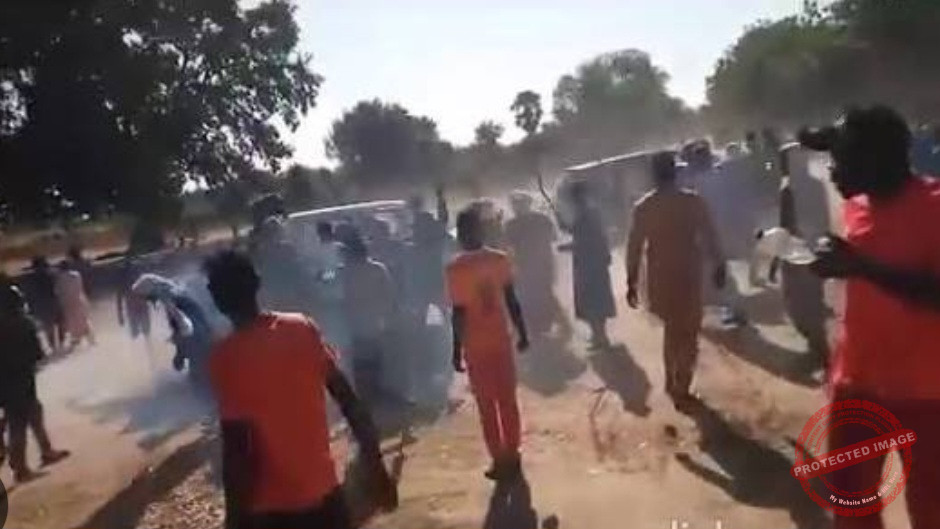
On the night of May 19, 2026, barely twenty-four hours before the regime’s annual “National Unity” celebrations, violent unrest erupted in the town of Zoétélé, located in Cameroon’s South Region — the political heartland of President Paul Biya. Following reports that a business couple suspected in a local murder case had been released by judicial authorities, angry mobs took to the streets. Shops were vandalised. Residential property was torched. Business owners were systematically targeted. Public disorder unfolded openly on the eve of one of the regime’s most symbolically important national events. Yet despite the scale of the violence, the state’s response remained remarkably restrained.
No military lockdown was imposed. No sweeping arrests were reported. No curfews paralysed the town. Most strikingly, no official rhetoric emerged branding the rioters as terrorists, separatists, extremists, or enemies of the Republic. Local administrators moved quickly to contain public embarrassment and preserve the appearance of national calm ahead of the May 20 celebrations. The contrast with the regime’s conduct in Southern Cameroons (Ambazonia) could not be more revealing.
The Ambazonian Reality: Collective Punishment as State Doctrine
When violence or resistance-related incidents occur in Ambazonia, the regime does not respond through narrowly targeted law enforcement operations. Instead, entire civilian populations are routinely subjected to collective punishment. Over the course of the conflict, several recurring patterns have emerged.
Community-Wide Military Roundups
Following clashes between resistance forces and the military, entire neighbourhoods are frequently rounded up by security forces. Men, women, and even children are assembled on open fields, school grounds, or public squares under armed supervision. Civilians are detained for hours, interrogated collectively, intimidated, and pressured to provide intelligence on local self-defense groups. In many communities, the line between civilian administration and military occupation has effectively disappeared.
The Scorched-Earth Pattern
Where communities are suspected of sympathising with independence fighters, military retaliation often extends far beyond individual suspects. Entire villages have faced systematic destruction. Communities such as Kwakwa became emblematic of this policy. Homes were burned. Businesses destroyed. Civilian infrastructure reduced to rubble. The objective appeared not merely punitive, but psychological — to instill fear across the wider population through visible collective devastation.
The Politics of Labels
The language employed by the state further exposes the unequal political framework governing the two territories. In the South Region, rioters are implicitly treated as citizens whose grievances require administrative management and social de-escalation.
In Ambazonia, however, civilians living under conflict conditions are routinely described using the language of counterterrorism: “terrorists,” “separatist bandits,” and “criminal extremists.” These labels are not politically neutral. They create the legal and psychological justification for extraordinary military measures that would likely provoke national outrage if applied elsewhere in the country.
The Collapse of the “National Unity” Narrative
Every May 20, Yaoundé projects the image of a unified and indivisible nation. Yet the regime’s own security behaviour increasingly undermines that narrative. A state cannot credibly claim equal citizenship while applying two radically different standards of governance and human protection to two different populations. In one territory, civil unrest is approached through restraint, mediation, and preservation of public normalcy. In the other, political dissent is met with militarisation, village destruction, population-wide intimidation, and prolonged emergency rule. This contradiction is no longer merely rhetorical. It has become structural.
For many Ambazonians, the issue is no longer simply one of political disagreement, but of political classification itself: whether they are regarded as equal citizens under a common legal order, or as a permanently suspect population governed through force.
The events at Zoétélé unintentionally exposed what years of official speeches have attempted to conceal — that the Republic increasingly operates according to two separate political realities, two separate standards of state protection, and ultimately, two separate conceptions of citizenship. And as long as that asymmetry persists, Yaoundé’s annual appeals to “unity” will continue to ring hollow across Ambazonia.
Lester Maddox
Guest Contributor, The Independentist News,