

The central miscalculation of Yaoundé may therefore be this: believing that the imprisonment of leaders can extinguish the historical forces that produced the conflict itself. And until that misunderstanding changes, the search for a durable resolution will remain painfully out of reach.
By Mankah Rosa Parks
Senior Investigative Correspondent, The Independentist News, Soho, London
YAOUNDÉ – 26 May 2026 – When the Cameroonian regime abducted Sisiku Julius Ayuk Tabe and members of his executive team from Nigeria in January 2018, the political establishment in Yaoundé erupted in celebration. State-aligned newspapers, broadcasters, and political commentators triumphantly proclaimed what they believed was the imminent collapse of the Ambazonian struggle. Headlines circulated declaring: “C’est la fin de l’Ambazonie” — “It is the end of Ambazonia” — and “On a coupé la tête de l’Ambazonie” — “We have cut off the head of Ambazonia.”
The reaction exposed a profound misunderstanding of the nature of liberation movements. The Cameroonian state appeared to operate under the assumption that political resistance functions like a conventional corporate hierarchy: remove the leadership at the top and the structure collapses beneath it. Yaoundé believed the imprisonment of prominent figures would psychologically decapitate the movement and trigger widespread surrender. Instead, the opposite occurred. The conflict did not disappear. It decentralized.
As the leadership crisis unfolded, the resistance evolved into a more localized and diffuse structure. Under the subsequent leadership of President Dr. Samuel Ikome Sako, the movement increasingly emphasized decentralized self-defense coordination across counties and Local Government Areas. Localized resistance networks emerged with varying levels of autonomy, allowing the conflict to survive despite sustained military pressure and the incarceration of senior political figures.
For Yaoundé, this transformation created a strategic dilemma. Conventional military operations proved incapable of fully extinguishing a conflict that no longer depended on a single command center or a tightly centralized political structure. The state had anticipated surrender through leadership removal. Instead, it encountered a fragmented but resilient resistance ecosystem spread across multiple localities. It was at this stage that the regime’s rhetoric began to shift.
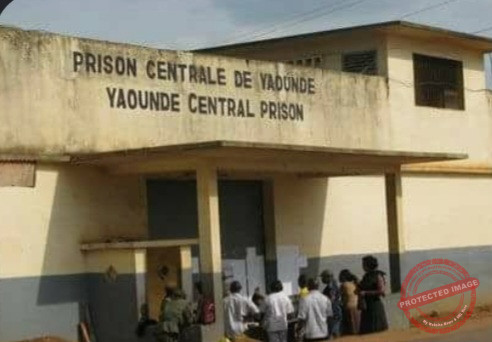
Having publicly declared the movement defeated, elements within the state apparatus reportedly began pursuing indirect and highly discreet channels of engagement with imprisoned leaders. According to numerous accounts circulated within Ambazonian political circles, confidential meetings and informal contacts allegedly took place within highly controlled state environments, including sections of Kondengui Central Prison, facilities connected to the Yaoundé Military Tribunal, and secure government-linked locations within the capital.
Critics of the regime argue that these engagements were never designed to facilitate a genuinely neutral political settlement. Rather, they allege that the objective was to exploit the vulnerability of incarcerated leaders in order to engineer fractures within the broader resistance movement. In this interpretation, dialogue itself became tactical — not a pathway toward conflict resolution, but an instrument intended to produce internal divisions, weaken external resistance structures, and manufacture the appearance of surrender without addressing the underlying political dispute.
This pattern reflects a deeper historical logic embedded within the architecture of the modern Cameroonian state. The highly centralized political culture inherited from the post-colonial French administrative model has traditionally treated separatist or autonomy-based demands not as legitimate constitutional disputes requiring neutral mediation, but as threats to territorial authority that must ultimately be absorbed, fragmented, or neutralized.
Under this framework, negotiations are often approached not as engagements between equal political actors, but as mechanisms for managing dissent while preserving the supremacy of the centralized state. Administrative concessions may be offered. Symbolic reforms may be announced. Selected intermediaries may be elevated. But the core structure of centralized authority remains largely untouched.
Many Ambazonian activists therefore argue that Yaoundé’s longstanding resistance to internationally mediated negotiations stems from this institutional mindset. Neutral mediation would implicitly acknowledge the existence of a political conflict between competing national claims. By contrast, internalized “dialogue” conducted entirely within the structures of the Cameroonian state allows Yaoundé to preserve the narrative that the conflict remains merely an internal security issue rather than an unresolved question of political sovereignty. Yet this strategy continues to face a fundamental limitation. The Ambazonian conflict has long outgrown individual personalities.
Years of war, displacement, civilian casualties, village burnings, military crackdowns, mass arrests, and social fragmentation have transformed the crisis into something far larger than the fate of any single political figure or governing faction. Among many younger Ambazonians, the conflict is increasingly perceived not simply as a protest movement seeking administrative reform, but as a broader struggle centered on identity, historical grievance, and competing visions of nationhood.
This is why attempts to engineer surrender through prison-based political maneuvering continue to produce limited results. A population shaped by prolonged conflict and collective trauma is unlikely to interpret midnight negotiations inside prison walls as a substitute for an internationally credible political settlement. The central miscalculation of Yaoundé may therefore be this: believing that the imprisonment of leaders can extinguish the historical forces that produced the conflict itself. And until that misunderstanding changes, the search for a durable resolution will remain painfully out of reach.
Mankah Rosa Parks
Senior Investigative Correspondent, soho London