









Commentary

We are home to news on Cameroon and the CEMAC region. We are dedicated to honest and reliable reporting. We are the voice of the Cameroonian people and their fight for freedom and democracy at a time when the Yaoundé government is silencing dissent and suppressing democratic voices.

What remains today is not a lawful union, but a prolonged contradiction. Ambazonia’s struggle is not merely political—it is the ultimate defense of the rule of law itself. And history has always shown that systems built on manipulation cannot endure indefinitely. Keep the faith. Hold the line. The law is on our side, and justice will have the final word.
By Timothy Enongene
Guest Editor-in-Chief, The Independentistnews
3 April 2026
The latest manipulation from Etoudi—postponing elections yet again—is not an isolated act of political convenience. It is the continuation of a 65-year pattern of calculated legal destruction. What the Yaoundé regime calls “governance” is, in reality, a sustained assault on the very idea of law itself. For Ambazonia, the law is not a suggestion—it is the foundation of society. For the regime, it is a disposable tool, reshaped or discarded whenever it becomes inconvenient.
The Original Sin: The Foumban Deception
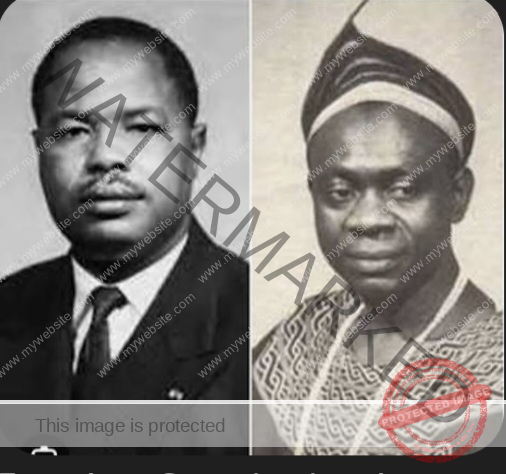
The foundation of this crisis was laid in July 1961 at the Foumban Conference. Southern Cameroons arrived with a clear and principled vision: a Federation of Two States, equal in status, bound by a constitution that protected both parties. What occurred instead was not negotiation, but manipulation. The Republic of Cameroon took the proposed framework, stripped it of its protections, and imposed a final version that President Ahmadou Ahidjo enacted—not as a new federal constitution between equals, but as an amendment to his already existing 1960 constitution. This was not the creation of a union; it was the absorption of one entity into another under the cover of legality. No new legal foundation was jointly established. No equal partnership was codified. From the very beginning, the process was structurally flawed and fundamentally dishonest.
The Legal “Self-Secession” of 1984
If there were any doubt about the nature of the relationship, it was erased in 1984. When Paul Biya signed Law No. 84/01, reverting the country’s name from the “United Republic of Cameroon” to the “Republic of Cameroon,” the legal consequences were profound. The “Republic of Cameroon” is not a neutral label—it is the exact name of the state that achieved independence on 1 January 1960, a state whose territorial scope did not include Southern Cameroons. By reverting to that identity, the regime did not reform the union; it abandoned it. By restoring the pre-1961 name, it effectively restored the pre-1961 state. In clear legal terms, Yaoundé walked away from the union. What followed was not unity, but occupation—an attempt to retain control over a territory that no longer fell within its restored legal identity.
Two Legal Cultures, One Irreconcilable Reality
The conflict between Ambazonia and La République du Cameroun is not merely political—it is civilisational in its legal character. Southern Cameroons is rooted in the Common Law tradition, where contracts bind, procedures matter, and power is constrained by rules. The Yaoundé regime operates within a system where law is subordinate to authority, where decrees override principles, and where constitutional limits are treated as flexible instruments rather than binding obligations. These are not minor differences in administrative style. They are opposing philosophies of governance. One system is anchored in accountability; the other in control. One seeks legitimacy through law; the other through power. These systems cannot be reconciled because they are built on fundamentally different premises.
The Present Confirms the Past
The repeated postponement of elections, now pushed once again into late 2026, is not a technical adjustment—it is evidence. It demonstrates that the regime neither respects its own laws nor feels bound by them. When a government can extend mandates at will, alter electoral timelines without consensus, and operate outside constitutional constraints without consequence, it ceases to function as a lawful authority. It becomes something else entirely—an entity sustained by power rather than legitimacy. And if law does not govern the state, then the state itself cannot claim lawful authority over any people.
A Call to the Resolute
To Ambazonians everywhere: do not be distracted by the theatre of elections in Yaoundé. These processes are not instruments of change; they are mechanisms of control. Every violation of their own constitution strengthens the legal and moral foundation of our case. Every decree issued without due process reinforces the reality that this is not governance, but domination. We are not resisting law—we are defending it. We are not seeking chaos—we are demanding the restoration of a legal order that was dismantled through deception and sustained through force.
Conclusion: The Law Will Outlast the Lie
Let them postpone elections. Let them amend codes. Let them govern by decree. None of it alters the fundamental truth: the legal basis of the union was compromised at Foumban, dismantled in 1972, and effectively terminated in 1984.
What remains today is not a lawful union, but a prolonged contradiction. Ambazonia’s struggle is not merely political—it is the ultimate defense of the rule of law itself. And history has always shown that systems built on manipulation cannot endure indefinitely. Keep the faith. Hold the line. The law is on our side, and justice will have the final word.
Timothy Enongene
Guest Editor-in-Chief, The Independentistnews
Share This Post:
The Invisible Occupation — Land Grabbing and the Economics of Erasure
The Eseka Census — A Blueprint for State-Sponsored Segregation
Related Post
PROPHECY, POLITICS, AND THE AMBAZONIAN QUESTION (PART III) Why
WHEN YAOUNDÉ’S ALLIES SUDDENLY ENDORSE AYUK TABE: SOLIDARITY OR
THE SECOND RETURN: FROM THE PAIN OF SEPARATION TO
WHEN THE REGULATOR BENDS: WHAT THE VISION 4 AFFAIR
PROPHECY, POLITICS, AND THE AMBAZONIAN QUESTION (PART II) :
IF SOMALILAND MATTERS TO WASHINGTON, WHY NOT SOUTHERN CAMEROONS?