

The “delusion of omnipotence” is not unique to any one leader or country. It is a recurring feature of political systems that conflate control with permanence. The corrective, as history repeatedly demonstrates, is not external force, but internal recognition: an acknowledgment that authority without accountability is inherently unstable.
By Lester Maddox
Guest Contributor, The Independentistnews
Oakland County, California
12 April 2026
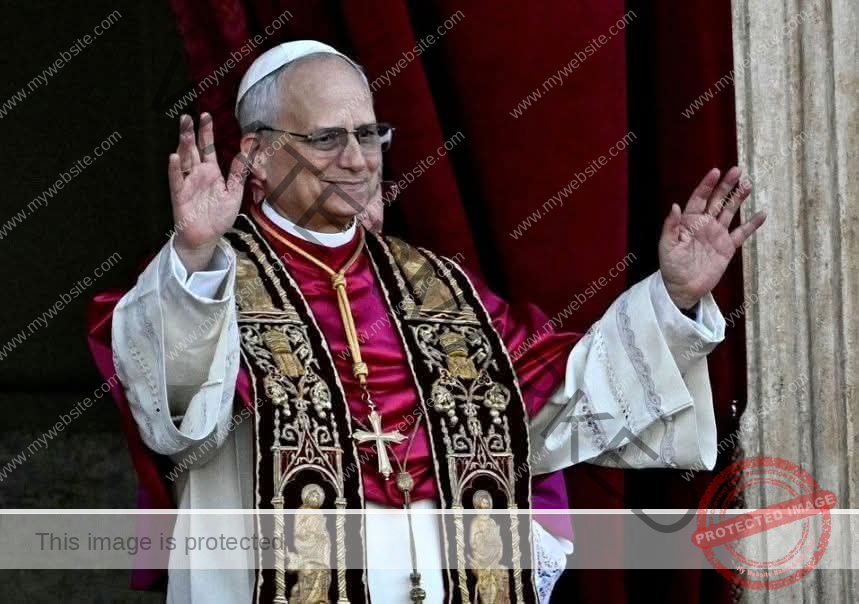
When Pope Leo XIV stood in the fading light of Saint Peter’s Basilica on April 11, 2026, his words carried far beyond the walls of the Vatican. His warning against the “delusion of omnipotence” and the “idolatry of self and money” was framed as a universal moral reflection. Yet in certain capitals, it lands with unmistakable specificity.
In Yaoundé, at the Unity Palace, power has long been exercised with the quiet assumption of permanence. For more than four decades, Paul Biya has presided over a system that projects durability, control, and—at times—immunity from consequence. Such systems often cultivate not only authority, but the perception of inevitability: that the state is synonymous with its leader, and that its trajectory is beyond challenge.
History suggests otherwise. Political systems built on the concentration of power tend to mistake endurance for legitimacy. They equate the absence of immediate challenge with the presence of consent. Over time, this gap between perception and reality widens—often invisibly—until it is no longer sustainable.
The conflict in Cameroon’s English-speaking regions illustrates this dynamic. What began as grievances over governance, legal systems, and cultural identity has evolved into a prolonged crisis marked by violence, displacement, and deepening mistrust. Incidents such as Ngarbuh and Kumba have become more than isolated tragedies; they are reference points in a broader narrative of a state struggling to reconcile authority with accountability.
It is in this context that the Pope’s forthcoming visit acquires significance. The Vatican’s influence does not derive from economic leverage or military capacity, but from moral authority. At critical moments, such authority can recalibrate the language of power—shifting the conversation from control to responsibility.
For that to occur, clarity is essential. A message framed in generalities risks being absorbed without effect. A message grounded in principle and directed with precision, however, can disrupt entrenched assumptions. The notion that strength is demonstrated through “displays of power” has long shaped the political theater of many states. Military parades, symbolic gestures, and assertions of control may project confidence, but they do little to resolve underlying conflicts.
The alternative, as suggested in the Pope’s remarks, is a redefinition of strength itself: not as dominance, but as the capacity to preserve life and restore trust. This shift is neither rhetorical nor abstract. It has practical implications—most immediately, the need for de-escalation and the creation of space for dialogue.
As Pope Leo XIV prepares to arrive in Cameroon on April 15, the expectations surrounding his visit are significant, but they must also be realistic. No single intervention can resolve a conflict of this complexity. Yet moments of moral clarity can alter trajectories. They can challenge narratives that have hardened over time and open pathways that previously seemed politically untenable.
For Paul Biya, the question is not one of personal authority, but of historical legacy. Leaders who govern over prolonged crises are ultimately judged not by the duration of their tenure, but by the choices they make when confronted with the limits of power.
The “delusion of omnipotence” is not unique to any one leader or country. It is a recurring feature of political systems that conflate control with permanence. The corrective, as history repeatedly demonstrates, is not external force, but internal recognition: an acknowledgment that authority without accountability is inherently unstable.
The Pope’s message, then, is less a condemnation than an invitation—an opportunity to recalibrate before circumstances impose that recalibration more abruptly. Whether that opportunity is taken remains uncertain.
What is clear is this: no system, however entrenched, is immune to the consequences of its own contradictions. And no leader, however enduring, is beyond the reach of history’s judgment.
Lester Maddox
Guest Contributor, The Independentistnews