

The great geopolitical reckoning now underway may ultimately determine not only the future of London, Washington, Canada, Greenland, or the Strait of Hormuz. It may also determine whether the twenty-first century continues preserving old imperial financial architectures — or finally opens space for new sovereignties to emerge.
By Ali Dan Ismael
Editor-in-Chief, The Independentist News
The Financial Empire Behind Globalization
For decades, the modern global order has operated under the dominance of a powerful Anglo-American financial and geopolitical architecture centered primarily around London and Washington. This system shaped international banking, maritime trade, reserve currencies, intelligence alliances, military coordination, offshore finance, multinational law, and the broader framework of globalization after the Cold War.
At the center of this structure stands the City of London — one of the most influential financial jurisdictions in human history. To admirers, London represents stability, sophistication, and global commerce. To critics, however, the City of London has evolved into something far more controversial: the operational heart of a worldwide system of financial opacity capable of absorbing, legitimizing, and recycling enormous flows of questionable wealth.
Russian oligarch fortunes flowed through London property markets. African political elites quietly transferred state wealth through British-linked offshore structures. Middle Eastern sovereign money passed through discreet legal trusts. International corporations exploited secrecy jurisdictions connected to the remnants of Britain’s global financial network.
The modern offshore system did not emerge accidentally. It was engineered through decades of legal innovation, tax structuring, banking protections, maritime insurance dominance, and elite political shielding. And for years, the system functioned efficiently because globalization rewarded unrestricted capital mobility above all else. Money no longer belonged to nations. Capital became transnational. Corporations became stateless.
Financial elites increasingly detached themselves from national accountability while ordinary populations absorbed the consequences of deindustrialization, debt dependency, inflation, migration pressures, and widening inequality.
The Strait of Hormuz and the Hidden Mechanics of Empire
But beneath this financial empire lay something even more strategic: control of global chokepoints. Few moments exposed this reality more dramatically than the repeated crises surrounding the Strait of Hormuz.
The Strait of Hormuz is one of the most critical maritime chokepoints on Earth. A massive percentage of the world’s oil and energy supply passes through this narrow corridor linking the Persian Gulf to global markets. Whenever tensions rise in the region, global markets panic, insurance costs surge, shipping rates spike, and energy prices tremble.
What many ordinary citizens fail to understand is that modern empires are not sustained merely through armies. They are sustained through control of trade routes, insurance systems, maritime law, reserve currencies, banking clearances, and strategic financial dependencies. For generations, Britain mastered this model better than any empire in modern history. Even after the collapse of formal colonialism, the architecture survived. The British Empire transformed itself from a territorial empire into a financial empire.
Instead of directly ruling territories, influence increasingly operated through offshore jurisdictions, maritime insurance networks, global legal systems, central banking influence, intelligence coordination, and control over financial services linked to international commerce. The City of London became the invisible command center of this post-imperial structure. Critics increasingly argue that the periodic crises around the Strait of Hormuz unintentionally exposed how deeply global wealth extraction remained tied to Anglo-financial power.
Whenever instability threatened global shipping, the financial ecosystem connected to London often benefited through insurance premiums, commodity speculation, banking flows, security contracting, shipping finance, and energy market volatility. To critics of the old order, this revealed a darker truth long hidden beneath the language of “free markets” and “international stability”: that the modern global economy was still quietly structured around systems capable of transferring enormous wealth upward into elite financial networks historically connected to the Crown and the Anglo-American financial establishment. Whether one views this as strategic statecraft or systemic exploitation depends largely on political perspective. But one reality is increasingly undeniable: the old order is under strain.
Trump and the Rise of Economic Nationalism
The rise of Donald Trump represents far more than an American political phenomenon. Whether one admires him or opposes him, Trump symbolizes a growing rebellion against the post-Cold War globalization model itself. His political doctrine increasingly frames transnational finance, supranational governance, and elite global networks as threats to national sovereignty. Under this worldview, anonymous offshore capital flows are no longer seen merely as economic activity. They are treated as instruments of geopolitical manipulation capable of influencing governments, destabilizing societies, undermining borders, and eroding democratic control.
This explains why Trump-aligned political circles increasingly advocate economic nationalism, aggressive tariff policies, strategic decoupling, reshoring industries, stricter financial enforcement, and greater scrutiny of offshore wealth networks. To supporters, this represents an attempt to restore sovereignty. To critics, it represents the emergence of a more aggressive American nationalist order seeking to replace the older Anglo-global financial system with a harder state-centered geopolitical architecture.
Canada and the Fracturing Atlantic Alliance
This ideological struggle is already reshaping global alliances. Canada, for example, has found itself increasingly caught between its deep historical ties to the British Commonwealth and its overwhelming economic dependence on the United States.
Although fully sovereign, Canada still exists symbolically within the constitutional orbit of the British Crown and the broader Anglo-Atlantic order historically influenced by London. Trump’s repeated rhetoric about Canada — including provocative references to economic dependency and suggestions that Canada functions essentially as an extension of American security space — has deeply unsettled Canadian policymakers.
The issue is not literal annexation. The deeper concern is that Trumpism challenges the assumptions underlying the traditional Atlantic alliance itself. The old order prioritized multinational integration, financial globalization, and institutional coordination through NATO, the European Union, global banking systems, and transnational corporate networks. The emerging nationalist doctrine prioritizes strategic self-interest, industrial sovereignty, resource security, and direct geopolitical leverage.This explains the growing tensions surrounding Greenland.
Greenland and the Battle for the Arctic Future
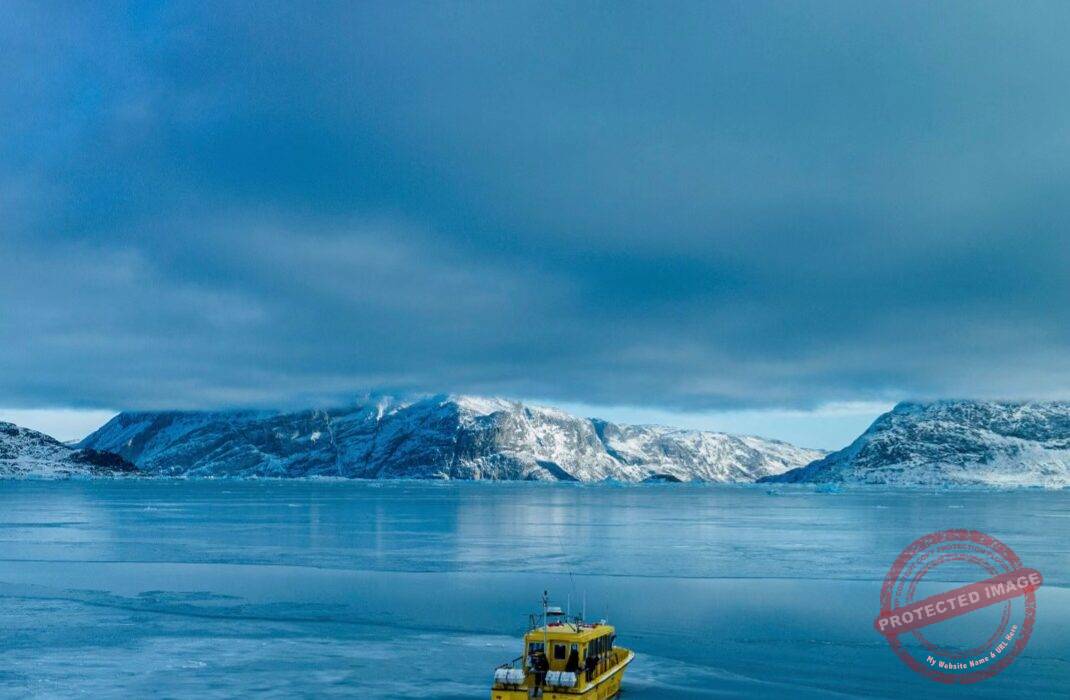
At first glance, Trump’s obsession with Greenland appeared absurd to many observers. Yet beneath the headlines lies one of the most important geopolitical realities of the twenty-first century. Greenland controls access to the Arctic future. As climate change melts polar ice, the Arctic is rapidly becoming a new arena of strategic competition involving shipping routes, rare earth minerals, military positioning, satellite infrastructure, energy reserves, and next-generation technological supply chains. Whoever dominates the Arctic may shape the future balance of global power and Trump understands this.
His administration openly argued that Greenland was essential to American national security interests. Danish and European officials reacted with alarm, viewing such rhetoric as an unprecedented challenge to sovereign territorial integrity within the Western alliance. But the Greenland controversy revealed something larger: the old assumptions governing Western unity are weakening. The United States is increasingly behaving less like the guardian of a liberal international order and more like a continental power aggressively securing strategic resources for an age of geopolitical fragmentation.
Ambazonia and the Crisis of Western Moral Authority
This transformation has profound implications far beyond Europe and North America. It also affects nations like Southern Cameroons, widely known as Ambazonia. For many Ambazonians, the Anglo-American world represents a painful contradiction. Southern Cameroons emerged historically from a British-administered UN Trust Territory. Its people inherited British-style legal systems, common law traditions, parliamentary culture, and educational institutions. Yet when constitutional disputes and political marginalization intensified within the post-colonial union with La République du Cameroun, the broader Anglo-Saxon world remained largely passive.
Britain consistently prioritized diplomatic stability and regional interests over meaningful intervention. The United States occasionally criticized human rights abuses but largely approached Cameroon through the lens of counterterrorism and regional security. Canada, Australia, and much of the Commonwealth adopted similarly cautious positions. To many Ambazonians, this silence appeared less like neutrality and more like geopolitical convenience. This has fueled a difficult and increasingly widespread question: Is the broader Anglo-American order itself hostile to genuine Ambazonian sovereignty? The answer is complex.
The Western powers are not necessarily hostile to Ambazonia specifically. Rather, they are institutionally committed to preserving the post-colonial international system upon which modern global stability rests. Most major powers fear the precedent of border fragmentation. They worry that recognizing one self-determination movement could encourage dozens of others worldwide. Thus, geopolitical stability often outweighs moral consistency.
Yet the same Anglo-American world also contains many of the democratic institutions through which the Ambazonian issue continues to survive internationally: human rights organizations, independent media, diaspora advocacy, academic institutions, parliamentary debates, and international legal frameworks. This paradox defines the modern crisis of the Western order itself. The Anglo-American system simultaneously promotes democratic principles while often subordinating those principles to strategic interests.
The Coming Geopolitical Reckoning
But now that very system is entering a period of profound internal instability. Globalization is weakening. Economic nationalism is rising. Trust in elite institutions is collapsing. Debt burdens are growing unsustainable. Resource competition is intensifying. The Arctic is militarizing. Supply chains are fragmenting. The post-Cold War consensus is unraveling. And as old power structures weaken, previously marginalized nations and movements may discover new geopolitical openings. For Ambazonia, the lesson is sobering but clear. No external civilization — British, American, French, Russian, Chinese, or otherwise — will permanently safeguard Ambazonian sovereignty out of sentiment or historical guilt alone.
Nations survive through strategic relevance, institutional maturity, diplomatic sophistication, economic resilience, and internal legitimacy. The emerging global struggle is no longer merely between left and right, East and West, or capitalism and socialism. It is increasingly a struggle between competing models of sovereignty itself. One side seeks to preserve the old transnational order built upon global finance, maritime chokepoints, multinational integration, and elite-managed globalization. The other seeks a fragmented nationalist order where states aggressively pursue strategic self-interest, territorial control, industrial independence, and resource security.
Caught between these tectonic forces are smaller nations, stateless peoples, and unresolved post-colonial questions like Ambazonia. The great geopolitical reckoning now underway may ultimately determine not only the future of London, Washington, Canada, Greenland, or the Strait of Hormuz. It may also determine whether the twenty-first century continues preserving old imperial financial architectures — or finally opens space for new sovereignties to emerge.
Ali Dan Ismael
Editor-in-Chief, The Independentist News