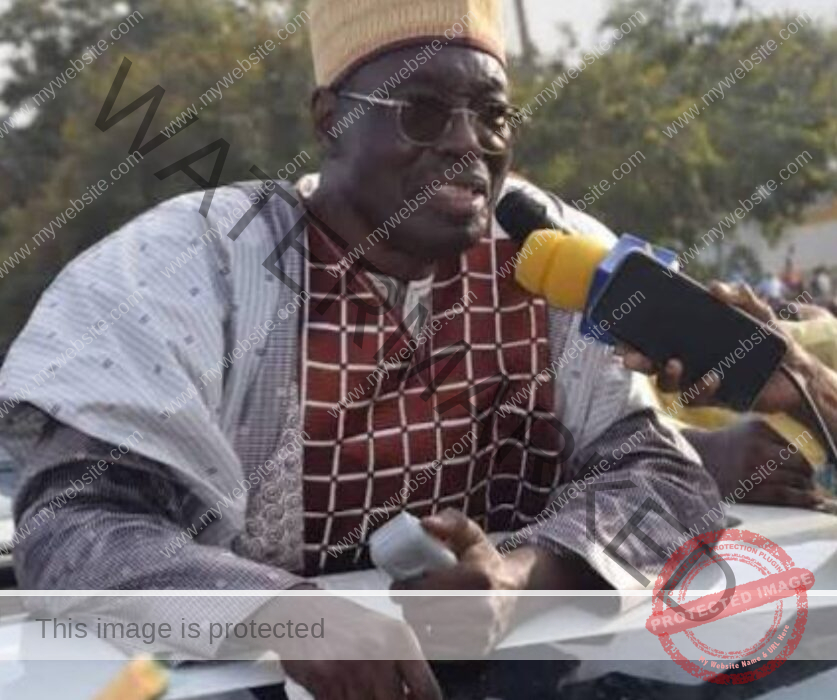


Tchiroma’s federal proposal ultimately fails because it cannot answer one question: why should Southern Cameroonians trust another federal promise from the same state that dismantled the first arrangement, centralized its institutions, militarized the political dispute, and rejected credible mediation?
By Timothy Enongene
Associate Editor-in-Chief, The Independentist News
Yaounde – August 6, 2026 – The political uncertainty engulfing La République du Cameroun has revived proposals that the people of the former British Southern Cameroons rejected years ago. Issa Tchiroma Bakary, the former minister who became Paul Biya’s principal electoral challenger, has publicly promoted a referendum on federalism, political amnesty, and national reconciliation. His conversion is politically significant. It is also many years too late. Tchiroma defended the very centralized order whose military response transformed peaceful demands for constitutional protection into a prolonged and bloody conflict. His later acknowledgment of abuses cannot restore the political world that existed before the first shots were fired, the first villages were burned, and the first families fled across the Nigerian border.
The timing of his appeal reveals the depth of the crisis in Yaoundé. Paul Biya left Cameroon on June 7, 2026, and had remained outside public view for nearly sixty days by the beginning of August. During that absence, decrees attributed to him reorganized much of the senior military command, replacing commanders in four of the country’s five joint military regions and elevating the commander of the Presidential Guard. These developments have intensified questions about presidential capacity, constitutional continuity, and the location of effective power within the state. They do not prove that the government has collapsed, but they demonstrate that the political center Tchiroma proposes to reconstruct through federalism is itself dangerously unstable.
From the perspective of the Ambazonian independence movement, the answer must therefore be stated without ambiguity: the historical moment for administrative federalism has passed. A political bridge cannot be rebuilt merely because those who destroyed it have finally discovered the value of compromise.
Federalism Was the Road Not Taken
Federalism was not always a dead proposal. It once represented a possible constitutional safeguard for two territories with distinct colonial histories, legal systems, educational traditions, administrative cultures, and international personalities.
La République du Cameroun became independent on January 1, 1960. British Southern Cameroons remained a separate United Nations Trust Territory until 1961. The United Nations plebiscite framework did not ask Southern Cameroonians whether they wished to become an independent sovereign state. Resolution 1352 limited the choice to achieving independence by joining Nigeria or by joining the Republic of Cameroon. Resolution 1608 subsequently endorsed the plebiscite result and provided for the termination of British trusteeship on October 1, 1961.
The historical record therefore defeats Tchiroma’s invocation of a permanently “one and indivisible” Cameroon. La République du Cameroun possessed a recognized international existence before the union, and its territory did not include British Southern Cameroons. The later association was a political arrangement between previously distinct territories. It was not the recovery of a natural or timeless national unity.
Southern Cameroonians attempted to construct a federal relationship with their eastern neighbor. That relationship was progressively centralized. The federal structure was abolished in 1972, and the constitutional identity of Southern Cameroons was steadily weakened through administrative assimilation, legal encroachment, educational disruption, economic centralization, and the renaming of the state.
The present crisis did not begin because Southern Cameroonians were unwilling to compromise. It began after decades in which compromise was repeatedly used to reduce their institutional security. Tchiroma is therefore offering the population the remains of a constitutional bargain that Yaoundé itself destroyed.
The Rubicon Was Crossed in Blood
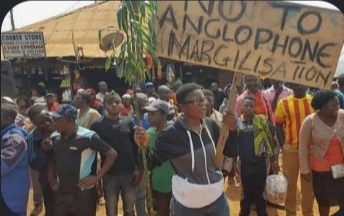
Tchiroma speaks about federalism as though the conflict were an extended constitutional seminar. It is not. It is the aftermath of failed constitutional protection, violent repression, armed resistance, mass displacement, disrupted education, destroyed livelihoods, and atrocities committed against civilians.
The suffering does not need exaggerated figures to become morally overwhelming. Internationally cited estimates indicate that more than 6,000 people have been killed and more than half a million displaced since the conflict escalated. Human Rights Watch reported that at least 6,000 civilians had been killed by government forces and armed separatists by the end of 2023, while more recent reporting citing the International Crisis Group places the overall death toll above 6,500.
The destruction of communities is also documented. Human Rights Watch used witness testimony, videos, photographs, and satellite imagery to examine 131 villages in the South-West. It identified clear evidence of building destruction consistent with arson in at least 20 villages and counted no fewer than 1,800 destroyed structures in those locations alone. The organization documented killings, torture, arbitrary arrests, school attacks, kidnappings, and abuses by both government forces and armed separatists.
These conservative, independently documented figures are already devastating. They describe thousands of graves, hundreds of thousands of displaced lives, abandoned farms, lost school years, traumatized children, and communities whose social and economic foundations have been broken. That history cannot be erased by the late discovery of federal vocabulary.
A family that has buried its children does not hear “federalism” as an abstract constitutional improvement. A farmer whose home was burned does not hear “amnesty” without asking who will be held accountable. A refugee who has spent years in Nigeria does not return merely because a former government spokesman now admits that the state he defended committed abuses.
Tchiroma’s proposal fails because it treats the political disagreement as though it remained where it stood in 2016. It does not address what happened afterward. It does not explain how trust could be reconstructed, how crimes would be investigated, how displaced communities would be restored, how military occupation would end, or how a future centralized government could be prevented from dismantling another federal arrangement when political circumstances changed.
Federalism cannot simply be announced. It requires trust, enforceable guarantees, constitutional equality, and credible institutions. Yaoundé has spent more than six decades exhausting each of those requirements.
A Union Cannot Be Rebuilt by the State That Destroyed It
There is a deeper contradiction in Tchiroma’s position. He proposes federalism while insisting upon the preservation of Cameroon’s inherited borders. He wants the political benefits of reconciliation without accepting the historical legitimacy of the Southern Cameroons claim.
That is not a new constitutional contract. It is an invitation to return to the same house under modified rules written by the same political center. No serious negotiation can begin with the predetermined conclusion that La République du Cameroun must retain sovereignty over Southern Cameroons. That is not dialogue. It is managed surrender.
The appropriate starting point is the historical record. La République du Cameroun and British Southern Cameroons entered the union as legally and institutionally distinct territories. If La République du Cameroun wishes to preserve itself as “one and indivisible,” it can do so within the territory over which it possessed sovereignty at independence. Southern Cameroons should not be required to remain inside another state merely to preserve that state’s preferred definition of territorial unity. This does not mean that separation must produce permanent hostility. Political independence and regional cooperation are not opposites.
Good Neighbors Instead of Unequal Partners
The independence position should not be confused with a desire for endless warfare. Two sovereign states can share roads, ports, energy systems, trade corridors, environmental resources, security arrangements, and family ties. They can negotiate customs agreements, freedom of movement, cross-border investment, and regional infrastructure. But cooperation must rest upon equality.
The future relationship should resemble two neighboring states entering agreements by consent, not a dominant center granting limited autonomy to a population whose constitutional protections it previously removed.
A civilized separation would require negotiations over borders, citizenship, public assets, pensions, debt, trade, natural resources, transportation, security, displaced persons, and the protection of minority communities. It would also require credible international facilitation and enforceable guarantees for civilians on both sides.
The objective should not be the humiliation of La République du Cameroun. It should be the termination of a political arrangement that has failed catastrophically and the creation of a stable relationship between two peoples who must continue living beside one another. The alternative to subjugation is not hatred. It is sovereign cooperation.
The Military Reshuffle Does Not Restore Legitimacy
The August 2026 military reorganization should not be mistaken for political renewal. Replacing commanders can alter the distribution of authority within an armed institution. It cannot repair the constitutional foundations of the state.
The decrees reportedly replaced senior commanders in four military regions, appointed a new armed-forces chief of staff, and elevated the head of the Presidential Guard. The reshuffle occurred while Biya remained absent from public view, deepening speculation about succession and elite competition.
It would be irresponsible, however, to describe every unexplained death inside a military base or every command change as proof that the armed forces are collapsing. Preliminary reports of a fatal incident involving two soldiers at Base 501 near Bamenda remain insufficient to establish a general institutional implosion. An international editorial must distinguish evidence from desire.
The stronger argument does not depend upon claiming that the Cameroonian military has ceased to function. It depends upon recognizing that military force cannot manufacture constitutional legitimacy.
A state may possess barracks, weapons, commanders, and decrees while losing the consent required for durable government. It may occupy towns without winning political allegiance. It may control roads by day while failing to restore confidence in the institutions it claims to defend.
The conflict has continued for nearly a decade despite overwhelming military superiority. That persistence should teach Yaoundé the limitation of coercion. A political problem cannot be permanently solved by treating the affected population as a security threat.
Independence Requires More Than Defiance
The independence movement must also confront its own responsibilities. It cannot demand accountability from Yaoundé while ignoring abuses committed by armed separatists. Human Rights Watch and other organizations have documented kidnappings, attacks on schools, killings of civilians, unlawful taxation, and violence by separatist groups as well as by government forces. A struggle for statehood cannot reproduce the conduct it condemns.
The claim to sovereignty must therefore be demonstrated through civilian protection, political discipline, credible institutions, transparent finances, respect for education, and accountability for abuses. Armed actors claiming to defend Southern Cameroons must observe humanitarian principles and end attacks against civilians, teachers, students, health workers, traders, and communities that refuse to follow political directives.
The strongest response to Tchiroma is not simply to declare that Ambazonia is gone. It is to demonstrate that a Southern Cameroons state can be governed more lawfully, competently, and humanely than the system from which it seeks separation. Statehood is not proved only by controlling territory. It is proved by protecting people.
The Question Tchiroma Cannot Answer
Tchiroma’s federal proposal ultimately fails because it cannot answer one question: why should Southern Cameroonians trust another federal promise from the same state that dismantled the first arrangement, centralized its institutions, militarized the political dispute, and rejected credible mediation? A new label cannot overcome that history.
Federalism might have offered a peaceful constitutional settlement before the state transformed peaceful demonstrations into a prolonged armed conflict. It might have preserved the union before thousands were killed, hundreds of thousands displaced, and entire generations deprived of stable education and economic opportunity. That bridge was not burned by one speech, one faction, or one election. It was destroyed plank by plank through broken agreements, institutional erosion, repression, and war.
The Rubicon has been crossed.
The independence movement should therefore reject federalism not as an emotional slogan but as a conclusion drawn from constitutional history and the accumulated evidence of failed union. It should simultaneously commit itself to civilian protection, documented truth, internal political reform, international diplomacy, and the patient construction of institutions worthy of sovereignty. The destination cannot merely be announced as Buea. It must be built.
And it must be built as a state governed by law, accountable to its people, protective of civilians, capable of peaceful relations with its neighbors, and unwilling ever again to exchange its sovereignty for promises that another government can later revoke.
Timothy Enongene
Associate Editor-in-Chief, The Independentist News