




He Writes
Dear editor
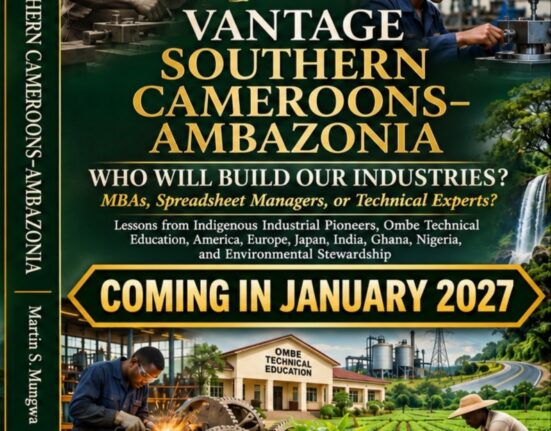
I write here to appreciate the efforts of Dr. Martin Mungwa,
Hello Dr Martin Mungwa,
I have been keenly following your writings about our struggle and I would want to swear that you have contributed as a member of the cabinet but have intellectually done more than all others so far as this struggle is concerned.
I would like to congratulate you with all my heart. I have seen that you are still on the field publishing books about us and at the same time doing all you can as a cabinet member of the Government. I would not want to take much of your time writing all that I have to, because you might not need it since I am not that creative to add anything to this struggle.
However Dr Mungwa I have been thinking a lot but never been able to understand what is holding us back when it comes to do all we possibly can, to approach other African countries which we can request assistance from. With assistance I don’t mean in weaponry even though we are still subject to the brutality of LRC attacks against us.
I have been examining our situation in my own shallow minded manner and come to some kind of conclusions which make me wonder what could be holding us back I had once wondered why our leadership has never bothered to meet the leadership of the SAHEL states which have revolted against the French and successfully driven them out of Africa and put an end to that horrible ACCORD de CORPORATION which is still subjugating many French former colonies all over the world.
I have wondered almost to a point of despair why we Southern Cameroonians are suffering under this French Yoke when we had never been a French colony. Secondly Our resources are beeing extracted by LRC and given to France with out even pretending to make us benefit a little from anything from our territory.
I have never heard of people in any organized way raise a complaint against this kind of slavery imposed on a people in these days. In fact is this not another form of slavery?
I had sent a message to Dr Sako trying to reason with him with the argument that If the leadership of the SAHEL Confederation can be approached and let them understand even by allowing France to continue extracting our resources when we are not even part of the ACCORD the CORPORATION that would ever make their struggle against France a little more harder since france would be extracting our resources almost for free when the SAHEL Confederation is struggle to put an end to such exploitation. What do you think about that?
Well this evening I patiently followed detail of the Russian African summit and decided to ask you why our country which is not part of LRC cannot appeal to Russia that we would rather want to be part of that huge economic zone Russia is trying to transform Africa into.
My reasons for looking at things this way is because we belong to no international organization and are tied to no economic zone anywhere in the world. So Dr Mungwa what is the reason for our existence on this earth?
Only to be available for LRC to be exploiting our people by recruiting them into low level jobs in their civil service while deceiving all others by appointing some few into deceptive high level position just to silence us?
So my question here is this, We have the resources even though we are not a very big country but we are a lot better placed than many other African countries which are smaller than us, Which organization can we be annoying when nobody has our time? If Russia decides to pay attention to us wont that be better just hanging in the air they way we are doing right now?
Or are we waiting just waiting for scraps of international community in the area of vaccines which we cannot manufacture by ourselves? We hardly participate in sporting activities since our youths are hardly selected by LRC to be part of their teams.. So Dr. Mungwa what are we really existing for?
Yours Fon Emmanuel Ngang
Reponse
Dear Fon Emmanuel Ngang,
First, let me sincerely thank you for your thoughtful, encouraging, and deeply patriotic message. Your generous words about my writings, books, and contributions to the Southern Cameroons–Ambazonia struggle are humbling. I receive them with gratitude, not as a personal achievement, but as an encouragement to continue serving our people intellectually, professionally, and diplomatically.
Please never underestimate your own contribution. You describe yourself as not sufficiently creative to add anything to the struggle, but I disagree. The questions you have raised are precisely the kinds of strategic questions our people and leadership must confront. A struggle advances not only through those who write books or hold public office, but also through citizens who challenge assumptions, identify neglected opportunities, and demand accountability.
You have raised three fundamental questions: Why have we not sufficiently engaged other African countries? Why have we not developed a more effective international economic and diplomatic strategy? And what is our national purpose if we cannot translate our resources and human potential into freedom, dignity, and prosperity?
These questions deserve serious answers.
- The Sahel Confederation and African Diplomacy
Your suggestion concerning the Alliance of Sahel States deserves careful examination. Burkina Faso, Mali, and Niger have challenged longstanding patterns of French influence and have sought greater control over their political and economic futures.
There are important lessons here for Southern Cameroons–Ambazonia. However, we must distinguish between the political circumstances of internationally recognized states and those of a people pursuing self-determination without comparable international recognition.
That distinction complicates diplomatic engagement, but it should not prevent us from pursuing it.
We should systematically examine opportunities to engage African governments, regional institutions, universities, peace research organizations, and influential African intellectuals. Our case must be presented through credible historical documentation, international law, economic analysis, and a clearly articulated vision of peaceful and democratic self-government.
- France, Our Natural Resources, and Economic Sovereignty
You are correct to raise the larger question of resource ownership and economic justice. Southern Cameroons possesses important agricultural, petroleum, maritime, forestry, and human resources. Yet the essential question is not merely what resources exist beneath our soil or within our territory. It is who exercises authority over their development, who receives the resulting economic benefits, and how those benefits improve the lives of ordinary people.
The relationship between Cameroon, France, and the management of strategic resources deserves rigorous investigation.
We must document the relevant agreements, commercial arrangements, revenue flows, and institutional responsibilities rather than rely exclusively on political accusations.
That is one reason my writings increasingly connect self-determination with what I call productive sovereignty. Political independence without the technical, educational, industrial, and institutional capacity to manage an economy can simply replace one form of dependency with another.
Our future must therefore be built on economic competence as well as political freedom.
- Russia and a Broader International Strategy
Your question about Russia is equally important.
I believe Southern Cameroons should examine opportunities for constructive dialogue with all relevant international actors, including Russia, African states, Europe, the United States, and emerging economic powers.
But we must be careful not to replace dependence on one foreign power with dependence on another.
International partnerships must be assessed according to what they can contribute to the security, dignity, education, economic development, and legitimate aspirations of our people.
We should seek relationships based on mutual respect, international law, peaceful engagement, and measurable benefits rather than the expectation that any foreign government will automatically embrace our cause.
A sound diplomatic strategy must therefore be diversified, evidence-based, and firmly anchored in our own long-term interests.
- What Is Holding Us Back?
I consider this perhaps your most important question.
In my assessment, several challenges deserve honest examination: fragmentation in political representation, limited diplomatic resources, the absence of a sufficiently coordinated international engagement strategy, and the difficulty of converting historical and legal arguments into sustained institutional relationships.
We must also recognize that international diplomacy is often driven by existing state relationships, strategic interests, and institutional calculations rather than moral arguments alone.
But none of these obstacles should become an excuse for inactivity. We need carefully prepared diplomatic dossiers, documented economic studies, credible policy proposals, and sustained engagement with African and international institutions.
Indeed, I am expanding my academic outreach to institutions such as CODESRIA, the Kofi Annan peace institutions, university research centers in Canada, and peace and conflict resolution organizations in South Africa and elsewhere. These efforts are intended to encourage independent examination of the Southern Cameroons question and its historical, political, legal, and economic dimensions.
Scholarship alone will not settle our political future. But credible scholarship can help open doors that political declarations alone may not open.
- What Are We Existing For?
My dear Fon, your final question is both painful and profound.
We do not exist merely to supply labor, natural resources, or political legitimacy to others.
We exist as a people with a history, a culture, a territory, a collective memory, and aspirations for dignity, security, opportunity, and self-government.
Our children deserve universities, hospitals, functioning industries, modern agriculture, scientific laboratories, sporting opportunities, and institutions that recognize their abilities.
They deserve more than permanent conflict and political uncertainty.
Our ultimate objective should not simply be to secure recognition of Southern Cameroons–Ambazonia, but to build a society capable of sustaining its freedom through knowledge, productive industry, good governance, environmental responsibility, and economic opportunity.
That is the intellectual foundation of much of my recent work.
I have always maintained that a people must prepare themselves not only to achieve self-determination but also to exercise it responsibly.
- A Practical Way Forward
I would welcome the development of a structured diplomatic and economic engagement proposal addressing the Sahel states, the African Union, international peace institutions, and other potentially relevant partners.
Such a proposal should explain our historical position, the applicable legal questions, the human consequences of the conflict, the economic issues you have identified, and specific opportunities for peaceful international engagement.
Your observations about the Sahel and Russia could form part of that broader discussion.
I would also encourage our leadership to examine these possibilities through the appropriate diplomatic channels, without making commitments that have not been collectively considered and authorized.
Fon Emmanuel Ngang, I thank you once again for the confidence you have expressed in me. Please continue to raise these questions. Our struggle needs independent thinkers who are prepared to ask difficult questions respectfully and constructively.
The future of Southern Cameroons–Ambazonia must not be defined solely by what others have done to us, but also by what we are prepared to build for ourselves and future generations.
History will not judge us only by the strength of our grievances. It will also judge us by the seriousness of our preparation, the quality of our institutions, and the future we offer our children.
With sincere appreciation, respect, and patriotic regards,
Martin S. Mungwa, Ph.D., Fellow ASCE
Secretary of State for Communications and Diplomacy
Government-in-Exile of Southern Cameroons–Ambazonia
Author and Publisher, Mungwa Legacy Press